
.jpg)
Film Review – I Am Frankelda (2026)
I Am Frankelda, 2025.
Written and Directed by Arturo Ambriz and Roy Ambriz.
Featuring voice talents from Mireya Mendoza, Arturo Mercado Jr., Luis Leonardo Suarez, Gaby Cárdenas, Beto Castillo, Magda Giner, Carlos Segundo, Idzi Dutkiewicz, Anahí Allue, Sergio Carranza, Laura Torres, Karla Falcón, Roy Ambriz, Arturo Ambriz, Oliver Díaz Barba, Antonio Badía, Jesse Conde, Assira Abbate, Blas García, Zamir Tabla, Clío Ambriz Melis, Lourdes Ambriz, Juan Pablo Monterrubio, and Habana Zoé.
SYNOPSIS:
Frankelda, an ambitious writer from 19th-century Mexico, delves into her subconscious to confront the monsters she has conceived in her stories. With the aid of a haunted prince, she must restore harmony between fiction and reality before time runs out.
Set in 19th-century Mexico and a dimension referred to as the Realm of Terrors (or “Topus Terrenus”), I Am Frankelda showcases the creative vision of writers/directors Arturo and Roy Ambriz through a stunning Gothic stop-motion animation that is both vast in scope and intricately detailed. The whimsical art design is so captivating that, even if the film lacked other compelling elements (which it certainly does not), it would still be worth watching, leaving the audience spellbound with each beautiful frame and wondering how such artistry was achieved.
This includes the increasingly complex plotting and world-building, which at times becomes difficult to track, raising questions about whether younger viewers (the film is rated PG, though it shares similarities with a 90s PG) would grasp the story—especially those not yet acquainted with international cinema. However, as one loses themselves in the sheer beauty of every image—sometimes transitioning seamlessly from stop-motion to a style reminiscent of animated watercolor paintings—such concerns fade away.
The narrative begins with Francisca Imelda, who, as a child (voiced by Habana Zoé), is taught by her mother about the transformative power of art, learning that her soul is interwoven with her creations. Tragically, she faces hardship as she is raised by a harsh grandmother who dismisses her writing aspirations. The story fast-forwards ten years, portraying Francisca at 18 (now voiced by Mireya Mendoza), still trapped in a dismal life, striving to get published but facing gender discrimination and being largely overlooked.
In Topus Terrenus, Prince Herneval's story also starts in childhood (voiced by Juan Pablo Monterrubio), where he learns that his royal parents spin nightmares on a beautifully crafted device called a Spiderharp, influencing what humans dream. The potency of these nightmares directly affects their appearance, adding another layer to the impressive detail of this production. When the nightmares' power wanes, the creatures, ranging from almost angelic beings to formless blobs, still evoke a sense of fear, yet appear weakened and drained.
The power dynamic is shifting, as one of the blobs, Procustes (voiced by Luis Leonardo Suárez), seeks to take on the role of nightmare creator despite lacking the qualifications. This segment of the prologue culminates in a spectacular musical number emphasizing the significance of playing the harp to maintain the balance between worlds and its vital role in Prince Herneval’s future.
Fast forward ten years, and Topus Terrenus is in decline. Prince Herneval (now voiced by Arturo Mercado Jr.) feels compelled to act, even if it means defying his parents to reconnect with Francisca, who had once summoned him through her writing. He discovers her talent and believes that by bringing her to the realm of terrors, she can pursue her writing dreams while helping them restore the source of their nightmare energy from humans.
This plot point is critical, as Procustes undermines Francisca’s confidence by disparaging her writing while simultaneously appropriating her stories for his own gain. Some lines passionately echo sentiments like “fuck AI,” potentially attracting the interest of producer Guillermo del Toro. Like AI, Procustes lacks creativity and personal connection to the material, producing lifeless imitations. The film makes this metaphor quite clear. This element also reflects Francisca's struggle with impostor syndrome, illustrating how we can often be our harshest critics.
Moreover, in a nod to contemporary issues faced by women writers who often publish under pseudonyms or anonymously, Francisca considers using the name Frankelda to enhance her chances of success. There’s also a romantic subplot where she and Herneval develop feelings for each other, battling the opposition from realms that perceive their coexistence as a threat to their existence. However, the prince also has his own blind spots, making decisions that may appear selfish.
I Am Frankelda sometimes feels overly ambitious, introducing seven clans to assist Proc
.jpg)
.jpg)
.jpg)
.jpg)
.jpg)
.jpg)
Other articles
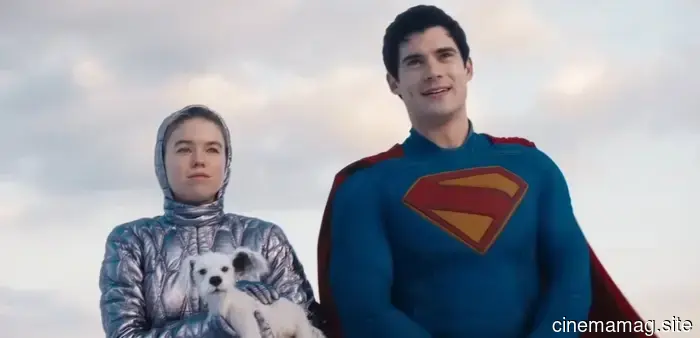 In a scene from DC's Supergirl, Superman greets Kara as she arrives on Earth.
With Supergirl poised to hit theaters in just a few weeks, a new clip from the upcoming installment of the emerging DC Universe has been released online, showcasing Kara Zor-El’s arrival.
In a scene from DC's Supergirl, Superman greets Kara as she arrives on Earth.
With Supergirl poised to hit theaters in just a few weeks, a new clip from the upcoming installment of the emerging DC Universe has been released online, showcasing Kara Zor-El’s arrival.
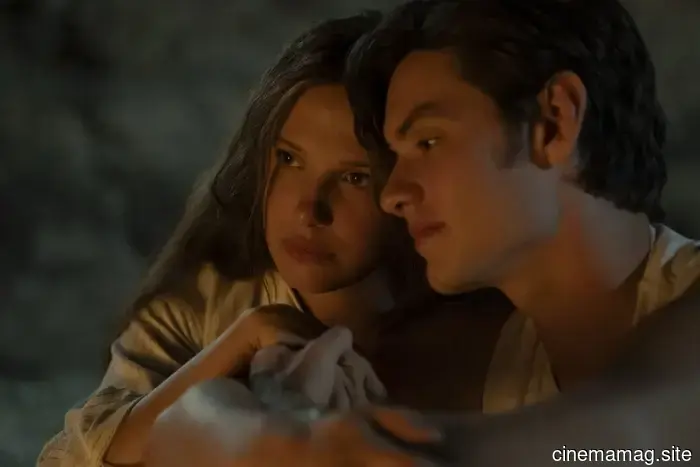 New trailer and promotional images for Enola Holmes 3 featuring Millie Bobby Brown have been released.
With only three weeks remaining until Enola Holmes 3 premieres on Netflix, the streaming service has unveiled another trailer for the upcoming entry in the mystery adventure series. Directed by Philip Barantini, t…
New trailer and promotional images for Enola Holmes 3 featuring Millie Bobby Brown have been released.
With only three weeks remaining until Enola Holmes 3 premieres on Netflix, the streaming service has unveiled another trailer for the upcoming entry in the mystery adventure series. Directed by Philip Barantini, t…
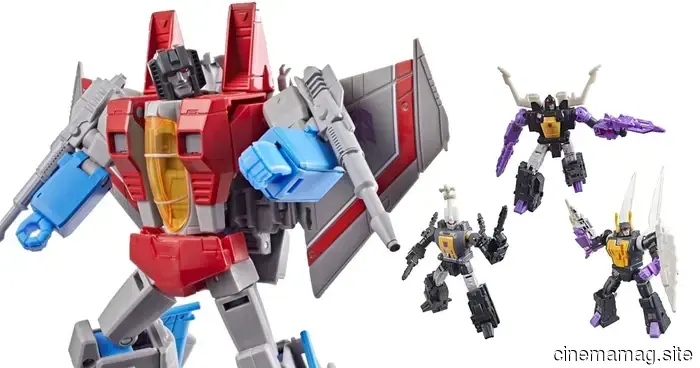 Hasbro has unveiled the Studio Series versions of Starscream, Prowl, and the Insecticons from The Transformers: The Movie.
As the celebrations for the film's 40th anniversary progress, Hasbro has introduced three new additions to its Studio Series collection from The Transformers: The Movie, including a Voyager Class Starscream, a Deluxe…
Hasbro has unveiled the Studio Series versions of Starscream, Prowl, and the Insecticons from The Transformers: The Movie.
As the celebrations for the film's 40th anniversary progress, Hasbro has introduced three new additions to its Studio Series collection from The Transformers: The Movie, including a Voyager Class Starscream, a Deluxe…
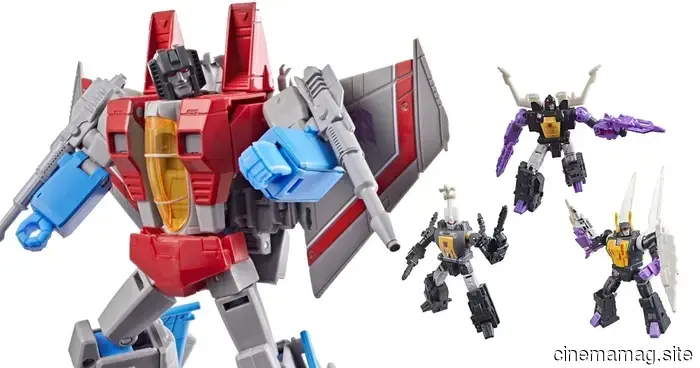 Hasbro has unveiled the Studio Series figures of The Transformers: The Movie, featuring Starscream, Prowl, and the Insecticons.
As the celebrations for the film's 40th anniversary carry on, Hasbro has introduced three new additions to its Studio Series line from The Transformers: The Movie, featuring a Voyager Class Starscream, Deluxe…
Hasbro has unveiled the Studio Series figures of The Transformers: The Movie, featuring Starscream, Prowl, and the Insecticons.
As the celebrations for the film's 40th anniversary carry on, Hasbro has introduced three new additions to its Studio Series line from The Transformers: The Movie, featuring a Voyager Class Starscream, Deluxe…
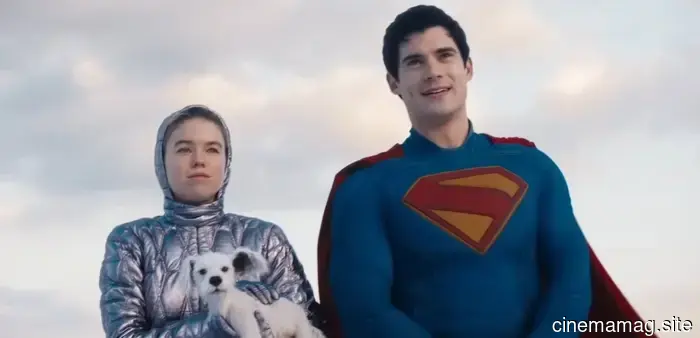 In a clip from DC's Supergirl, Superman greets Kara upon her arrival to Earth.
As Supergirl prepares to debut in theaters in just a few weeks, a fresh clip from the upcoming installment of the emerging DC Universe has been released online, showcasing Kara Zor-El's (Milly Alcock) arrival...
In a clip from DC's Supergirl, Superman greets Kara upon her arrival to Earth.
As Supergirl prepares to debut in theaters in just a few weeks, a fresh clip from the upcoming installment of the emerging DC Universe has been released online, showcasing Kara Zor-El's (Milly Alcock) arrival...
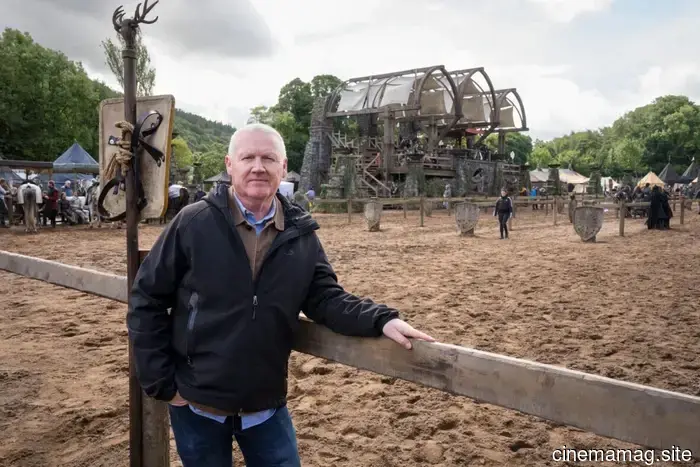 Tom McCullagh from A Knight of the Seven Kingdoms discusses the process of minimizing Westeros and building connections - MovieMaker.
Tom McCullagh talks about his intricate set design for A Knight of the Seven Kingdoms, offering a closer look at Westeros.
Tom McCullagh from A Knight of the Seven Kingdoms discusses the process of minimizing Westeros and building connections - MovieMaker.
Tom McCullagh talks about his intricate set design for A Knight of the Seven Kingdoms, offering a closer look at Westeros.
Film Review – I Am Frankelda (2026)
I Am Frankelda, 2025. Created and Directed by Arturo Ambriz and Roy Ambriz. With voice performances by Mireya Mendoza, Arturo Mercado Jr., Luis Leonardo Suarez, Gaby Cárdenas, Beto Castillo, Magda…