
How the Women Behind All Her Fault Highlighted Domestic Disparities
Megan Gallagher, the creator of All Her Fault, is still enjoying the positive reception of the Peacock miniseries, months after its launch to enthusiastic reviews last November.
“I tend to be quite critical of myself and don’t usually indulge in success, but I can honestly say I’m proud of this project,” she shared with MovieMaker in mid-March from a London hotel, where she was collaborating with the producers of All Her Fault Carnival Films on another miniseries.
“It was an incredible experience. I really mean that, not just because it’s expected to be said. It genuinely was a fulfilling experience,” she remarked, crediting all the collaborators involved in the Golden Globe-nominated kidnapping drama. “Seeing it explode on social media has been such a pleasure. The entire journey has been amazing, so I'm still in disbelief.”
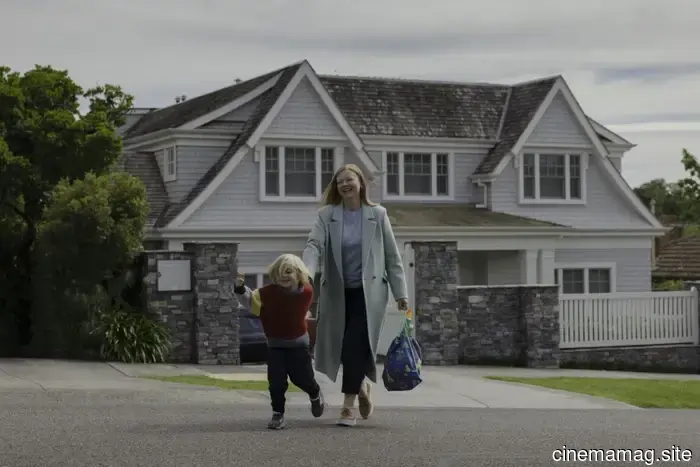
The eight-episode limited series captivates audiences from its opening scene, where Sarah Snook’s character arrives at a location to collect her son from what she believes is a playdate, only to discover that there was never a playdate, and the text exchange with another mother was part of a complex plan to abduct her son.
The situation quickly spirals into chaos. The media starts to blame the protagonist, while friends and family turn into suspects and past secrets come to light.
All Her Fault is filled with enough twists to keep crime enthusiasts guessing until the final moments, yet the intricate plot is steeped in rich human insight that also appealed to viewers.
“I aimed for the audience to embark on an entertaining and fast-paced journey while feeling seen,” said executive producer Minkie Spiro, who directed the first four episodes. “It was crucial for me to spark a conversation and facilitate discussion around these themes.”
The show explores largely unexplored themes on television: the imbalance of domestic responsibilities in marriage. This concept is central to author Andrea Mara’s book, which shares the same title, and Gallagher sought to highlight it. She was met with considerable support from female executives at the studio.
“There are many women at Universal and Peacock in leadership roles, and their reaction was enthusiastic - ‘Yes, yes, yes! That’s me, that’s my home, that’s my husband!’” Gallagher recalled. “Every woman I know between 35 and 55 relates to this, but it hasn’t yet been represented on screen. It felt unusual that such a prevalent experience for at least half of the global population hasn’t been portrayed before.”
“I’m thrilled that we stayed committed to this theme, as it has resonated incredibly,” she added.
Spiro commented, “We aimed to illustrate the experiences of working parents trying to balance everything when one parent isn't equally contributing. We wanted to tell this story subtly, avoiding a heavy-handed approach.”
The dramatic tension culminates in episode eight, where the intricately crafted narrative of drama and betrayal concludes with a significant twist.
“Mapping out the series to ensure every piece fits together was a lot of work,” Gallagher said. “But it’s something I enjoy, and because of that initial groundwork, episode eight was the fastest draft to complete and the quickest to edit. We are immensely proud of that episode and its ending.”
The satisfying finale is the result of subtle hints placed throughout the series, with Snook leading the cast, who received the 2026 Critics Choice Award for Best Actress in a Limited Series. Michael Peña and Sophia Lillis were also nominated, with Jake Lacy, Dakota Fanning, Abby Elliott, Jay Ellis, Daniel Monks, Johnny Carr, and Kartiah Vergara rounding out the remarkable cast.
“Every single cast member rose to the occasion,” Spiro said. “They each had a personal reason for wanting to be involved in this show, making it a fascinating experience.”
Spiro, who has previously directed episodes of Barry, Better Call Saul, and The Plot Against America, appreciated the "delicious" plot twists in the source material but was especially drawn to the exploration of family dynamics in Gallagher’s vision.
“What excited me was the chance to conduct a thorough character analysis of family, along with secrets, lies, trauma, and social disparities,” she explained.
All Her Fault is a cleverly constructed whodunnit elevated by strong performances and resonant themes interwoven through the limited series. Both its director and creator highlight another critical element that contributed to its success: alignment.
“Peacock, as a network, was supportive and respectful to the creatives, without unnecessary micromanagement,” Spiro noted. “I’ve had the privilege of working in various countries, and some studio executives lack understanding of the creative process, so we were quite fortunate in this case.”
“Such situations don’t always occur,” Gallagher acknowledged. “Sometimes a broadcaster greenlights a project that may not align with what they truly want, leading to discord. It’s essential to surround yourself with the right people, and we truly had an excellent team for this.”
All Her Fault is currently available for streaming on Peacock.


Other articles
 Barrio Triste Trailer: Stillz, a collaborator of Bad Bunny, makes a daring directorial debut set to release in July.
A notable directorial debut at last year's festival circuit, Stillz's Barrio Triste, which was selected for Venice, TIFF, and NYFF, is set to hit theaters in a timely July release. Executive produced by Harmony Korine and featuring an original score by Arca, Film Movement will be releasing the first feature from the Bad Bunny collaborator in theaters this July.
Barrio Triste Trailer: Stillz, a collaborator of Bad Bunny, makes a daring directorial debut set to release in July.
A notable directorial debut at last year's festival circuit, Stillz's Barrio Triste, which was selected for Venice, TIFF, and NYFF, is set to hit theaters in a timely July release. Executive produced by Harmony Korine and featuring an original score by Arca, Film Movement will be releasing the first feature from the Bad Bunny collaborator in theaters this July.
 Barrio Triste Trailer: Bold Directorial Debut of Bad Bunny Collaborator Stillz Set to Premiere in July.
Making a mark as a directorial debut on the festival circuit last year, Stillz's Barrio Triste, selected for Venice, TIFF, and NYFF, is now set to hit theaters in a suitable July release window. Executive produced by Harmony Korine and featuring an original score by Arca, Film Movement will be releasing this first feature from the Bad Bunny collaborator in theaters this July.
Barrio Triste Trailer: Bold Directorial Debut of Bad Bunny Collaborator Stillz Set to Premiere in July.
Making a mark as a directorial debut on the festival circuit last year, Stillz's Barrio Triste, selected for Venice, TIFF, and NYFF, is now set to hit theaters in a suitable July release window. Executive produced by Harmony Korine and featuring an original score by Arca, Film Movement will be releasing this first feature from the Bad Bunny collaborator in theaters this July.
 Comic Book Teaser – Vampirella #3
Dynamite Entertainment will release Vampirella #3 this Wednesday, and you can check out the official preview of the issue below… Vampirella joins forces with her wicked twin, Draculina, to confront…
Comic Book Teaser – Vampirella #3
Dynamite Entertainment will release Vampirella #3 this Wednesday, and you can check out the official preview of the issue below… Vampirella joins forces with her wicked twin, Draculina, to confront…
 LEGO introduces the KPop Demon Hunters theme featuring the Derpy Tiger and Sussie Bird set.
The LEGO Group has officially revealed the Derpy Tiger and Sussie Bird (72537) set, marking the launch of a new licensed LEGO theme related to Netflix’s popular animated musical fantasy KPop Demon Hunter…
LEGO introduces the KPop Demon Hunters theme featuring the Derpy Tiger and Sussie Bird set.
The LEGO Group has officially revealed the Derpy Tiger and Sussie Bird (72537) set, marking the launch of a new licensed LEGO theme related to Netflix’s popular animated musical fantasy KPop Demon Hunter…
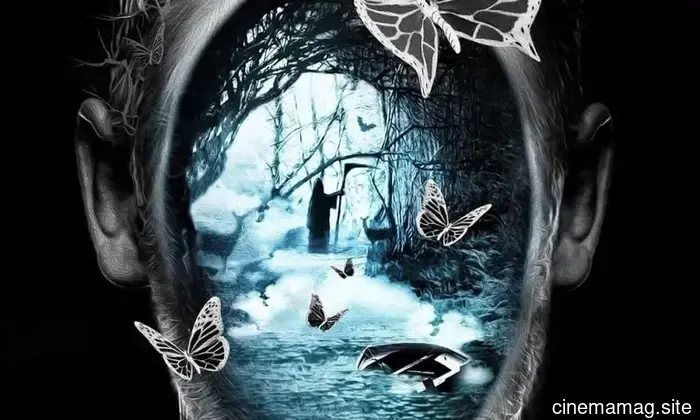 A film adaptation of Stephen King's Mister Yummy is currently in development.
Deadline has announced that a feature film adaptation of Stephen King’s short story Mister Yummy is being developed by Australian director Ben Young (Hounds of Love, Devil’s Peak).
A film adaptation of Stephen King's Mister Yummy is currently in development.
Deadline has announced that a feature film adaptation of Stephen King’s short story Mister Yummy is being developed by Australian director Ben Young (Hounds of Love, Devil’s Peak).
How the Women Behind All Her Fault Highlighted Domestic Disparities
Megan Gallagher, the creator of All Her Fault, is still enjoying the positive response to the Peacock miniseries, months after it debuted to widespread acclaim last.