
.jpg)
Film Review – Toy Story 5 (2026)
**Toy Story 5, 2026.**
**Directed by Andrew Stanton.**
**Featuring the voice talents of:** Tom Hanks, Tim Allen, Joan Cusack, Greta Lee, Conan O’Brien, Craig Robinson, Shelby Rabara, Tony Hale, Scarlett Spears, Jay Hernandez, Lori Alan, Bonnie Hunt, Kristen Schaal, Wallace Shawn, John Ratzenberger, Blake Clark, Jeff Bergman, Anna Vocino, Annie Potts, Mykal-Michelle Harris, Keanu Reeves, Ernie Hudson, Jeff Garlin, Melissa Villaseñor, Matty Matheson, John Hopkins, and Jeff Pidgeon.
**SYNOPSIS:**
Woody, Buzz, Jessie, and the rest of the crew face new challenges when electronics emerge, posing a fresh threat to playtime. While it might appear that this theme of traditional toys versus technology is long overdue (considering there are video games featuring Buzz Lightyear battling Zurg), and that this film comes after a perfectly satisfying conclusion, Toy Story 5 has arrived. Fortunately, it mostly continues to uphold the high standards set by Disney and Pixar, ensuring they won’t release a lackluster installment. This beloved franchise is likely to still earn another billion, with a significant portion coming from Swifties who will undoubtedly enjoy the end-credits song.
Once more, the film thoughtfully centers on the roles of toys in a rapidly changing technological and social landscape, earning significant emotional responses for both toys and children. Directed by Andrew Stanton and co-directed by Kenna Harris, this story deeply explores how children are navigating a tech-driven world, the unfortunate reality of digital friendships, the true essence of friendship, and the challenges of making connections when one’s interests haven't aligned with contemporary trends, leading to hesitance in welcoming new friends. This installment takes inspiration from the *Inside Out* series, focusing heavily on a child’s emotions.
Complicating matters further, these characters are primarily young children, around eight years old, exposed to devices created to entertain, educate, and often ease parenting. This can also lead to bullying when a child feels out of place. Growing up is already a difficult journey, and while technology has its advantages, it has also complicated the process and, at times, serves as a hindrance.
The primary new non-human character, Lilypad (voiced by Greta Lee), is a play on tablets designed for early childhood development. It's not meant to be social media per se but a closed network allowing nearby children to text or play games together. The intention is to inspire real-life connections through parents coordinating playdates and sleepovers; however, the children have become less imaginative with traditional toys, opting instead to become absorbed in their screens.
Bonnie, now voiced by Scarlett Spears and the current owner of the beloved toys, still holds on to her imagination. However, her enjoyment of playing with Jessie (voiced by Joan Cusack), Buzz Lightyear (voiced by Tim Allen), and the gang results in her facing judgment from peers and struggles in forming friendships. Feeling torn between moving on and putting effort into making friends, her parents (voiced by Jay Hernandez and Lori Alan) buy her a Lilypad, which quickly captivates her interest, pulling her away from her toys and proving to be addictive despite its good intentions. Although it seems to provide companionship, it lacks depth, with no genuine connection beneath the interaction.
The film isn’t entirely against technology; rather, it acknowledges the Internet's dual nature, capable of fostering friendships with like-minded individuals. Ultimately, it emphasizes the need for classic and new toys to coexist and support Bonnie in a way that benefits her. This installment primarily revolves around cowgirl Jessie and her fiercely loyal horse companion Bullseye, as they embark on a journey driven by self-discovery in search of purpose and the meaning of their existence to their owners.
During her exploration, Jessie encounters outdated electronic toys that have been neglected and discarded, like Snappy, a talking digital camera (voiced by Shelby Rabara), GPS Atlas (voiced by Craig Robinson), and an unforgettable potty-trainer voiced by Conan O’Brien, delivering a plethora of toilet humor puns. Initially, Jessie views these toys with disdain, seeing them as distractions that stifle creativity. However, it soon becomes apparent that they are older models linked to the Lilypad network, intended for early education and shared memories.
Meanwhile, a group of advanced Buzz Lightyears has escaped from their transport and is on a quest for Star Command, entirely disconnected from Woody and the other toys (who return, including Rex, Mr. Potato Head, Slinky Dog, Forky, and others, providing generous laughs for a hit of nostalgia). These segments offer lighthearted diversions while leading to their eventual integration into the overarching narrative.
At times, there’s a desire for *Toy Story 5* to delve deeper into the psychological dangers of technology, especially for young minds.
.jpg)
.jpg)
.jpg)
.jpg)
.jpg)
.jpg)
.jpg)
Other articles
 Task Production Designer Keith P. Cunningham Discusses Creating a World That Feels Natural and Undesigned
Production designer Keith P. Cunningham discusses how he created a sense of being frozen in time for the Delco-based drama.
Task Production Designer Keith P. Cunningham Discusses Creating a World That Feels Natural and Undesigned
Production designer Keith P. Cunningham discusses how he created a sense of being frozen in time for the Delco-based drama.
 Dreams in Nightmares Trailer: Shatara Michelle Ford's Highly Regarded Second Film is Set to Release in August.
Following her remarkable directorial debut, Test Pattern, which received nominations for the Gotham and Independent Spirit Awards, Shatara Michelle Ford returned to the festival scene in 2024 with Dreams in Nightmares. It has now been acquired by Lunette Films for a release starting in NYC on August 21 and in LA on August 28. The new trailer has been released.
Dreams in Nightmares Trailer: Shatara Michelle Ford's Highly Regarded Second Film is Set to Release in August.
Following her remarkable directorial debut, Test Pattern, which received nominations for the Gotham and Independent Spirit Awards, Shatara Michelle Ford returned to the festival scene in 2024 with Dreams in Nightmares. It has now been acquired by Lunette Films for a release starting in NYC on August 21 and in LA on August 28. The new trailer has been released.
 Production Designer Keith P. Cunningham Discusses Creating an Authentic World That Appears Unintentionally Crafted
Production designer Keith P. Cunningham discusses how he created a sense of timelessness for the Delco-based drama.
Production Designer Keith P. Cunningham Discusses Creating an Authentic World That Appears Unintentionally Crafted
Production designer Keith P. Cunningham discusses how he created a sense of timelessness for the Delco-based drama.
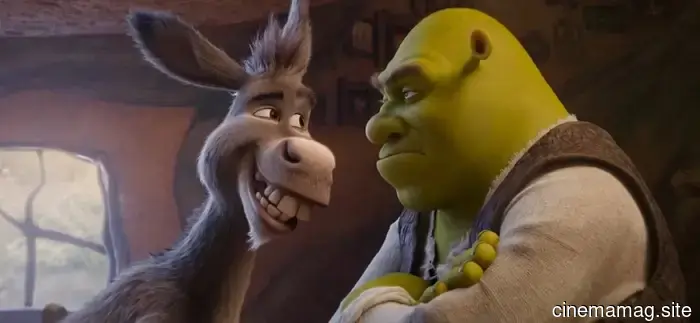 DreamWorks Animation has released a teaser trailer for Shrek 5.
Even though there’s still a year until its release, Universal Pictures has unveiled a new teaser trailer for the eagerly anticipated next chapter in the cherished DreamWorks Animation series, Shrek 5. Dire…
DreamWorks Animation has released a teaser trailer for Shrek 5.
Even though there’s still a year until its release, Universal Pictures has unveiled a new teaser trailer for the eagerly anticipated next chapter in the cherished DreamWorks Animation series, Shrek 5. Dire…
 12 Oscar Winners Who Began Their Careers in Sitcoms
Here are 12 Oscar winners who began their careers in sitcoms.
12 Oscar Winners Who Began Their Careers in Sitcoms
Here are 12 Oscar winners who began their careers in sitcoms.
 Shinya Tsukamoto Enters Battle in Trailer for English-Language Vietnam Film Mr. Nelson, Did You Kill People?
After more than 50 years in a groundbreaking career, Shinya Tsukamoto has taken on an uncommon project in English. In diversifying his work, one of the leading figures in Japanese cinema—known for directing the Tetsuo: The Iron Man series, A Snake in June, Bullet Ballet, and Tokyo Fist, and for his appearances in Martin Scorsese's Silence and Takashi Miike's Ichi the Killer—continues to expand his artistic reach.
Shinya Tsukamoto Enters Battle in Trailer for English-Language Vietnam Film Mr. Nelson, Did You Kill People?
After more than 50 years in a groundbreaking career, Shinya Tsukamoto has taken on an uncommon project in English. In diversifying his work, one of the leading figures in Japanese cinema—known for directing the Tetsuo: The Iron Man series, A Snake in June, Bullet Ballet, and Tokyo Fist, and for his appearances in Martin Scorsese's Silence and Takashi Miike's Ichi the Killer—continues to expand his artistic reach.
Film Review – Toy Story 5 (2026)
Toy Story 5, set to release in 2026, will be directed by Andrew Stanton. The film will include voice performances from Tom Hanks, Tim Allen, Joan Cusack, Greta Lee, Conan O’Brien, Craig Robinson, Shelby Rabara, Tony Hale, and Scarlett Spea…