
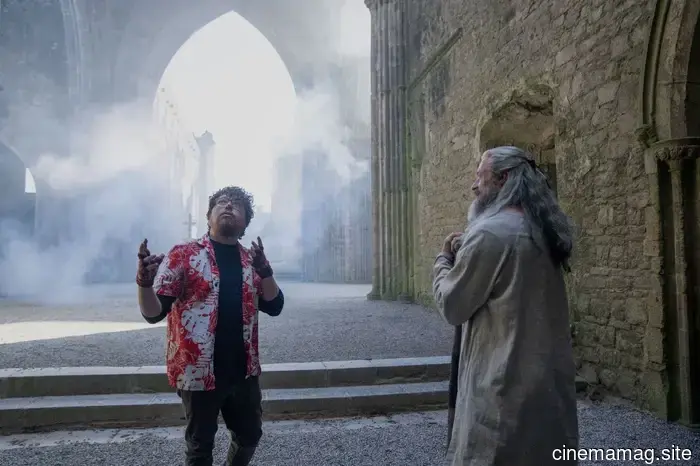
Michael Sarnoski discusses his favorite films about Robin Hood and the violent mythology surrounding the character.
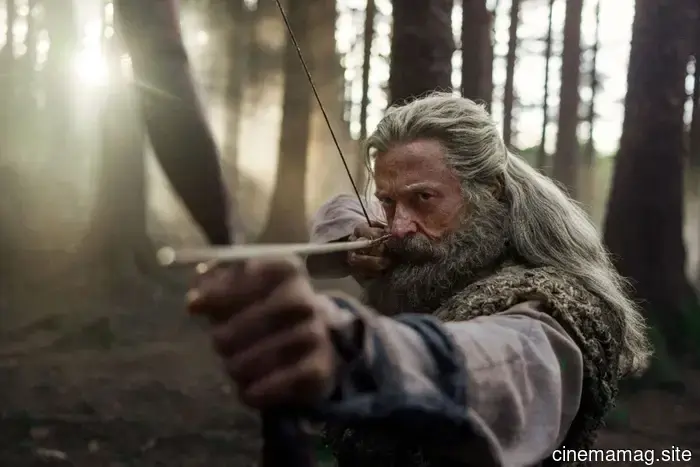
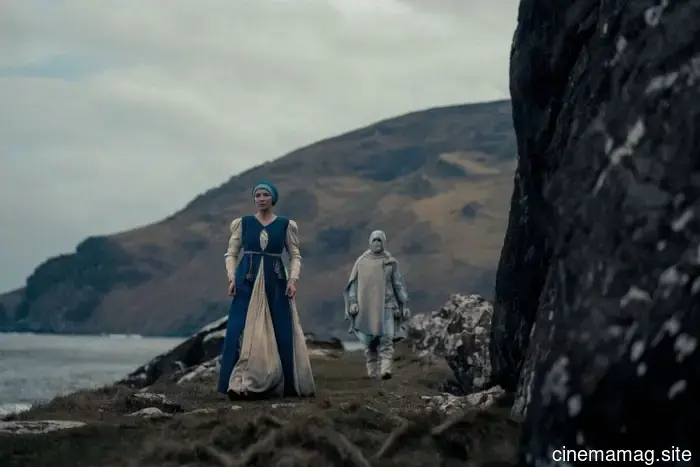
When you think of Robin Hood, who comes to mind? Errol Flynn? Kevin Costner? The idea of taking from the rich and giving to the poor? Bryan Adams’ hit song “(Everything I Do) I Do It for You”? In The Death of Robin Hood, Michael Sarnoski offers a fresh perspective on the iconic outlaw. Drawing inspiration from the 17th-century ballad “Robin Hood’s Death,” the writer-director crafts a new story that directly addresses the essence of storytelling, questioning why we recount certain tales and the potential consequences—both positive and negative—that arise from them. The outcome is a poignant, violent narrative that showcases one of Hugh Jackman's finest performances.
As we approach the film's release on Friday, we chatted with Sarnoski about how the project originated, the decision to shoot in Northern Ireland, his favorite Robin Hood adaptations, and much more.
The Film Stage: Besides the ballad “Robin Hood’s Death,” which has been retold in various ways over the centuries, were there any other ballads that stood out to you during the development of this idea?
Michael Sarnoski: From the beginning, I was drawn to “Robin Hood’s Death” as the primary focus. What intrigued me, even as a child, was its stark difference from other stories. While there are plenty of fun, violent narratives, this one tells a quiet, simple, human tale. This contrast fascinated me about the character—he’s capable of beheading people and engaging in wild adventures, yet he is also this other person. The film undoubtedly contains references to the other ballads and examines their truthfulness and significance to Robin. [“Robin Hood’s Death”] was centrally important to the project.
Did you have a favorite Robin Hood film or television series going into this?
I think it's akin to people having a favorite James Bond based on their childhood. For me, it was Disney’s Robin Hood—it meant everything to me as a kid; it was my top Disney film. Then there was Robin Hood: Prince of Thieves. I had all the merchandise, the treehouse set, and the action figures.
The Costner version is interesting in that it hints at a more realistic interpretation, much like what you are doing.
Absolutely; they grounded it and made it feel authentic in '90s terms, even though it has its silly moments.
One aspect I appreciated about your filming location is that Robin Hood is such a quintessentially English tale. I loved that you chose to shoot in Ireland, which adds an underdog element. How did you decide on that location?
We explored various areas but ultimately chose Northern Ireland because, within an hour of Belfast, there's an incredible variety of landscapes. We shot the film in just 30 days, so we didn’t have time for extensive location changes. We considered places like the Lake District in England and the Scottish Highlands, which are stunning, but traveling between diverse locations would require flights. That wasn’t feasible for our scrappy indie approach. Plus, the crews in Northern Ireland were exceptional. Many of them came from Game of Thrones, and this type of work is their forte.
Can you tell me about Scotichronicon? What elements are you drawing from it?
It's an ancient historical text, similar to Herodotus for Scotland. It contains a mix of mythic history, where accuracy wasn’t the primary concern. It may be the first recorded reference to Robin Hood in historical writings, depicting him as a ruthless bandit adored by the common people. It illustrates how even back then, there wasn't consensus about who he was and what he represented, and he could be depicted in different ways. This provided a great starting point for exploring the brutality present in the original ballads. What if the violence was real but the more positive aspects were exaggerated? The ballads emerged 300 years after the actual "Robin Hood" existed. That's ample time for the stories to morph into something different from reality. It’s almost as if Robin Hood became a cultural archetype of the classic outlaw before the narratives were even penned. A similar dynamic exists with King Arthur, where early references describe him merely as a "champion."
What resonates most with me about your film is its examination of storytelling. The constant exploration of narratives, truth, and their significance is compelling. This must have been a central theme for you from the start.
That was an inherent aspect of the character for me. Considering the stark contrast between Robin Hood's quiet demise and his adventurous exploits, pondering the meaning and purpose behind these tales was crucial. It stemmed from envisioning a Robin Hood who had outlasted his era, witnessing his own legacy while still alive.
Robin utilizes stories as tools for violence and control, while the Prioress, in her own way, employs narratives to manipulate and heal. She strives to teach him that, despite stories being used for malevolent purposes and lacking truth, they can still provide assistance to
Other articles
 Comic Book Sneak Peek – Supernatural #8
Dynamite Entertainment’s Supernatural comic series is set to release issue #8 this Wednesday, and you can take a look at the official preview below for an early glimpse... Monsters? No...
Comic Book Sneak Peek – Supernatural #8
Dynamite Entertainment’s Supernatural comic series is set to release issue #8 this Wednesday, and you can take a look at the official preview below for an early glimpse... Monsters? No...
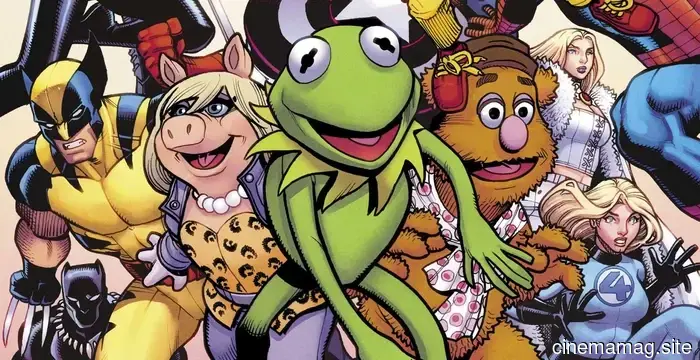 Marvel commemorates 50 years of The Muppet Show with a one-shot comic titled The Muppets Take the Marvel Universe.
Marvel Comics has declared that it will commemorate the 50th anniversary of The Muppet Show this September by launching the one-shot comic The Muppets Take the Marvel Universe #1, which will feature…
Marvel commemorates 50 years of The Muppet Show with a one-shot comic titled The Muppets Take the Marvel Universe.
Marvel Comics has declared that it will commemorate the 50th anniversary of The Muppet Show this September by launching the one-shot comic The Muppets Take the Marvel Universe #1, which will feature…
.jpg) Film Review – Rose of Nevada (2025)
Rose of Nevada, 2025. Directed and written by Mark Jenkin. Featuring performances by George MacKay, Callum Turner, Francis Magee, Edward Rowe, Rosalind Eleazar, Mary Woodvine, Adrian Rawlins, Yana Penrose, Mae Voogd,…
Film Review – Rose of Nevada (2025)
Rose of Nevada, 2025. Directed and written by Mark Jenkin. Featuring performances by George MacKay, Callum Turner, Francis Magee, Edward Rowe, Rosalind Eleazar, Mary Woodvine, Adrian Rawlins, Yana Penrose, Mae Voogd,…
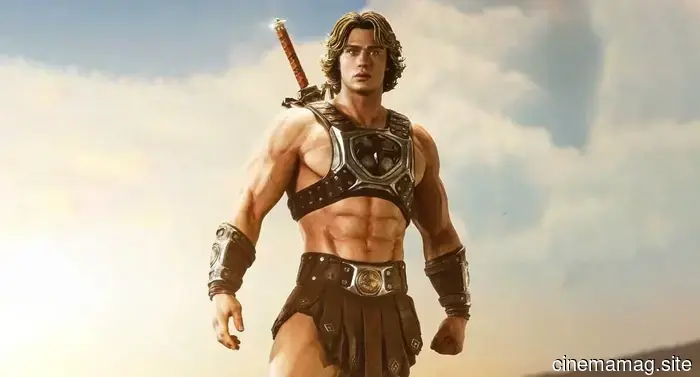 Prime 1 Studio has revealed the collectible statue of He-Man from the Masters of the Universe Real Elite Masterline.
Prime 1 Studio has officially introduced its He-Man Real Elite Masterline collectible statue, drawing inspiration from Nicholas Galitzine's portrayal of Eternia’s Champion in director Travis Knight's film.
Prime 1 Studio has revealed the collectible statue of He-Man from the Masters of the Universe Real Elite Masterline.
Prime 1 Studio has officially introduced its He-Man Real Elite Masterline collectible statue, drawing inspiration from Nicholas Galitzine's portrayal of Eternia’s Champion in director Travis Knight's film.
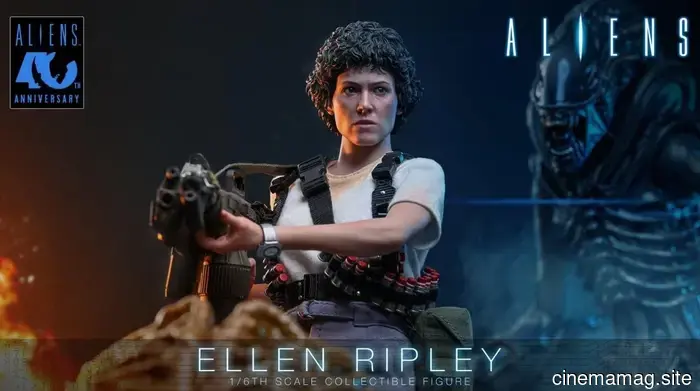 Hot Toys commemorates the 40th anniversary of Aliens with a sixth scale figure of Ellen Ripley.
In honor of the 40th anniversary of Aliens, Hot Toys has released its sixth scale collectible figure of Ellen Ripley, drawing inspiration from Sigourney Weaver's portrayal in James Cameron’s 1986 sci-fi film.
Hot Toys commemorates the 40th anniversary of Aliens with a sixth scale figure of Ellen Ripley.
In honor of the 40th anniversary of Aliens, Hot Toys has released its sixth scale collectible figure of Ellen Ripley, drawing inspiration from Sigourney Weaver's portrayal in James Cameron’s 1986 sci-fi film.
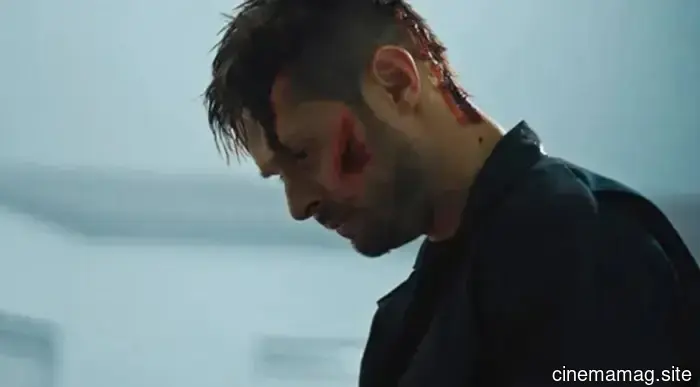 Revenge thriller In a Cold Vein reveals its trailer and poster.
In anticipation of its digital launch this July, Saban Films has unveiled a poster and trailer for the revenge thriller In a Cold Vein, directed by Eric Owen. Evan Gamble plays the role of a man who has dedicated years of his...
Revenge thriller In a Cold Vein reveals its trailer and poster.
In anticipation of its digital launch this July, Saban Films has unveiled a poster and trailer for the revenge thriller In a Cold Vein, directed by Eric Owen. Evan Gamble plays the role of a man who has dedicated years of his...
Michael Sarnoski discusses his favorite films about Robin Hood and the violent mythology surrounding the character.
When you hear the name Robin Hood, what comes to mind? Errol Flynn? Kevin Costner? The idea of taking from the wealthy and aiding the less fortunate? Bryan Adams’ hit song "(Everything I Do) I Do It for You”? With The Death of Robin Hood, Michael Sarnoski offers a fresh perspective on the iconic outlaw. Drawing inspiration from