
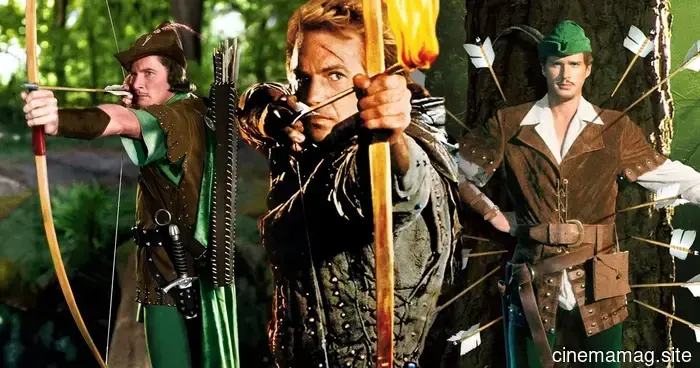
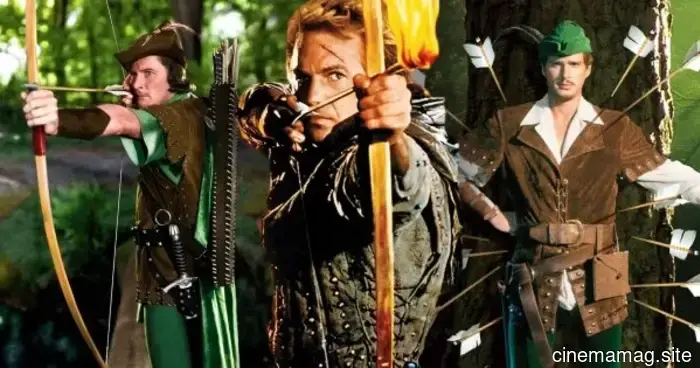
Seven Key Portrayals of Robin Hood in Film
Casey Chong presents the notable portrayals of Robin Hood in film...
The legend of Robin Hood has been adapted in numerous ways, including through ballads, theatrical performances, literature, television shows, and notably, a variety of films. The character has been portrayed by various actors since 1912, when Robert Frazer first took on the role in a brief silent film. In light of Michael Sarnoski’s upcoming film The Death of Robin Hood featuring Hugh Jackman [read our review here], we reflect on seven remarkable representations of Robin Hood in cinema...
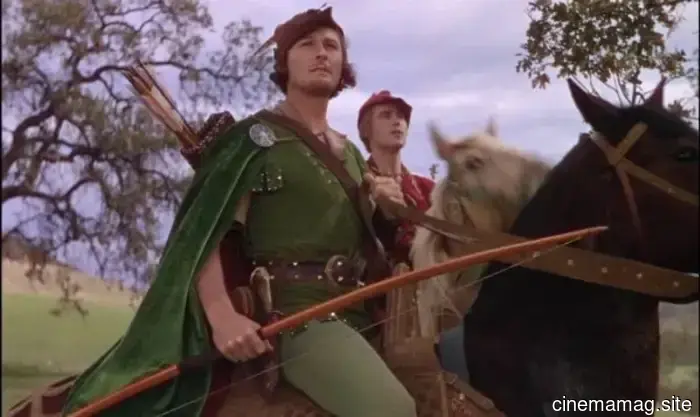
Errol Flynn in The Adventures of Robin Hood (1938)
The definitive Robin Hood is the charismatic Errol Flynn, who brought the character to life in 1938. His devil-may-care attitude, playful humor, and impressive agility are unforgettable. He famously sports the iconic pointed hat and vibrant green-and-brown tights without looking foolish. Flynn also shines as a romantic lead, particularly in his chemistry with Olivia de Havilland’s Marian. The Adventures of Robin Hood benefits from its stunning Technicolor and synchronized sound, while co-directors Michael Curtiz and William Keighley execute a vigorous pace within its 102 minutes. Even after nearly 90 years, the film's action sequences feel ahead of their time, favoring dynamic camerawork and lively editing over static set pieces. This is especially evident in the thrilling sword fights, most notably the climactic duel between Flynn’s Robin Hood and Basil Rathbone’s Sir Guy of Gisbourne, often considered one of the finest action sequences by today’s standards.
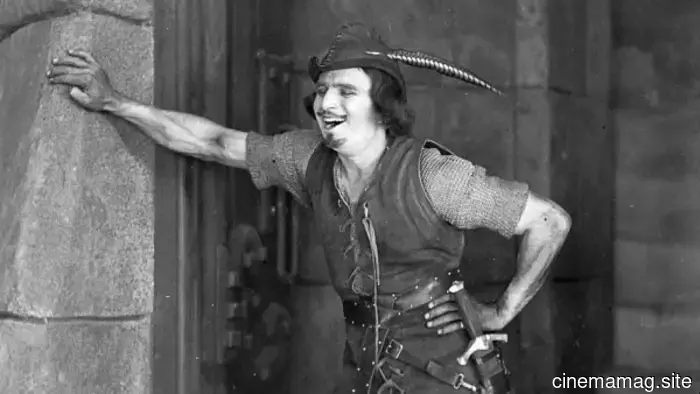
Douglas Fairbanks in Robin Hood (1922)
As a silent film, Robin Hood does not allow spoken wit, yet Douglas Fairbanks rises to the challenge with one of the best portrayals in cinematic history. Directed by Allan Dwan, the 1922 Robin Hood was one of the era's most expensive productions, with Fairbanks creatively utilizing the budget to construct a medieval set and a full-scale 12th-century Nottingham village at the Pickford-Fairbanks Studio. Fairbanks is pivotal in making Robin Hood a classic; he begins as the disciplined Earl of Huntingdon before transforming into a rebellious hero for the oppressed. This transformation showcases his physical prowess, from scaling castle walls to sliding down a massive tapestry. Additionally, he presents Robin Hood as a skilled archer and swordsman, setting a precedent for future adaptations.
Brian Bedford in Robin Hood (1973)
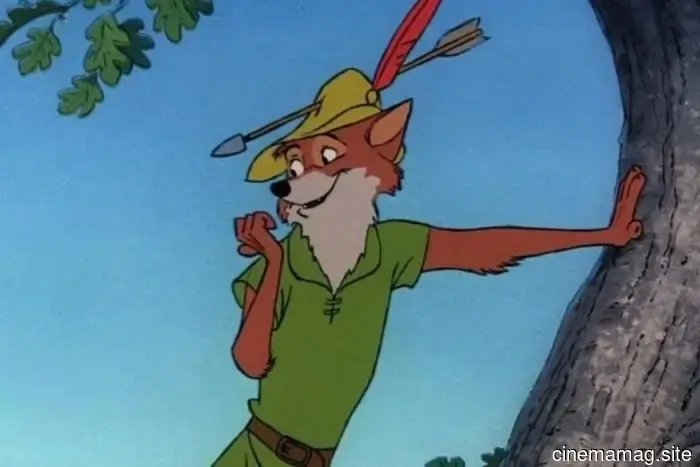
Disney’s animated Robin Hood replaces the human lead with an anthropomorphic character—a talking orange fox. Voiced by Brian Bedford, the character possesses a charming, playful spirit. Although Bedford's Robin Hood may not exhibit the athletic grace typical of the character, he compensates with his smooth-talking style and posh British accent. While his portrayal is less flashy than Errol Flynn's, he relies on his wit and clever disguises to navigate challenges, such as masking his identity as a stork to infiltrate Prince John’s (Peter Ustinov) archery tournament. Despite mixed reviews upon release, the film became a box-office hit and has developed a dedicated fan base.
Sean Connery in Robin and Marian (1976)
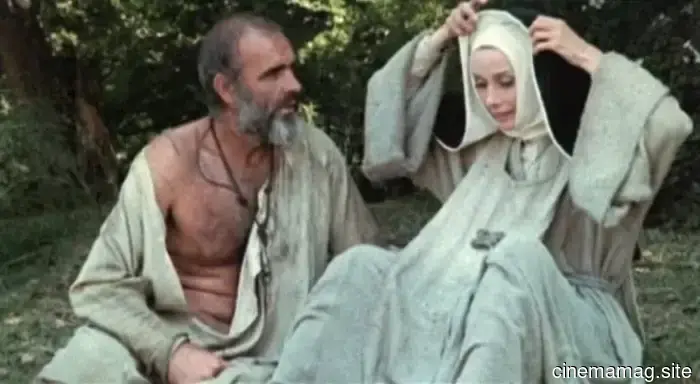
Long before The Death of Robin Hood, Sean Connery portrayed an aging Robin Hood in Richard Lester’s Robin and Marian. This film challenges the playful myth of Robin Hood by exploring themes of mortality, presenting Connery as a weary former captain who has spent decades fighting for King Richard the Lionheart (Richard Harris). The narrative follows his return to Sherwood Forest to reconnect with old companions. True to its title, Robin and Marian focuses on the rekindled romance between the two leads, with Connery’s rugged charm complementing Audrey Hepburn’s practical Maid Marian-turned-abbess. The exploration of mortality is poignant, particularly as Connery's Robin seeks vengeance against the Sheriff of Nottingham (Robert Shaw). Unlike others, Robin is stuck in the past, resisting the need to mature, culminating in an exhausted and grueling duel with the Sheriff—a reflection of their harsh realities. The film's conclusion adds a bittersweet twist to their story.
Cary Elwes in Robin Hood: Men in Tights (1993)
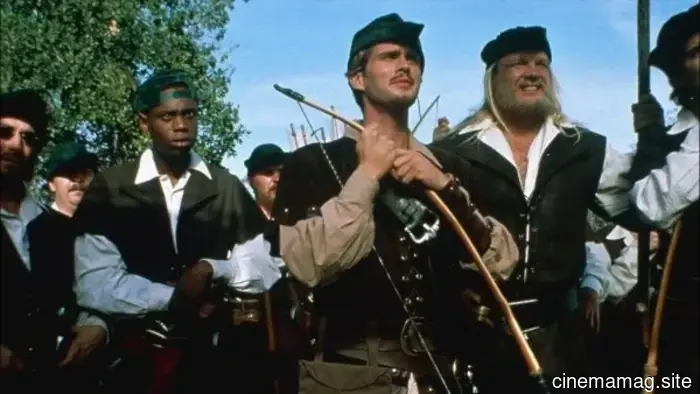
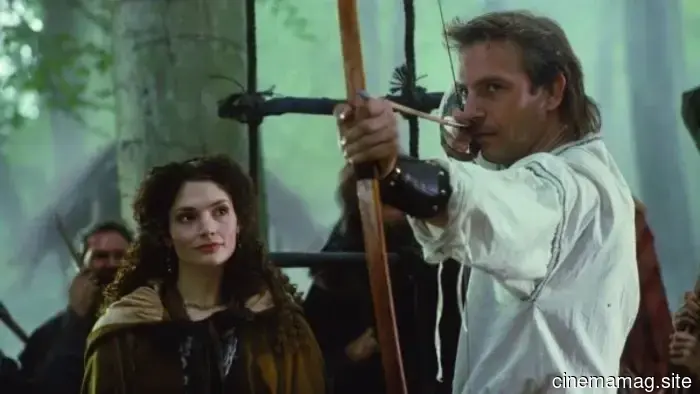
Though not among Mel Brooks's finest parodies—his earlier works like Blazing Saddles and Young Frankenstein enjoy greater acclaim—Robin Hood: Men in Tights has its highlights, from clever meta-humor to satirical musical sequences and a spoof of The Godfather, featuring Dom DeLuise channeling Marlon Brando's famed low voice. Cary Elwes shines as the titular character, showcasing his comic timing and charisma. His athleticism and impressive swordplay bring an entertaining physicality to the role, drawing on his experience from 1987’s The Princess Bride. Memorable is his quip, “Unlike other Robin Hoods, I can speak with an English accent,” poking fun at Kevin Costner's criticized accent in Robin Hood: Prince of Thieves.
Kevin
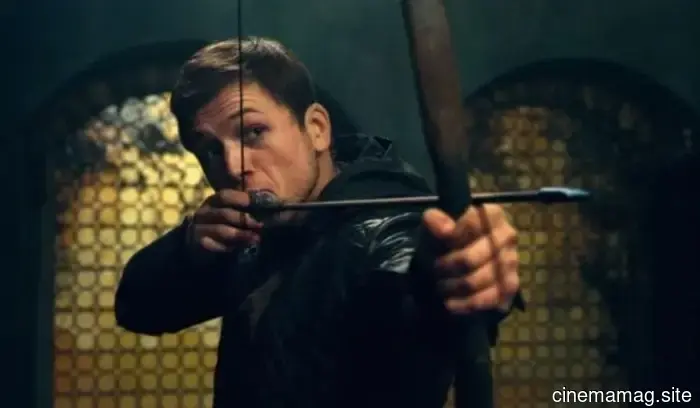
Other articles
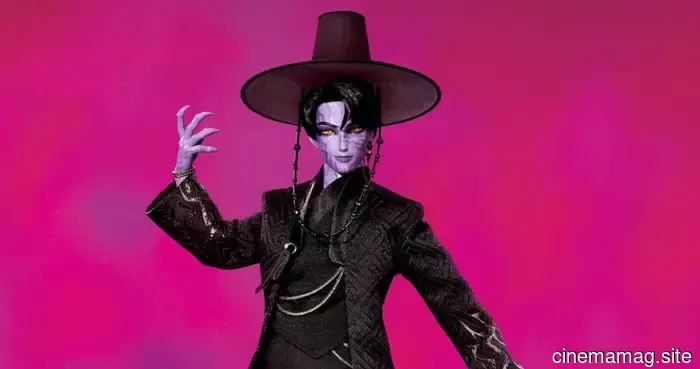 Mattel is releasing a KPop Demon Hunters Demon Jinu Collector Doll.
Mattel Creations has revealed that its Jinu collector doll is inspired by the look of the Saja Boys' lead singer in his “Your Idol” performance attire from the popular Netflix animated series.
Mattel is releasing a KPop Demon Hunters Demon Jinu Collector Doll.
Mattel Creations has revealed that its Jinu collector doll is inspired by the look of the Saja Boys' lead singer in his “Your Idol” performance attire from the popular Netflix animated series.
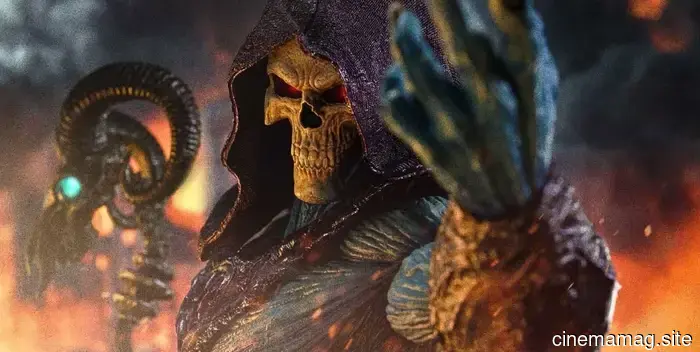 Prime 1 Studio has unveiled their collectible statue from the Masters of the Universe Real Elite Masterline featuring Skeletor.
Following the introduction of its He-Man statue earlier this week, Prime 1 Studio has now officially revealed its 1:3 scale Skeletor Real Elite Masterline collectible statue, inspired by Jared Leto’s portrayal…
Prime 1 Studio has unveiled their collectible statue from the Masters of the Universe Real Elite Masterline featuring Skeletor.
Following the introduction of its He-Man statue earlier this week, Prime 1 Studio has now officially revealed its 1:3 scale Skeletor Real Elite Masterline collectible statue, inspired by Jared Leto’s portrayal…
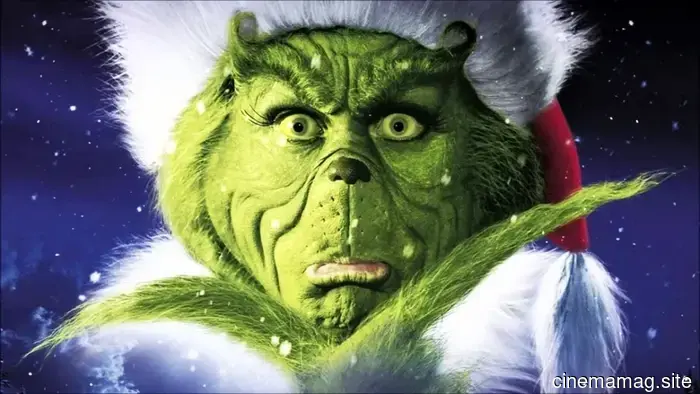 Jim Carrey and Ron Howard are collaborating on a sequel to How The Grinch Stole Christmas.
After more than 25 years since its debut, Jim Carrey and Ron Howard are preparing to revisit Whoville in a sequel to their beloved holiday film How The Grinch Stole Christmas, inspired by the classic work of Dr. Seuss.
Jim Carrey and Ron Howard are collaborating on a sequel to How The Grinch Stole Christmas.
After more than 25 years since its debut, Jim Carrey and Ron Howard are preparing to revisit Whoville in a sequel to their beloved holiday film How The Grinch Stole Christmas, inspired by the classic work of Dr. Seuss.
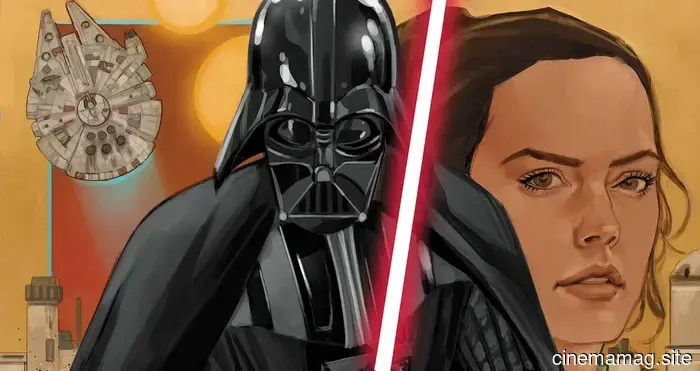 Comic Book Sneak Peek – Star Wars: Galaxy’s Edge – Echoes of the Empire #3
Marvel Comics will release Star Wars: Galaxy’s Edge – Echoes of the Empire #3 next week, and you can find a sneak peek of the issue below with the official preview… INVASION OF BATUU! DARTH…
Comic Book Sneak Peek – Star Wars: Galaxy’s Edge – Echoes of the Empire #3
Marvel Comics will release Star Wars: Galaxy’s Edge – Echoes of the Empire #3 next week, and you can find a sneak peek of the issue below with the official preview… INVASION OF BATUU! DARTH…
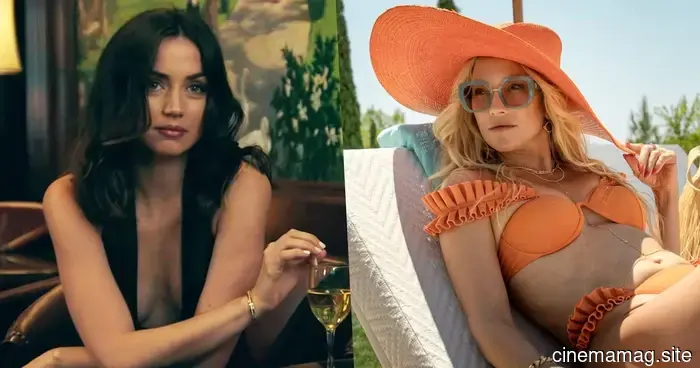 Kate Hudson and Ana de Armas are set to star in the erotic thriller Palm Grove.
Kate Hudson (Song Sung Blue) and Ana de Armas (Blonde) will star in Palm Grove, an erotic thriller directed by Kornél Mundruczó (Pieces of a Woman). According to Deadline, Palm Grove is set in M…
Kate Hudson and Ana de Armas are set to star in the erotic thriller Palm Grove.
Kate Hudson (Song Sung Blue) and Ana de Armas (Blonde) will star in Palm Grove, an erotic thriller directed by Kornél Mundruczó (Pieces of a Woman). According to Deadline, Palm Grove is set in M…
Seven Key Portrayals of Robin Hood in Film
Casey Chong presents the key portrayals of the Robin Hood movie… The legend of Robin Hood has been depicted in numerous ways, including ballads, theatrical productions, literature, television series, and certainly, film adaptations…