
Fair Use: When You Are Allowed and When You Are Not Allowed to Use Another Person’s Work
Aditya Ezhuthachan is an attorney specializing in entertainment law with Pessah Law Group located in Beverly Hills. In this article, he discusses essential information filmmakers should be aware of regarding fair use when incorporating copyrighted clips, music, and other materials into their films. – M.M.
Fade In: A gavel repeatedly SLAMS onto its base! BANG BANG BANG. "Order in the court!" commands a stern-faced JUDGE, glaring at the defendant, a budding FILMMAKER, who is left speechless.
"To the accusation of copyright infringement for the unauthorized use of clips and music," the judge says while pointing with the gavel, "how do you plead?"
With her career flashing before her eyes, the filmmaker SWALLOWS hard. She murmurs to her lawyer, "But isn't it fair use?"
Filmmakers generally recognize that copyright owners have limitations on their ability to prevent others from using their protected content. Many, through experiences from past films, independent research, or collaboration with experts, develop an instinctual understanding of what can be considered fair use.
Nonetheless, artistic license or the nature of the material might lead filmmakers to make choices that could stray into infringements that are hard to justify legally. Additionally, the law can evolve. This is why asking about fair use early and often is advisable.
The courtroom scene I described is exaggerated, but it serves to remind filmmakers that fair use is a defense that comes into play only after a lawsuit for copyright infringement has already been filed. If that thought unsettles filmmakers, it should; it highlights that claiming fair use means one is already facing an unfavorable and potentially costly scenario.
So, how is "fair use" defined by law? To grasp fair use, one must first understand the foundations of copyright protection. The Copyright Clause (Article I, Section 8, Clause 8) in the U.S. Constitution states, in part: “To promote the Progress of… useful Arts, by securing for limited Times to Authors… the exclusive Right to their respective Writings…”. This clause grants copyright owners the right to prohibit others from exploiting their protected works, stimulating artistic creation that benefits the nation.
However, this exclusionary power can conflict with the constitutionally guaranteed rights of others, particularly the freedom of expression protected by the First Amendment. Fair use arises from the inherent tension between copyright and the rights of individuals to use protected works in their creative expressions.
The concept of fair use in the United States was established through a case in 1841, which involved the verbatim reprinting of George Washington’s letters published previously, some of which were private and unpublished elsewhere. Courts had applied a doctrine that determined if a shorter version of a longer work demonstrated sufficient creativity, it would establish a separate copyright and thus not be considered infringement. However, in this notable case, the reprinted excerpts were deemed “the most instructive, useful and interesting to be found in that large collection.”
Consequently, the court undertook a new analysis, applying specific factors to assess whether the use constituted fair use.
The court focused on the fact that the new work diminished the original's value and concluded that the use was unfair and constituted infringement (the term “piracy” was used at the time).
Thus, the legal doctrine of "fair use" was created, allowing limited use of copyrighted material without needing permission from the copyright owner.
This judge-influenced doctrine developed through various lawsuits that refined the analysis and was later encapsulated in the Copyright Act of 1976, or 17 U.S.C. § 107, which presents the four fair use factors that courts consider:
1. The purpose and character of the use, including whether it is of a commercial nature or intended for nonprofit educational purposes;
2. The nature of the copyrighted work;
3. The amount and substantiality of the portion used in relation to the entire copyrighted work; and
4. The effect of the use on the potential market for or value of the copyrighted work.
Purpose and Character of the Use
The first factor assesses whether the new work is commercial or non-commercial, with the latter being more likely to qualify as fair use. This is also where the court evaluates whether the work falls under news reporting, commentary, criticism, scholarship, or parody; all of which are favorable indicators for fair use.
A landmark case from 1994 involved the rap group 2 Live Crew and their song "Pretty Woman," a provocative parody of the Roy Orbison classic "Oh, Pretty Woman." This case set a significant legal precedent, establishing that courts evaluate whether a work transforms the original's expression or meaning, thus qualifying as fair use. Courts continued along this trajectory, leading to controversial opinions whereby even minimal changes were seen as transformative, ultimately resulting in widespread critique.
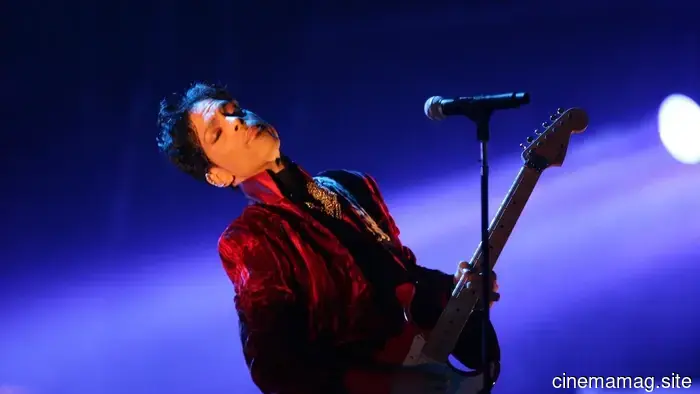
The current Supreme Court seems to have deviated from this trend with a ruling that a Warhol piece, "Orange Prince," derived from a photograph of the musician,
Other articles
 New trailer released for the boxing crime drama Fightland, produced by 50 Cent.
Sky and Starz have released a new trailer for Fightland, the forthcoming crime drama produced by Curtis '50 Cent' Jackson, set against the intense backdrop of British boxing. Check…
New trailer released for the boxing crime drama Fightland, produced by 50 Cent.
Sky and Starz have released a new trailer for Fightland, the forthcoming crime drama produced by Curtis '50 Cent' Jackson, set against the intense backdrop of British boxing. Check…
 New trailer released for the boxing crime drama Fightland produced by 50 Cent.
Sky and Starz have released a new trailer for Fightland, the forthcoming crime drama produced by Curtis ‘50 Cent’ Jackson, which takes place in the high-pressure environment of British boxing. Check…
New trailer released for the boxing crime drama Fightland produced by 50 Cent.
Sky and Starz have released a new trailer for Fightland, the forthcoming crime drama produced by Curtis ‘50 Cent’ Jackson, which takes place in the high-pressure environment of British boxing. Check…
Fair Use: When You Are Allowed and When You Are Not Allowed to Use Another Person’s Work
What constitutes fair use in film and television? Attorney Aditya Ezhuthachan offers some insights.