
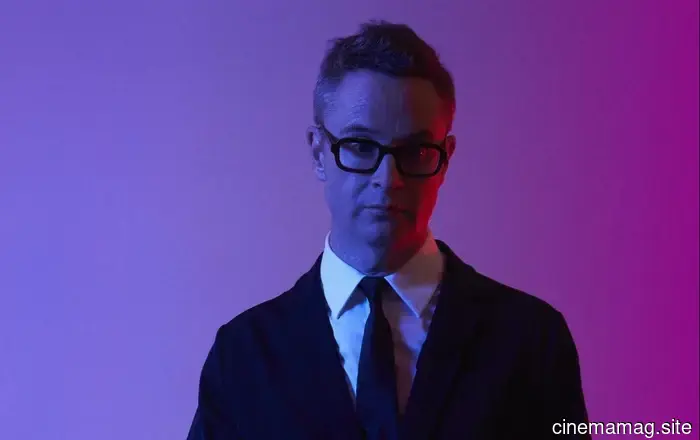
Sex and Violence Combined: Nicolas Winding Refn Discusses Her Private Hell
The decade that has passed since Nicolas Winding Refn's last theatrical film was just enough time to invoke a sense of déjà vu as Her Private Hell premiered at Cannes to a mixed and somewhat hostile reception. Although some of the reactions (including ours) are articulated well and presented eloquently, much of the feedback feels routine, especially considering how few directors can still attract stars and funding while remaining true to their unique vision. Even as he brings innovation and surprise, the key elements in Refn's work remain unchanged: stunning actors deliver intense performances while an ethereal score (typically by Cliff Martinez, but this time by Pino Donaggio) underscores a persistent sense of dread. If you ask his supporters, you might even find that there's an overarching theme regarding the aestheticization of rage, particularly as it pertains to genre conventions.
As Her Private Hell gears up for its theatrical release, Winding Refn has been discussing the film in ways that far exceed what its elusive, initially parallel narrative structures might suggest. He is both an entertaining and direct interviewee—most notably starting our conversation with an apology for having just begun lunch.
The Film Stage: If you had low blood sugar and were in a bad mood, this whole thing would just…
Nicolas Winding Refn: Trust me, eating well helps everything. You are what you eat.
What do you eat during those long days on set to keep your energy up?
A lot of water and a lot of coffee. And I make sure there are plenty of cakes for the crew at lunch.
Cakes?
Yes.
Because that makes people happy?
Every day feels like a birthday.
Okay, good to know. I don't usually connect your films with the sweet nature of cake; they often come off more like bloody steaks. But perhaps that reflects their complexity.
I love candy. And sugar. And everything pink and fluffy.
Yes, and cake encompasses all of that.
But I also ensure we have plenty of ice cream breaks on set.
Your sets sound fantastic. It’s no wonder you have so many regular collaborators.
It’s all about keeping the crew happy.
Well, the movie brought me joy. I had my expectations, yet it still surprised and confounded me. I don’t think it's inappropriate to suggest that you're part of the lineage of great giallo filmmakers, and something I’ve always admired is how your work operates on two levels—appreciating and appropriating iconography while also subverting it. The Leather Man strikes a remarkable balance between revering and playing with giallo elements. How do you strike this balance?
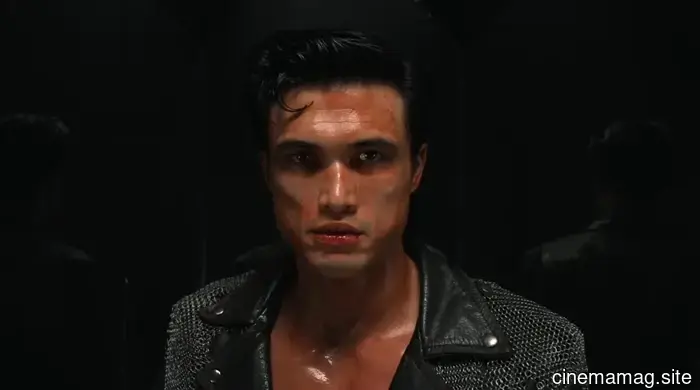
I think the Italians excel in attention to detail and the fetishization of objects, whether they’re body parts, tools, or fashion and design. There’s also this almost supernatural aspect. The Leather Man was in my archives of ideas, and for this film, I continued to develop him as a glam icon—similar to glam rock, a part of a world of crystals, jewelry, and design. Visually, that was his essence. Then there’s the leather—the sound and fetish of leather—while still preserving his human dignity as a father lost in the underworld searching for his daughter, whom he will never find. He becomes a killing machine, embodying pure emotion.
Not knowing the plot of Her Private Hell, I was surprised at how much I had to grapple with the shifting perspectives between Sophie and Charles. You and Esti Giordani crafted a very elusive script that frequently shifts POVs. How did you both navigate towards a rhythmic flow?
It developed in stages. I started with two foundational ideas: one was Private K descending into hell, and the other was a young woman arriving in a non-existent city. This meant I wanted to create an artificial world, which was a departure for me since I usually work with urban settings. These concepts were at opposite ends, so I needed to find a connection. One was fleeing something, the other moving towards something. I drew on the Leather Man and placed him at the center of the triangle. [Draws triangle with hands] Esti and I then worked on how the narratives of Private K and the girl could intersect.
However, when I began shooting, I realized that these two parallel stories had more in common than I had initially thought. They weren’t isolated but related. Editorially, it became clear that Private K was Elle’s alter ego, representing the father she wished she had. He’s unattainable, while her real father is abandoning her to marry her lover, who becomes her stepmother. During the script phase, we constructed intricate narratives detailing how these characters, particularly the women, would interact. Private K embarked on his own journey, and as I saw everything come together, I could reshuffle the structure, allowing the narratives to intertwine more than run parallel.
That’s impressive, especially because the film feels meticulously planned. I was surprised to learn that you originally had a different ending but changed it
Other articles
 High with People You Enjoy: An Exclusive Interview with Nicolas Winding Refn and Charles Melton on Her Private Struggles
Robert Kojder speaks with Nicolas Winding Refn, the director of Her Private Hell, and star Charles Melton… Renowned for his vibrant, neon-infused cinematic style that often shifts between slow-paced drama and bursts of intensity…
High with People You Enjoy: An Exclusive Interview with Nicolas Winding Refn and Charles Melton on Her Private Struggles
Robert Kojder speaks with Nicolas Winding Refn, the director of Her Private Hell, and star Charles Melton… Renowned for his vibrant, neon-infused cinematic style that often shifts between slow-paced drama and bursts of intensity…
 A crossover between Vampirella and Darkstalkers is on the way from Dynamite and UDON Entertainment.
Dynamite Entertainment and UDON Entertainment have revealed that the Daughter of Drakulon will collide with Capcom’s popular video game series Darkstalkers in an upcoming crossover comic.
A crossover between Vampirella and Darkstalkers is on the way from Dynamite and UDON Entertainment.
Dynamite Entertainment and UDON Entertainment have revealed that the Daughter of Drakulon will collide with Capcom’s popular video game series Darkstalkers in an upcoming crossover comic.
 Venice Film Festival Reveals 2026 Program
In anticipation of the 83rd Venice Film Festival happening from September 2-12, with a jury headed by Maggie Gyllenhaal and joined by Kaouther Ben Hania, Johnnie To, Xavier Giannoli, Shahrbanoo Sadat, Daniel Blumberg, and Francesco Casetti, the program has been announced. Notable features include the newest works from Lee Chang-dong, Julia Loktev, Tsai Ming-liang, Werner Herzog, Lav Diaz, and Luca Guadagnino.
Venice Film Festival Reveals 2026 Program
In anticipation of the 83rd Venice Film Festival happening from September 2-12, with a jury headed by Maggie Gyllenhaal and joined by Kaouther Ben Hania, Johnnie To, Xavier Giannoli, Shahrbanoo Sadat, Daniel Blumberg, and Francesco Casetti, the program has been announced. Notable features include the newest works from Lee Chang-dong, Julia Loktev, Tsai Ming-liang, Werner Herzog, Lav Diaz, and Luca Guadagnino.
 Hasbro has formally announced the launch of The Legend of Zelda Heroes of Hyrule action figure collection.
Hasbro has officially introduced the initial wave of action figures from its new partnership with Nintendo and the cherished video game series, The Legend of Zelda, featuring 6-inch 'Heroes of Hyrule...
Hasbro has formally announced the launch of The Legend of Zelda Heroes of Hyrule action figure collection.
Hasbro has officially introduced the initial wave of action figures from its new partnership with Nintendo and the cherished video game series, The Legend of Zelda, featuring 6-inch 'Heroes of Hyrule...
 Three friends are stuck on an infinite backroad in the trailer for Neon’s It Ends.
Neon has released a poster and trailer for It Ends, a psychological thriller directed and written by Alexander Ullom. The film features Mitchell Cole, Akira Jackson, Noah Toth, and Phinehas Yoon as part of a group…
Three friends are stuck on an infinite backroad in the trailer for Neon’s It Ends.
Neon has released a poster and trailer for It Ends, a psychological thriller directed and written by Alexander Ullom. The film features Mitchell Cole, Akira Jackson, Noah Toth, and Phinehas Yoon as part of a group…
Sex and Violence Combined: Nicolas Winding Refn Discusses Her Private Hell
The decade that has passed since Nicolas Winding Refn's last film was just sufficient to create a feeling of déjà vu when Her Private Hell premiered at Cannes, receiving a varied and often unfavorable reception. While some of these responses (including our own) are articulated clearly and thoughtfully, many others seem mechanical, especially considering that few directors continue to draw in stars and funding.