

The Counselor: When an All-Star Ensemble Failed to Create a Success
Matthew Shepherd reflects on Ridley Scott's overlooked star-studded crime thriller, The Counselor. Ridley Scott rarely acknowledges when he feels wronged. The creator of Alien, Blade Runner, and Gladiator possesses a confidence in his judgment that is almost geological. Therefore, when he remarked to the Toronto Sun, years later, that The Counselor should have been “fucking huge” — expected to open at $50 million instead of the $9 million it actually grossed domestically — it warrants a closer examination to understand its poor performance.
Scott had faith in the uniqueness of his creation. However, the marketing team had a differing opinion. The audience, lacking proper guidance about what to expect, leaned towards the marketers' view. Consequently, one of the most unusual and artistically ambitious studio films of the 21st century quietly faded into oblivion.
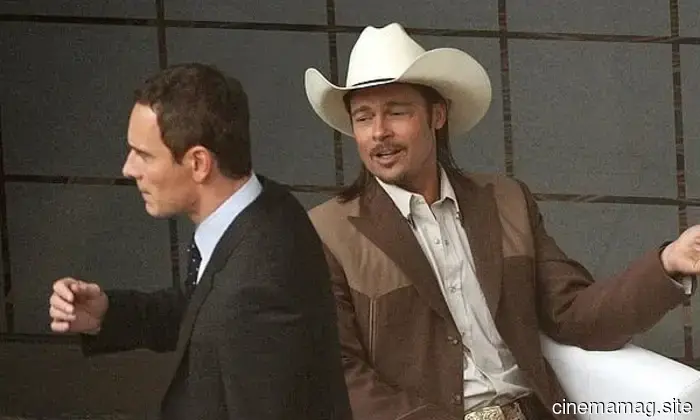
The premise is intentionally, almost aggressively, straightforward. An unnamed lawyer, referred to only as the Counselor and portrayed by Michael Fassbender, opts to enhance his comfortable life in Texas by facilitating a single drug deal at the Mexican border. His associate in this endeavor is Westray, a cautious middleman played by Brad Pitt, who repeatedly warns him that the cartels operate under rules that allow no margin for error. The Counselor, however, ignores the advice. The deal ultimately goes awry, leading to dire consequences.
On paper, it presents a classic noir setup — a man naively stepping into an unfamiliar and perilous world that ultimately destroys him. In practice, the film is quite different, increasingly focused on the meaning of the destruction instead of depicting the process.
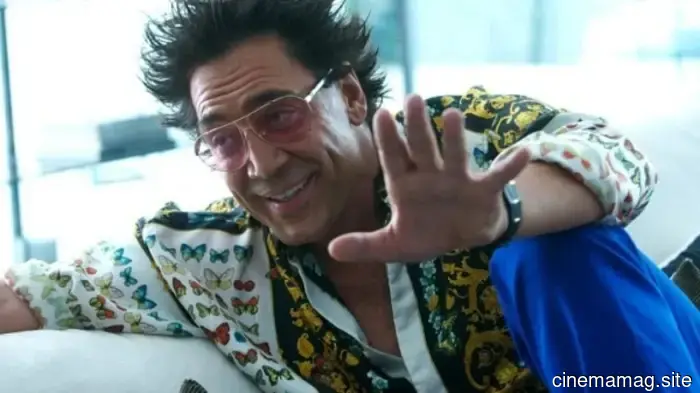
What makes the utter obscurity of The Counselor puzzling is the impressive lineup of talent involved. Cormac McCarthy, famed for No Country for Old Men, Blood Meridian, and The Road, penned the script — his first original screenplay specifically for the screen rather than an adaptation. Ridley Scott, riding high from Prometheus and with Alien and Blade Runner behind him, directed the film. The cast surrounding Fassbender included Penélope Cruz, Cameron Diaz, Javier Bardem, and Brad Pitt, all of whom accepted lower fees to participate in a McCarthy script.
Scott later recalled that once the project was ready, the cast was competing for their roles. The entire production was organized in just two weeks. Filming took place at Pinewood Studios and in the Spanish desert locations of Almería and Cádiz, which stood in for the El Paso and Juárez border. The film was dedicated to Tony Scott, Ridley's brother, who sadly passed away during production. Every aspect seemed to promise a film that would leave a lasting impression.
From the marketing department's viewpoint, the issue was that The Counselor does not fit the mold of a conventional thriller. McCarthy's script is predominantly composed of dialogue — lengthy, philosophical, meandering conversations between characters who communicate using the language of his novels instead of following cinematic rhythm. Characters engage in drawn-out monologues about fate, greed, mortality, and evil. Most of the action occurs offscreen, and when violence does occur, it is abrupt, clinical, and devoid of catharsis. McCarthy was writing a Cormac McCarthy film, not a Ridley Scott thriller. Consequently, the tension between these two cinematic styles is the most intriguing aspect of The Counselor, yet also the reason for its marketing challenges.
20th Century Fox launched a traditional promotional campaign — featuring glossy cast photos, a trailer that highlighted style and violence — leading to an audience arriving expecting a slick genre thriller but instead encountering something more akin to an existential fable. The CinemaScore was a D. Critics were divided; some viewed it as a captivating formal experiment, while others deemed it pretentious and incoherent. Mark Kermode ranked it second on his list of the ten worst films of 2013. The Hollywood Reporter called it a squandered opportunity for talented individuals. Screen International referred to it as weary tough-guy poetry executed with notable intelligence. The sharp disagreements were total and irreconcilable, which is often indicative of a film doing something unexpected rather than merely bad.
Years later, Scott candidly stated what went wrong. He mentioned to the Toronto Sun that The Counselor should have been a massive success and that the marketing had completely failed the film. He regarded McCarthy’s dialogue as the finest he had ever worked with. Since then, the film has been re-evaluated, particularly among ardent cinephiles, as one of the more peculiar and surprising missteps of studio productions from that period — a film that utilized a $25 million budget and a cast usually commanding ten times that to create something the mainstream audience was ill-equipped to receive, evident in its poor box office performance.
Have you watched The Counselor? What do you think led to its shortcomings? Share your opinions with us on our social channels @FlickeringMyth...
Matthew Shepherd



Other articles
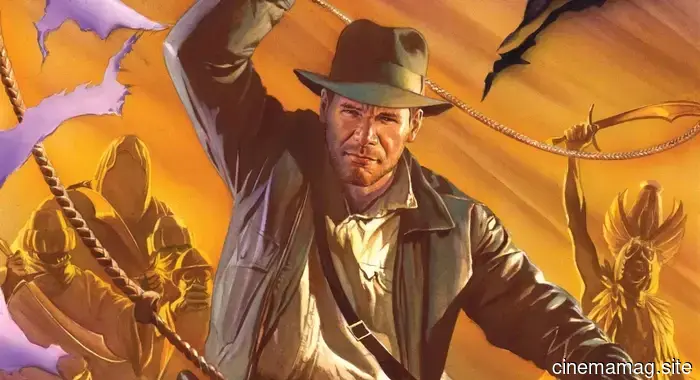 Indiana Jones makes his comeback to comics in Marvel's The Sword of Pandemonium.
During the Lucasfilm Publishing panel at San Diego Comic-Con yesterday, it was revealed that Indiana Jones is set to make a significant comeback to comic books this December with Indiana Jones and the S…
Indiana Jones makes his comeback to comics in Marvel's The Sword of Pandemonium.
During the Lucasfilm Publishing panel at San Diego Comic-Con yesterday, it was revealed that Indiana Jones is set to make a significant comeback to comic books this December with Indiana Jones and the S…
 Marvel Super Heroes collide with Magic: The Gathering in a new set of Marvel Legends Series crossover figures.
Hasbro has officially introduced a new wave of Marvel Legends Series and Magic: The Gathering crossover figures at San Diego Comic-Con International, featuring Black Panther, Captain America (Avenger…
Marvel Super Heroes collide with Magic: The Gathering in a new set of Marvel Legends Series crossover figures.
Hasbro has officially introduced a new wave of Marvel Legends Series and Magic: The Gathering crossover figures at San Diego Comic-Con International, featuring Black Panther, Captain America (Avenger…
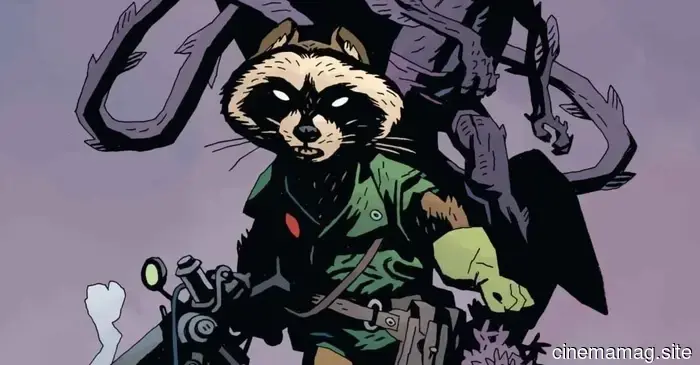 Comic Book Teaser – Rocket Raccoon: Rocket Rewind #1
Marvel Comics is set to commemorate fifty years of excitement next week with the anniversary special Rocket Raccoon: Rocket Rewind #1. You can catch a glimpse of it with the official preview below… Blast…
Comic Book Teaser – Rocket Raccoon: Rocket Rewind #1
Marvel Comics is set to commemorate fifty years of excitement next week with the anniversary special Rocket Raccoon: Rocket Rewind #1. You can catch a glimpse of it with the official preview below… Blast…
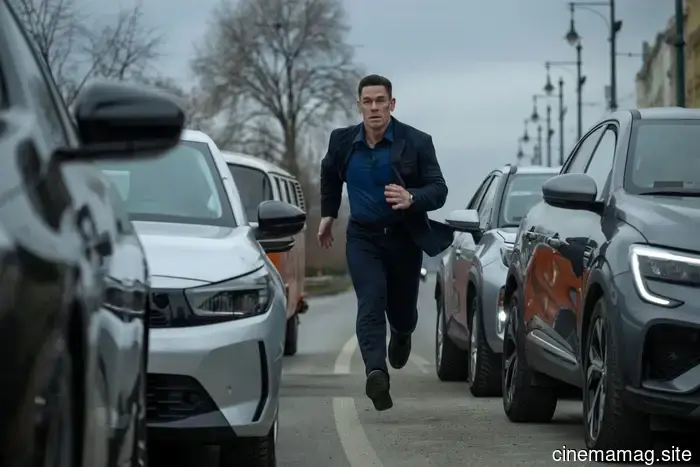 The first trailer for Mattel's Matchbox The Movie has been released by Apple TV.
At San Diego Comic-Con today, Apple TV unveiled the first trailer for Matchbox The Movie, an upcoming action-adventure comedy inspired by Mattel’s legendary toy car series.
The first trailer for Mattel's Matchbox The Movie has been released by Apple TV.
At San Diego Comic-Con today, Apple TV unveiled the first trailer for Matchbox The Movie, an upcoming action-adventure comedy inspired by Mattel’s legendary toy car series.
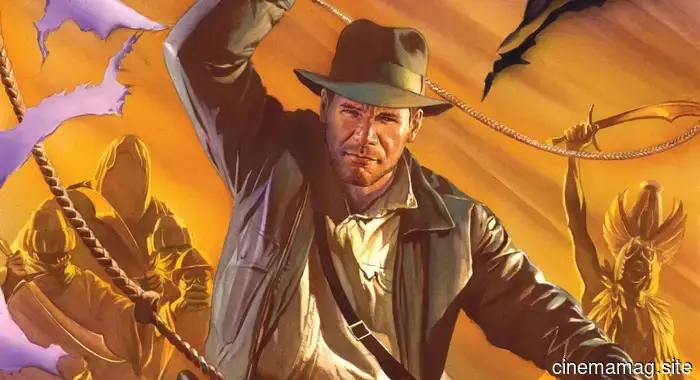 Indiana Jones makes his comeback in the comics with Marvel’s The Sword of Pandemonium.
During yesterday’s Lucasfilm Publishing panel at San Diego Comic-Con, it was revealed that Indiana Jones will make his spectacular return to comic books this December in Indiana Jones and the S…
Indiana Jones makes his comeback in the comics with Marvel’s The Sword of Pandemonium.
During yesterday’s Lucasfilm Publishing panel at San Diego Comic-Con, it was revealed that Indiana Jones will make his spectacular return to comic books this December in Indiana Jones and the S…
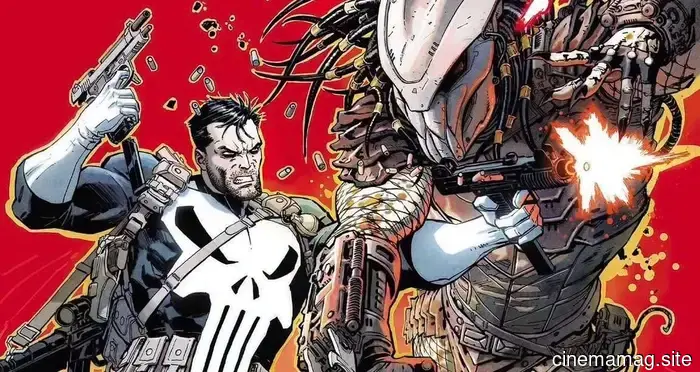 Marvel reveals a crossover series featuring Predator and Punisher.
The most formidable hunter in the galaxy will set its sights on the Marvel Universe once more this November with the forthcoming four-issue limited crossover series Predator vs. Punisher, written by Frank Tieri (Alien v…
Marvel reveals a crossover series featuring Predator and Punisher.
The most formidable hunter in the galaxy will set its sights on the Marvel Universe once more this November with the forthcoming four-issue limited crossover series Predator vs. Punisher, written by Frank Tieri (Alien v…
The Counselor: When an All-Star Ensemble Failed to Create a Success
Matthew Shepherd reflects on Ridley Scott’s overlooked star-studded crime thriller, The Counselor. Ridley Scott seldom acknowledges when he feels he has been wronged. The filmmaker behind Al…