
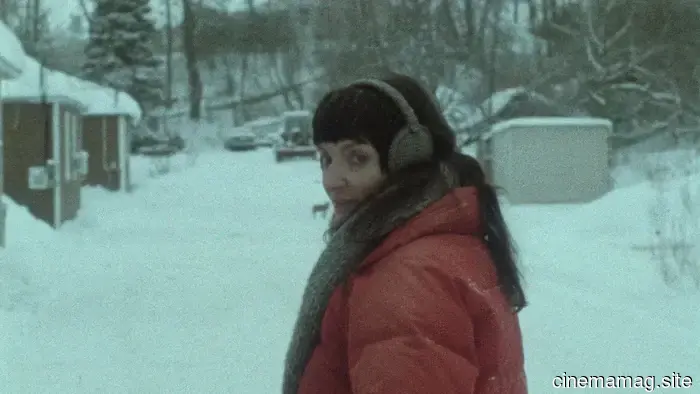
Locarno Review: Denis Côté’s Nobody’s Violence Is an Astonishingly Vivid Thriller
In 2006, Denis Côté received a diagnosis of a degenerative kidney disease; by 2022, around the time he finished Mademoiselle Kenopsia, the condition escalated to a critical stage: without a transplant—which he thankfully received just a few months later—the Quebec filmmaker would not have survived. Death has long been a specter in his cinema, a growing body of work filled with brutal violence (see Vic + Flo Saw a Bear), eerie apparitions (such as the inhabitants of Ghost Town Anthology), and wayfarers who have forsaken civilization to wander a ghostly wasteland (like the titular drifter in Wilcox). Yet, none of Côté's films feels as mournful as Nobody’s Violence, which sees frequent collaborator Larissa Corriveau return as Mira, a quiet wanderer who assists terminally ill individuals in ending their lives. Côté's latest serves as a bleak, melancholic character study that aligns with his previous works—not just through the returning cast—this marks his fifth collaboration with Corriveau—but also in its themes and tone. Like its predecessors, this film continues his exploration of solitude and alienation, but in terms of its dramatic progression, it may be his most approachable.
However, this doesn't imply that Violence is entirely straightforward. While the plot may be easily summarized, the film itself is complex and enigmatic, much like its central character. Part of this is due to Côté’s focus on the present, without delving into the backstories of his characters. Who they were or what they did prior to appearing on screen remains intentionally ambiguous; while this silence might shock newcomers, it seems appropriate here. Violence presents Mira as a mystery; the fact that we learn little more about her by the end than we did at the start is not a flaw but rather a testament to the film's puzzling allure. Côté has referenced Jonathan Glazer’s Under the Skin as an influence, and, similar to Scarlett Johansson’s character, Corriveau’s is an angel of destruction wrapped in secrecy. Employing her services for a cult-like group of affluent bohemians led by Ludo (Philippe Rebbot), she travels across Canada meeting those who hire her to ease their passing, which she accomplishes through a lethal concoction they drink in one swift gulp.
The film's episodic format mirrors its direct predecessor, Paul, which portrays a chronically online cleaning "simp" and shares with Violence a non-judgmental perspective toward its protagonist. While the families of Mira’s patients-victims may object to her deeds—as seen in an intense early encounter—Côté himself never does. Mira’s actions stem simply from her ability, as she acknowledges in a rare moment of disclosure, yet she is not devoid of emotion. The toll of her work eventually weighs heavily on her, and a chance meeting with a young man named Pierric (Xavier Bergeron) rekindles her passion for life. This point in Violence risks coming off as overly neat, a shift that can feel somewhat out of character for a director as adept in ambiguity as Côté. The lively, talkative Pierric serves less as a fully realized character and more as a catalyst for Mira’s transformation, a sentiment that intensifies when their paths cross again under vastly different circumstances. Despite some predictable plot elements, Violence deliberately disorients its audience.
Time flows in an elliptical manner. Edited by Terence Chotard, the film glides through the seasons with such dizzying and fluid speed that it can disorient viewers. As Ludo’s circle recounts their dreams, the film itself appears to evolve into one, increasingly blurring the line between reality and imagination. Côté has described his filmmaking as a form of supernaturalism—a cinema that embraces the improbable and fantastical not to replicate reality but to revel in its mysteries. Much of this aesthetic can be attributed to Vincent Biron’s 16mm cinematography, which alternates between Kodak and a lesser-known, more unstable stock: Orwo. The flares and scratches are not merely flaws but reflections of a persistent, jarring restlessness; although Violence revolves around death, its visuals convey an extraordinary vitality.
Discussions regarding Côté’s body of work often highlight his affinity for liminal spaces. From zoos (Bestiaire) to retreats (That Kind of Summer) to the abandoned locations watched over by Corriveau in Mademoiselle Kenopsia, his films frequently unfold in transitional environments—his cinema can be viewed as one of passageways. However, Violence illustrates another fundamental theme: the human body itself, connecting works as varied as Paul and A Skin So Soft, which closely examines the world of bodybuilders. Violence, a film centered on a woman who aids strangers in saying farewell to their physical forms, can evoke deep sadness, yet it also depicts a journey of self-discovery filled with moments of joy. Through occasional scenes of intimacy,
Other articles
 McFarlane Toys has revealed a 2-pack featuring Atrocitus and the Red Lantern Corps from the DC Multiverse.
McFarlane Toys has officially revealed its new DC Multiverse Atrocitus & Red Lantern Corps 2-pack, showcasing 7″-scale figures of Atrocitus and Rankorr, along with a Dex-Starr and an alternate...
McFarlane Toys has revealed a 2-pack featuring Atrocitus and the Red Lantern Corps from the DC Multiverse.
McFarlane Toys has officially revealed its new DC Multiverse Atrocitus & Red Lantern Corps 2-pack, showcasing 7″-scale figures of Atrocitus and Rankorr, along with a Dex-Starr and an alternate...
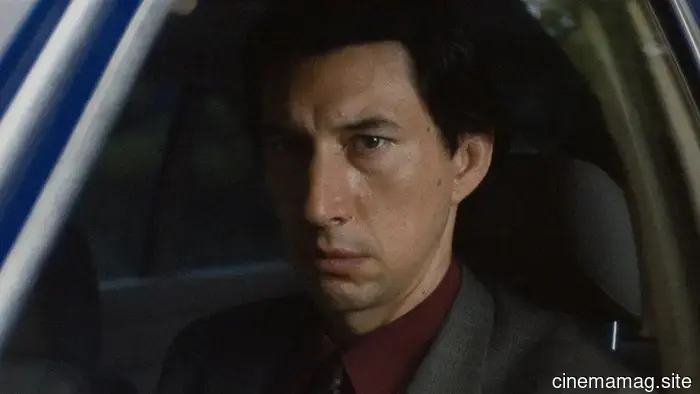 Paper Tiger Trailer: Adam Driver, Miles Teller, and Scarlett Johansson Dive into James Gray’s Underworld
Following its premiere at Cannes this May and its upcoming North American debut at the NYFF next month, James Gray's Paper Tiger has released its first teaser. The film stars Adam Driver, Miles Teller, and Scarlett Johansson and marks Gray's return to his hometown of New York. It also continues his focus on the working-class environment of the 1980s for a second consecutive feature.
Paper Tiger Trailer: Adam Driver, Miles Teller, and Scarlett Johansson Dive into James Gray’s Underworld
Following its premiere at Cannes this May and its upcoming North American debut at the NYFF next month, James Gray's Paper Tiger has released its first teaser. The film stars Adam Driver, Miles Teller, and Scarlett Johansson and marks Gray's return to his hometown of New York. It also continues his focus on the working-class environment of the 1980s for a second consecutive feature.
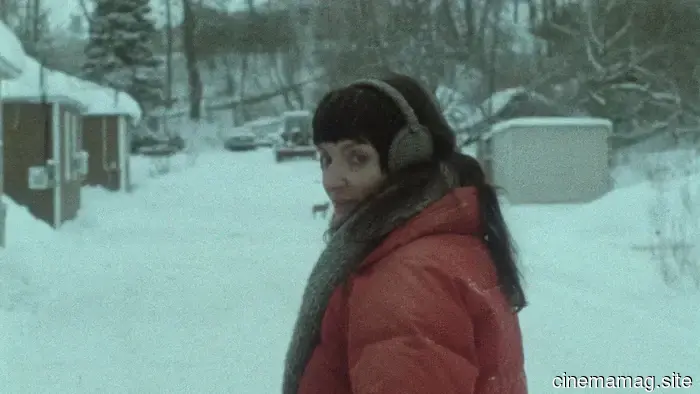 Locarno Review: Denis Côté’s Nobody’s Violence Is an Impressively Vital Thriller
In 2006, Denis Côté was identified as having a degenerative kidney condition; by 2022, as he was finishing Mademoiselle Kenopsia, the severity of his insufficiency escalated to critical levels. Without a transplant—an operation he fortunately underwent a few months later—the Quebecois filmmaker would not have survived. Themes of death had consistently permeated his films, which already featured a growing body of work filled with acts of
Locarno Review: Denis Côté’s Nobody’s Violence Is an Impressively Vital Thriller
In 2006, Denis Côté was identified as having a degenerative kidney condition; by 2022, as he was finishing Mademoiselle Kenopsia, the severity of his insufficiency escalated to critical levels. Without a transplant—an operation he fortunately underwent a few months later—the Quebecois filmmaker would not have survived. Themes of death had consistently permeated his films, which already featured a growing body of work filled with acts of
 McFarlane Toys has revealed a 2-pack featuring Atrocitus and the Red Lantern Corps from the DC Multiverse.
McFarlane Toys has officially revealed its new DC Multiverse Atrocitus & Red Lantern Corps 2-pack, which includes 7″-scale figures of Atrocitus and Rankorr, as well as a Dex-Starr and an alter…
McFarlane Toys has revealed a 2-pack featuring Atrocitus and the Red Lantern Corps from the DC Multiverse.
McFarlane Toys has officially revealed its new DC Multiverse Atrocitus & Red Lantern Corps 2-pack, which includes 7″-scale figures of Atrocitus and Rankorr, as well as a Dex-Starr and an alter…
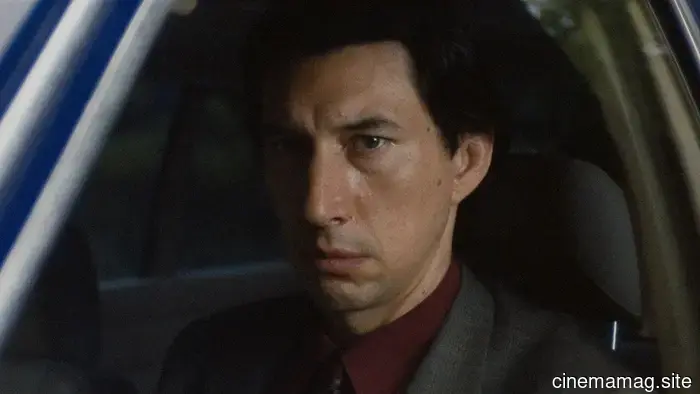 Paper Tiger Trailer: Adam Driver, Miles Teller, and Scarlett Johansson Dive into James Gray’s Underworld
Following its world premiere at Cannes this May and its upcoming North American debut at the NYFF next month, James Gray's Paper Tiger has released its first teaser. The film stars Adam Driver, Miles Teller, and Scarlett Johansson, marking Gray's return to his hometown of New York and, for the second consecutive feature, delving into its working-class environment during the 1980s.
Paper Tiger Trailer: Adam Driver, Miles Teller, and Scarlett Johansson Dive into James Gray’s Underworld
Following its world premiere at Cannes this May and its upcoming North American debut at the NYFF next month, James Gray's Paper Tiger has released its first teaser. The film stars Adam Driver, Miles Teller, and Scarlett Johansson, marking Gray's return to his hometown of New York and, for the second consecutive feature, delving into its working-class environment during the 1980s.
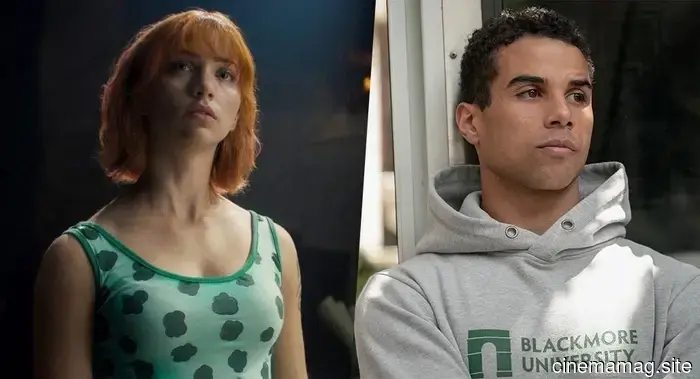 Emily Rudd and Mason Gooding will confront ravenous alligators in the sequel to Alexandre Aja's Crawl.
As filming is scheduled to start this month, The Hollywood Reporter has disclosed that director Alexandre Aja has cast Emily Rudd (One Piece) and Mason Gooding (Scream) to lead the sequel to the successful 2019…
Emily Rudd and Mason Gooding will confront ravenous alligators in the sequel to Alexandre Aja's Crawl.
As filming is scheduled to start this month, The Hollywood Reporter has disclosed that director Alexandre Aja has cast Emily Rudd (One Piece) and Mason Gooding (Scream) to lead the sequel to the successful 2019…
Locarno Review: Denis Côté’s Nobody’s Violence Is an Astonishingly Vivid Thriller
In 2006, Denis Côté was diagnosed with a degenerative kidney condition. By 2022, as he was finishing Mademoiselle Kenopsia, his condition had deteriorated to a critical state: without a transplant—which he fortunately received a few months afterward—the Quebec director would not have survived. Death had been a persistent theme in his films, which featured a growing body of work filled with instances of