
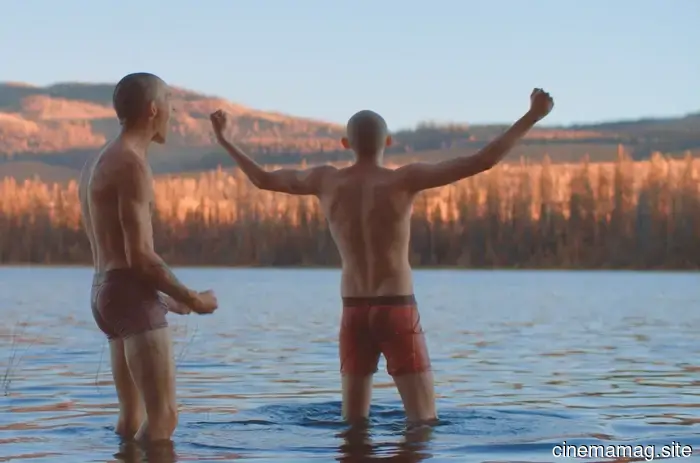
Locarno Review: Manhunt Offers a Raw Exploration of Contemporary Male Adolescence
Are the kids doing okay? The latest film to explore this timeless question is Wayne Wapeemukwa’s Manhunt, a coming-of-age road film viewed through the lens of true crime—or maybe it’s the other way around. At times, it resembles a typical boys’ trip movie filled with greasy diners, camping adventures, and hints of sexual exploration. At other moments, it feels more like a creation from Harmony Korine’s EDGLRD collection, particularly in a late dive into faded, mind-bending psychedelia. It’s definitely worth watching out for.
Manhunt is Wapeemukwa’s first feature since 2017’s Luk’Luk’i, which won the best Canadian debut award at the Toronto International Film Festival. In the years that followed, Wapeemukwa, who has Canadian Indigenous Michif heritage, earned a PhD in philosophy from Penn State before returning to Canada to begin a postdoctoral fellowship at the University of British Columbia. Few filmmakers possess such impressive credentials, and those who do often don’t create films as captivating and visceral as this one.
Watching it at Locarno, I immediately thought of Korine’s recent works upon hearing the raw (and largely unprintable) dialogue exchanged in the opening scene. This sequence introduces the film’s main characters, Joey and Kit (energetically portrayed by Harris Lowe and Landon Tunold, respectively), who communicate in a typical boyish manner through headsets while battling other players (and each other) in the fictional video game that inspired the film’s title. After this banter, Kit asks Joey for an update on a project they’re working on, prompting the camera to cut to Joey’s 3D printer revealing a part of what will ultimately be a bright-pink, occasionally functioning rifle.
Rather than serving as a finger-wagging cautionary tale, Manhunt is not strictly a documentary or a dramatization of real events. It is based more than loosely on a killing spree that occurred in British Columbia around 2019, when two young men, Kam McLeod and Bryer Schmegelsky, randomly murdered three strangers during a road trip. Manhunt does not seek to sensationalize these events (Wapeemukwa has wisely altered the identities of the victims) but rather investigates, with curiosity and an open mind, the kinds of lives, choices, influences, personalities, testosterone levels, and societal pressures that might drive a pair of teenage friends to commit such horrific acts.
What Wapeemukwa aims to do is to visualize how the boys’ video game-influenced minds, when left unrestrained, might perceive the world not as inhabited by humans but by NPCs. This is why, when Joey and Kit take a break and encounter two attractive German tourists who treat them to lunch and request a ride, we’re immediately on edge. This occurs right after an opening act that reveals a glimpse of Joey’s home life while only hinting at Kit’s. Joey, the more handsome and introverted of the two, lives with his grandmother and his friendly yet heavy-drinking father. As they prepare to depart in their dilapidated van, we witness Kit receiving a relatively affectionate farewell from his father, underscoring that no simple explanations can be found here.
Manhunt truly shines when its duo expands to four, allowing Wapeemukwa to unfold various potential futures in real time, making the bluntness of what follows hit even harder. He then propels the film’s key visual theme (a striking plunge into surreal blues and oranges) toward its conclusion—essentially, towards oblivion.
Manhunt premiered at the 2026 Locarno Film Festival.
Other articles
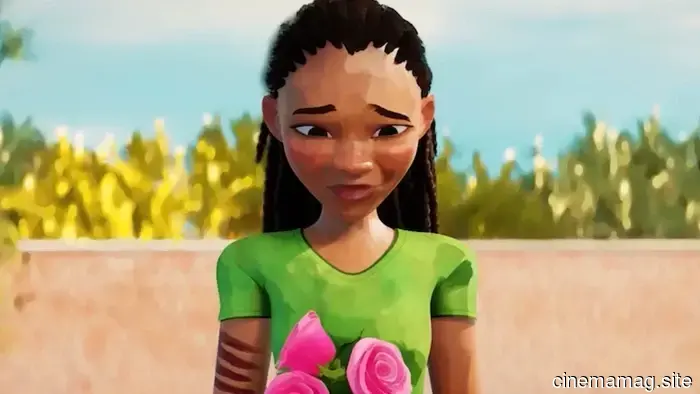 'Will I Dance Again' Discovers Hope Amidst the Ruins of One of America's Darkest Times
Spoiler alert: The captivating animated short "Will I Dance Again" by Princella D. Smith will have a greater impact on you if you approach it with no prior knowledge. Featuring Alfre
'Will I Dance Again' Discovers Hope Amidst the Ruins of One of America's Darkest Times
Spoiler alert: The captivating animated short "Will I Dance Again" by Princella D. Smith will have a greater impact on you if you approach it with no prior knowledge. Featuring Alfre
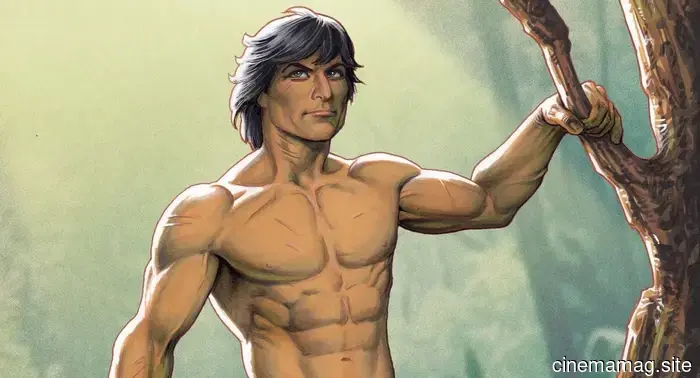 Comic Book Sneak Peek – Altered States: Warlords #3
Dynamite Entertainment will be releasing Altered States: Warlords #3 this Wednesday, and we have the official preview of the issue right here for you… Welcome to the world of Altered States… from Dynamite Entertainment…
Comic Book Sneak Peek – Altered States: Warlords #3
Dynamite Entertainment will be releasing Altered States: Warlords #3 this Wednesday, and we have the official preview of the issue right here for you… Welcome to the world of Altered States… from Dynamite Entertainment…
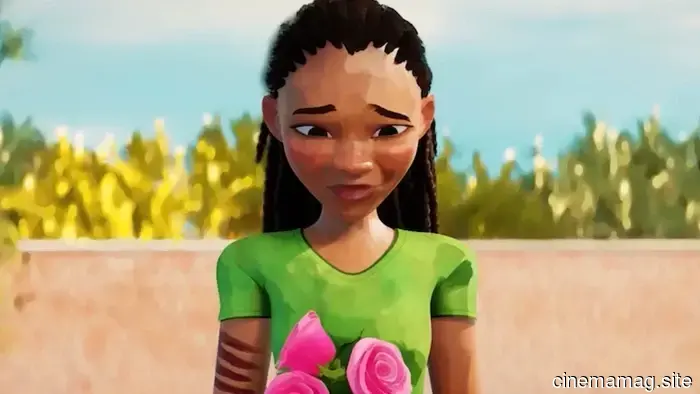 'Will I Dance Again' Discovers Hope Amid the Ruins of One of America's Darkest Times
Spoiler alert: Princella D. Smith's captivating animated short "Will I Dance Again" is likely to have a greater impact on you if you approach it without any prior knowledge. Featuring Alfre
'Will I Dance Again' Discovers Hope Amid the Ruins of One of America's Darkest Times
Spoiler alert: Princella D. Smith's captivating animated short "Will I Dance Again" is likely to have a greater impact on you if you approach it without any prior knowledge. Featuring Alfre
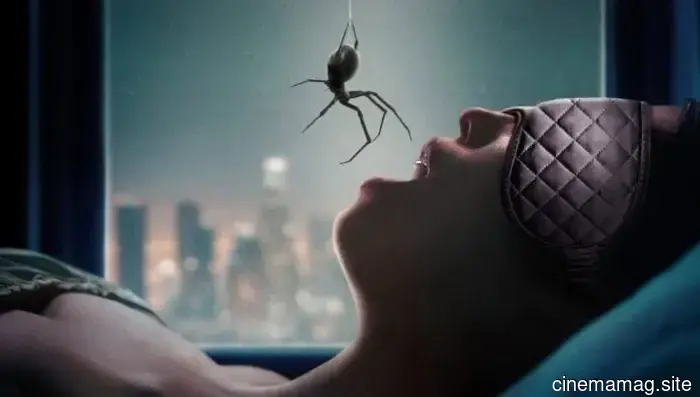 The trailer for the spider horror film Crawlers, featuring Matilda Lutz, will give you chills.
Roadside Attractions and Saban Films have released a poster and trailer for Crawlers, the forthcoming creature feature directed by Ángel Gómez Hernández. Featuring Matilda Lutz (Revenge, Red Sonja), the horror film…
The trailer for the spider horror film Crawlers, featuring Matilda Lutz, will give you chills.
Roadside Attractions and Saban Films have released a poster and trailer for Crawlers, the forthcoming creature feature directed by Ángel Gómez Hernández. Featuring Matilda Lutz (Revenge, Red Sonja), the horror film…
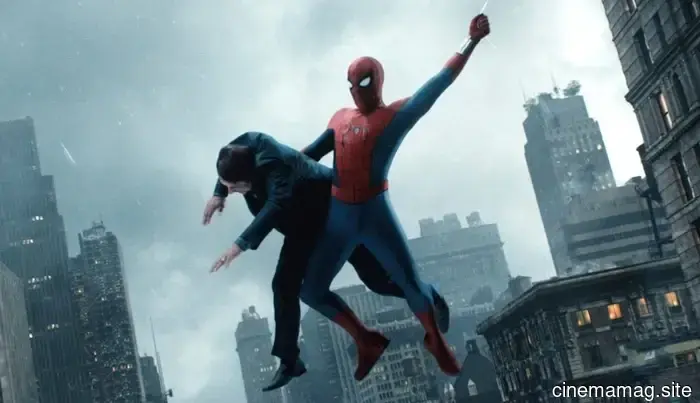 Spider-Man: Brand New Day is now the second-quickest film to earn a billion dollars.
Following its debut with the second-largest global opening in history, only behind 2019's Avengers: Endgame, Marvel and Sony's Spider-Man: Brand New Day has now become the second-quickest…
Spider-Man: Brand New Day is now the second-quickest film to earn a billion dollars.
Following its debut with the second-largest global opening in history, only behind 2019's Avengers: Endgame, Marvel and Sony's Spider-Man: Brand New Day has now become the second-quickest…
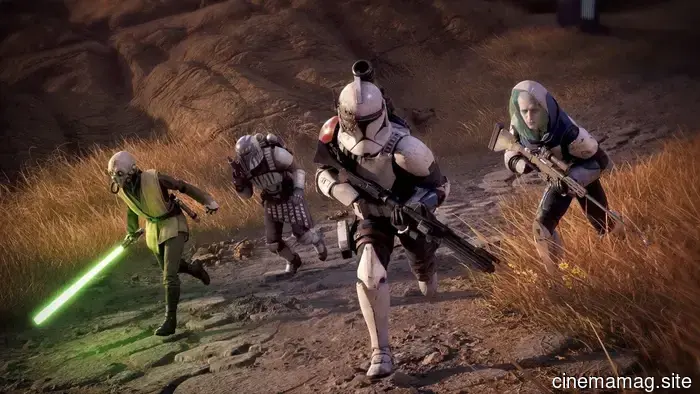 Take part in the battle in the ultimate Star Wars: Zero Company trailer.
EA has unveiled the final trailer for Star Wars: Zero Company in anticipation of its release next week. In this RPG, players will assume the role of Officer Hawks during the concluding days of the Clone…
Take part in the battle in the ultimate Star Wars: Zero Company trailer.
EA has unveiled the final trailer for Star Wars: Zero Company in anticipation of its release next week. In this RPG, players will assume the role of Officer Hawks during the concluding days of the Clone…
Locarno Review: Manhunt Offers a Raw Exploration of Contemporary Male Adolescence
Are the children okay? The newest film to explore this timeless inquiry is Wayne Wapeemukwa’s Manhunt, a coming-of-age road film viewed through the lens of true crime—or maybe it's the reverse. At certain points, it can appear like a typical boys' trip movie filled with greasy diners, camping experiences, and occasional hints of sexuality.