
Locarno Review: The Illusion of an Endless Summer Presents a Vital Depiction of Life on the Pampas.
Long recognized as a platform for adventurous cinema, Locarno's Filmmakers of the Present sidebar has recently become a must-see event. Similar in format to Cannes' Critics' Week, which focuses exclusively on first or second features, the last three editions have presented remarkable titles such as Sophy Romvari’s Blue Heron, Courtney Stephens’ Invention, and Ruan Lan-Xi’s The Plant from the Canaries. This year, the sidebar's top award was given to Alessandra Sanguinetti's The Illusion of an Everlasting Summer, a film that, alongside Beatrice Gibson’s captivating autofiction work At Night, has significantly contributed to this ongoing trend.
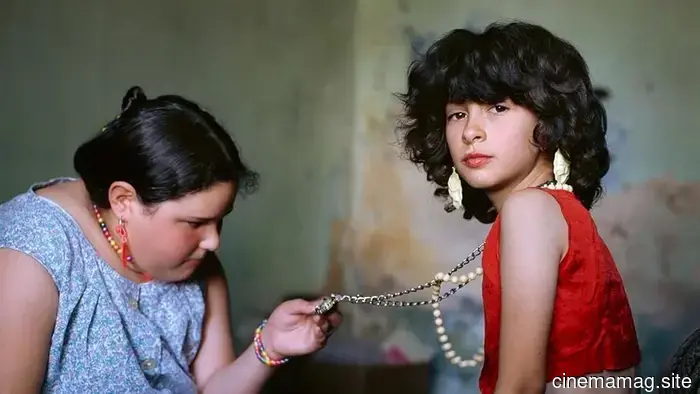
Everlasting Summer is a temporally expansive yet emotionally resonant docu-portrait shot and edited by Sanguinetti—a distinguished Magnum photographer—over a span of 25 years. The film features two young girls whom Sanguinetti met in the Argentinian Pampas during the 1990s, and whose lives she chronicled in her acclaimed 2003 book, The Adventures of Guille and Belinda and the Enigmatic Meaning of Their Dreams. This directorial debut revisits the era of those photographs before revealing the subsequent developments in their lives.
As the title indicates and the film illustrates, aging remains a challenging process, yet rarely has it been depicted with such meticulous attention and depth. This vibrant work combines joy, playfulness, striking visuals, and emotional struggles, compressing 25 fleeting years into a 90-minute film that resonates with universal experiences. The first half predominantly explores the years covered in the book, as Guille (the more outgoing of the two) and Belinda (who becomes increasingly reserved) transition from approximately 9 to 14 years old. The latter half quickly traverses the following decade, concluding as Guille and Belinda’s own children reach the ages they were during Sanguinetti’s book. Time progresses, as it invariably does.
The film bears some resemblance to Paul Almond's Seven Up! and perhaps a bit of Richard Linklater's Boyhood, yet Everlasting Summer presents this journey through Sanguinetti's distinctive cinematic perspective, creating imagery that is consistently engaging and occasionally leans towards the legendary. Much of the initial footage captures the girls interacting with the camera: dressing up, singing, playing pool, and sharing their aspirations for the future; typical childhood antics, portrayed with delightful sincerity and charming precocity. They form an inseparable duo that is a joy to watch.
At one moment, we witness Belinda dancing in a communion dress as storm clouds loom ominously in the background. In another particularly well-composed shot from above, the girls examine an amniotic sac containing what appears to be a horse fetus. Additionally, there’s a stunningly symmetrical image of clouds mirrored in a farm reservoir that evokes Matisse. In this scene, alongside another featuring gauchos on horseback, Sanguinetti diligently adheres to the horizon rules once imparted by John Ford to Steven Spielberg—long before The Fabelmans served as a reminder.
The film’s references to American Westerns feel intentional: Everlasting Summer, much like its precursor book, seeks to portray the experience of growing up as a girl in the traditionally masculine and often romanticized landscape of Argentinian cattle lands. We see Guille watching movies with her father, who casually dons a bandolier. In one early interview, she reveals her belief that a man will inevitably abandon her, influenced by the films she has seen. When Sanguinetti asks if she enjoys being a woman, she responds affirmatively: “Because men are gruff and strong and women are weak and kind.”
As a feat of editing, Everlasting Summer excels, wonderfully defying the implications of its own title. At around the one-hour mark, Guillermina briefly addresses a question about pregnancy, and within four cuts (a matter of mere minutes), her baby has grown up fully. This sensation of time accelerating will resonate with anyone who is a parent, likely striking a chord with many viewers as well.
Ultimately, this film explores how the passage of time can diminish the enthusiasm we once possessed, but it is less a mournful narrative than a candid one. It is notably infused with levity and humor, which makes the first moment of regret from Guillermina profoundly impactful. In an early interview, Guillermina shares that her greatest wish is for “everyone to be happy,” and “that there are no curses, as witches say.” Is that truly too much to hope for?
The Illusion of an Everlasting Summer premiered at the 2026 Locarno Film Festival.

Other articles
 Locarno Review: The Illusion of a Perpetual Summer Creates a Vital Representation of Life in the Pampas.
Locarno has long been recognized as a venue for bold cinema, but its Filmmakers of the Present sidebar has recently turned into a must-see event. Much like Cannes’ Critics’ Week, which focuses solely on debut or sophomore features, the past three editions have showcased exceptional films, including Sophy Romvari’s Blue Heron, Courtney Stephens’ Invention, and
Locarno Review: The Illusion of a Perpetual Summer Creates a Vital Representation of Life in the Pampas.
Locarno has long been recognized as a venue for bold cinema, but its Filmmakers of the Present sidebar has recently turned into a must-see event. Much like Cannes’ Critics’ Week, which focuses solely on debut or sophomore features, the past three editions have showcased exceptional films, including Sophy Romvari’s Blue Heron, Courtney Stephens’ Invention, and
 NYC Weekend Preview: Independent Sci-Fi, Francis Ford Coppola, Strangers on a Train, and Additional Highlights
NYC Weekend Watch is our weekly summary of repertory screenings. BAMFilms presents works by Godard, Wong Kar-wai, Apichatpong (on 35mm), Żuławski, Cronenberg, and a pair of Tarkovsky films, featured in the Arthouse Sci-Fi category. Film Forum kicks off a retrospective of Francis Ford Coppola, showcasing prints of The Conversation and New York Stories; Robb Moss' The Same River Twice and Riverdogs will also start screening.
NYC Weekend Preview: Independent Sci-Fi, Francis Ford Coppola, Strangers on a Train, and Additional Highlights
NYC Weekend Watch is our weekly summary of repertory screenings. BAMFilms presents works by Godard, Wong Kar-wai, Apichatpong (on 35mm), Żuławski, Cronenberg, and a pair of Tarkovsky films, featured in the Arthouse Sci-Fi category. Film Forum kicks off a retrospective of Francis Ford Coppola, showcasing prints of The Conversation and New York Stories; Robb Moss' The Same River Twice and Riverdogs will also start screening.
 Asmus Toys presents the collectible figure of Thranduil, portrayed by Lee Pace, from The Hobbit.
In anticipation of the character's comeback in the 2027 film The Lord of the Rings: The Hunt for Gollum, Asmus Toys has officially revealed its sixth scale Thranduil figure, which is influenced by…
Asmus Toys presents the collectible figure of Thranduil, portrayed by Lee Pace, from The Hobbit.
In anticipation of the character's comeback in the 2027 film The Lord of the Rings: The Hunt for Gollum, Asmus Toys has officially revealed its sixth scale Thranduil figure, which is influenced by…
 New to Streaming: Rose of Nevada, Romería, The Fence, Mother Mary, and More
Every week, we showcase the significant titles that have recently arrived on streaming services in the United States. Take a look at this week's picks below and find previous compilations here. Armageddon Time (James Gray) Armageddon Time is the kind of movie often referred to as a “portrait of the nation” or a “state of the union address,” reflecting the current climate of
New to Streaming: Rose of Nevada, Romería, The Fence, Mother Mary, and More
Every week, we showcase the significant titles that have recently arrived on streaming services in the United States. Take a look at this week's picks below and find previous compilations here. Armageddon Time (James Gray) Armageddon Time is the kind of movie often referred to as a “portrait of the nation” or a “state of the union address,” reflecting the current climate of
Locarno Review: The Illusion of an Endless Summer Presents a Vital Depiction of Life on the Pampas.
Although Locarno has long been known as a venue for daring cinema, its Filmmakers of the Present sidebar has recently become a must-see. With a format reminiscent of Cannes’ Critics’ Week, which features only first or second films, the last three editions have showcased remarkable titles like Sophy Romvari’s Blue Heron, Courtney Stephens’ Invention, and