

10 Must-See Indie Sci-Fi Films from the 1980s That You May Have Overlooked
Casey Chong showcases a collection of crucial indie sci-fi films from the 1980s.
The 1980s heralded the ascent of sci-fi cinema, highlighted by landmark blockbusters such as E.T. The Extra-Terrestrial, Back to the Future, Aliens, and Predator. Not to mention the enduring popularity of franchises like Star Wars and Star Trek, which continued to dominate theaters. Aside from mainstream studio creations, the independent film scene also contributed its share of ingenuity, merging the genre with varied storytelling methods while operating on limited budgets. Here are ten essential indie sci-fi films from the ‘80s…
**Liquid Sky (1982)**
With a modest budget of $500,000, Slava Tsukerman's Liquid Sky is notoriously peculiar: a small flying saucer, about the size of a typical dinner plate, lands on a rooftop in Manhattan. The aliens, depicted solely through thermal-style POV shots, come to Earth seeking heroin but soon realize that the true high lies in human endorphins and pheromones. This revelation becomes especially significant as the central character, a fashion model named Margaret (played by Anne Carlisle) struggling with addiction, engages in sexual encounters that allow the aliens to harvest brain chemicals before they inexplicably evaporate.
While some audiences might deem Liquid Sky unwatchable due to its stilted performances and monotonous line delivery, there is an undeniable uniqueness to it. Anne Carlisle's vibrant dual portrayal of the bisexual Margaret and the male character Jimmy, combined with the film’s vivid Day-Glo expressionism, encapsulates the New Wave subculture of 1980s New York City. Liquid Sky emerged as a financially successful independent film a year after its premiere at a film festival, grossing $1.7 million during its theatrical release.
**Android (1982)**
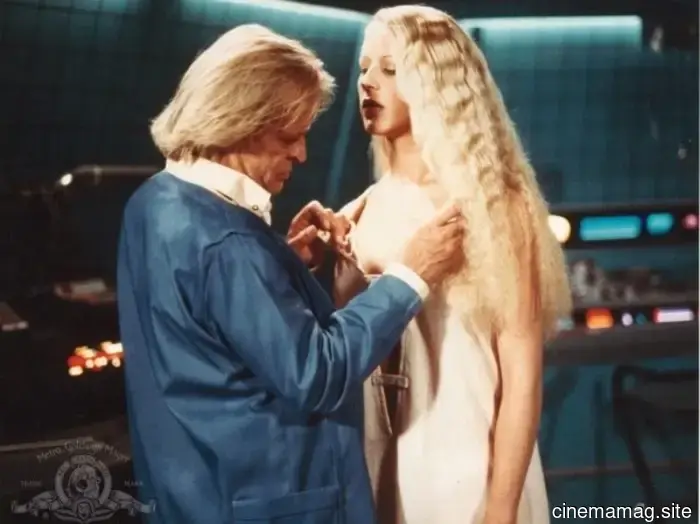
Debuting in the same year as Blade Runner, Aaron Lipstadt's budget-conscious exploration of artificial intelligence tells a more intimate story in a chamber-drama style, contrasting with Ridley Scott's expansive genre-defining masterpiece. The AI at the center of the narrative is the android named Max 404 (Don Keith Opper, who later portrayed Charlie McFadden in the Critters series), a solitary companion to his creator, Dr. Daniel (played by Klaus Kinski, perfectly embodying the role of a cold-hearted mad scientist). Max navigates his daily routines while striving to understand human behavior.
Opper, who co-wrote the screenplay, presents the android character with wide-eyed innocence and curiosity, particularly when three characters—Maggie (Brie Howard), Keller (Norbert Weisser), and Mendes (Crofton Hardester)—arrive on the space station. They reveal themselves to be escaped convicts from a prison transport ship. Max becomes especially infatuated with Maggie, igniting his quest for love and sexual awakening. Lipstadt adopts a deliberate slow-burn approach, focusing on Max’s character development and interactions with the fugitives, leading to a tense confrontation.
**Battle Beyond the Stars (1980)**
Picture a deep-space reimagining of Seven Samurai/The Magnificent Seven, and you have Battle Beyond the Stars. The plot centers on Shad (Richard Thomas), a young farmer from the agricultural planet Akir, who embarks on an intergalactic quest to gather a diverse team of mercenaries to rescue his planet from the tyrannical warlord, Sador (John Saxon, relishing his over-the-top villain role). John Sayles, experienced in crafting genre films like Piranha and Alligator, skillfully weaves a screenplay infused with humorous pulp elements and vivid characters.
Sayles introduces mercenaries with unique traits, such as Robert Vaughn's stoic assassin Gelt and George Peppard's easygoing Space Cowboy from Earth. Battle Beyond the Stars also set the stage for future Hollywood talents, showcasing young James Cameron’s impressive art direction and miniature special effects work, along with James Horner’s orchestral score. The film was a box office success and garnered five Saturn Award nominations, winning the Golden Scroll of Merit for Outstanding Achievement awarded to Sybil Danning, who portrays the brave Valkyrie warrior St. Exmin.
**Galaxy of Terror (1981)**
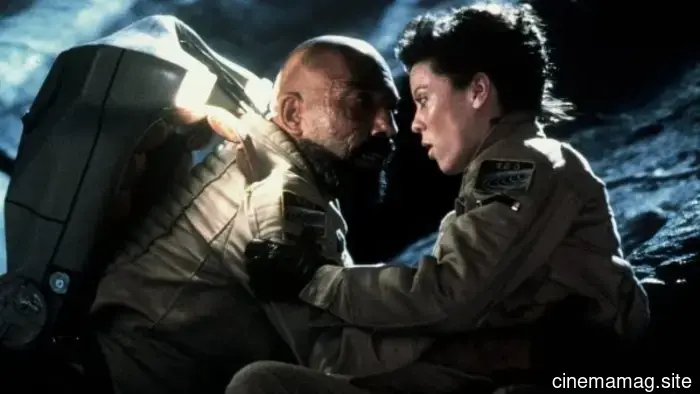
Created under Roger Corman’s New World Pictures, Galaxy of Terror capitalizes on the groundbreaking success of Ridley Scott’s Alien, albeit in a low-budget B-movie format. Co-written by Bruce D. Clark and Marc Siegler, the film shares narrative similarities, featuring a beleaguered working-class space crew—cast members include Edward Albert, Erin Moran, and a pre-Nightmare on Elm Street Robert Englund—on a hostile, desolate planet.
Yet, Galaxy of Terror distinguishes itself with a surreal sci-fi horror angle. Instead of a fearsome alien species like in Alien, the danger emanates from a psychic monolithic pyramid that presents the









Other articles
 Comic Book Teaser – Marvel Mangaverse: Web of Blood #1
Marvel Comics makes its return to the Mangaverse this week with the 25th anniversary special Marvel Mangaverse: Web of Blood #1. You can check out a sneak peek of the one-shot below with the official preview…
Comic Book Teaser – Marvel Mangaverse: Web of Blood #1
Marvel Comics makes its return to the Mangaverse this week with the 25th anniversary special Marvel Mangaverse: Web of Blood #1. You can check out a sneak peek of the one-shot below with the official preview…
 Rashomon-inspired horror film Burning reveals trailer prior to its digital launch.
In anticipation of its debut next week, IndiePix Films has released a trailer for the psychological horror-thriller Burning, directed by Radik Eshimov, which utilizes a fragmented truth narrative style.
Rashomon-inspired horror film Burning reveals trailer prior to its digital launch.
In anticipation of its debut next week, IndiePix Films has released a trailer for the psychological horror-thriller Burning, directed by Radik Eshimov, which utilizes a fragmented truth narrative style.
 Preview of Comic Book – Teen Titans #1
This week, a revamped Teen Titans come together as DC Comics launches a new volume with Teen Titans #1; check out the official preview below for a sneak peek… When one of their own…
Preview of Comic Book – Teen Titans #1
This week, a revamped Teen Titans come together as DC Comics launches a new volume with Teen Titans #1; check out the official preview below for a sneak peek… When one of their own…
 Funko reveals new Pop! Vinyl figures from The Hunger Games.
Funko has officially announced a new collection of The Hunger Games Pop! Vinyl figures that includes Katniss Everdeen in her Mockingjay outfit, tribute mentor Haymitch Abernathy, and Katniss in her wedding gown.
Funko reveals new Pop! Vinyl figures from The Hunger Games.
Funko has officially announced a new collection of The Hunger Games Pop! Vinyl figures that includes Katniss Everdeen in her Mockingjay outfit, tribute mentor Haymitch Abernathy, and Katniss in her wedding gown.
 Comic Book Preview – Supernatural Special: Wayward #1
The Winchester brothers are on the verge of parting ways in Dynamite’s Supernatural comic book series, with the groundwork for this separation being laid in Supernatural Special: Wayward #1, which is set to be released this Wednesday.
Comic Book Preview – Supernatural Special: Wayward #1
The Winchester brothers are on the verge of parting ways in Dynamite’s Supernatural comic book series, with the groundwork for this separation being laid in Supernatural Special: Wayward #1, which is set to be released this Wednesday.
 Kal Penn and Abbie Cornish feature in the trailer for the Anna Nicole Smith film, Trust Me, I’m a Doctor.
Briarcliff Entertainment has unveiled a trailer for the biographical comedy-drama Trust Me, I’m a Doctor. Kal Penn plays the role of Dr. Sandeep Kapoor, a man whose peaceful existence begins to unravel...
Kal Penn and Abbie Cornish feature in the trailer for the Anna Nicole Smith film, Trust Me, I’m a Doctor.
Briarcliff Entertainment has unveiled a trailer for the biographical comedy-drama Trust Me, I’m a Doctor. Kal Penn plays the role of Dr. Sandeep Kapoor, a man whose peaceful existence begins to unravel...
10 Must-See Indie Sci-Fi Films from the 1980s That You May Have Overlooked
Casey Chong showcases a collection of must-see indie sci-fi films from the 1980s. This decade highlighted the emergence of science fiction cinema, greatly influenced by iconic blockbusters such as E.T. the Extra-Terrestrial...