
Amplifying the Voices of Adolescents During Their Teenage Years
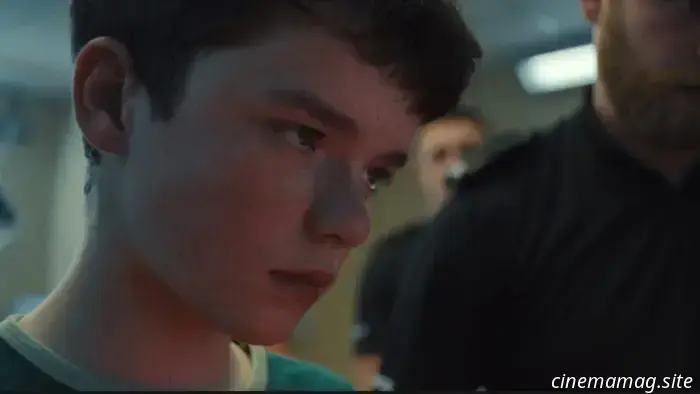
Adolescence begins with 13-year-old Owen, portrayed by Jamie Miller, being arrested for the murder of a female classmate and transported by van from his home to a police station. The beginning of this journey is accompanied by Owen's sounds — his cries, his banging on the window, and his calls for his father.
These sounds are then seamlessly replaced by a percussive ticking and a female voice singing melancholic notes. Although Adolescence does not draw attention to it, the voice belongs to Emilia Holliday, who plays Owen's victim, Katie Leonard.
Katie has no dialogue in Adolescence — she is seen only in grainy CCTV footage. Yet her singing gives her a voice from beyond, reminding viewers of her lost potential. She also acts as a telltale heart for Owen, who is tormented by his actions and cannot undo them.
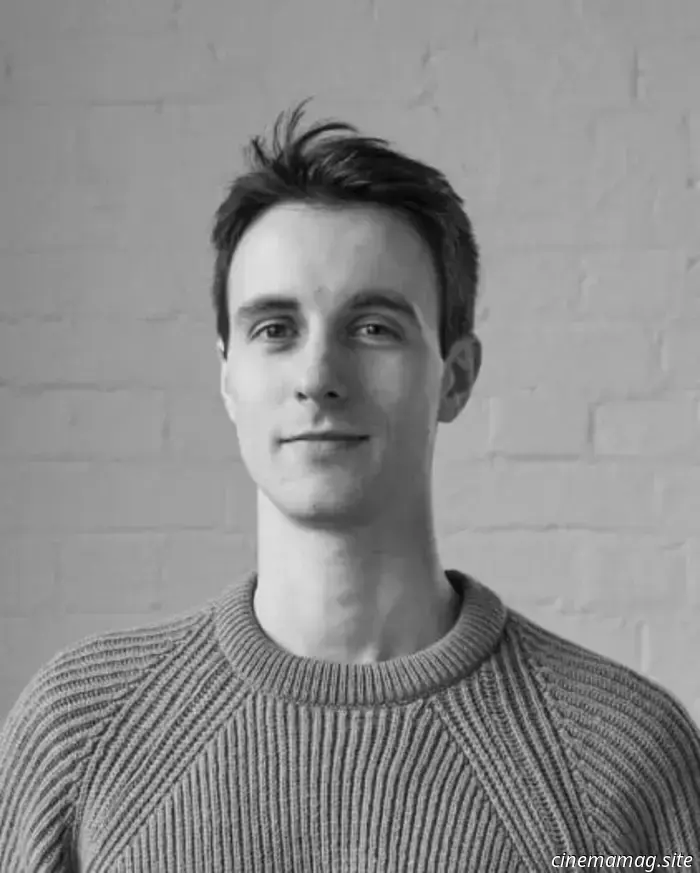
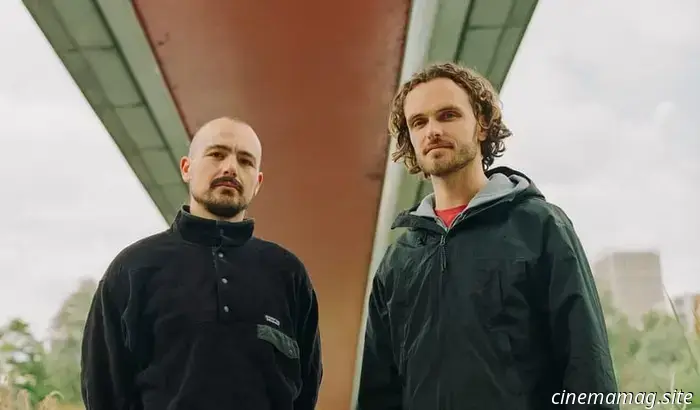
This scene exemplifies the impeccable collaboration between sound and music in Adolescence, as well as the dedication of supervising sound editor James Drake and composers Aaron May and David Ridley to represent the authentic voices of youth, making it one of Netflix’s most popular and critically praised series.
The British limited series consists of four episodes and was created by two middle-aged men — Stephen Graham, who also stars, and Jack Thorne — with direction by another middle-aged man, Philip Barantini.
However, the series captures the passions and struggles of youth, thanks to Drake, May, and Ridley, who are all in their 30s and committed to highlighting the sounds of young people.
The sound design and score in Adolescence are beautifully integrated, partly due to the previous collaboration between Drake, May, and Ridley on Barantini’s 2021 film Boiling Point, which also featured Graham.
Similar to Boiling Point, which was filmed in one continuous shot, each episode of Adolescence maintains this approach. The absence of edits creates a sense of immediacy and tragic inevitability. The sound team was careful to avoid excessive sound elements that could diminish the show’s immersive quality.
Audiences feel they, like Owen, are experiencing irreversible events. The sound collaborators were particularly mindful of preserving this feeling without resorting to over-orchestration or unnecessary embellishments that could disrupt our suspension of disbelief. At one moment, powerful emotion is evoked from the simple, subtle sound of rain.
“The remarkable aspect is that the material we’re working with is so meticulously planned and refined,” says Drake. “From the perspective of sound editing and design, it often involved filling space and maintaining tension while keeping a consistent mood, engaging the audience.”
The composers adopted a similarly naturalistic technique. In Boiling Point, all music was diegetic, coming from a radio in the kitchen where Graham’s character works. In Adolescence, most of the music is non-diegetic, meaning it is heard by the audience but not by the characters. Still, it is closely connected to the young protagonists' experiences.
This connection is particularly strong in a devastating rendition of Sting’s “Fragile,” sung by a youth choir at the conclusion of the second episode.
The inspiration partly stemmed from The Langley Music Project, a recording Barantini shared with the composers early in the process. In the 1970s, Canadian music educator Hans Fenger recorded students in British Columbia’s Langley School District performing songs by artists such as David Bowie, The Beach Boys, Paul McCartney, and The Eagles.
These recordings became a pop culture sensation when they were released as the 2001 album, The Langley Schools Music Project: Innocence and Despair, and listeners were struck by the rawness and beauty of the performances.
May and Ridley assembled their own adolescent choir by enlisting students from Minsthorpe Community College in Wakefield, West Yorkshire, where the second episode was filmed. (Unlike U.S. community colleges, which typically serve late teenagers and older, Minsthorpe caters to students aged 11 to 16.)
“There’s something breathtaking and moving about young, untrained adolescent voices harmonizing,” says May. “Initially, there was a choir of about 15 students, but they auditioned additional singers. We ended up with a choir of 38, and we rehearsed for two days with Dave, who previously directed children's choirs in China.”
The inclusion of students who had not participated in a choir before added a layer of innocence, as did the environment where they recorded.
“We were fortunate to find an old, slightly out-of-tune grand piano in the corner of the village hall,” recalls Ridley. “It felt like we had struck gold when we arrived.”
They recorded at the village hall with singers as young as 11, some of whom were new to the school. “I think they were just looking for a way to skip school for a few days,” says Ridley. “But they were perfect. They sounded like the children on-screen, as many of
Other articles
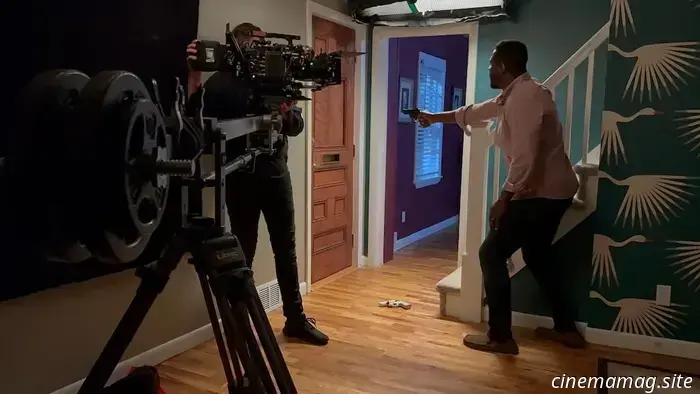 In 'Who's There?', Boston's independent film community makes its presence known - MovieMaker Magazine
"Who's There?" is a film directed by Ryan Doris and penned by the acclaimed A24 screenwriters Todd Spence and Zak White, featuring a caring stepfather portrayed by Garland.
In 'Who's There?', Boston's independent film community makes its presence known - MovieMaker Magazine
"Who's There?" is a film directed by Ryan Doris and penned by the acclaimed A24 screenwriters Todd Spence and Zak White, featuring a caring stepfather portrayed by Garland.
 30 Boomers We Truly Adore, Ranging from Dolly Parton to Eddie Murphy
"Okay, boomer" doesn't pertain to these incredible individuals. Here are our top Baby Boomers in the film industry, featuring Dolly Parton and Eddie Murphy among others.
30 Boomers We Truly Adore, Ranging from Dolly Parton to Eddie Murphy
"Okay, boomer" doesn't pertain to these incredible individuals. Here are our top Baby Boomers in the film industry, featuring Dolly Parton and Eddie Murphy among others.
 How Nobody Wants This Employs Cross-Shooting and Innovative Editing to Establish Connections
In Nobody Wants This, cinematographer Adrian Peng Correia and editor Maura Corey take daring choices to narrate a tale of unexpected connection.
How Nobody Wants This Employs Cross-Shooting and Innovative Editing to Establish Connections
In Nobody Wants This, cinematographer Adrian Peng Correia and editor Maura Corey take daring choices to narrate a tale of unexpected connection.
 Boulder Dash marks its 40th Anniversary on PC and consoles this July.
BBG Entertainment is set to launch the highly awaited Boulder Dash 40th Anniversary on July 24th, available on PC, Nintendo Switch, Xbox, Mac, and PlayStation 4 and 5. This remake of the 1984 classic will feature fresh levels, new designs, and additional characters, all while retaining the beloved Rockford and the gameplay that contributed to its popularity among gamers.
Boulder Dash marks its 40th Anniversary on PC and consoles this July.
BBG Entertainment is set to launch the highly awaited Boulder Dash 40th Anniversary on July 24th, available on PC, Nintendo Switch, Xbox, Mac, and PlayStation 4 and 5. This remake of the 1984 classic will feature fresh levels, new designs, and additional characters, all while retaining the beloved Rockford and the gameplay that contributed to its popularity among gamers.
-Movie-Review.jpg) Juliet & Romeo, 2025. Penned and helmed by Timothy Scott Bogart. Featuring Clara Rugaard, Jamie Ward, Jason Isaacs, Dan Fogler, Rebel Wilson, Rupert Everett, Derek Jacobi, Lidia Vitale, Ferdia Walsh-Peelo, Nicholas Podany, Tayla Parx, Jim Sheridan, Dennis Andres, Rupert Graves, Jordan Clark Ledis, Martina Ortiz Luis, Lexie Coons, Clodagh Amira Sheridan, Max C. Parker, and others.
Juliet & Romeo, 2025. Penned and helmed by Timothy Scott Bogart. Featuring Clara Rugaard, Jamie Ward, Jason Isaacs, Dan Fogler, Rebel Wilson, Rupert Everett, Derek Jacobi, Lidia Vitale, Ferdia Walsh-Peelo, Nicholas Podany, Tayla Parx, Jim Sheridan, Dennis Andres, Rupert Graves, Jordan Clark Ledis, Martina Ortiz Luis, Lexie Coons, Clodagh Amira Sheridan, Max C. Parker, and others.
 12 Feel-Good Movies to Lift Your Spirits Anytime
At times, we all require a little uplift. Here are 13 beloved comfort films that could provide just that.
12 Feel-Good Movies to Lift Your Spirits Anytime
At times, we all require a little uplift. Here are 13 beloved comfort films that could provide just that.
Amplifying the Voices of Adolescents During Their Teenage Years
Adolescence begins with 13-year-old Owen, portrayed by Jamie Miller, being arrested for the murder of a female classmate and transported by van from his house to a