
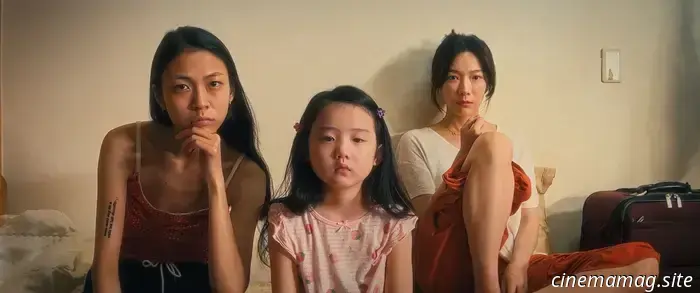
BFI London Review: Left-Handed Girl is a Compelling Drama Viewed Through the Perspective of a Child
The neon-lit streets of Taipei’s night markets appear particularly vibrant when viewed through the innocent perspective of a child. Captured on an iPhone to highlight the astonishing wonder seen through a five-year-old’s eyes, where every ordinary alley is brimming with endless potential for a young protagonist embarking on her first city adventure, director Shih-Ching Tsou’s debut film, Left-Handed Girl, tells a poignant yet striking story about growing up in a family living paycheck-to-paycheck. The film's visual style and its child’s perspective on near-poverty evoke memories of co-writer Sean Baker’s The Florida Project, which Tsou produced, but it focuses more on those who have just managed to escape the margins, facing the risk of slipping back with every rent hike or unexpected expense.
As the film begins, the family has just moved to the city, and we fast forward to the moment when mother Chu-Fen (Janel Tsai) has successfully set up her noodle stall at the night market, although domestic life is more turbulent. Her older teenage daughter I-Ann (Shih-Yua Ma) is rebellious, engaging in a relationship with her boss and having frequent disputes with her mother, who is frustrated at having to cover the costs of her ex-husband’s funeral, as he has no one else to turn to––and no family member is willing to assist with rent anymore despite years of seeking help. Meanwhile, young I-Jing (Nina Ye) faces her own crisis after her grandfather demands she stop using her left hand for writing and eating, claiming it’s associated with the devil. After contemplating extreme measures like cutting it off, she ultimately decides to tie it up to enforce using her right hand, and eventually resorts to shoplifting, blaming her “devil hand” for her actions.
While the struggle with being left-handed serves as a central theme, it isn’t the core element driving the film. Instead, it contributes to a broader examination of a culture still entrenched in traditional misogyny. I-Jing’s mother and sister find themselves in conflict with the aging patriarch, who relishes the opportunity to care for his granddaughter when the rest of the family is absent, providing him the freedom to discourage her reliance on her left hand without opposition. This narrative component is steeped in folklore––a casual mention reveals that many of I-Ann’s past classmates have changed their names out of superstition, hoping it would aid their chances in university entrance exams––while the various arcs within the family drama delve into the distinct hurdles women face, including ingrained misogyny from older female relatives, who openly express that the sons are valued above all.
Despite the younger women’s assertions that certain traditions are waning and don’t reflect present-day society, their mother’s and sister’s peers still judge them for not meeting societal expectations. This is particularly evident in the life of a financially struggling single mother, but it also weighs heavily on a daughter just entering adulthood, showcasing how secondary characters view her as a disappointment. For instance, after announcing to her married boss that she’s pregnant while quitting just to embarrass him in front of his girlfriend, that same girlfriend later suggests to I-Ann that she can keep the baby if it’s a girl; if it’s a boy, she plans to take it, anticipating the prosperity that comes with having a son. In this world, being a woman alone doesn’t lead to immediate dismissal––but failing to achieve stability or lacking a male heir to boost one’s respectability makes the struggle significantly harder.
The film takes a surprising turn towards melodrama in its final act, featuring a tense confrontation during a family gathering that Tsou has cited was inspired by Mike Leigh’s Secrets & Lies. This pivotal moment revolves around a family secret that suddenly emerges, yet due to a lack of subtle hints prior, it feels as if the director didn’t quite know how to conclude the drama––a disappointment, considering that integrating this tension smoothly could have enriched the family dynamics instead of appearing as an unearned climax. This sequence also fluctuates between the child’s perspective and would likely be more effective if told entirely from that viewpoint, thereby clarifying why the sudden revelations feel appropriate. The scene is well-executed and performed, showcasing Tsou’s ability to draw exceptional performances from young and non-professional actors, yet its abruptness makes it feel awkwardly integrated––a jarring shift that might leave viewers puzzled rather than emotionally moved.
This sudden shift is particularly striking given how well-drawn and authentic the rest of Left-Handed Girl feels, with the family dynamics expertly portrayed until the director tries to dismantle everything we understand about them. While this doesn’t overshadow the film as a whole, it suggests a moment crafted with Tsou’s right hand rather than her left.
Left-Handed Girl premiered at the BFI London Film Festival and will be released in theaters on November 14, with its arrival on Netflix scheduled for November 28.
Other articles
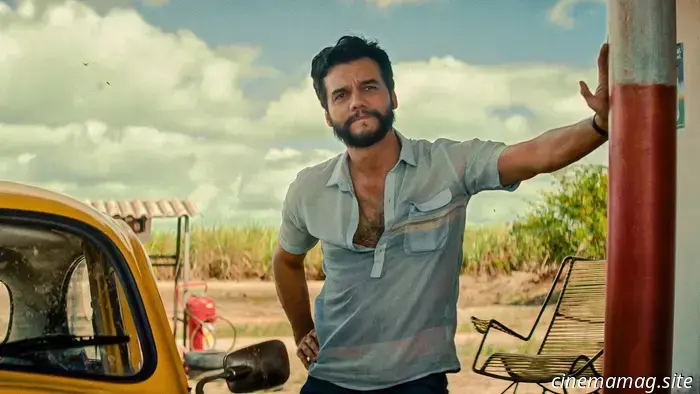 Wagna Moura is the undercover operative in the new trailer for the highly praised crime epic.
Neon has released a new trailer for their highly praised drama The Secret Agent, which has impressed audiences at various festivals with its story starring Wagner Moura (Civil War) focusing on political themes...
Wagna Moura is the undercover operative in the new trailer for the highly praised crime epic.
Neon has released a new trailer for their highly praised drama The Secret Agent, which has impressed audiences at various festivals with its story starring Wagner Moura (Civil War) focusing on political themes...
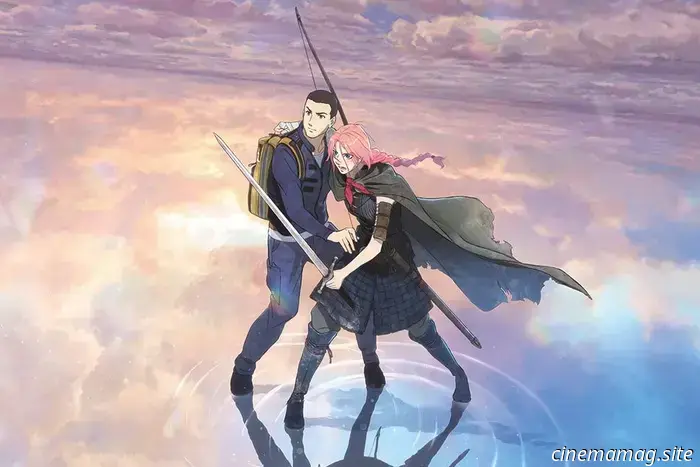 NYFF Review: Scarlet Discovers Mamoru Hosoda's Simplistic Adaptation of a Classic Story
Over the span of twenty years creating animated films, director Mamoru Hosoda has delivered both personal stories such as Wolf Children and ambitious projects like the sci-fi extravaganza Summer Wars. In 2019, his family fantasy Mirai received an Academy Award nomination, marking it as the first anime feature outside of Studio Ghibli to earn this honor. However, instead of
NYFF Review: Scarlet Discovers Mamoru Hosoda's Simplistic Adaptation of a Classic Story
Over the span of twenty years creating animated films, director Mamoru Hosoda has delivered both personal stories such as Wolf Children and ambitious projects like the sci-fi extravaganza Summer Wars. In 2019, his family fantasy Mirai received an Academy Award nomination, marking it as the first anime feature outside of Studio Ghibli to earn this honor. However, instead of
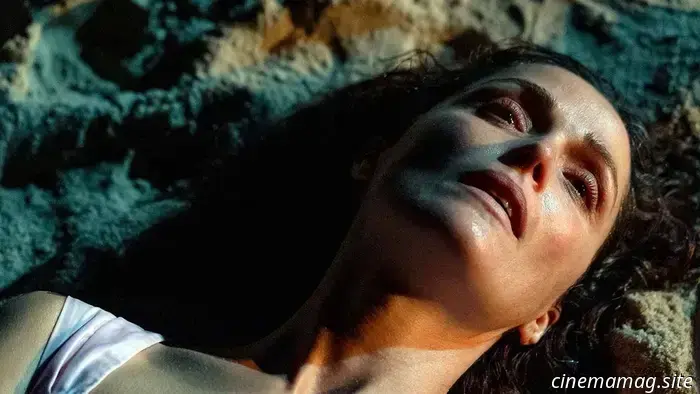 She Has Anger Within Her: Exclusive Interview with Mary Bronstein, Writer-Director of If I Had Legs I’d Kick You
Robert Kojder speaks with writer-director Mary Bronstein about her film If I Had Legs I’d Kick You… After making her first feature-length film in 2008, Mary Bronstein is returning with the…
She Has Anger Within Her: Exclusive Interview with Mary Bronstein, Writer-Director of If I Had Legs I’d Kick You
Robert Kojder speaks with writer-director Mary Bronstein about her film If I Had Legs I’d Kick You… After making her first feature-length film in 2008, Mary Bronstein is returning with the…
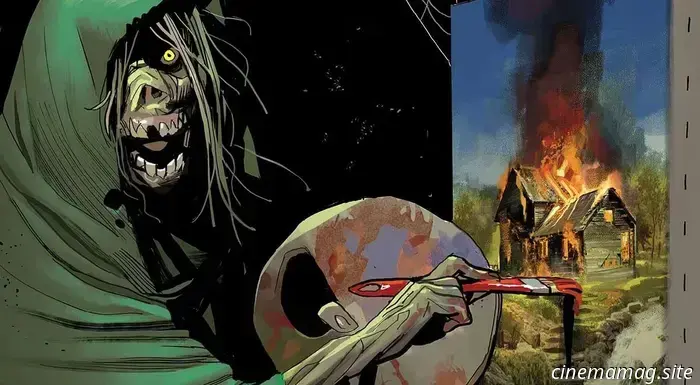 Comic Book Preview – Creepshow #2
Image and Skybound's Creepshow Volume 4 is set to continue next week with the release of the second issue of the current series. Take a look at the official preview below for an exclusive sneak peek... IT WOULDN’...
Comic Book Preview – Creepshow #2
Image and Skybound's Creepshow Volume 4 is set to continue next week with the release of the second issue of the current series. Take a look at the official preview below for an exclusive sneak peek... IT WOULDN’...
 Canadian drama The Granville Girls is set to arrive on Netflix.
Following the success of North of North, Netflix has commissioned a new Canadian drama titled The Granville Girls, created by Adriana Maggs (Frontier) and produced by Shafte, the company behind Murdoch Mysteries.
Canadian drama The Granville Girls is set to arrive on Netflix.
Following the success of North of North, Netflix has commissioned a new Canadian drama titled The Granville Girls, created by Adriana Maggs (Frontier) and produced by Shafte, the company behind Murdoch Mysteries.
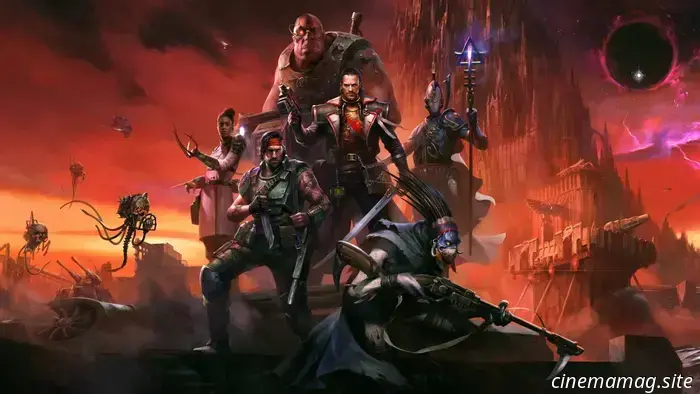 Owlcat Games reveals exciting news for fans of Warhammer 40,000.
During the IGN Fan Fest, Owlcat Games revealed thrilling updates about their games Rogue Trader and Dark Heresy, both set in the Warhammer 40,000 universe. Owlcat’s most cherished CRPG, Warhammer 40,000: R…
Owlcat Games reveals exciting news for fans of Warhammer 40,000.
During the IGN Fan Fest, Owlcat Games revealed thrilling updates about their games Rogue Trader and Dark Heresy, both set in the Warhammer 40,000 universe. Owlcat’s most cherished CRPG, Warhammer 40,000: R…
BFI London Review: Left-Handed Girl is a Compelling Drama Viewed Through the Perspective of a Child
The brightly illuminated alleys of Taipei’s night markets appear especially vibrant when seen through a child’s perspective. Captured using an iPhone to highlight the amazement of a five-year-old’s point of view, where each ordinary side street is brimming with infinite opportunities for a young character who is experiencing city life after departing from the countryside for the very first time.