
WTO/99 Review: A Harsh Reminder of Our U.S. Police State
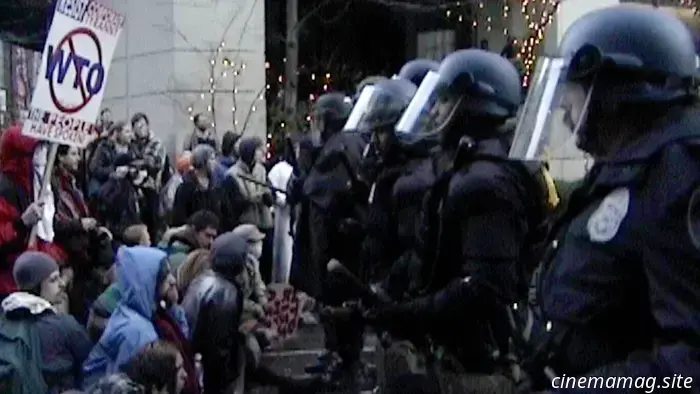
One of the most intriguing aspects of the documentary WTO/99, directed by Ian Bell, is that while it visually presents itself as a relic, the political insights feel as forward-looking as they are reflective. The film offers a clear timeline of the events that unfolded during the Seattle WTO protests outside the WTO Ministerial Conference on November 30, 1999. What started as a peaceful protest primarily focused on labor and environmental concerns quickly descended into chaos on the first day, with law enforcement deploying tear gas and rubber bullets on thousands of participants. Although there are video clips showing property damage, Bell creates a vivid portrayal of a significant number of non-violent demonstrators who were harmed due to police escalation.
The narrative is shaped by a mix of news footage and on-the-ground consumer video recordings, with the 4:3 aspect ratio and grainy digital visuals providing an oddly comforting feel. The year 1999 seems like ages ago, and much has transpired since then. About 40,000 individuals gathered in the streets, and by the second day, any non-aggressive stance from the police had vanished. Seattle Mayor Paul Schell announced curfews in downtown areas, requested assistance from the National Guard, and established "No Protest Zones" in certain parts of the city. As expected, the situation worsened. Notably striking scenes depict law enforcement pursuing protesters into Capitol Hill, beyond the designated areas, and causing chaos in an entire neighborhood late into the night.
The film features clips of activist Ralph Nader, politician Bernie Sanders, and filmmaker Michael Moore criticizing the World Trade Organization, as well as President Bill Clinton attempting to justify the situation. These segments arguably represent the film’s weakest moments, as they highlight the broader motivations behind the demonstrations. Much of this context is familiar from the archival footage. However, there is a particularly amusing soundbite from then-Starbucks CEO Howard Schultz, who emphasizes his “corporate conscience” while expressing confusion about the protests.
We see footage of protesters being confined to buses and jailed without access to phone calls or any charges filed against them, serving as a chilling reflection of today’s constitutional crisis in America. Seattle Police Chief Norm Stamper discusses his officers preparing for violence even before any actual violence occurred, reminding us starkly of what escalation entails. The final moments of WTO/99 are strikingly framed and impactful, using text and music to pull us back into the precarious present we inhabit.
About halfway through the film, there is a particularly thought-provoking moment where a news reporter interviews Tom Hayden, the civil rights activist and one of the leaders of the 1968 Democratic National Convention protests. Hayden discusses “perception management” and how those in power aim to portray any organized actions against them as failures. If WTO/99 conveys anything, it’s that this perception management was, indeed, effective.
WTO/99 will have a one-week theatrical run at NYC’s DCTV starting Friday, December 5.
Otros artículos
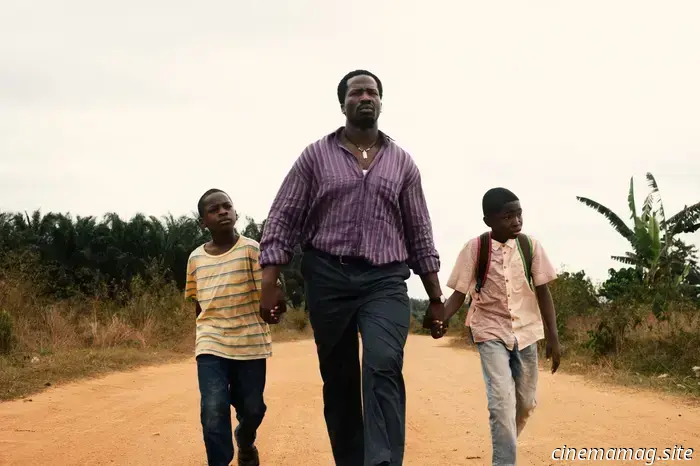 Tráiler de «La sombra de mi padre»: la candidatura del Reino Unido a los Oscar y ganadora de Cannes se estrena este febrero
Presentada en Un Certain Regard del Festival de Cine de Cannes, el aclamado debut de Akinola Davies Jr., My Father's Shadow, obtuvo una Mención Especial por la Caméra d'Or y, recientemente, el premio a Mejor Director en los British Independent Film Awards y el de Director Revelación y Actuación Sobresaliente en Papel Protagónico en los Gotham Awards. Tras una serie de proyecciones que le permitieron optar a premios el pasado
Tráiler de «La sombra de mi padre»: la candidatura del Reino Unido a los Oscar y ganadora de Cannes se estrena este febrero
Presentada en Un Certain Regard del Festival de Cine de Cannes, el aclamado debut de Akinola Davies Jr., My Father's Shadow, obtuvo una Mención Especial por la Caméra d'Or y, recientemente, el premio a Mejor Director en los British Independent Film Awards y el de Director Revelación y Actuación Sobresaliente en Papel Protagónico en los Gotham Awards. Tras una serie de proyecciones que le permitieron optar a premios el pasado
 El tráiler de "The President’s Cake": la representante de Irak al Oscar y ganadora en Cannes se estrena este febrero.
Una de las películas revelación en la Quincena de los Realizadores de Cannes a principios de este año, el debut como director de Hasan Hadi, The President's Cake, obtuvo el Premio del Público de la sección y la Caméra d'Or. Adquirida por Sony Pictures Classics, la candidata de Irak al Oscar tendrá ahora un periodo de proyecciones que la hace elegible para premios, a partir del 12 de diciembre en el Village East de Nueva York y en el Laemmle Monica Film de Los Ángeles.
El tráiler de "The President’s Cake": la representante de Irak al Oscar y ganadora en Cannes se estrena este febrero.
Una de las películas revelación en la Quincena de los Realizadores de Cannes a principios de este año, el debut como director de Hasan Hadi, The President's Cake, obtuvo el Premio del Público de la sección y la Caméra d'Or. Adquirida por Sony Pictures Classics, la candidata de Irak al Oscar tendrá ahora un periodo de proyecciones que la hace elegible para premios, a partir del 12 de diciembre en el Village East de Nueva York y en el Laemmle Monica Film de Los Ángeles.
 Nuestras 7 películas navideñas favoritas disfrazadas - MovieMaker Magazine
Estas películas navideñas disfrazadas te entretendrán, tanto si buscas una película de Navidad como si estás cansado de las típicas películas navideñas.
Nuestras 7 películas navideñas favoritas disfrazadas - MovieMaker Magazine
Estas películas navideñas disfrazadas te entretendrán, tanto si buscas una película de Navidad como si estás cansado de las típicas películas navideñas.
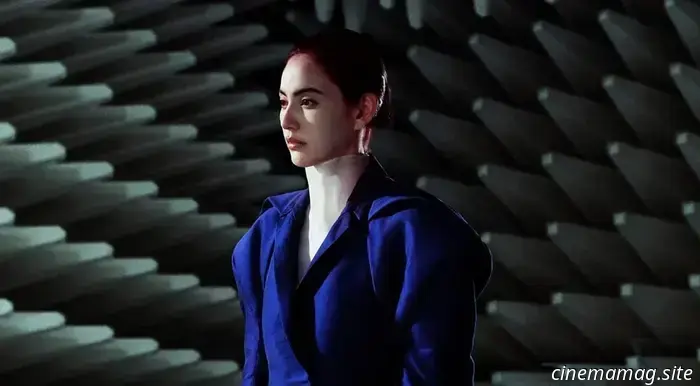 Comedia negra sobrenatural «A Useful Ghost» recibe tráiler y estreno en EE. UU.
Antes de su estreno en Estados Unidos el mes que viene, han aparecido en línea un póster y un tráiler de A Useful Ghost, ganadora del Gran Premio de la Semana de la Crítica de Cannes, escrita y dirigida por Ratchapoom Boonbunchachoke. La tailandesa…
Comedia negra sobrenatural «A Useful Ghost» recibe tráiler y estreno en EE. UU.
Antes de su estreno en Estados Unidos el mes que viene, han aparecido en línea un póster y un tráiler de A Useful Ghost, ganadora del Gran Premio de la Semana de la Crítica de Cannes, escrita y dirigida por Ratchapoom Boonbunchachoke. La tailandesa…
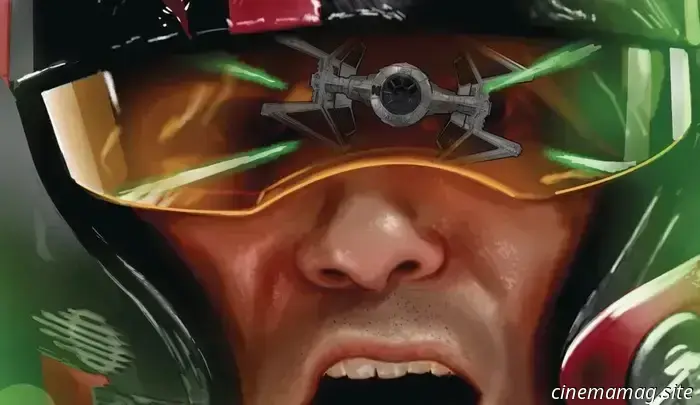 Avance del cómic – Star Wars: Historias del Hiperespacio – Descifrador de códigos n.º 4
El último número de Star Wars: Hyperspace Stories – Codebreaker, de Dark Horse Comics, llega a las tiendas de cómics y a los distribuidores digitales la próxima semana, y puedes echar un vistazo a continuación con el off…
Avance del cómic – Star Wars: Historias del Hiperespacio – Descifrador de códigos n.º 4
El último número de Star Wars: Hyperspace Stories – Codebreaker, de Dark Horse Comics, llega a las tiendas de cómics y a los distribuidores digitales la próxima semana, y puedes echar un vistazo a continuación con el off…
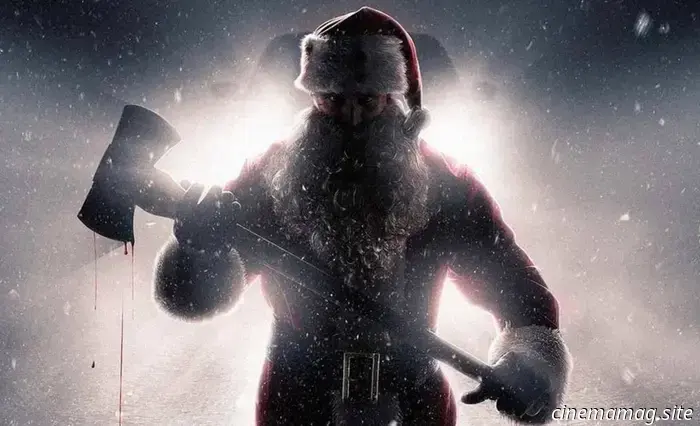 El remake de Silent Night, Deadly Night se vuelve retro con un nuevo tráiler.
El controvertido clásico de culto slasher festivo de los años 80 Silent Night, Deadly Night recibe este mes el tratamiento de remake por cortesía del guionista y director Mike P. Nelson (Wrong Turn), con la participación de R… de Halloween Ends.
El remake de Silent Night, Deadly Night se vuelve retro con un nuevo tráiler.
El controvertido clásico de culto slasher festivo de los años 80 Silent Night, Deadly Night recibe este mes el tratamiento de remake por cortesía del guionista y director Mike P. Nelson (Wrong Turn), con la participación de R… de Halloween Ends.
WTO/99 Review: A Harsh Reminder of Our U.S. Police State
A particularly intriguing aspect of the documentary WTO/99, directed by Ian Bell, is that although it visually appears to be a relic, the political insights come across as both prescient and reflective. The film presents a straightforward timeline of the events that occurred during the Seattle WTO protests held outside the WTO Ministerial Conference.