
The Plague Review: A Bullying Drama of Paranoia Demands a Suspension of Disbelief
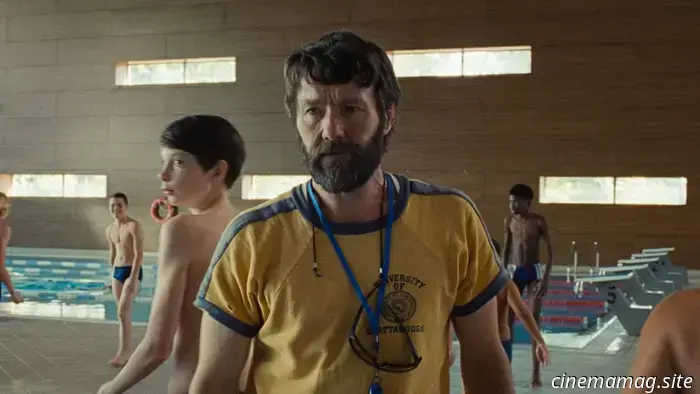
If you've ever witnessed tween bullying, you understand that, before it turns personal, the process of selecting a target starts with relentless annoyance; the first to succumb to this is typically the most psychologically vulnerable. The Plague, the debut film from writer-director Charlie Polinger, operates similarly, overwhelming its audience with a continuous score that resembles a small army making irritating taunting noises, practically daring you to capitulate. While it may be too simplistic to label it mental warfare, stepping into the shoes of a 12-year-old being assessed for potential bullying at a water polo camp certainly evokes that feeling – at least to an extent. There is a limit to the level of sustained anxiety Polinger can generate regarding the threat of bullying and social exclusion, particularly when adults are nearby and somewhat aware of what's happening. Eventually, it becomes challenging to maintain disbelief at the extent of teacher-student negligence necessary for the story to unfold.
Set in a 2003 that feels reminiscent of the late 1990s due to its surprising number of Eurodance music moments and references to Smash Mouth, The Plague starts with Ben (Everett Blunck) arriving at a California water polo camp, immediately finding himself an outcast. His mother has recently remarried, marking his first stop after the family relocated from the other coast; his differences are quickly accentuated when Jake (Kayo Martin) fixates on his speech impediment, making him repeat various phrases for the entire lunch table. Jake doesn’t come across as a blatant bully, but it's evident that his leadership status is bolstered by the visible traits of his classmates, which he can wield against them should they stray out of line – for now, their focus is entirely on Eli (Kenny Rasmussen), whom they label with a mythical “plague” due to an undisclosed skin condition. If he sits near them, they hurriedly shift tables; if he touches them, they rush to the showers to cleanse themselves, fearing they too will be seen as infected and ostracized. This is the environment Ben has to navigate, and Polinger seizes every chance to depict it as a living nightmare, forcing him to avoid the one person he has anything in common with and instead socialize with someone who makes it clear he would betray Ben at the first chance.
In this world, Joel Edgerton plays the coach who knows one of his students is being targeted – it’s hard not to notice when half the cafeteria flees their table as he approaches – but he is ineffective in addressing it. There is a seed of a well-observed idea here: who doesn’t remember a school moment where a teacher proved inadequate in intervening against a bully, or handing out equal punishments to the antagonist and the victim? This psychological warfare reminiscent of Lord of the Flies is hardly concealed, but the level of ignorance displayed by the adult characters for The Plague's plot to unfold borders on farcical. Even from the perspective of a shy tween who might feel as if the world is collapsing if he becomes a target, it's difficult to accept the situation as it is. The insularity of the children’s social environment remains unaffected by the ever-present adults in the background; as Jake continues his behavior even in the presence of a teacher, there’s never a tangible threat pushing him to disguise how he or any of his peers is treated. Everything is openly visible from the start, leading the film to feel like a long setup before the inevitable moment when Ben learns to stand up for himself – there’s no clear divide between the adult and child realms that would cause him to hide and question this outcome.
That said, there are moments of insightful observation. As the boys approach their teenage years, there is a natural disparity in their understanding of sexuality, and though it's not explicitly stated, it’s evident that the shy, sensitive Ben lags behind in grasping the basics of sex. He initially tries to join Jake’s group during a game of Would You Rather, where each question aims to force someone into confessing something sexually embarrassing; later, on his first night in the dorm, his bully in the bunk above prompts him to discuss a girl from back home for material to fap to. It’s a profoundly confusing atmosphere for a boy who seems yet to experience his own awakening, where sex is portrayed by peers as something every boy is expected to have encountered, yet also serves as a means of humiliating others. A boy getting a public erection is shunned, while another openly masturbating in the dorm receives no punishment – the rules are inconsistent, and the dynamics only become more perplexing if you’re trying to fit in, living in fear that the next misstep could leave you isolated at a lunch table alone, on the far side of the cafeteria.
In those moments where the characters exist completely apart from the adult world, the growing paranoia is at its most powerful. When Polinger pulls back to present the larger context, he struggles to maintain
Other articles
 Alistair Ryder's Best 10 Movies of 2025
In conjunction with The Film Stage's aggregated list of the top 50 films of 2025, we're featuring our contributors' individual top 10 selections as part of our year-end review. It seems that in each end-of-year summary, I find myself expressing concern over the decline of cinema, film criticism, or even both. There are valid reasons to feel pessimistic about each; you are already aware of the
Alistair Ryder's Best 10 Movies of 2025
In conjunction with The Film Stage's aggregated list of the top 50 films of 2025, we're featuring our contributors' individual top 10 selections as part of our year-end review. It seems that in each end-of-year summary, I find myself expressing concern over the decline of cinema, film criticism, or even both. There are valid reasons to feel pessimistic about each; you are already aware of the
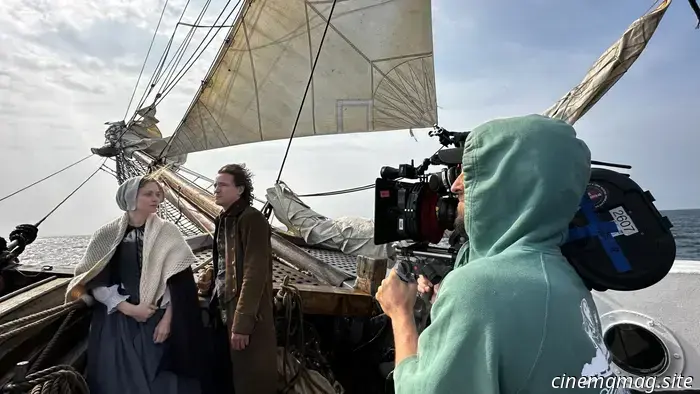 Cinematographer William Rexer Discusses His Work on The Testament of Ann Lee, Focusing on Capturing Dance and His Faith in Mona Fastvold.
The Testament of Ann Lee presents a biography with striking clarity and urgency, chronicling the life of the 18th-century Shakers' founder. The film oscillates between stark violence and moments of ecstatic revelation, capturing audience interest. It was penned by Mona Fastvold and Brady Corbet, who previously worked together on The Brutalist, and is directed by Fastvold.
Cinematographer William Rexer Discusses His Work on The Testament of Ann Lee, Focusing on Capturing Dance and His Faith in Mona Fastvold.
The Testament of Ann Lee presents a biography with striking clarity and urgency, chronicling the life of the 18th-century Shakers' founder. The film oscillates between stark violence and moments of ecstatic revelation, capturing audience interest. It was penned by Mona Fastvold and Brady Corbet, who previously worked together on The Brutalist, and is directed by Fastvold.
 If there’s a counterpoint to the purported decline of the music press, it is the significant surge in the popularity of music books. When CLASH was in its early years—around the turn of the Millennium—bookstores typically featured no more than half a dozen music titles, mainly focusing on The Beatles, The Stones, and Queen. Fast forward about twenty years, and the landscape has vastly broadened, allowing even niche artists like Felt's Lawrence to be the focus of best-selling biographies.
These publications are in print, convey long-form narratives, and pack an impact. What else are those shelves but an extension of the music press?
CLASH compiles the 10 best music books we've encountered in 2025.
—
Keith Cameron – 168 Songs of Hatred and Failure
As the title indicates, Cameron’s book is structured around nearly half of the Manic Street Preachers’ catalog throughout their 35-year journey, offering concise and thoughtful entries supplemented by insights from Nicky Wire and James Dean Bradfield. It steers clear of idealizing the band, pointing out misses like the lackluster studio version of ‘Methadone Pretty’ and ‘flimsy’ lyrics in ‘There by the Grace of God.’
The behind-the-scenes perspectives are the real highlight for both devoted and casual fans: anxieties over charts, responses to press criticism, and the unexpected origins of particular tracks. The meticulous care put into the book is evident, rewarding dedicated fans with explorations of demos, B-sides, and lesser-known tracks, while Cameron’s sharp writing and candid reflections from the band craft a vibrant narrative of continual reinvention for one of Britain’s enduring rock ensembles. Richard Bowes
—
Billy Bragg & Iain Key – A People’s History
Instead of a conventional autobiography, ‘A People’s History’ provides a vivid, chronological depiction of Bragg’s life, intertwining 700 fan recollections with insights from friends, collaborators, and Bragg himself. It charts his evolution from punk beginnings with Riff Raff, through his political awakening in the 1980s, Red Wedge activism, and decades of impactful songwriting. The text is enriched with photographs, memorabilia, and a gigography, while anecdotes capture the humor, humility, and grounded essence that characterize The Bard of Barking. For fans of Bragg’s politics, the array of stories delivers a shared history reflecting his lasting influence on music and politics worldwide, showcasing a life shaped by conviction, community, and an unwavering sense of purpose. Richard Bowes
—
Mike Joyce – The Drums
With Andy Rourke’s recent passing and the prospect of a reunion becoming increasingly unlikely, The Smiths are taking on an even more legendary status. We’ve heard from the iconic guitarist and the less-celebrated singer and lyricist, making Joyce’s narrative a compelling read. In his account, Joyce confesses to being the band’s biggest fan, and his enthusiasm shines through the pages. He avoids rehashing the infamous court case, opting instead to celebrate the band’s creativity from 1983 to 1987. Anecdotes and humor depict the emotional realities of life within the band, all conveyed with the honesty of a devoted fan. The stories of their experiences remain captivating. Richard Bowes
—
Stuart Maconie – With A Little Help From Their Friends
There has been no shortage of literature on The Fab Four throughout the years. What distinguishes Stuart Maconie's comprehensive entry is the emphasis on both intimate and peripheral figures in the band’s narrative. From family members to rival musicians and friends who came and went, it illustrates that more than just Paul, John, George, and Ringo shaped The Beatles and their world-conquering success. It’s a fast-paced, humorous read that, instead of resembling another book about the quartet, provides genuinely fresh insights. Chris Connor
—
Cameron Crowe – The Uncool
Before becoming an Oscar-winning director known for films like Jerry Maguire, Singles, and Almost Famous, Cameron Crowe was among the youngest writers at Rolling Stone magazine, interviewing a variety of stars in the 1970s. Almost Famous beautifully captured this through his journey with the fictional band Stillwater. In reality, Crowe hit the road with The Allman Brothers and Led Zeppelin, sharing his experiences as a journalist in his memoir, The Uncool. It reads almost like a fictionalized version of the film, filled with amusing anecdotes often featuring familiar names. Highlights include an interview with the Eagles before their rise to fame and Crowe following Bowie around LA during his transition away from Ziggy Stardust. Chris Connor
—
Robbie Robertson – Insomnia
Best known as the guitarist and central figure of The Band, Robbie Robertson also had a successful partnership with the famed director Martin Scorsese. His posthumous memoir, Insomnia, delves into their brotherly bond and chaotic lifestyle while living together. It mainly chronicles
Ranking at number 23 on our list of the 100 most-anticipated films of 2025, Christopher Nolan's grand project, The Odyssey, seems to be another significant venture in his career filled with such opportunities. Following exclusive theatrical previews, Universal Pictures has now shared the initial trailer online. Here’s a short synopsis: "Christopher Nolan’s
How Shifts in Digital Entertainment Preferences Are Altering Audience Expectations - MovieMaker Magazine
Attention is no longer focused in a single area. A film now competes not only with other films but also with all the other content that occupies a viewer's digital time.
If there’s a counterpoint to the purported decline of the music press, it is the significant surge in the popularity of music books. When CLASH was in its early years—around the turn of the Millennium—bookstores typically featured no more than half a dozen music titles, mainly focusing on The Beatles, The Stones, and Queen. Fast forward about twenty years, and the landscape has vastly broadened, allowing even niche artists like Felt's Lawrence to be the focus of best-selling biographies.
These publications are in print, convey long-form narratives, and pack an impact. What else are those shelves but an extension of the music press?
CLASH compiles the 10 best music books we've encountered in 2025.
—
Keith Cameron – 168 Songs of Hatred and Failure
As the title indicates, Cameron’s book is structured around nearly half of the Manic Street Preachers’ catalog throughout their 35-year journey, offering concise and thoughtful entries supplemented by insights from Nicky Wire and James Dean Bradfield. It steers clear of idealizing the band, pointing out misses like the lackluster studio version of ‘Methadone Pretty’ and ‘flimsy’ lyrics in ‘There by the Grace of God.’
The behind-the-scenes perspectives are the real highlight for both devoted and casual fans: anxieties over charts, responses to press criticism, and the unexpected origins of particular tracks. The meticulous care put into the book is evident, rewarding dedicated fans with explorations of demos, B-sides, and lesser-known tracks, while Cameron’s sharp writing and candid reflections from the band craft a vibrant narrative of continual reinvention for one of Britain’s enduring rock ensembles. Richard Bowes
—
Billy Bragg & Iain Key – A People’s History
Instead of a conventional autobiography, ‘A People’s History’ provides a vivid, chronological depiction of Bragg’s life, intertwining 700 fan recollections with insights from friends, collaborators, and Bragg himself. It charts his evolution from punk beginnings with Riff Raff, through his political awakening in the 1980s, Red Wedge activism, and decades of impactful songwriting. The text is enriched with photographs, memorabilia, and a gigography, while anecdotes capture the humor, humility, and grounded essence that characterize The Bard of Barking. For fans of Bragg’s politics, the array of stories delivers a shared history reflecting his lasting influence on music and politics worldwide, showcasing a life shaped by conviction, community, and an unwavering sense of purpose. Richard Bowes
—
Mike Joyce – The Drums
With Andy Rourke’s recent passing and the prospect of a reunion becoming increasingly unlikely, The Smiths are taking on an even more legendary status. We’ve heard from the iconic guitarist and the less-celebrated singer and lyricist, making Joyce’s narrative a compelling read. In his account, Joyce confesses to being the band’s biggest fan, and his enthusiasm shines through the pages. He avoids rehashing the infamous court case, opting instead to celebrate the band’s creativity from 1983 to 1987. Anecdotes and humor depict the emotional realities of life within the band, all conveyed with the honesty of a devoted fan. The stories of their experiences remain captivating. Richard Bowes
—
Stuart Maconie – With A Little Help From Their Friends
There has been no shortage of literature on The Fab Four throughout the years. What distinguishes Stuart Maconie's comprehensive entry is the emphasis on both intimate and peripheral figures in the band’s narrative. From family members to rival musicians and friends who came and went, it illustrates that more than just Paul, John, George, and Ringo shaped The Beatles and their world-conquering success. It’s a fast-paced, humorous read that, instead of resembling another book about the quartet, provides genuinely fresh insights. Chris Connor
—
Cameron Crowe – The Uncool
Before becoming an Oscar-winning director known for films like Jerry Maguire, Singles, and Almost Famous, Cameron Crowe was among the youngest writers at Rolling Stone magazine, interviewing a variety of stars in the 1970s. Almost Famous beautifully captured this through his journey with the fictional band Stillwater. In reality, Crowe hit the road with The Allman Brothers and Led Zeppelin, sharing his experiences as a journalist in his memoir, The Uncool. It reads almost like a fictionalized version of the film, filled with amusing anecdotes often featuring familiar names. Highlights include an interview with the Eagles before their rise to fame and Crowe following Bowie around LA during his transition away from Ziggy Stardust. Chris Connor
—
Robbie Robertson – Insomnia
Best known as the guitarist and central figure of The Band, Robbie Robertson also had a successful partnership with the famed director Martin Scorsese. His posthumous memoir, Insomnia, delves into their brotherly bond and chaotic lifestyle while living together. It mainly chronicles
Ranking at number 23 on our list of the 100 most-anticipated films of 2025, Christopher Nolan's grand project, The Odyssey, seems to be another significant venture in his career filled with such opportunities. Following exclusive theatrical previews, Universal Pictures has now shared the initial trailer online. Here’s a short synopsis: "Christopher Nolan’s
How Shifts in Digital Entertainment Preferences Are Altering Audience Expectations - MovieMaker Magazine
Attention is no longer focused in a single area. A film now competes not only with other films but also with all the other content that occupies a viewer's digital time.
 A New Era of Excellence for John le Carré
Chris Connor discusses the emerging golden age of adaptations of John le Carré's works… John le Carré continues to be one of the most esteemed and impactful spy novelists of both the 20th and 21st centuries. Titles such as The Spy Wh…
A New Era of Excellence for John le Carré
Chris Connor discusses the emerging golden age of adaptations of John le Carré's works… John le Carré continues to be one of the most esteemed and impactful spy novelists of both the 20th and 21st centuries. Titles such as The Spy Wh…
 Prime Video reveals the first glimpse of the mystery thriller series Vanished, featuring Kaley Cuoco and Sam Claflin.
Prime Video has released a set of first-look images from Vanished, an upcoming four-part mystery thriller series featuring Kaley Cuoco (The Flight Attendant) and Sam Claflin (Lazarus) as a couple whose romance…
Prime Video reveals the first glimpse of the mystery thriller series Vanished, featuring Kaley Cuoco and Sam Claflin.
Prime Video has released a set of first-look images from Vanished, an upcoming four-part mystery thriller series featuring Kaley Cuoco (The Flight Attendant) and Sam Claflin (Lazarus) as a couple whose romance…
The Plague Review: A Bullying Drama of Paranoia Demands a Suspension of Disbelief
If you've experienced tween bullying, you understand that before it becomes personal, the initial step involves choosing a target by being as irritating as possible; the first individual to be worn down is often the most psychologically vulnerable. The Plague, the first work from writer-director Charlie Polinger, functions similarly.