
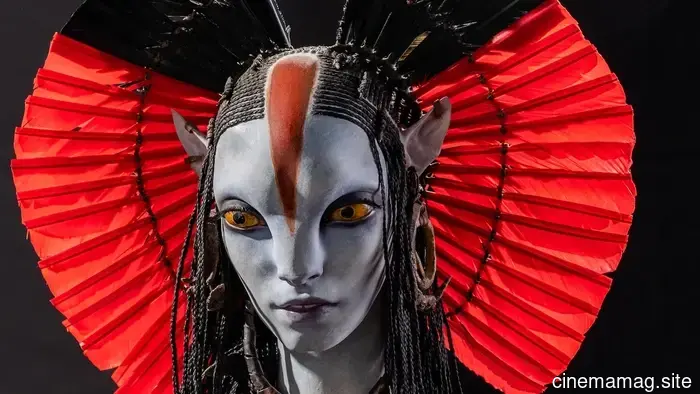
Costume designer Deborah L. Scott played a pivotal role in bringing costumes into the digital age for Avatar: Fire and Ash.
Costume designer Deborah L. Scott’s Oscar nomination for Avatar: Fire and Ash signifies more than just a singular achievement: it highlights a transformation in the realm of costume design.
“This is one of those moments, right?” Scott comments. “This is one of those instances where a film that is primarily performance capture VFX virtual reality has received a nomination for costume design. It feels like a significant milestone, not just for me but for all of us, and for the costume designers who will follow in my footsteps.”
Scott clinched her first Oscar for James Cameron’s Titanic and now has her second nomination for Avatar: Fire and Ash after collaborating with Cameron on all three Avatar movies. Beginning her career in the 1970s, when costume design was a tactile craft, she has contributed to iconic films such as E.T., Back to the Future, and Heat.
For the Avatar films, she must create tangible designs while constantly coordinating with the rest of the Avatar team to understand how the costumes will move and flow within a digital animation setting.
Deborah L. Scott on Crafting the Costumes for Avatar: Fire and Ash — and Their Transition to Digitization
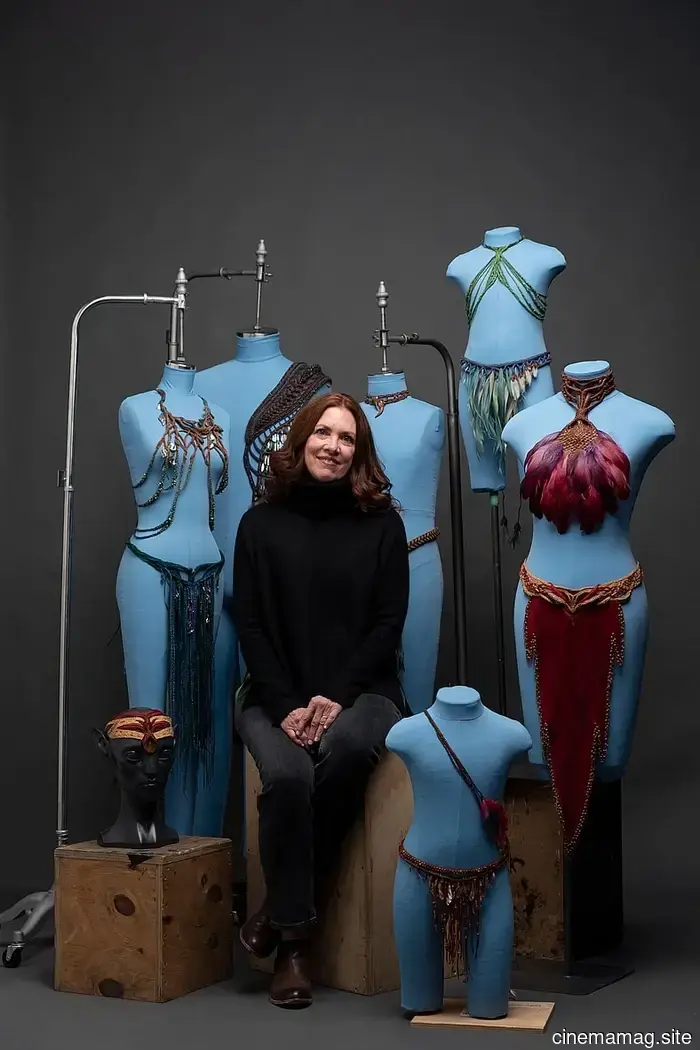
Deborah L. Scott with some of her creations for Avatar: Fire and Ash. – Credit: 20th Century Studios
As she typically does, Scott began by researching environments, defining cultures, and designing clothing that mirrors the characters' lifestyles. However, in the case of the Avatar films, these characters inhabit Pandora, a planet from Cameron’s visionary imagination.
The Ash People, influenced by a rugged terrain, wear minimal materials, while the Wind Traders, who traverse the planet, don a variety of colors and styles they’ve collected during their journeys.
“Most Indigenous peoples, even in modern times, utilize materials available in their environments,” Scott explains. “Especially in earlier times, they would use plants, twigs, anything accessible.”
The costumes were constructed by hand, woven, assembled, and aged, following the same methods Scott has used throughout her career. Yet for the Avatar films, this process is merely the beginning after the costumes are completed.
The actors don capture suits, enabling their movements and expressions to be translated onto digital Na’vi characters. Scott’s designs are scanned, analyzed, and digitally reconstructed, with visual effects artists replicating every detail, from beads to fibers. Adapting to this process required Scott to embrace an entirely new creative language, prompting her to rethink long-held instincts.
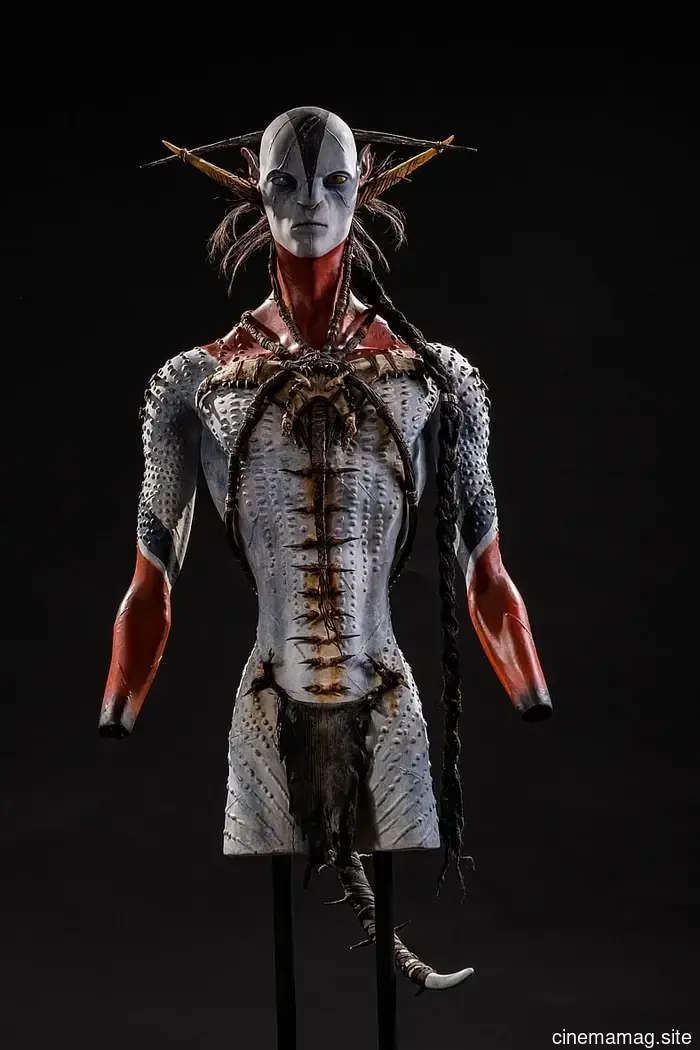
One of the costumes designed by Deborah L. Scott for Avatar: Fire and Ash. Photo by Mark Fellman. © 2025 20th Century Studios. All Rights Reserved.
“When I first started, I wasn’t very adept with computers,” she admits. “Let alone understanding the lighting they use or the intricacies of simulation and animation. There's so much to learn.”
Scott had to transition from heading a physical workshop to engaging continually with artists working in digital spaces, often without the immediate feedback she’d typically received.
“I guide them weekly until the film is completed,” she notes.
This level of involvement marks a notable change in the requirements of costume design today. Traditionally, designers finalize their tasks when the garments are constructed and filmed. In contrast, on Avatar, Scott continually influences those costumes within the digital framework, assisting visual effects teams in interpreting their movement and behavior.
“When we begin working with it, there are many unknowns, such as the weight of the garment, how much it moves in the wind, and what sounds it produces,” she explains.
Typically, a designer observes how fabric drapes or shifts when an actor crosses a room. However, Scott must transform that understanding into detailed instructions, collaborating closely with artists who rely on simulations rather than direct observation. She acknowledges that this requires patience and a readiness to tackle challenges without straightforward solutions.
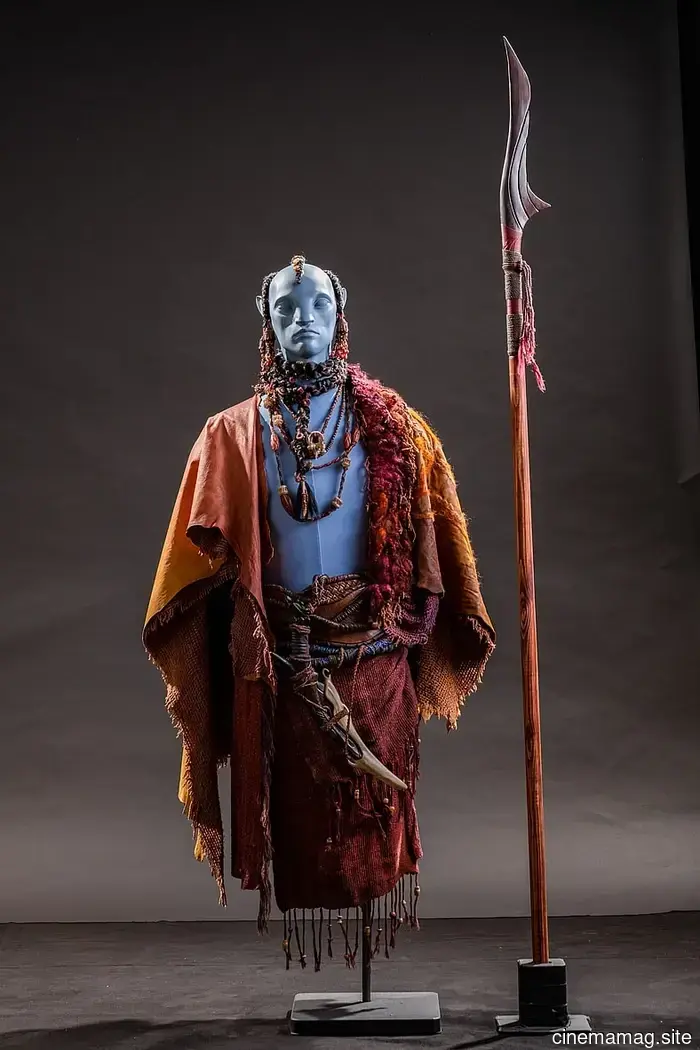
CORAL – Costumes. Photo by Mark Fellman. © 2025 20th Century Studios. All Rights Reserved.
“Honestly, it's quite challenging as I’m accustomed to working with my hands,” she confesses. “Now I collaborate with the team at a computer using my eyes and voice to convey all necessary information.”
The work progresses gradually. Scott reviews snippets of footage as they are completed, fine-tuning costume colors, contrasts, and textures alongside the animation, lighting, and rendering teams.
“It unfolds step-by-step,” she describes. “It’s like assembling a large jigsaw puzzle.”
Lighting adds another layer of complexity. Since Pandora is entirely a digital construct, director James Cameron can manipulate light in ways that would be impossible on a physical set.
“Jim can say, I’d like a hint of pink coming from the ocean. I’d like some blue coming from this direction,” Scott explains. “This introduces additional complexities.”
Avatar: Fire and Ash is currently in theaters.
Main image: One of the costumes from Avatar: Fire and Ash designed by Deborah L. Scott. Photo by Mark Fellman. © 2025 20th Century
Other articles
 Daryl Hannah Criticizes Her Representation in the Love Story as 'Typical Misogyny'
Daryl Hannah claims that the new FX series Love Story: John F. Kennedy Jr. & Carolyn Bessette, in which she plays a role, is full of falsehoods about her.
Daryl Hannah Criticizes Her Representation in the Love Story as 'Typical Misogyny'
Daryl Hannah claims that the new FX series Love Story: John F. Kennedy Jr. & Carolyn Bessette, in which she plays a role, is full of falsehoods about her.
 Daryl Hannah Criticizes Her depiction in the Love Story as 'Textbook Misogyny'
Daryl Hannah claims that the new FX series Love Story: John F. Kennedy Jr. & Carolyn Bessette, where she plays a character, is replete with falsehoods about her.
Daryl Hannah Criticizes Her depiction in the Love Story as 'Textbook Misogyny'
Daryl Hannah claims that the new FX series Love Story: John F. Kennedy Jr. & Carolyn Bessette, where she plays a character, is replete with falsehoods about her.
 The Genuine Techniques for Transforming a $10K Film into a $1M Production - MovieMaker Magazine
Creating films independently has always revolved around creativity, perseverance, and maximizing available resources. While large studios require substantial budgets,
The Genuine Techniques for Transforming a $10K Film into a $1M Production - MovieMaker Magazine
Creating films independently has always revolved around creativity, perseverance, and maximizing available resources. While large studios require substantial budgets,
 Sideshow's Star Wars Scum & Villainy collection grows with the addition of the Vizam sixth scale figure.
Sideshow has announced the upcoming addition to its Star Wars Scum & Villainy collectible series, featuring a sixth scale figure of Vizam, Jabba the Hutt’s weapons master, as portrayed in Star Wars: Episode VI…
Sideshow's Star Wars Scum & Villainy collection grows with the addition of the Vizam sixth scale figure.
Sideshow has announced the upcoming addition to its Star Wars Scum & Villainy collectible series, featuring a sixth scale figure of Vizam, Jabba the Hutt’s weapons master, as portrayed in Star Wars: Episode VI…
 Andy Jurgensen on the Managed Disorder of Continuous Battles
Editor Andy Jurgensen of One Battle After Another states that no topic was off-limits.
Andy Jurgensen on the Managed Disorder of Continuous Battles
Editor Andy Jurgensen of One Battle After Another states that no topic was off-limits.
 Setting the Tone: The Role of Music in Influencing the Atmosphere of Neo-Noir and Independent Films - MovieMaker Magazine
Music in film serves not merely as an auditory component, but as an emotional guide. In neo-noir thrillers, late-night character-driven dramas, and independent genre films, soundtracks
Setting the Tone: The Role of Music in Influencing the Atmosphere of Neo-Noir and Independent Films - MovieMaker Magazine
Music in film serves not merely as an auditory component, but as an emotional guide. In neo-noir thrillers, late-night character-driven dramas, and independent genre films, soundtracks
Costume designer Deborah L. Scott played a pivotal role in bringing costumes into the digital age for Avatar: Fire and Ash.
Costume designer Deborah L. Scott's nomination for an Oscar for Avatar: Fire and Ash signifies more than just one project; it highlights a change in what