
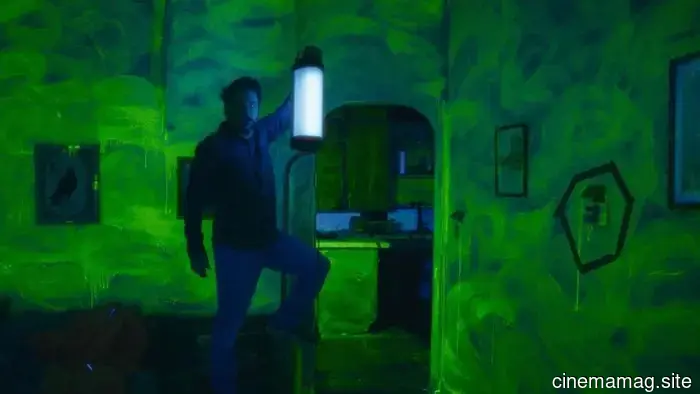
In Kill Me, Charlie Day portrays a character who is convinced that he did not attempt to take his own life.
Kill Me, a intricately layered dark comedy featuring Charlie Day, had a path to the screen that was nearly as convoluted as the film itself, as explained by writer-director Peter Warren during a SXSW screening on Monday.
Day portrays Jimmy, a man who awakens with his wrists slashed, lying in a bathtub filled with his own blood. He contacts 911 and informs the operator (Allison Williams) that he needs assistance — and insists that it wasn’t a suicide attempt.
He is convinced that someone else is responsible for his condition.
Before long, Jimmy and the operator, Margot, delve into Jimmy's past and compile a list of individuals who might have had motives to harm him while disguising it as suicide. The impressive cast includes Giancarlo Esposito from Breaking Bad, Aya Cash from The Boys, Tony Cavalero from The Righteous Gemstones, and Jessica Harper, known for Suspiria.
The Creation of Kill Me
You might recognize the It’s Always Sunny in Philadelphia meme from a memorable episode where Day's character becomes embroiled in conspiracy theories. Now envision that scenario with a different twist.
Warren approaches the topic of suicide seriously in Kill Me — though it’s comedic, the film treats Jimmy’s struggles with mental illness with dignity, subtlety, and empathy. Prior to making the film, Warren worked on a suicide-prevention hotline.
Initially, he pitched the concept to his agents as a series, and they were on board. However, when no one bought the idea, he decided to write it as a feature on spec.
At the same time, Day and producer Keith Goldberg, an executive at Dark Horse Entertainment (Umbrella Academy), were in search of a writer for a planned Netflix series. Warren submitted his script for Kill Me, then titled Murder Suicide, as a writing sample.
Goldberg was not only impressed by the story but also by how thoughtfully the script addressed Jimmy's depression.
“I read this script as a writing sample for the TV show, and I told Charlie, ‘Hey, I found our writer. But also, this script is really good, we should just go make this,’” Goldberg recounted during Monday's post-screening Q&A.
Although the TV series never materialized, the movie did. Dark Horse collaborated with XYZ, which then connected with Natalie Metzger of Vanishing Angle. Vanishing Angle and XYZ had previously partnered on the clever horror film The Wolf of Snow Hollow.
“As I read it, I thought, ‘Wow, this feels just like a script I’ve encountered before.’ And the more I read, I realized, ‘No, I’ve seen this script before,’” Metzger shared on Monday.
She recalled having read Murder Suicide during the pandemic, a peculiar time for development overall. She suggested filming in the Salt Lake City area, where the movie was ultimately shot.
“She’s a magician when it comes to making things work within a budget,” Goldberg noted.
The film, which benefitted from its title change during development, leaves many aspects open for interpretation. At times, Jimmy is suspicious of certain individuals around him, and it remains uncertain whether his fears are justified or if his mental illness is causing paranoia.
“I don't believe anyone in that entire group desires anything for Jimmy other than health and happiness, but it remains complicated, and they all deal with feelings of resentment to varying degrees of success,” Warren remarked.
The film is currently in search of distribution.
Kill Me had its premiere at SXSW and will screen again today. For more on our SXSW coverage, you can read further here. The main image features Charlie Day as Jimmy using a blacklight to search for clues in Kill Me. Vanishing Angle.
Other articles
 Wild Horse Nine Trailer: John Malkovich and Sam Rockwell Star in Martin McDonagh’s Dark Comedy
After the success of 2022's The Banshees of Inisherin, Martin McDonagh is back with Wild Horse Nine, featuring John Malkovich, Sam Rockwell, Steve Buscemi, Mariana di Girolamo, Ailín Salas, Tom Waits, and Parker Posey. Although the film is not scheduled to be released until November 6, Searchlight Pictures has begun its promotional efforts with the release of the first trailer.
Wild Horse Nine Trailer: John Malkovich and Sam Rockwell Star in Martin McDonagh’s Dark Comedy
After the success of 2022's The Banshees of Inisherin, Martin McDonagh is back with Wild Horse Nine, featuring John Malkovich, Sam Rockwell, Steve Buscemi, Mariana di Girolamo, Ailín Salas, Tom Waits, and Parker Posey. Although the film is not scheduled to be released until November 6, Searchlight Pictures has begun its promotional efforts with the release of the first trailer.
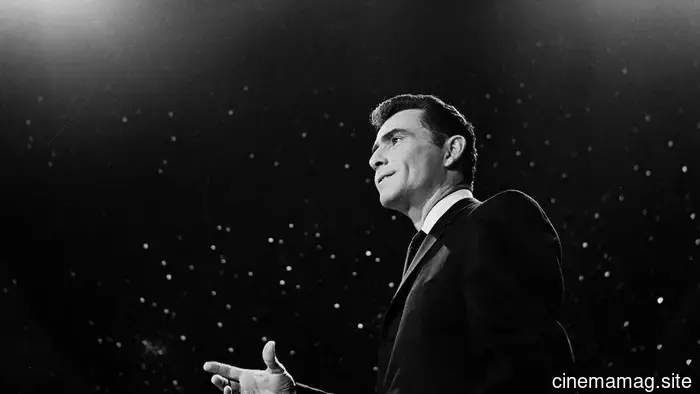 In New Doc, Rod Serling Illustrates From Beyond the Grave How We Came to Exist in The Twilight Zone.
Long before he developed The Twilight Zone, Rod Serling attempted to narrate a tale influenced by Emmet Till, the Black teenager who was lynched in Mississippi in 1955 for
In New Doc, Rod Serling Illustrates From Beyond the Grave How We Came to Exist in The Twilight Zone.
Long before he developed The Twilight Zone, Rod Serling attempted to narrate a tale influenced by Emmet Till, the Black teenager who was lynched in Mississippi in 1955 for
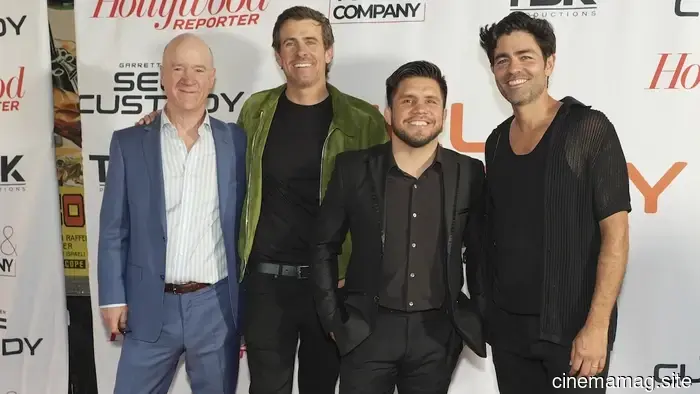 Garrett Patten's 'Self Custody' Reveals Dual Aspects of Bitcoin, Featuring Adrien Grenier and Henry.
"Self Custody," an intelligently crafted and comically suspenseful new thriller co-directed by and starring Garrett Patten, effectively outlines both the positives and negatives of Bitcoin.
Garrett Patten's 'Self Custody' Reveals Dual Aspects of Bitcoin, Featuring Adrien Grenier and Henry.
"Self Custody," an intelligently crafted and comically suspenseful new thriller co-directed by and starring Garrett Patten, effectively outlines both the positives and negatives of Bitcoin.
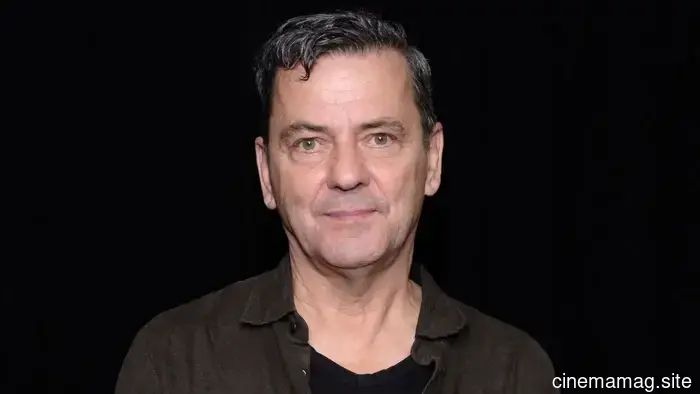 “The Film Is More Clever Than I Am”: Christian Petzold Discusses Miroirs No. 3
I have conducted interviews in a variety of locations: multiplexes, screening rooms, green rooms, distributor offices, post-production facilities, cafés, hotels—quite a few hotels—or any available space at the moment. (One discussion with a true architect of contemporary cinema even took place in a coat closet.) Christian Petzold is the first to have expressed regret about the room. I observed
“The Film Is More Clever Than I Am”: Christian Petzold Discusses Miroirs No. 3
I have conducted interviews in a variety of locations: multiplexes, screening rooms, green rooms, distributor offices, post-production facilities, cafés, hotels—quite a few hotels—or any available space at the moment. (One discussion with a true architect of contemporary cinema even took place in a coat closet.) Christian Petzold is the first to have expressed regret about the room. I observed
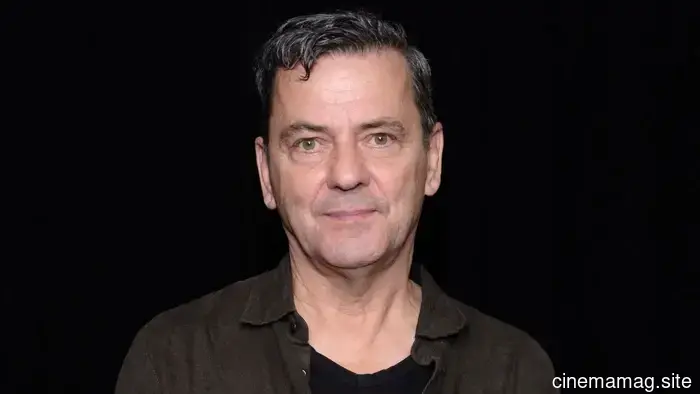 "‘The Film Is Smarter Than Me’: Christian Petzold Discusses Miroirs No. 3"
I have conducted interviews in various environments: multiplexes, screening rooms, green rooms, distributor offices, post-production facilities, cafés, hotels—numerous hotels—or any available space at the time. (One discussion with a true pioneer of contemporary cinema even took place in a coat closet.) Christian Petzold is the first to apologize for the setting. I observed
"‘The Film Is Smarter Than Me’: Christian Petzold Discusses Miroirs No. 3"
I have conducted interviews in various environments: multiplexes, screening rooms, green rooms, distributor offices, post-production facilities, cafés, hotels—numerous hotels—or any available space at the time. (One discussion with a true pioneer of contemporary cinema even took place in a coat closet.) Christian Petzold is the first to apologize for the setting. I observed
 In Their Town, Ora Duplass, Mark Duplass, and Katie Aselton create a film aimed at uniting different generations.
"My parents certainly made an effort to keep me away from the industry for as long as possible," states Ora Duplass, who delivers an impressive performance in her feature acting debut in Their.
In Their Town, Ora Duplass, Mark Duplass, and Katie Aselton create a film aimed at uniting different generations.
"My parents certainly made an effort to keep me away from the industry for as long as possible," states Ora Duplass, who delivers an impressive performance in her feature acting debut in Their.
In Kill Me, Charlie Day portrays a character who is convinced that he did not attempt to take his own life.
Kill Me, a rivetingly intricate dark comedy featuring Charlie Day, underwent a pathway to the screen that was nearly as convoluted as the movie itself, according to writer-director Peter Warren.