
Faces of Death Review: A Cleverly Made Remake Examines the “Sicko” Within Us All
When Faces of Death debuted in 1978, the very notion of watching actual deaths was enough to attract audiences, even if most of the footage was staged (thus not a “true” snuff film). Fast forward about four decades, and your Mass Media Studies teacher can readily show you R. Budd Dwyer’s suicide on LiveLeak; shortly after that, The Verge publishes an article discussing how Facebook moderators frequently review such videos, among even worse content. Violence has transcended shock sites and bluntly titled Reddit forums to become a regular feature of social media, where changes in algorithms can cause gruesome animal cruelty to flood everyone’s feeds before being classified as “not a problem.”
Directors Daniel Goldhaber and co-writer Isa Mazzei possess a deep understanding of the Internet's darker realms. Their 2018 film, Cam, is a standout horror film of the Internet era, and with their reboot/remake/reimagining of Faces of Death, they bring the past vividly into the present. This film acknowledges the unsettling reality that there may be a darker side within all of us, and possibly nothing we can do to alter that.
The tone is established almost immediately when Margot (Barbie Ferreira) scrolls through videos for approval on a TikTok-style social network, giving the green light to intensely graphic footage of a man being struck by a dump truck while simultaneously approving videos that provide disturbing advice like How to Use Narcan or How to Put on Condoms. Although the job is appalling, she genuinely seems to want to perform it well, especially when she encounters a video seemingly depicting an actual beheading, accompanied by dry commentary. She can’t verify its authenticity, nor can her boss; approving the video highlights the failings of platforms that bend the rules for trends and those in charge who are reluctant to make waves. These issues escalate as more videos surface, and Margot connects one of them to a missing person case.
Similar to Cam—featuring its heroine wielding a taser before meeting a dubious client—Faces of Death is thoughtfully constructed. It’s the kind of film made by creators who become frustrated when protagonists fail to choose the reasonable solution or fall into the same traps as the cheesy horror films Margot’s roommate enjoys. In addition to a commitment to realism through Reddit threads, geolocation, and public filming, Goldhaber and Mazzei take care to highlight Margot’s limitations: an NDA, previous trauma from a problematic video shoot, and her inept boss. They realistically portray how individuals on the Internet actually respond: with memes, speculation, and ultimately inaction, since there are no bodies and it requires too much effort to care. Moreover, the videos are trending, and her boss insists they must “give the people what they want”—they aren’t the morality police.
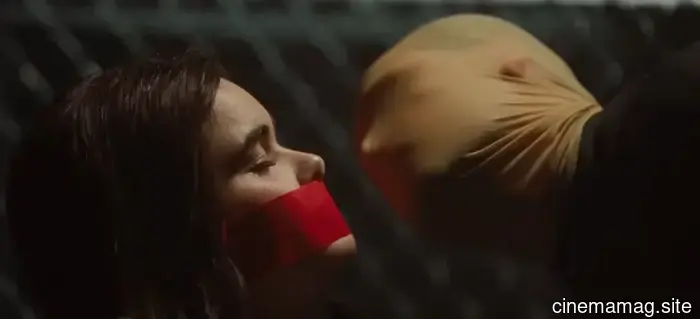
This recurring line comes into sharp focus with Dacre Montgomery’s character, Arthur, first seen at a dead-end job in a cell phone store, utilizing the customer database to his advantage. Before long, we discover that Arthur is the content creator, taking the production of his material as seriously as the influencer he kidnaps; he even engages in sockpuppet accounts to spar with trolls in the comments. In these scenes, Faces of Death could have easily turned into a conventional tech horror tale, but Goldhaber and Mazzei pursue a more nuanced and pessimistic perspective. Their ire is directed at the broader systemic forces that have transformed death and destruction into yet another type of “content,” something to dissect and anticipate. As Arthur states, “It’s the attention economy and, baby, business is booming.”
Most notably, Goldhaber and Mazzei skillfully balance viewer expectations with critical analysis, providing what audiences seek while examining their motivations. After all, isn’t there a disturbing part of us all that is drawn to the taboo? The fascination with snuff as a concept lies in its very existence—that we can witness something horrific from the comfort of our homes without getting involved. In a similar vein, Goldhaber’s tense direction—enhanced by a vintage film-grain aesthetic and synth score—gains suspense not only from a home invasion but also from revealing the next recreated scene. The horror movie thrills maintain enjoyment, preventing it from becoming didactic or preachy, yet the thematic ideas never fade into the background.
Despite following a general structure, Faces of Death often takes unexpected turns, opting to portray Arthur as nearly “normal”—the ideal content creator—or peppering the script with lines like, “Hey, guys, I fucked a clown and I got BV” in the midst of a tense scene. Faces of Death caters to the audience while persistently questioning why they desire this content, culminating in an ending as grim as the original Texas Chain Saw Massacre. Online platforms relentlessly work to reduce everything to “content,” where witnessing atrocities is seen as morally acceptable rather than obscene. Margot’s roommate correctly describes the original Faces of Death as the first viral video,

Faces of Death Review: A Cleverly Made Remake Examines the “Sicko” Within Us All
When Faces of Death first came out in 1978, the idea of being able to see real people die was sufficient to market the film, even if much of it was staged (making it not a "real" snuff film). Fast forward approximately 40 years, and your Mass Media Studies instructor can present you with footage