
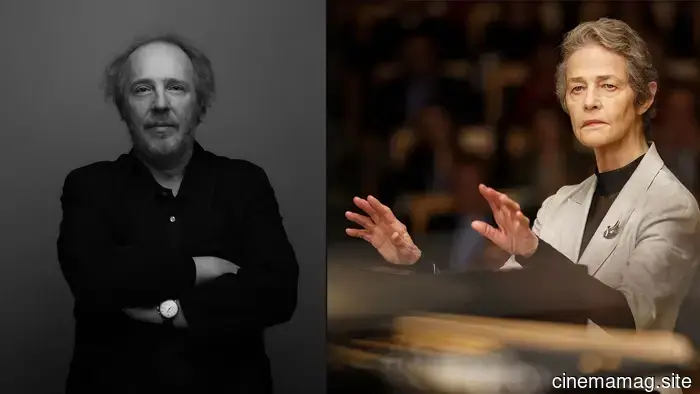
Arnaud Desplechin discusses Two Pianos, anxiety-induced breakdowns, and the art of creating cinema that surpasses reality.
With 18 features and more—including modern classics such as My Sex Life… or How I Got into an Argument and A Christmas Tale—French writer-director Arnaud Desplechin continues to push the boundaries of thought-provoking cinema. Whether it's a police procedural, a documentary about film history, or a convoluted love story, he appears to have an endless array of narratives to explore.
Staying true to the tone of his literary style, his latest film, Two Pianos, chronicles the troubled life of savant pianist Mathias Vogler (François Civil), who returns home to perform with his aging mentor Elena (Charlotte Rampling), despite underlying motivations that emerge through confrontations with his tumultuous romantic history and severe struggles with alcoholism.
Prior to the U.S. release of Two Pianos, I spoke with Desplechin about the film's literary qualities, the psychological depths of his characters, his filmmaking methods, and the extraordinary actors he had the honor of collaborating with.
The Film Stage: Two Pianos feels very much like a novel—a deliberate, literary form of cinema that unfolds slowly, with deep emotions and unexpressed nuances at its core. There seems to be more unspoken detail here than in much of your previous work. Your films are frequently described as literary; do you see them that way? Is this literary essence an intentional choice in your filmmaking, or is it simply your inherent style?
Arnaud Desplechin: I will respond in two brief ways, so don’t worry. The first is a recollection of a conversation I had with Philippe Garrel, who said, “You failed as a novelist, and that’s why your films are remarkable. I failed as a painter, and that’s why my films are noteworthy.” I love that perspective. He’s an unfulfilled painter, and I’m an unfulfilled writer. Perfectly fitting for me.
I remember being so devoted to films that by the age of nine or ten, I declared, “I will never read a serious novel because I want to create popular movies.” The allure of cinema lies in its accessibility; it’s for everyone, not just cinephiles. In my family, we had a ritual that when we turned 17, we were expected to start reading In Search of Lost Time. The long series of Proust novels, you know? My siblings did, but I refused. I insisted, “No Proust! I want to be John Ford! I’m not interested in Proust!” So yes, I’ve failed as a writer.
On the other hand, I recall that about a week before filming La vie des morts, I saw a Truffaut film, Les Deux Anglaises et le Continent [Two English Girls], on a small black-and-white TV in our tiny apartment. I had seen the film before and wasn’t particularly fond of it at the time. However, since I was preparing to make my first film, I decided to watch it again. The story revolves around a French man invited to a country mansion with two attractive young English sisters. At one moment, he gently places his hand on one sister’s neck, and she, being puritanical, questions, “Why are you doing that?” Jean-Pierre Léaud’s character responds, “Because you come from Earth and I think I like it.” I thought, “What an extraordinary line. This is what I want to do for a living.” It’s not about writing something simple like “Do you want a cup of coffee?” It’s when characters express enigmas—lines that transcend them. When they say something profound, the actor grapples with their own interpretation of such a poetic line.
In my films, I aim to capture those moments when you remember on the big screen just how much grander human existence can be than societal expectations suggest. Realist movies often try to convince you that life is dull and trivial, but then you buy a ticket, enter a theater, and witness faces that are larger than life, awakening you to just how expansive your own existence can be. That’s my goal: to portray those fleeting moments where characters feel larger than life.
This leads to my next inquiry about the psyche of the characters within your work. You’re recognized for creating introspective, self-aware characters. Is this intentional? Is it something you reflect on? Characters that are critical of themselves?
I believe we all share that quality. In films, that introspection can be explored more freely than in real life, where it can sometimes lead to silence. In film, though, you can do anything. To share one thing: during the editing of Deux Pianos, I was taken aback to discover that all my characters share a sense of solitude—the young widow Claude’s loneliness, Elena’s despair, Mathias’ struggles with alcohol, and even the shy mother who hesitates to connect with her son after years apart. I realized this theme of solitude emerged
Other articles
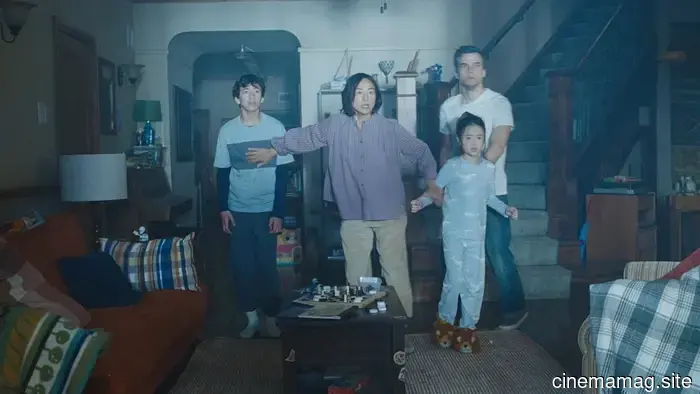 Netflix reveals a sneak peek of The Last House featuring Greta Lee and Wagner Moura.
Netflix has unveiled a selection of first-look images for its sci-fi thriller The Last House, directed by Louis Leterrier, known for Now You See Me. The film features Greta Lee (Past Lives) and Wagner Moura (…
Netflix reveals a sneak peek of The Last House featuring Greta Lee and Wagner Moura.
Netflix has unveiled a selection of first-look images for its sci-fi thriller The Last House, directed by Louis Leterrier, known for Now You See Me. The film features Greta Lee (Past Lives) and Wagner Moura (…
.jpg) Blu-ray Review – Throw Momma From the Train (1987)
Throw Momma From the Train, 1987. Directed by Danny DeVito. Featuring Danny DeVito, Billy Crystal, Anne Ramsey, and Kim Greist. SYNOPSIS: Are there any fans of Throw Momma From the Train in the audience? If that's the case, you…
Blu-ray Review – Throw Momma From the Train (1987)
Throw Momma From the Train, 1987. Directed by Danny DeVito. Featuring Danny DeVito, Billy Crystal, Anne Ramsey, and Kim Greist. SYNOPSIS: Are there any fans of Throw Momma From the Train in the audience? If that's the case, you…
 5 Films That Successfully Transitioned Into Television Series - MovieMaker Magazine
Today, just as audiences consistently keep up with updates from sources like Gamezone casino games news to remain updated on the latest in digital entertainment,
5 Films That Successfully Transitioned Into Television Series - MovieMaker Magazine
Today, just as audiences consistently keep up with updates from sources like Gamezone casino games news to remain updated on the latest in digital entertainment,
Arnaud Desplechin discusses Two Pianos, anxiety-induced breakdowns, and the art of creating cinema that surpasses reality.
With 18 features and more to his credit—including contemporary masterpieces such as My Sex Life... or How I Got into an Argument and A Christmas Tale—French writer-director Arnaud Desplechin consistently produces thought-provoking films. Whether it’s a police procedural, a documentary on cinematic history, or a difficult love story, he appears to have an endless supply of narratives to share.