
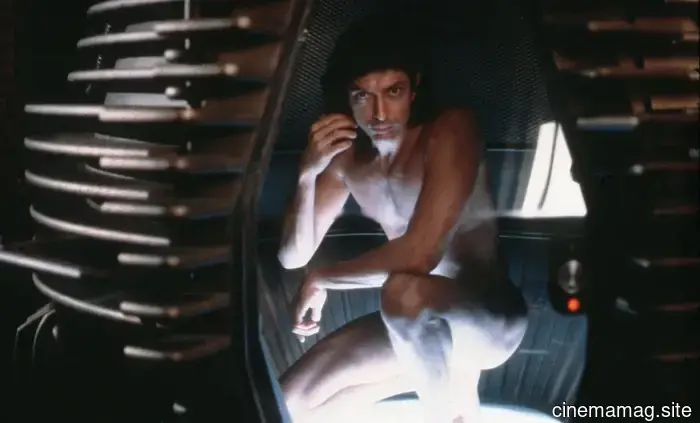
David Cronenberg’s The Fly at 40: A Tribute to Decay
Adam Page reflects on David Cronenberg’s science fiction body horror masterpiece, The Fly.
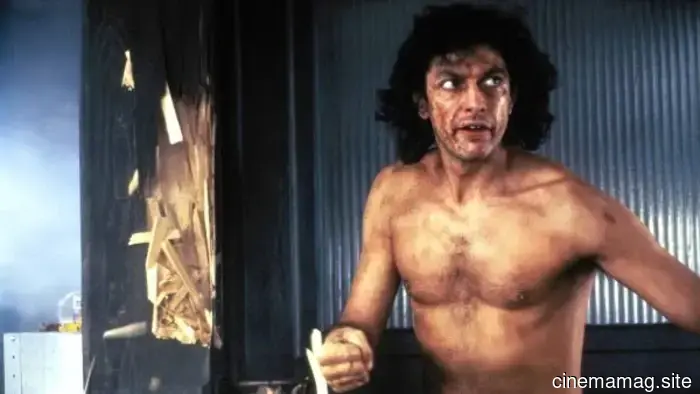
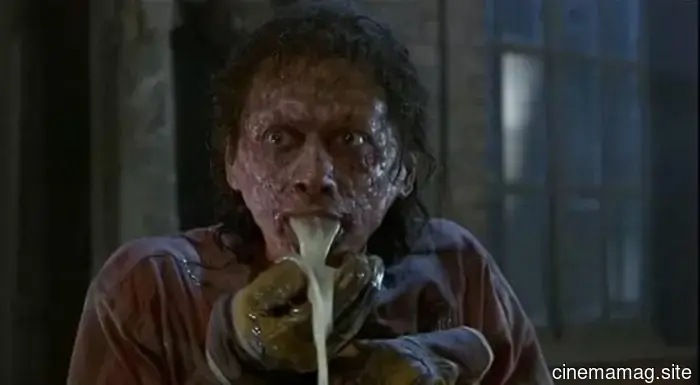
In The Fly, there’s a notable scene, and if you haven't seen it yet, pause reading, go watch it, and then come back—I'll be here. Ready? It’s the moment when Jeff Goldblum’s Seth Brundle removes his fingernail. He simply lifts it off, revealing flesh beneath that is both glistening and grotesque, oozing pus. His expression isn’t one of horror; it’s more indicative of scientific fascination—a sense of wonder, perhaps. He documents everything in his notebooks like a man who has resigned himself to accept the reality of the situation.
This moment encapsulates what makes The Fly exceptional. It embodies pure Cronenberg and explains why, even after forty years, this film continues to compel audiences to momentarily set aside their popcorn and reflect introspectively on their own hands.
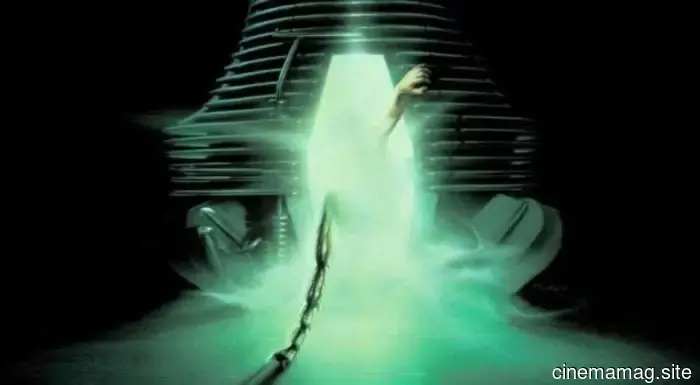
Let’s be straightforward. The premise of The Fly might not appear to warrant critical acclaim. A scientist invents a teleportation pod, experiments with alcohol, teleports himself without noticing the housefly that accompanies him, and subsequently undergoes monstrous transformation. It resembles a clichéd B-movie from the 1950s, which is precisely how it started before Cronenberg infused it with his vision.
The original The Fly, produced in 1958 and featuring a wonderfully hammy Vincent Price, represents typical Cold War anxiety cinema. A man tampering with nature? Nature retaliates. The film’s iconic final image—a tiny human-headed fly ensnared in a spider's web, squeaking “Help me! Help meeee!” in a voice reminiscent of a distressed mouse—has left an indelible mark on an entire generation. While it’s delightfully campy, it lacks, by any genuine standard, the label of art.
Cronenberg’s 1986 rendition, however, undertook the bold and perilous task of asking: what if we approached this story earnestly? What if we truly invested in the characters? What if this transformation was not merely retribution for pride but rather something far more intimate and horrific—a disease? The term disease becomes crucial to understanding everything.
Throughout his career, Cronenberg has navigated themes of bodily mutation. Shivers (1975) explored the consequences of parasites transforming bodies into pleasure machines. Rabid (1977) featured a feeding orifice under a character's armpit, dubbed an evolutionary breakthrough. Videodrome introduced a stomach cavity in James Woods that consumed VHS tapes, achieving a quintessentially Canadian surrealism. Scanners depicted telepathy as a migraine capable of killing from afar.
By the time he adapted The Fly, Cronenberg had crafted a profound philosophy surrounding the flesh. He presented the body as both identity and confinement. The body is not a mere vessel for the self; it embodies the self. When it transforms, the individual transforms. The notion of a ghost in the machine is rendered irrelevant; the machine is all that exists.
This perspective is discomforting. Considerable societal energy is devoted to the belief that our “true selves” can be separated from our physical forms. It’s a comforting illusion to think a person trapped in a deteriorating body remains fundamentally themselves. Cronenberg, with his cold Canadian demeanor, offers no such comforts.
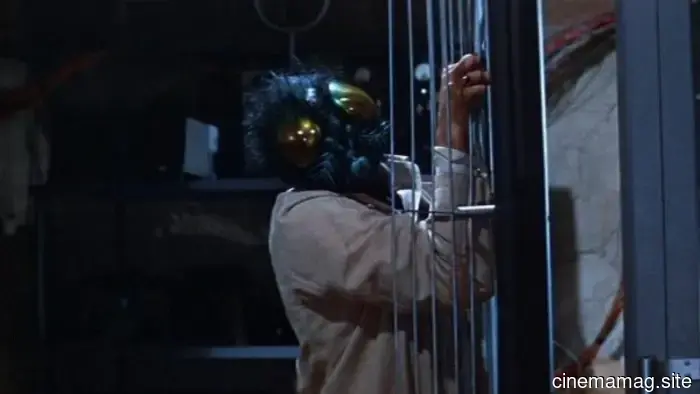
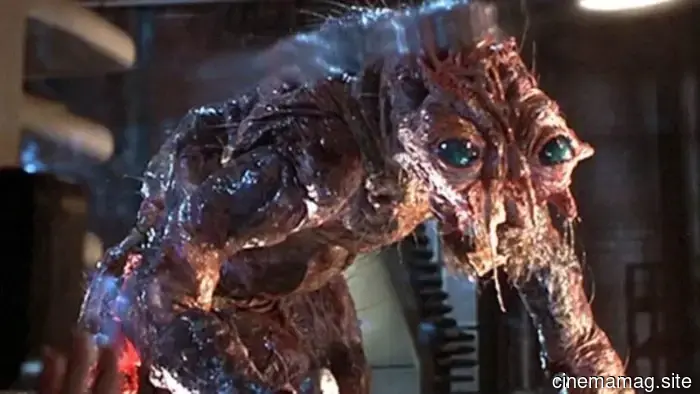
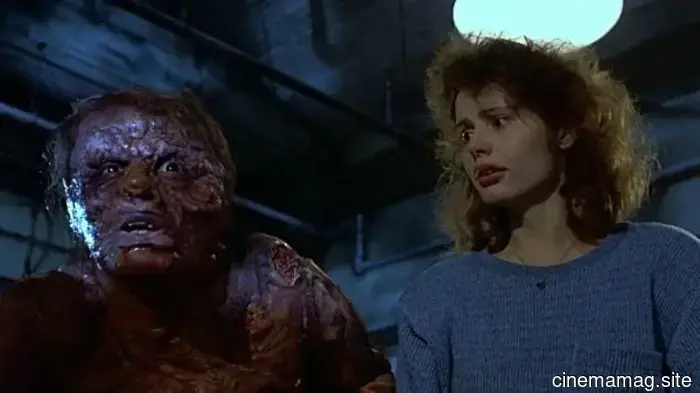
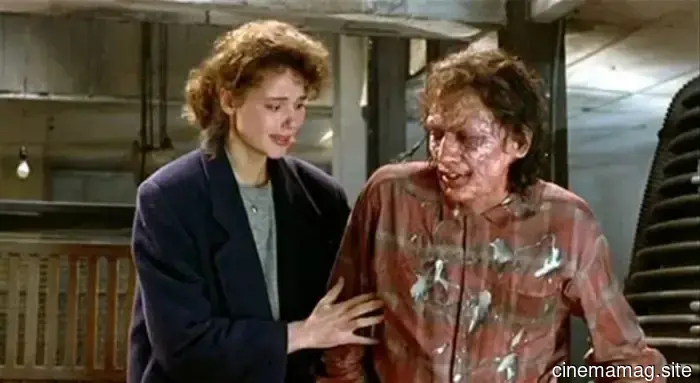
Seth Brundle doesn’t merely develop fly traits; he grows enthusiastic about them. He can scale walls and ceilings, consume food by regurgitating enzymes onto it, and drink the resultant mixture. He experiences superhuman strength. For a time, and this is particularly unsettling, it appears that this might be beneficial. Brundle is invigorated and laser-focused. Physically, he represents the peak version of himself. He recognizes this, revels in it, and distances himself from the woman who loves him because she struggles to keep pace with his astonishing new metabolism.
Sound familiar? It should, as it evokes everyone we know who has succumbed to something consuming them, whether it’s an obsession, a toxic relationship, or a substance that temporarily elevates them. The fly symbolizes addiction, with Brundle being the individual who opens the door to it.
It’s worth noting that Jeff Goldblum delivers one of the finest physical performances in American cinema in this film. While much attention is given to the makeup, which is warranted, we don’t discuss enough what Goldblum accomplishes before the prosthetics begin their striking transformation. He embodies an archetypal scientist—brilliant yet awkward, socially disconnected, and accustomed to communicating with machines rather than people.
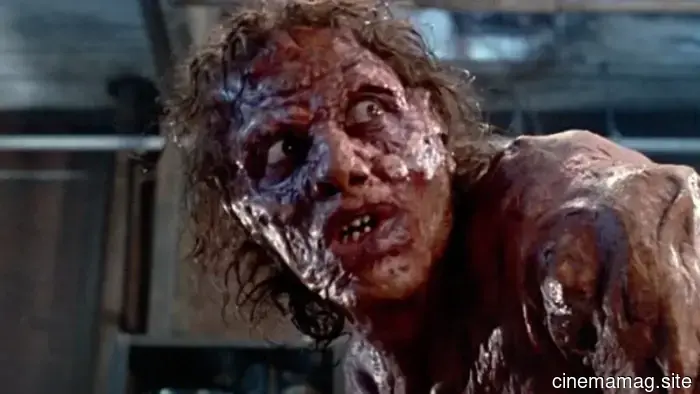
Observe his movements in early scenes. He navigates spaces with an uncertainty, as if he is unsure where his body ends and the surroundings begin. This isn’t traditional acting; it’s more akin to physical expression. The portrayal of a man so immersed in his intellect that his body becomes merely ornamental. Then witness that evolution.
As Brundlefly emerges, Goldblum exhibits
Other articles
 The Top 12 James Bond Films at the U.S. Box Office, Adjusted for Inflation
Here are the 12 highest-grossing James Bond films at the U.S. box office, adjusted for inflation.
The Top 12 James Bond Films at the U.S. Box Office, Adjusted for Inflation
Here are the 12 highest-grossing James Bond films at the U.S. box office, adjusted for inflation.
.png) Top Online Pokies in Australia: We Evaluated Over 40 Online Pokies Sites for Immediate AUD Payouts (May 2026)
Hello Punters! Searching for that winning spin? We’ve got you sorted. Our specialists have streamlined your search, making it simpler and more effective, through thorough research and
Top Online Pokies in Australia: We Evaluated Over 40 Online Pokies Sites for Immediate AUD Payouts (May 2026)
Hello Punters! Searching for that winning spin? We’ve got you sorted. Our specialists have streamlined your search, making it simpler and more effective, through thorough research and
 Fast Payout Casinos Australia 2026: Top 5 Online Casinos for Quick Payouts in Australia - MovieMaker
Neosurf is a prepaid voucher that enables Australian gamblers to make online payments without the need to input extensive banking information. It is appreciated for its privacy and convenience.
Fast Payout Casinos Australia 2026: Top 5 Online Casinos for Quick Payouts in Australia - MovieMaker
Neosurf is a prepaid voucher that enables Australian gamblers to make online payments without the need to input extensive banking information. It is appreciated for its privacy and convenience.
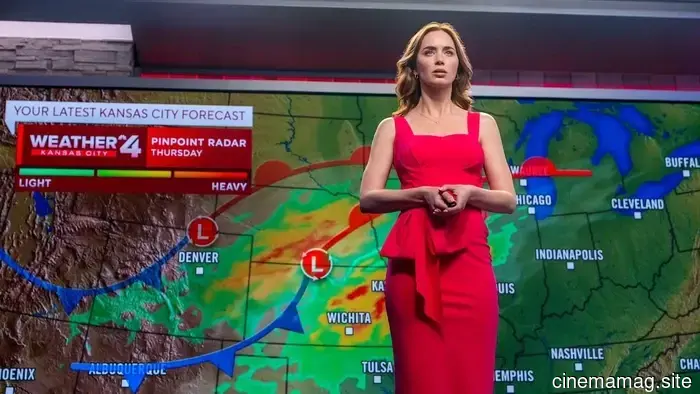 Disclosure Day author states that 'Religion Plays a Significant Role' in the new Spielberg film.
Disclosure Day, the forthcoming alien movie directed by Steven Spielberg, is perfectly aligned with current trends. David Koepp, the film's screenwriter, shared with MovieMaker that
Disclosure Day author states that 'Religion Plays a Significant Role' in the new Spielberg film.
Disclosure Day, the forthcoming alien movie directed by Steven Spielberg, is perfectly aligned with current trends. David Koepp, the film's screenwriter, shared with MovieMaker that
 McFarlane Toys adds the Batmissile from Batman Returns to its DC Multiverse collection.
McFarlane Toys has officially revealed that pre-orders are now open for the 7-inch scale DC Multiverse Batmissile vehicle, which is inspired by its portrayal in Tim Burton’s 1992 DC superhero sequel…
McFarlane Toys adds the Batmissile from Batman Returns to its DC Multiverse collection.
McFarlane Toys has officially revealed that pre-orders are now open for the 7-inch scale DC Multiverse Batmissile vehicle, which is inspired by its portrayal in Tim Burton’s 1992 DC superhero sequel…
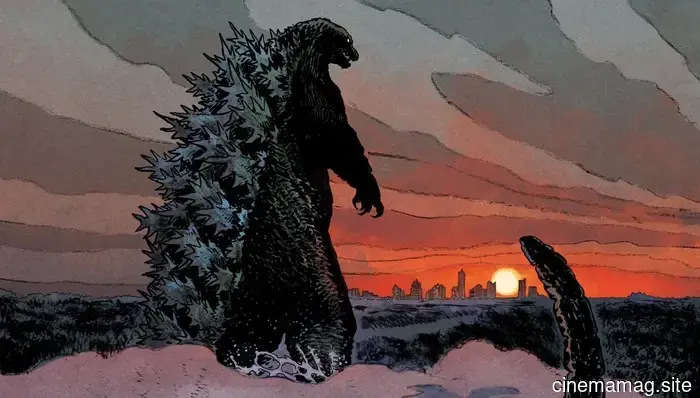 Comic Book Sneak Peek – Godzilla vs. America: Texas #1
The King of the Monsters is set to arrive in the Lone Star State this Wednesday with the launch of the one-shot special Godzilla vs. America: Texas #1, and you can catch a glimpse of the issue…
Comic Book Sneak Peek – Godzilla vs. America: Texas #1
The King of the Monsters is set to arrive in the Lone Star State this Wednesday with the launch of the one-shot special Godzilla vs. America: Texas #1, and you can catch a glimpse of the issue…
David Cronenberg’s The Fly at 40: A Tribute to Decay
Adam Page discusses David Cronenberg’s sci-fi body horror classic The Fly… There is a scene in The Fly directed by David Cronenberg, and if you haven't watched it yet, pause reading, go view it, and then return...