
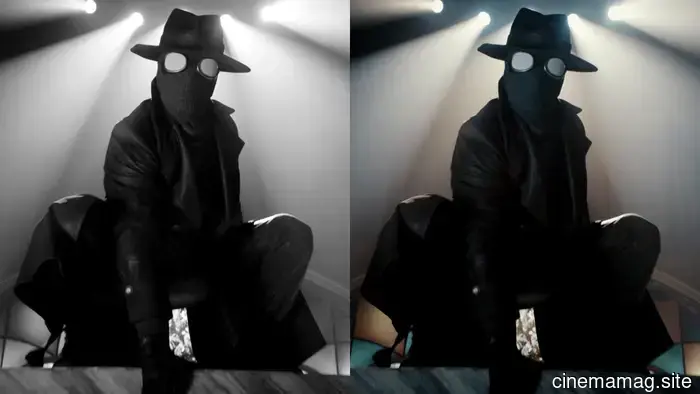
How Spider-Noir Achieved Color and Black-and-White Versions of the Series
Spider-Noir was a passionate endeavor for Oren Uziel and his team, who faced the unique challenge of creating both a black-and-white and a colorized version of the new superhero series featuring Nicolas Cage.
“It’s been unprecedented, and finishing it has given me a clearer understanding of why that’s the case,” says Uziel, co-showrunner and executive producer of the series. “To do it properly, you have to strike a peculiar balance between the two.
“When preparing for black and white, sometimes you use unconventional colors like green lipstick and unusual wall shades, as these contrast best in black and white. However, in color, they might look bizarre. Thus, you need to find a middle ground for everything. It’s quite a challenge.”
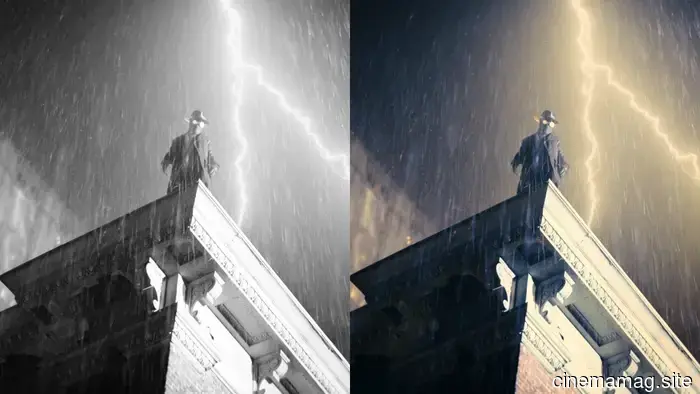
When Uziel started developing the project, inspired by Sony’s Oscar-winning Into the Spider-Verse film, the original vision was purely black and white, which helped shape the aesthetic direction toward 1940s film noir, utilizing modern techniques to create a rich contrast of deep blacks, extensive shadows, and strong lighting.
The decision to include color in Spider-Noir was made during the prep phase, without extending the production schedule, which added to the workload for all departments. Thankfully, a California tax incentive that mandated a few days of shooting in July 2024 before principal photography enabled the team to conduct a trial run.
“That gave us insight into how we would handle the color and black-and-white aspects,” Uziel explains.
Cinematographer Darran Tiernan considers this advance preparation a significant advantage.
“We were able to film a scene with all the textures about two months prior to the actual shooting,” says Tiernan, who shot the series digitally using the Sony VENICE 2 and Canon Rangefinder lenses for a grain quality reminiscent of classic noir. “Testing can only reveal so much, but shooting a scene with actors allowed us to fine-tune those elements before principal photography began.”
This tuning process necessitated ongoing calibration and communication between the Spider-Noir camera and costume departments since wardrobe choices greatly influenced the interplay of light and shadow in each shot.
“There’s a delicate balance when working with two different media,” says costume designer Trayce Gigi Fields. “For the color version, things need to truly stand out. Conversely, in the black-and-white version, there needs to be enough texture, fabric, sheen, or something to maintain visual interest.”
To accommodate the needs of all departments throughout the 100-day shoot while honoring the noir commitment, Tiernan made every monitor on set black and white, except for the color DIT monitors, typically reserved for his and Uziel’s use alone.
“Additionally, to assist the art and costume departments,” Tiernan explains, “I set up cameras that had the same color science and lookup tables as the show, allowing them to assess how different colors would appear in black and white and, by extension, how they'd look in color.”
Dressing Spider-Noir
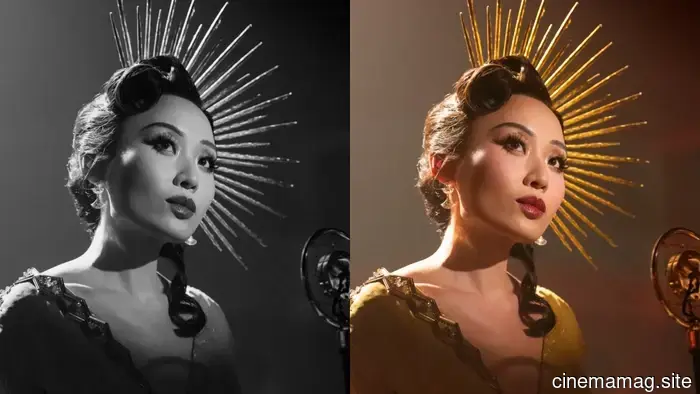
Li Jun Li as Cat Hardy in Spider-Noir. Prime Video and MGM+
For the main characters alone, Fields and her team created over 1,000 clothing items from scratch, sometimes dressing 300 extras in a single day to bring vibrant life to the 1933 period piece set in New York City.
“It was a colossal undertaking,” she notes, pointing out her biggest challenge was ensuring that every piece of clothing would look appropriate in both color palettes.
“We had to camera test almost everything with a special lens,” she explains. “The color has a unique Technicolor feel; it’s like black and white transformed into color. I find that truly amazing, as I haven’t seen it done much before.”
Tiernan adds: “The color is distinctly special. It’s certainly not typical.”
The fusion of the pulp detective genre and superhero storytelling merges two American pop culture favorites.
“One is recognized for its black and white and the other for its vibrant colors,” explains Uziel, embarking on his television career with Spider-Noir after writing films like 22 Jump Street, Mortal Kombat, The Lost City, and directing Shimmer Lake. “If we’re creating a color version, it’s about presenting noir in a palette fans haven’t encountered, and in black and white, it's about offering comic book fans a perspective they've never seen before."
His aspiration was to introduce enthusiasts of one cinematic style to the other, showcasing much for both groups to appreciate in this detective saga led by Cage’s character, Ben Reilly. He diverges from the youthful Peter Parker version of Spider-Man, and is distinct from the character Cage voiced in Spider-Verse, as well as from the one voiced by Andy Samberg in Across the Spider-Verse. He’s both fresh and familiar.
“I’m past my high school years, so I can’t relate to that narrative, which I feel has been told often. However, we haven’t explored the version where Spider-Man is older and has experienced a lot, being a bit more
Other articles
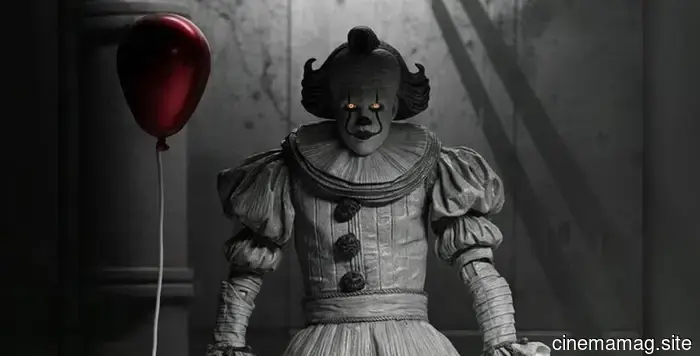 IT: Presenting the Derry Ultimate Black & White Pennywise action figure released by NECA.
NECA has formally introduced its Ultimate Black & White Pennywise 7-inch action figure, drawing inspiration from the portrayal of Stephen King's legendary sinister character by Bill Skarsgård...
IT: Presenting the Derry Ultimate Black & White Pennywise action figure released by NECA.
NECA has formally introduced its Ultimate Black & White Pennywise 7-inch action figure, drawing inspiration from the portrayal of Stephen King's legendary sinister character by Bill Skarsgård...
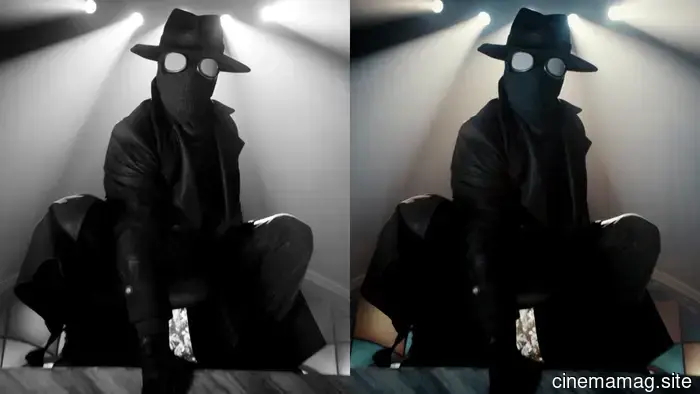 How Spider-Noir Achieved Both Color and Black-and-White Versions of the Series
Spider-Noir was a labor of love for Oren Uziel and his team, who faced the unique challenge of creating both a black-and-white and a colorized version.
How Spider-Noir Achieved Both Color and Black-and-White Versions of the Series
Spider-Noir was a labor of love for Oren Uziel and his team, who faced the unique challenge of creating both a black-and-white and a colorized version.
 Tom McCullagh from A Knight of the Seven Kingdoms discusses the process of minimizing Westeros and building connections - MovieMaker.
Tom McCullagh talks about his intricate set design for A Knight of the Seven Kingdoms, offering a closer look at Westeros.
Tom McCullagh from A Knight of the Seven Kingdoms discusses the process of minimizing Westeros and building connections - MovieMaker.
Tom McCullagh talks about his intricate set design for A Knight of the Seven Kingdoms, offering a closer look at Westeros.
 Video Review – Disclosure Day is the Finest Modern Film by Steven Spielberg
EJ Moreno presents a review of Disclosure Day… Given his contributions to cinema, it's fair to say that Steven Spielberg's career over the past ten years has experienced both peaks and valleys. T…
Video Review – Disclosure Day is the Finest Modern Film by Steven Spielberg
EJ Moreno presents a review of Disclosure Day… Given his contributions to cinema, it's fair to say that Steven Spielberg's career over the past ten years has experienced both peaks and valleys. T…
How Spider-Noir Achieved Color and Black-and-White Versions of the Series
Spider-Noir was a project that required immense dedication from Oren Uziel and his team, who undertook the unique challenge of creating both a black-and-white and a colorized version.