

The Gas Station Attendant Review: An Engaging Yet Formally Inconsistent Immigrant Narrative
In a political environment as hostile towards immigrants as any I can remember, deeply personal narratives like Karla Murthy’s *The Gas Station Attendant* remind us of the struggle and determination necessary to succeed in the United States. One can only hope that these films are perceived as stories of resilience rather than tales of exceptionalism. Murthy’s film employs a framing device—an extended phone interview with her father, H.N. Shantha Murthy, during his night shifts at a gas station—transforming this immigrant narrative into a reflection of his journey and the restlessness that persists despite having experienced the proverbial “American Dream” on several occasions.
The narration and editing provide only a superficial exploration of the immigrant ordeal: the “striver” mentality, the crisis of identity, and the subtle, passive-aggressive stereotyping prevalent in the United States. These themes are readily identifiable to any immigrant from the Global South. Murthy’s narration feels simplistic, rarely advancing beyond basic symbol-object associations, which gives the essay film an academic thesis vibe rather than the work of an experienced artist. The film's strength lies in a wealth of home movie footage that contrasts life in America with her father's stories of his experiences in India (for which there is no visual material). He shares memories of having to sleep on the streets while working in restaurants in Bangalore and elsewhere; then, we see him resting in his car between late shifts at the gas station. This struggle is different, but the transition to the "First World" feels disappointingly tangible.
The film's most impactful moments arise when it is framed less as an immigrant journey and more as a narrative about a familial bond. Murthy's mixed Indian and Filipino heritage is distinctive, yet it is not deeply examined beyond home videos and photographs of her mother and sisters, which illustrate a family more in line with the American "melting pot" notion than most. Murthy’s relationship with her father is sweet and candid, imbuing the film with a rare warmth that stems from genuineness and a willingness to share intimate moments. If the immigrant experience offers any insight into the essence of this country, it is in those revealing moments, where the nation seems open to opportunity while concealing numerous complexities.
Murthy's editing features extensive voiceovers and archival footage to enhance the filmed segments. There is little discernible rhythm or structure to the sequencing; rather, the phone conversations with her father guide the flow of the narrative. Certain segments, such as Murthy’s reflections on her college years and her motivations for leaving home, feel inappropriately situated. Similarly, the obvious use of newsreel audio—interjecting during footage of Gandhi's funeral with background on who Gandhi was—indicates a lack of confidence in the audience's ability to comprehend these images.
Its viewpoint on the immigrant experience appears aimed at those who have never encountered an immigrant or who harbor doubts about their place in this country. Despite the sense that Murthy may not fully trust her own visuals to convey meaning, the narrative resonates as a deeply personal tale. *The Gas Station Attendant* carries the important burden of communicating a vital message about the American immigrant experience within a perilously regressive political landscape.
*The Gas Station Attendant* premieres in theaters on Friday, June 12.
Other articles
 Top Online Roulette Options in Australia: Premier Sites for Gaming in 2026 - MovieMaker Magazine
The roulette ball bounces, the chat flickers next to the table, and the dealer is already requesting final bets. This is what online roulette players in Australia anticipate.
Top Online Roulette Options in Australia: Premier Sites for Gaming in 2026 - MovieMaker Magazine
The roulette ball bounces, the chat flickers next to the table, and the dealer is already requesting final bets. This is what online roulette players in Australia anticipate.
 Top Online Roulette Options in Australia: Leading Platforms to Enjoy in 2026 - MovieMaker Magazine
The roulette ball bounces, the chat glimmers next to the table, and the dealer is already announcing the last call for bets. That’s the online roulette experience that players in Australia desire.
Top Online Roulette Options in Australia: Leading Platforms to Enjoy in 2026 - MovieMaker Magazine
The roulette ball bounces, the chat glimmers next to the table, and the dealer is already announcing the last call for bets. That’s the online roulette experience that players in Australia desire.
 Top Stake Alternatives - Websites Similar to Stake for U.S. Players - MovieMaker Magazine
By 2026, the offshore gambling market has developed to the extent that alternatives to Stake are available in every niche, ranging from extensive slot collections to
Top Stake Alternatives - Websites Similar to Stake for U.S. Players - MovieMaker Magazine
By 2026, the offshore gambling market has developed to the extent that alternatives to Stake are available in every niche, ranging from extensive slot collections to
 Best Online Pokies in Australia 2026: Top 5 Real Money Pokies Sites for Australian Gamblers - MovieMaker Magazine
To assist Australian players in optimizing their gameplay, we’ve evaluated five popular pokies along with the casinos that provide the best overall experience.
Best Online Pokies in Australia 2026: Top 5 Real Money Pokies Sites for Australian Gamblers - MovieMaker Magazine
To assist Australian players in optimizing their gameplay, we’ve evaluated five popular pokies along with the casinos that provide the best overall experience.
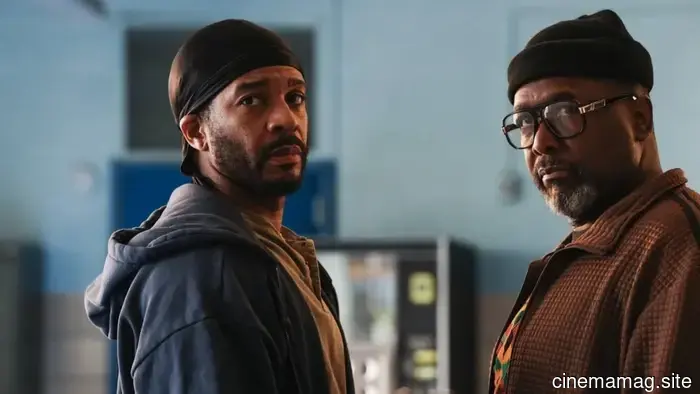 Trailer for the boxing drama "They Fight," featuring Andre Holland and Wendell Pierce.
Andscape has unveiled a poster and trailer for the forthcoming sports drama They Fight, directed by Sheldon Candis. Inspired by the 2018 documentary of the same title, the movie centers on Walt (Andre Holland), a…
Trailer for the boxing drama "They Fight," featuring Andre Holland and Wendell Pierce.
Andscape has unveiled a poster and trailer for the forthcoming sports drama They Fight, directed by Sheldon Candis. Inspired by the 2018 documentary of the same title, the movie centers on Walt (Andre Holland), a…
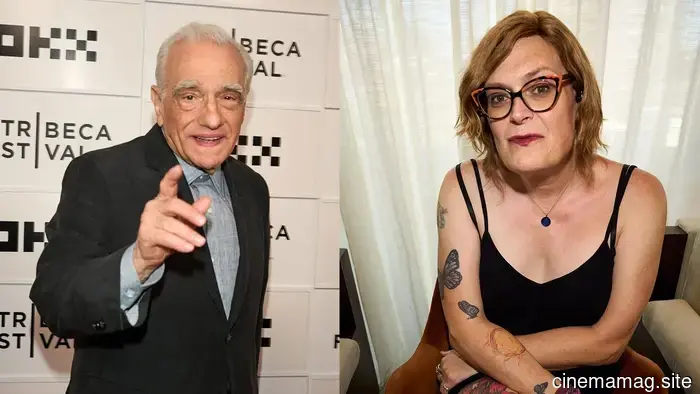 The 2026 Portrait Gallery of the Tribeca Festival by The Film Stage
As filmmakers from across the globe gather in Manhattan to celebrate the 25th anniversary of the Tribeca Festival, we're excited to share that The Film Stage will be presenting exclusive photos of directors, stars, and crew during the premieres of their latest projects. Our gallery, photographed by Daniel Dickerman, features Lilly Wachowski, Martin
The 2026 Portrait Gallery of the Tribeca Festival by The Film Stage
As filmmakers from across the globe gather in Manhattan to celebrate the 25th anniversary of the Tribeca Festival, we're excited to share that The Film Stage will be presenting exclusive photos of directors, stars, and crew during the premieres of their latest projects. Our gallery, photographed by Daniel Dickerman, features Lilly Wachowski, Martin
The Gas Station Attendant Review: An Engaging Yet Formally Inconsistent Immigrant Narrative
In a political environment as hostile to immigrants as I can remember, intimate narratives such as Karla Murthy’s The Gas Station Attendant serve as a reminder of the struggles and dedication needed to succeed in the United States. It is to be hoped that these films are viewed as tales of endurance rather than stories of exceptionalism. The framing technique