
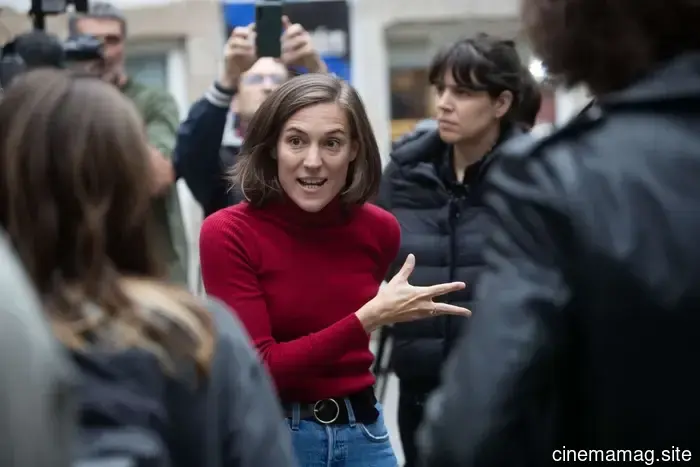
“Memory Is Not Something You Can Rely On”: Carla Simón Discusses Romería, Familial Narratives, and Antonioni
Spanish filmmaker Carla Simón explores her past in profound ways, completing her family trilogy with Romería, which follows her debut film Summer 1993 and the Golden Bear-winning Alcarràs. The story unfolds as a teenager visits the Atlantic coast of Spain to connect with her paternal grandparents and unravel the mysteries of her history.
In his Cannes review from last year, Rory O’Connor noted, “Continuing in the understated style of her Golden Bear winner Alcarràs, Carla Simón presents Romería, a new story of intergenerational strife. This film discusses the narratives families choose to share as well as those they keep hidden, set against Spain’s Atlantic coast, where 18-year-old orphan Marina (Llúcia Garcia) seeks to reunite with her paternal relatives. It is also a tale of dislocation and the longing for lost heritage—themes that resonate deeply for a director who lost her parents to AIDS in childhood and who reconnected with her father's family in Vigo, Galicia, at the same age. Simón has always drawn from her own experiences; Romería may be her most intimate work to date.”
Before the film's U.S. release starting this Friday with Janus Films, I spoke with Simón about the newfound freedom that comes with concluding her family trilogy, how she recreates her past, her inspiration from an Antonioni classic, her collaboration with Hélène Louvart for the first time, and more.
The Film Stage: You’ve shared that Romería comes from a very personal place. Can you describe the moment you realized you wanted to turn your experiences into a screenplay and what that process involved?
Carla Simón: Reflecting on the start, I have to take you back to when I was writing my first film, Summer 1993. It was a pivotal moment when I became aware of my limited memories of my parents. It was frustrating to realize I couldn't ask them anything. I could gather stories from others, but they often lacked reliability, as memory is never entirely trustworthy, particularly when family memories are clouded by the stigma and taboo surrounding AIDS and heroin.
At that time, I intended to incorporate my mother into the script, even though she wasn’t physically present in Summer 1993. I wanted to understand her better to represent her absence meaningfully. I gathered letters she wrote to her friends and family and visited the places where she wrote them. I filmed empty spaces, reflecting the notion that places remain even as people disappear. I created a short film with my voice reading her letters, but I felt the footage didn’t do justice to the poetry she expressed. Her letters revealed her experiences in youth, her views on drugs, friendships, and work—a generational portrait I found valuable.
Later, I made Alcarràs, but the idea of revisiting these letters for a film about memory was already forming. As I continued to create films, I discovered that through cinema, I could visualize the images I lacked of my parents. Film has this magical ability to “bring back” people and make them feel alive again.
I find the time-traveling aspect of the film intriguing. While reading a narrative or examining writings may evoke nostalgia, your method demonstrates how traumatic it can be to relive those experiences through cinema. Can you elaborate on your approach to the “film-in-a-film” concept and how you recreated the past in this way?
I'm drawn to the concept of a film within a film because it allowed me to explore memory. Marina embarks on a journey to comprehend her past. She consults many individuals and eventually realizes that memory cannot be taken at face value, as every interpretation differs. She attempts to piece together the narrative, but it never fully aligns. Ultimately, we don’t remember events as they were; we remember our most recent recollection of them. Memory constantly evolves and shifts within our minds.
Once she grasps this, she allows herself to craft a potential story to fill those voids—an approach I adopted for the movie. For me, the critical aspect of her imaginative journey was striking the right tone. I didn't want to delve into a dark exploration of heroin. I refuse to let heroin solely define my parents; they were much more than that. Simultaneously, I wanted to avoid overly romanticizing that time. It was a joyous period during Spain's transition to democracy, a time everyone longed for, yet it also coincided with the heroin epidemic—a time when an influx of heroin plagued the country and the government did little to combat it. There was a belief that as long as young people were preoccupied with drugs, they wouldn’t engage in politics, which resulted in many tragic deaths that remain difficult for us to discuss.
Typically, this issue is examined from my grandparents’ perspective, who tend to judge their children and hide the topic away to avoid scrutiny. They seem to think these young individuals chose that path, while I perceive them as victims of circumstance. It felt
Other articles
 Top Online Pokies in Australia 2026 – 5 Leading Real Money Pokies Sites Offering Quick PayID Withdrawals - MovieMaker
Australian players currently enjoy greater options than ever for real money pokies, as contemporary casino sites vie for attention with diverse game selections and swift withdrawal processes.
Top Online Pokies in Australia 2026 – 5 Leading Real Money Pokies Sites Offering Quick PayID Withdrawals - MovieMaker
Australian players currently enjoy greater options than ever for real money pokies, as contemporary casino sites vie for attention with diverse game selections and swift withdrawal processes.
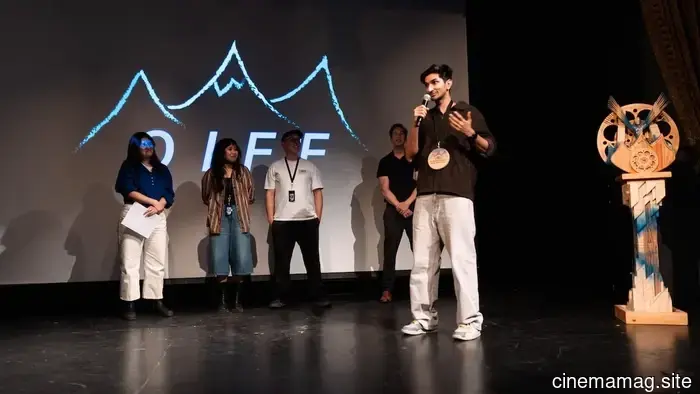 'We Were Here' Triumphs at the Ouray International Film Festival
The Grand Prize at the Ouray International Film Festival was awarded to "We Were Here," a satire on artificial intelligence.
'We Were Here' Triumphs at the Ouray International Film Festival
The Grand Prize at the Ouray International Film Festival was awarded to "We Were Here," a satire on artificial intelligence.
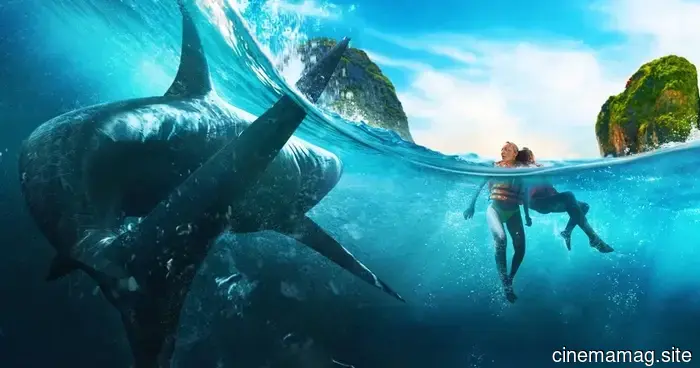 A journey to paradise becomes fatal in the trailer for the shark survival horror film The Bay.
Following closely on the success of titles like Thrash and Chum, Brainstorm Media has unveiled a trailer for another new shark survival horror film, The Bay. It is written and directed by Phil Volken (Dead Sea) and features...
A journey to paradise becomes fatal in the trailer for the shark survival horror film The Bay.
Following closely on the success of titles like Thrash and Chum, Brainstorm Media has unveiled a trailer for another new shark survival horror film, The Bay. It is written and directed by Phil Volken (Dead Sea) and features...
 Roadmap Writers Reveals Winners of LGBTQ+ Pitch Fellowship
Roadmap Writers has unveiled Nikki Palumbo, Teresa Jusino, Kevin Wolfe, and Edwin Domachowski as the inaugural recipients of its new LGBTQ+ Pitch Fellowship.
Roadmap Writers Reveals Winners of LGBTQ+ Pitch Fellowship
Roadmap Writers has unveiled Nikki Palumbo, Teresa Jusino, Kevin Wolfe, and Edwin Domachowski as the inaugural recipients of its new LGBTQ+ Pitch Fellowship.
 How to Divorce During the War Trailer: Sundance Award Winner Coming This August
A highlight of this year's Sundance Film Festival, where director Andrius Blaževičius received the Best Director award in the World Cinema Dramatic Competition, *How to Divorce During the War* has been acquired by Kino Lorber and Zeitgeist Films for its U.S. release. In anticipation of its theatrical debut on August 21, the initial trailer has been released.
How to Divorce During the War Trailer: Sundance Award Winner Coming This August
A highlight of this year's Sundance Film Festival, where director Andrius Blaževičius received the Best Director award in the World Cinema Dramatic Competition, *How to Divorce During the War* has been acquired by Kino Lorber and Zeitgeist Films for its U.S. release. In anticipation of its theatrical debut on August 21, the initial trailer has been released.
 Top Online Pokies Australia 2026 – 5 Leading Real Money Pokies Platforms Featuring Quick PayID Withdrawals - MovieMaker
Australian players have greater options than ever for real money pokies, as contemporary casino websites compete in terms of game selection and withdrawal speed.
Top Online Pokies Australia 2026 – 5 Leading Real Money Pokies Platforms Featuring Quick PayID Withdrawals - MovieMaker
Australian players have greater options than ever for real money pokies, as contemporary casino websites compete in terms of game selection and withdrawal speed.
“Memory Is Not Something You Can Rely On”: Carla Simón Discusses Romería, Familial Narratives, and Antonioni
Spanish filmmaker Carla Simón has finished her family trilogy with Romería, delving into her past in profound ways, following her debut Summer 1993 and the Golden Bear-winning Alcarràs. When a teenager travels to the Atlantic coast of Spain to see her paternal grandparents, she starts to unravel the enigmas of her history. Rory O’Connor noted in his review from Cannes.