
Camp Review: A Captivating, Dreamlike Experience of Self-Discovery
The opening credits introduce a tragic event as teenage Emily (Zola Grimmer) drives along a dimly lit country road, accidentally hitting and killing a young girl who dashed into the street after a soccer ball. This is a harsh reality she's grappled with over the years, and during a game of Truth or Dare at a college party, she bravely shares her story with a group of strangers when asked about her biggest regret. Her clarity and confidence in recounting this incident show that she has managed to move forward.
Writer-director Avalon Fast delivers another emotional blow to Emily by making her witness another life lost due to her past actions—even though neither demise was directly her fault. However, that distinction offers her little comfort; it won't reverse the losses or ease her suffering. It's merely what others point out to her when the pain feels insurmountable.
Emily is compelled to restart her life after returning home to escape the judgmental glances of those aware of her past. Her father (Michael Tan) encourages her to take a job as a camp counselor in the Alberta mountains, allowing her to distance herself from the places tainted by tragedy while confronting her guilt. It's a camp for troubled youth, where she hopes to see reflections of herself, helping those who share similar struggles while seeking balance in her own life.
This journey is intended to be as healing for Emily as the film is for Fast. They present an intricate director's statement, suggesting that the film itself embodies their message: the script is rooted in a tale they often recounted about an unhealable wound, and the finished product offers a means to initiate healing by watching others face similar experiences.
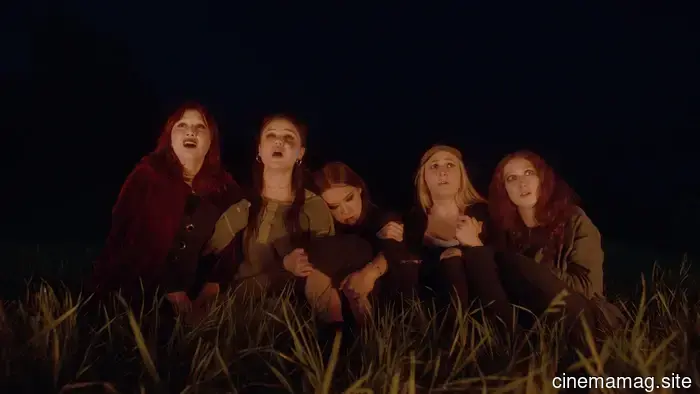
This sentiment resonates well, especially as the narrative becomes more abstract and dream-like in the latter half. Perhaps what unfolds aligns with expectations: Emily meets a group of like-minded young women grappling with their own issues (all former campers turned counselors) who take her under their wing, introducing her to a force of power and darkness in the forest. Alternatively, this power might signify an escape rather than malevolence.
Clara (Alice Wordsworth), Rosie (Cherry Moore), Nev (Lea Rose Sebastianis), and Hope (Ella Reece) epitomize the instant chemistry upon seeing her, excitedly expressing how thrilled they are that she’s there, as if they know something that Emily (and we) are unaware of. Similarly, Jo (Sophie Bawks-Smith) appears as a beacon of good, eagerly presenting an alternative route for Emily.
The film unfolds not as two opposite forces vying for Emily's allegiance, but rather as a representation of what lies ahead for her outside this small retreat. She can choose the path of forgiving herself and aligning with God’s will to shed her guilt, or she can embrace her identity and acknowledge her actions. The latter doesn’t romanticize the deaths but rather conveys acceptance of them, finding empowerment in that acceptance. It’s about discovering magic in the shadows.
Fast elevates Eily Sprungman’s stunning cinematography with animated effects that depict the fantastical: nighttime vistas filled with shooting stars, elemental manifestations that appear as enchanting flourishes rather than chaos. This is not a mere illusion; the film doesn’t present a sanitized view of Emily’s future to push her toward a precipice before unveiling a nightmare. Instead, it is beautiful, hopeful, and inviting.
This complexity often makes it challenging to interpret moments in a purely objective manner—deliberately so. Engaging in manipulative games with camp leader Dan (Austyn Van de Kamp) that devastate him to gain more magical power doesn’t seem “hopeful.” The atmosphere that leads a camper (Izza Jarvis’ Eden) to draw unsettling images of them doesn’t necessarily reflect “beauty.” Coupled with a brutal sacrifice during the climax, it opens up a multitude of interpretations.
Are we encountering a God of untamed nature represented by Vulcan, also referred to as Mulciber (with Sarah Roman portraying a character named Mulci)? How much of what unfolds is real, particularly since Emily awakens from dreams in a manner suggesting they may not have been dreams at all? Has Fast infused life into metaphor, or is Emily genuinely experiencing the ritualistic supernatural events portrayed? Could it all be a manifestation of her grief dragging her into despair?
The unmistakable visual and stylistic influence throughout Camp is reminiscent of David Lynch, showcasing its surreal and out-of-place qualities. Phone conversations with Emily’s dad are barely discernible. The sense of lost time emphasizes her confusion, which translates into our own as she suddenly becomes aware and engaged with the horrors ahead, merely with a jump cut marking that transition. Did I fully grasp what was transpiring? Not really. But the captivating nature of it makes that less important.
This marks significant progress for Fast following the promise shown in their debut, Honeycomb. The budget doesn’t appear to be much larger, despite their previous project being made on
Other articles
 Willem Dafoe and Greta Lee Clash Over Legacy in Trailer for Kent Jones’ Late Fame
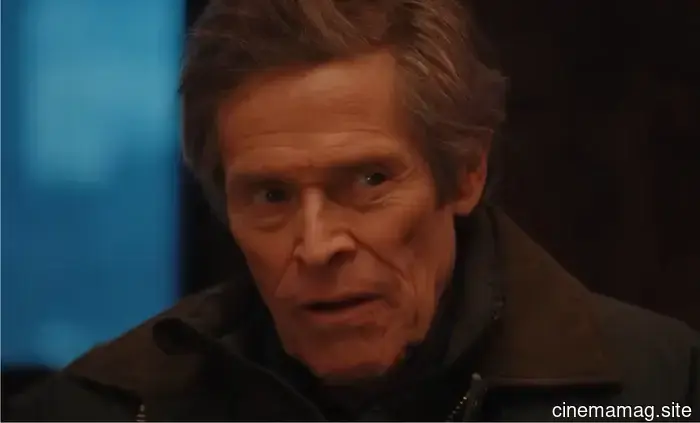
Late Fame discovers a rare balance between biting and nostalgic, with Willem Dafoe (radiating a renewed passion) and Greta Lee (exuding an overly heightened enthusiasm) delivering compelling performances in Samy Burch's adaptation of Arthur Schnitzler's novella. Meanwhile, Kent Jones utilizes his extensive understanding of New York to create the city's most visually captivating cinematic portrayal.
Willem Dafoe and Greta Lee Clash Over Legacy in Trailer for Kent Jones’ Late Fame
Late Fame discovers a rare balance between biting and nostalgic, with Willem Dafoe (radiating a renewed passion) and Greta Lee (exuding an overly heightened enthusiasm) delivering compelling performances in Samy Burch's adaptation of Arthur Schnitzler's novella. Meanwhile, Kent Jones utilizes his extensive understanding of New York to create the city's most visually captivating cinematic portrayal.
 12 Amazing Films from 1984, an Incredible Year for Blockbusters
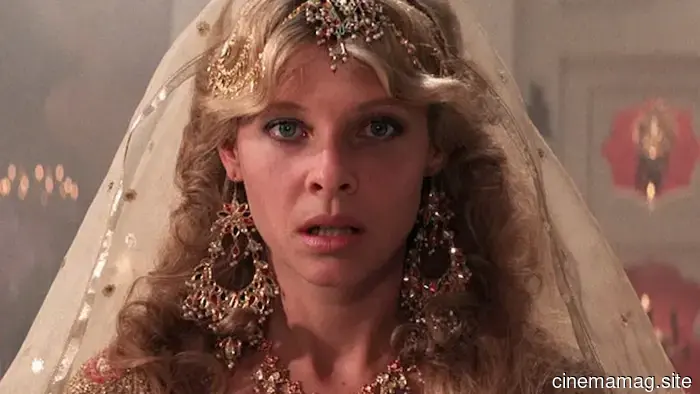
These 12 amazing films from 1984 will transport you to a time of major blockbusters and the beginnings of franchise creation.
12 Amazing Films from 1984, an Incredible Year for Blockbusters
These 12 amazing films from 1984 will transport you to a time of major blockbusters and the beginnings of franchise creation.
 Ranking All 8 John Hughes Films from Least to Most Impressive
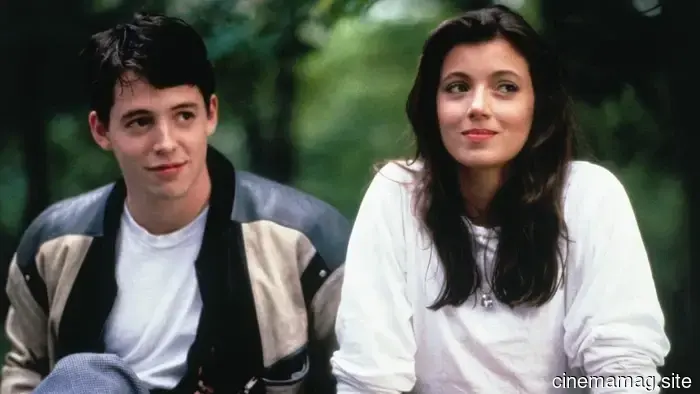
As Ferris Bueller's Day Off marks its 40th anniversary this month, here is a ranking of all 8 movies by John Hughes.
Ranking All 8 John Hughes Films from Least to Most Impressive
As Ferris Bueller's Day Off marks its 40th anniversary this month, here is a ranking of all 8 movies by John Hughes.
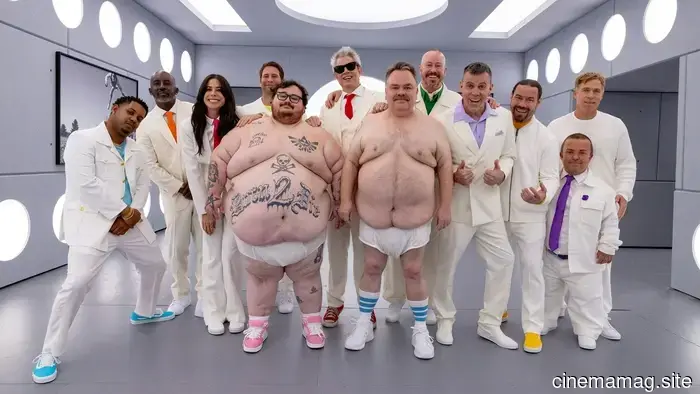 Jackass: Final Review: Knoxville and Team Make a Comeback for One Last Performance
What sets Jackass apart is that it's truly one of a kind. Originating from the skate videos of the 1990s, Jackass has lasted long enough to witness its public image transform completely: shifting from crude, irritating troublemakers to crude, irritating darlings. The franchise has always remained true to itself. In successfully transitioning from television
Jackass: Final Review: Knoxville and Team Make a Comeback for One Last Performance
What sets Jackass apart is that it's truly one of a kind. Originating from the skate videos of the 1990s, Jackass has lasted long enough to witness its public image transform completely: shifting from crude, irritating troublemakers to crude, irritating darlings. The franchise has always remained true to itself. In successfully transitioning from television
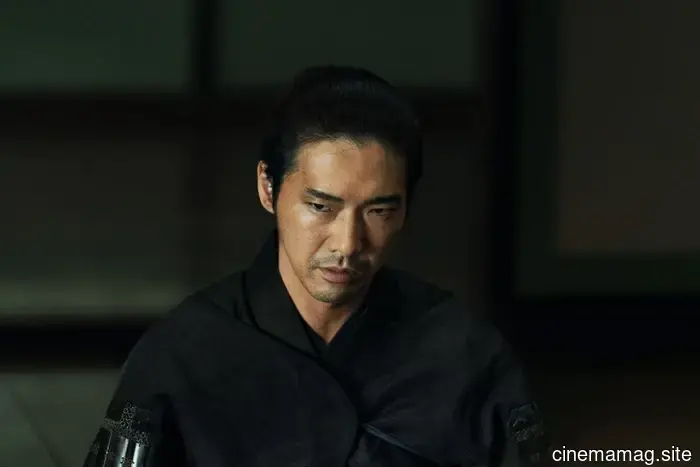 The Samurai and the Prisoner Trailer: Kiyoshi Kurosawa's Epic Mystery is Coming This July
We apologize to Christopher Nolan in advance, but the period epic we are anticipating most in July comes from Kiyoshi Kurosawa. The Samurai and the Prisoner, featuring Masahiro Motoki, Masaki Suda, Yuriko Yoshitaka, Joe Odagiri, Munetaka Aoki, Ryota Miyadate, and Tasuku Emoto, made its debut at the Cannes Film Festival and will start its rollout in the U.S. on...
The Samurai and the Prisoner Trailer: Kiyoshi Kurosawa's Epic Mystery is Coming This July
We apologize to Christopher Nolan in advance, but the period epic we are anticipating most in July comes from Kiyoshi Kurosawa. The Samurai and the Prisoner, featuring Masahiro Motoki, Masaki Suda, Yuriko Yoshitaka, Joe Odagiri, Munetaka Aoki, Ryota Miyadate, and Tasuku Emoto, made its debut at the Cannes Film Festival and will start its rollout in the U.S. on...
 Loyalties are challenged in the latest Doctor Who audio drama from Big Finish, titled Gallifrey – War Room.
Big Finish Productions has launched the third box set in the Worlds of Doctor Who – Gallifrey: War Room series, which takes place during the Time War between Gallifrey and Skaro. This new box set,…
Loyalties are challenged in the latest Doctor Who audio drama from Big Finish, titled Gallifrey – War Room.
Big Finish Productions has launched the third box set in the Worlds of Doctor Who – Gallifrey: War Room series, which takes place during the Time War between Gallifrey and Skaro. This new box set,…
Camp Review: A Captivating, Dreamlike Experience of Self-Discovery
The opening credits highlight a tragedy when a teenage Emily (Zola Grimmer) is driving along a dimly lit country road and accidentally strikes and kills a young girl who darted into the street after a soccer ball. This is a reality that Emily has had to reconcile with over the years, and, in a display of honesty, is the