
.jpg)
Film Review – Sheep in the Box (2026)
Sheep in the Box, 2026.
Written and Directed by Hirokazu Kore-eda.
Featuring Haruka Ayase, Daigo Yamamoto, Kuwaki Rimu, Nana Seino, Kanichiro, Hinata Hiiragi, Akihiro Kakuta, Kayo Noro, Mari Hoshino, Ayumu Nakajima, Kimiko Yo, and Min Tanaka.
SYNOPSIS:
Set in the near future, Otone Komoto is an architect married to Kensuke Komoto, who operates a construction business. The couple decides to introduce a humanoid robot into their home, referring to it as their son.
While several filmmakers have attempted to explore the theme of generative AI and the morally questionable corporations exploiting people's grief by providing inhuman substitutes for recently deceased loved ones, these endeavors have typically been small independent films that often miss the mark for various reasons. Despite receiving an unfavorable response from critics at Cannes, I remained hopeful that Hirokazu Kore-eda’s Sheep in the Box would rise above these previous missteps. Given that Kore-eda has consistently excelled in crafting poignant family dramas—whether about blood relatives or found connections—there was reason for optimism, especially with the integration of an AI child replacement.
What I did not anticipate was that this film would stumble for the same reasons as those others: a lack of engagement in critically assessing AI or exploring the potential pitfalls and privacy issues associated with such replicas. This isn’t to suggest it should turn into something akin to The Terminator, but the film's overly optimistic stance neglects serious discussions about the technology. In an interview, Kore-eda expressed that he was less focused on the AI aspect and its implications, and more interested in the narrative concerning giving life to the deceased. With that perspective, the film can be appreciated, though it still appears flawed in its naive approach to AI.
The family drama takes a perplexing turn, blurring the lines between these humanoid robots and creations that resemble natural phenomena, suggesting that they might actually be more evolved than humans. This confusion is tied to the interests of young Kekaru (Kuwaki Rimu), whose parents are engaged in gardening, woodworking, and train station routes, all areas linked to nature.
Using archived audio, videos, and photographs—while deliberately omitting references to trains due to a tragic accident involving Kekaru—the humanoid possesses a strange hollowness. Kekaru's mother, Otone (Haruka Ayase), recalls her son as energetic and passionate about food, traits that this synthetic version cannot replicate. This contrast is intriguing and deserved further exploration, as it highlights that the parents are not truly receiving an accurate representation of their son, even in humanoid form. Nevertheless, the humanoid can quickly acquire knowledge of the mentioned interests, often as a means to convince its owners of its authenticity and perceived sentience, potentially outstripping their real child's understanding.
The film leans into the uncanny, drawing on familiar but disappointingly superficial family dynamics. Initially skeptical about a delivery from the REbirth corporation offering a free trial of a humanoid replica—complete with the option to cancel—Otone succumbs to her grief. Kensuke (Daigo Yamamoto), while justifiably opposing the idea, allows her to choose, humorously likening the humanoid to a Tamagotchi (a virtual pet from a handheld device, for those unfamiliar). A lackluster twist emerges, revealing that as time passes, it is Otone who grows increasingly empty, surrounded by the humanoid, while Kensuke, alongside work colleagues, finds enjoyment in the boy's rapid acquisition of skills like baseball, gaining emotional relief from it. Each character grapples with their grief, though this theme is only partially addressed amidst the film's broader concerns.
Humanoid Kekaru also encounters a group of misfit human teens and fellow synthetics, led by a character (Kanichiro) who plans a revolt by escaping into nature. He removes Kekaru’s GPS tracking device and begins to convince him that he is not meant to serve the needs and desires of these humans. As a result, Sheep in the Box (the title inspired by a passage in The Little Prince, gaining new meanings as the story progresses) ultimately refrains from critiquing corporate motives, instead suggesting that the humans are partially culpable (indeed, they are for succumbing to the allure of such sinister offerings) while awkwardly advocating for coexistence with AI as akin to nature.
Despite strong performances, an intriguing premise, and numerous visually striking shots of lush landscapes, the misguided "kumbaya" attitude toward AI fails to deliver the intricate family dynamics or the emotional depth typically present in Kore-eda’s films.
Flickering Myth Rating – Film: ★ ★ / Movie: ★ ★ ★
Robert Kojder
.jpg)
.jpg)
.jpg)
.jpg)
.jpg)
Другие статьи
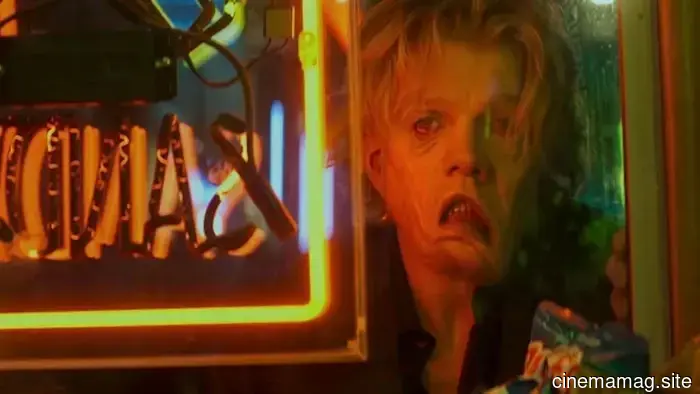 Месть, телесный ужас и DC сталкиваются в новом трейлере о Глиняном Лице
DC Studios выпустила новый трейлер своего предстоящего фильма ужасов о теле «Клейкое Лицо», основанного на злодее Бэтмена, который получает способность изменять форму после трагического происшествия. В фильме снимается Том Рис Харрис…
Месть, телесный ужас и DC сталкиваются в новом трейлере о Глиняном Лице
DC Studios выпустила новый трейлер своего предстоящего фильма ужасов о теле «Клейкое Лицо», основанного на злодее Бэтмена, который получает способность изменять форму после трагического происшествия. В фильме снимается Том Рис Харрис…
 Драма A24 "Мисти Грин", режиссированная Крисом Роком, получила трейлер и постер.
A24 выпустила трейлер к фильму Misty Green, их звездной драме «Внутри Голливуда», которая рассказывает историю актрисы Розалинд Элеазар и её борьбы, когда она пытается ре…
Драма A24 "Мисти Грин", режиссированная Крисом Роком, получила трейлер и постер.
A24 выпустила трейлер к фильму Misty Green, их звездной драме «Внутри Голливуда», которая рассказывает историю актрисы Розалинд Элеазар и её борьбы, когда она пытается ре…
 Режиссированный Крисом Роком драматический фильм A24 "Мисти Грин" получил трейлер и постер.
A24 выпустила трейлер к фильму "Мисти Грин", их звездной драме "Внутри Голливуда", которая рассказывает историю актрисы Розалинд Элеазар в главной роли и её борьбу, когда она пытается ре…
Режиссированный Крисом Роком драматический фильм A24 "Мисти Грин" получил трейлер и постер.
A24 выпустила трейлер к фильму "Мисти Грин", их звездной драме "Внутри Голливуда", которая рассказывает историю актрисы Розалинд Элеазар в главной роли и её борьбу, когда она пытается ре…
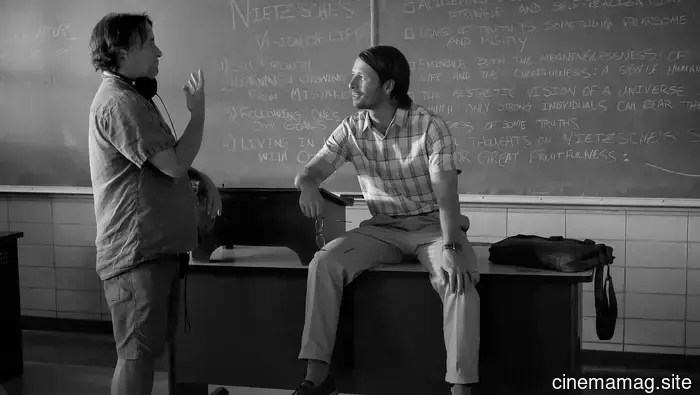 Ричард Линклейтер, Глен Пауэлл и Лорн Майклс объединились для биографического фильма о Лу Гериге
Ричард Линклейтер остается достаточно плодовитым — если только между его постоянно снимаемым «Счастливо катимся» и запланированным проектом о трансценденталистах — так что это уже имеет атмосферу чего-то, что мы вспоминаем, читая заголовок многолетней давности и задаваясь вопросом, что же там произошло. Тем не менее, приятно читать, что он планирует снова объединиться с Гленом Пауэллом для другого фильма о бейсболе.
Обзор фильма – Овцы в коробке (2026)
Овцы в коробке, 2026. Сценарий и режиссура Хирокадзу Корээда. В главных ролях Харуко Аясэ, Дайго Ямамото, Куваки Риму, Нана Сэино, Каничиро, Хината Хираги, Акихиро Какута, Кайо Норо, Мари Хошино, А…
Ричард Линклейтер, Глен Пауэлл и Лорн Майклс объединились для биографического фильма о Лу Гериге
Ричард Линклейтер остается достаточно плодовитым — если только между его постоянно снимаемым «Счастливо катимся» и запланированным проектом о трансценденталистах — так что это уже имеет атмосферу чего-то, что мы вспоминаем, читая заголовок многолетней давности и задаваясь вопросом, что же там произошло. Тем не менее, приятно читать, что он планирует снова объединиться с Гленом Пауэллом для другого фильма о бейсболе.
Обзор фильма – Овцы в коробке (2026)
Овцы в коробке, 2026. Сценарий и режиссура Хирокадзу Корээда. В главных ролях Харуко Аясэ, Дайго Ямамото, Куваки Риму, Нана Сэино, Каничиро, Хината Хираги, Акихиро Какута, Кайо Норо, Мари Хошино, А…
Film Review – Sheep in the Box (2026)
Sheep in the Box, 2026. Written and Directed by Hirokazu Kore-eda. Featuring Haruka Ayase, Daigo Yamamoto, Kuwaki Rimu, Nana Seino, Kanichiro, Hinata Hiiragi, Akihiro Kakuta, Kayo Noro, Mari Hoshino, A…