
.jpg)
Film Review – The Samurai and the Captive (2026)
The Samurai and The Prisoner, 2026.
Written and Directed by Kiyoshi Kurosawa.
Starring Masahiro Motoki, Masaki Suda, Yuriko Yoshitaka, Munetaka Aoki, Ryota Miyadate, Tasuku Emoto, Joe Odagiri, Yusuke Santamaria, Mitsuo Yoshihara, Ryota Bando, Yoshiyoshi Arakawa, Kiyohiko Shibukawa, Ikkei Watanabe, Yoshimasa Kondo, Toshihiro Yashiba, Masatoshi Kihara, Yamato Kochi, Mutsuo Yoshioka, Shusaku Kamikawa, Oshirō Maeda, and Shingo Bando.
SYNOPSIS:
Set in 16th-century Japan, the story centers on Lord Murashige Araki, who, under siege in his castle, faces enigmatic crimes and teams up with the imprisoned strategist Kanbei Kuroda to uncover the truth. In 1578, Feudal Lord Araki Murashige betrayed his superior, the “great unifier” Lord Oda Nobunaga, with the reasons behind this betrayal remaining largely unclear. Adapted from a novel by Honobu Yonezawa, writer/director Kiyoshi Kurosawa’s The Samurai and the Prisoner offers a theoretical take on this betrayal through an episodic series of murder mysteries that the treacherous war general (portrayed with dignity and a strong moral compass by Masahiro Motoki) must unravel while devising strategies from within Itami Castle to secure victory in a war that seems contingent on forming alliances with other factions, among other tactics.
In this light, the narrative is more fulfilling when one sets aside the broader historical context of feudal Japan (the film itself doesn’t delve deeply into it; you're reading a review from someone more familiar with the Onimusha video game series that draws heavily from this era for its absurd action involving an army of demons) and approaches it as a character study of an unconventional feudal lord who prefers to solve conflicts with means other than violence, contrasting starkly with the more hypocritical Lord Oda Nobunaga (viewed in a flashback portrayed by Shingo Bando), who ruthlessly butchers innocents and anyone who obstructs his ambitions. This raises questions about whether the corruption of power contributed to the fallout. Expanding on that theme, it may also be fitting to transform a mystery into an exploration of other mysteries that, once unraveled, provide deeper insights into the protagonist.
Another significant aspect is that Lord Araki Murashige struggles to identify the perpetrator on his own for various reasons, whether dealing with a child shot with arrows, the distortion of a deceased man’s face, a murder linked to stolen antiques, or the morbidly amusing episode of “divine punishment” when lightning strikes a soldier about to disclose pivotal information, further eroding the general's already dwindling morale and trust among his crew. This prompts him to seek help from Kuroda Kanbei (Masaki Suda), a lieutenant of the imprisoned Lord Oda Nobunaga, who has his own motives for collaborating with his adversary despite being confined. Much of the narrative hinges on Lord Araki Murashige failing to see what’s plainly before him, gaining a perspective he sometimes seems surprised he overlooked.
Managing the situation while confined to a castle and strategizing with his loyal soldiers and his wife Chiyoho (Yuriko Yoshitaka), nearly everyone close to him becomes a suspect at various points. The film’s episodic nature ultimately leads to an impressive 30-minute twisty climax that delves into themes of honor, war, and suffering through a cyclical lens, though this is accompanied by a repetitive structure and a somewhat dry tone, with unremarkable supporting characters, even if any of the individual mysteries would have made for an engaging whodunit on their own.
Fortunately, Kiyoshi Kurosawa is a talented filmmaker (often employing a classical style akin to Akira Kurosawa), eliciting compelling performances from his principal cast in what often feels like theatrical staging with dynamic camera movements, even during intense one-on-one exchanges that escalate as the characters dissect each other. A particularly striking shot showcases dozens of soldiers charging into battle in authentically detailed gear, alongside other immersive historical elements. Overall, The Samurai and The Prisoner offers more than its occasionally cumbersome and sluggish structure, with its third act recontextualizing the narrative into something of added complexity.
Flickering Myth Rating – Film: ★ ★ ★ ★ / Movie: ★ ★ ★
Robert Kojder
.jpg)
.jpg)
.jpg)
.jpg)
Other articles
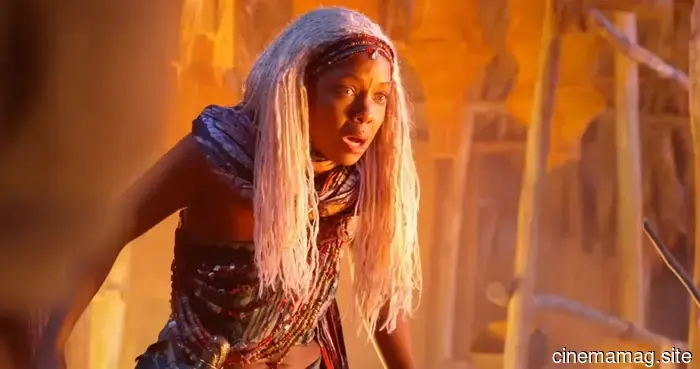 Take a look behind the scenes of Children of Blood and Bone with an exclusive first-look featurette.
With the premiere of the first trailer scheduled for tomorrow, Paramount Pictures has unveiled a behind-the-scenes featurette for the forthcoming adaptation of Tomi Adeyemi’s fantasy novel Children of Blood and Bone, whic…
Take a look behind the scenes of Children of Blood and Bone with an exclusive first-look featurette.
With the premiere of the first trailer scheduled for tomorrow, Paramount Pictures has unveiled a behind-the-scenes featurette for the forthcoming adaptation of Tomi Adeyemi’s fantasy novel Children of Blood and Bone, whic…
 New trailer reveals gameplay for Garfield – Escape from Monday.
Microids has released a new gameplay trailer for Garfield – Escape from Monday, showcasing the initial 10 minutes of the forthcoming 3D platform adventure. This gameplay trailer (see below) demonstrates player...
New trailer reveals gameplay for Garfield – Escape from Monday.
Microids has released a new gameplay trailer for Garfield – Escape from Monday, showcasing the initial 10 minutes of the forthcoming 3D platform adventure. This gameplay trailer (see below) demonstrates player...
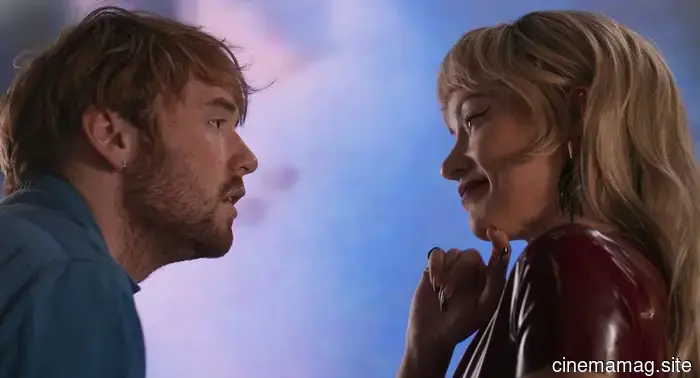 Gregg Araki discusses I Want Your Sex, Madonna, Mapplethorpe, and Gooning.
A friend of mine recently joked that Steven Spielberg's Disclosure Day could be considered "Mysterious Skin for straight individuals." Putting the humor aside, it's a fitting analogy that goes beyond the alien-trauma theme: both Spielberg and queer punk icon Gregg Araki are intrigued by characters who are motivated by their quest for connection and satisfaction in dysfunctional families and fragmented communities. Moreover, their
Gregg Araki discusses I Want Your Sex, Madonna, Mapplethorpe, and Gooning.
A friend of mine recently joked that Steven Spielberg's Disclosure Day could be considered "Mysterious Skin for straight individuals." Putting the humor aside, it's a fitting analogy that goes beyond the alien-trauma theme: both Spielberg and queer punk icon Gregg Araki are intrigued by characters who are motivated by their quest for connection and satisfaction in dysfunctional families and fragmented communities. Moreover, their
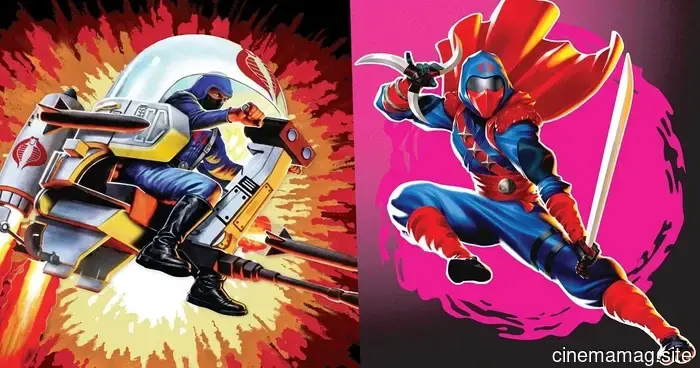 Super7 introduces Trubble Bubbles and Ninja Force to the G.I. Joe: A Real American Hero ReAction+ collection.
Super7 has revealed the latest figures in its G.I. Joe: A Real American Hero ReAction+ Series, featuring the Cobra Trubble Bubble and Python Patrol Trubble Bubble, which include a pilot...
Super7 introduces Trubble Bubbles and Ninja Force to the G.I. Joe: A Real American Hero ReAction+ collection.
Super7 has revealed the latest figures in its G.I. Joe: A Real American Hero ReAction+ Series, featuring the Cobra Trubble Bubble and Python Patrol Trubble Bubble, which include a pilot...
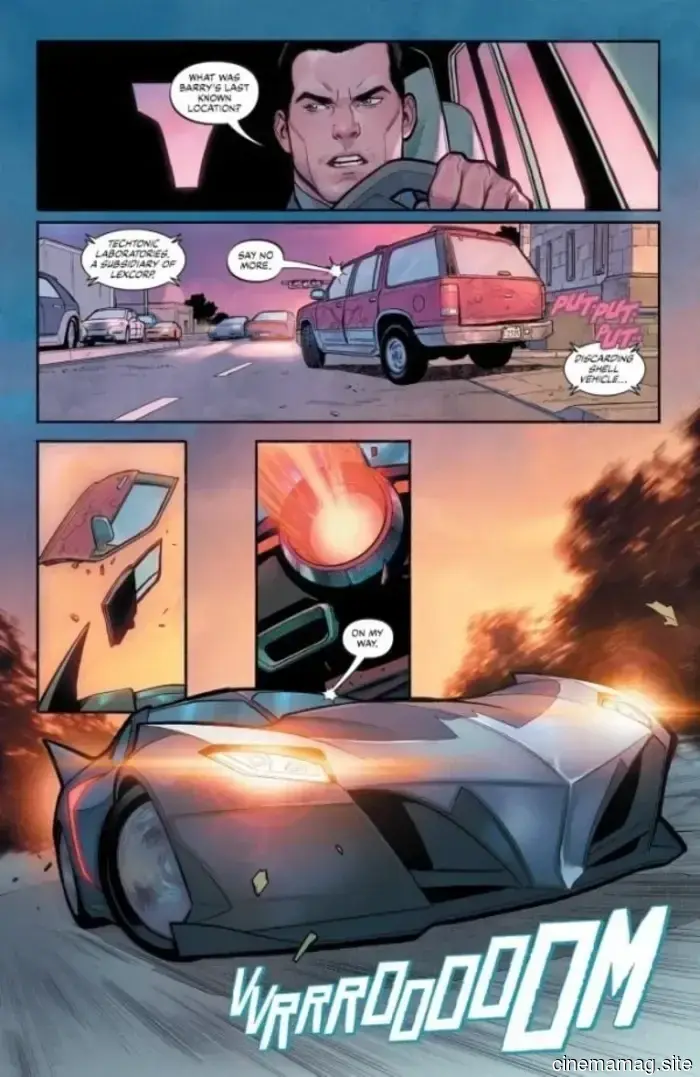 Comic Book Preview – Batman/Superman: World’s Finest 2026 Annual #1
DC Comics will release Batman/Superman: World’s Finest 2026 Annual #1 on Wednesday. You can take a look at the official preview of this special oversized issue below… AN OVERSIZED SUMMER SPECIAL!…
Comic Book Preview – Batman/Superman: World’s Finest 2026 Annual #1
DC Comics will release Batman/Superman: World’s Finest 2026 Annual #1 on Wednesday. You can take a look at the official preview of this special oversized issue below… AN OVERSIZED SUMMER SPECIAL!…
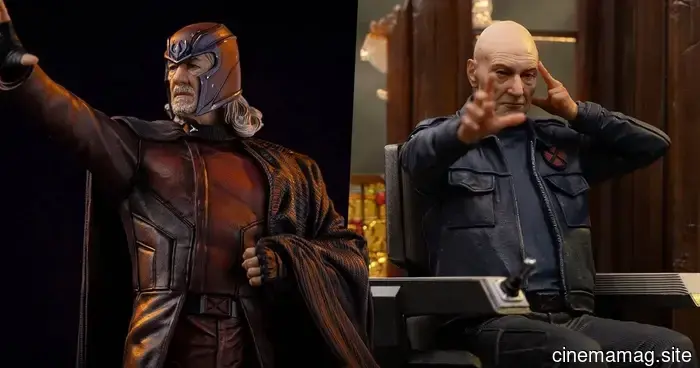 Iron Studios has revealed collectible statues of Magneto and Professor X from Avengers: Doomsday.
Continuing with Hasbro, Hot Toys, and LEGO, Iron Studios has started to reveal its merchandise for December’s Avengers: Doomsday, showcasing its 1:10 scale figures of Professor Xavier and Ma…
Iron Studios has revealed collectible statues of Magneto and Professor X from Avengers: Doomsday.
Continuing with Hasbro, Hot Toys, and LEGO, Iron Studios has started to reveal its merchandise for December’s Avengers: Doomsday, showcasing its 1:10 scale figures of Professor Xavier and Ma…
Film Review – The Samurai and the Captive (2026)
The Samurai and The Prisoner, 2026. Written and Directed by Kiyoshi Kurosawa. Featuring Masahiro Motoki, Masaki Suda, Yuriko Yoshitaka, Munetaka Aoki, Ryota Miyadate, Tasuku Emoto, Joe Odagiri, Yusuke…