
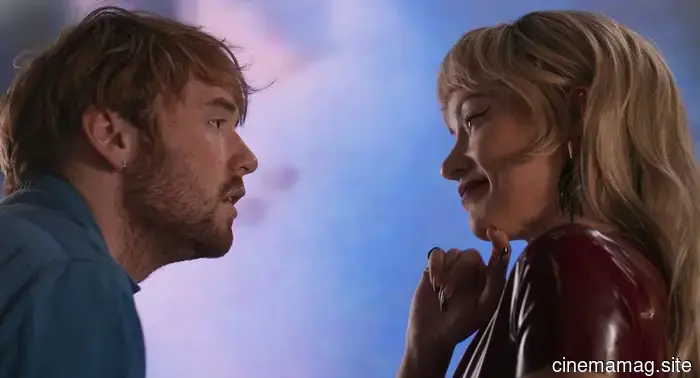
Gregg Araki discusses I Want Your Sex, Madonna, Mapplethorpe, and Gooning.
A friend recently joked that Steven Spielberg’s Disclosure Day was akin to “Mysterious Skin for straight people.” Jokes aside, it’s an insightful comparison that goes beyond the alien-trauma theme: both Spielberg and queer punk icon Gregg Araki exhibit a deep interest in characters who are searching for connection and fulfillment within broken homes and fractured communities. Although their approaches differ, both are currently reflecting on the past—evaluating what has changed and how they, as creators, have matured.
In his latest comic thriller, I Want Your Sex, Araki retains his rebellious essence. The story revolves around a struggling intern (Cooper Hoffman) who engages in an affair with his provocative artist boss (Olivia Wilde), allowing the director to analyze how the sexual and artistic landscapes have been devastated by rampant consumption, social isolation, and the monopolization of online interactions since his groundbreaking debut with The Living End and the Teen Apocalypse Trilogy. Armed with sharp humor and vibrant visuals, Araki confronts a culture filled with more sex, social fluidity, and anxieties about sexuality than during his 1992 Sundance experience amid the AIDS crisis.
Prior to the Friday release, I spoke with the queer cinema trailblazer about Madonna, Mapplethorpe, and gooning.
The Film Stage: You debuted I Want Your Sex at the Sundance Film Festival, and also won the Grand Jury Prize for The Living End there. How did it feel to showcase your latest work at your last appearance in Park City?
Gregg Araki: It was incredible. I was thrilled to be there. The Living End premiered at Sundance in ’92, making it around 34 years. For I Want Your Sex, we screened at the Eccles [Theater] during the opening weekend. It was just fantastic. The audience was fully engaged, making it my best Sundance experience ever.
You also presented Now Apocalypse there, right?
I think I’ve lost track—maybe around 11 or 12 times at Sundance, if you count Now Apocalypse. We screened three episodes, so it was almost like a film. I've also participated on juries or panels there. Yeah, I’ve been there numerous times.
You collaborated with I Want Your Sex's co-writer Karley Sciortino on Now Apocalypse. How was the transition from working together on a TV series to a feature film?
The origin of I Want Your Sex actually predates Now Apocalypse. It was Carly’s spec script; it was the first thing of hers that I read back in 2013 or 2014. It was based on her experience of having slept with her boss in her 20s and was originally pitched to me as a comedic Fifty Shades of Grey, featuring a female intern and a male boss. Over the years, it evolved significantly. At one point, there was a version set to be made around 2015, but it fell through, which is common in film. Eventually, I decided to switch the gender roles in 2016 because I didn’t want to depict a woman being dragged around after #MeToo.
I don’t want to shame anyone, but I felt it was crucial not to include that dynamic in the film. I found it more fun and enriching to portray a male submissive and a female dominant. Many aspects of the film evolved during this development phase, including commentary on Generation Z and their lack of sexual experiences, which emerged while I was working on the script. The article mentioned in the film is a real one I encountered, prompting me to comment on its disturbing nature, which became a significant part of the narrative.
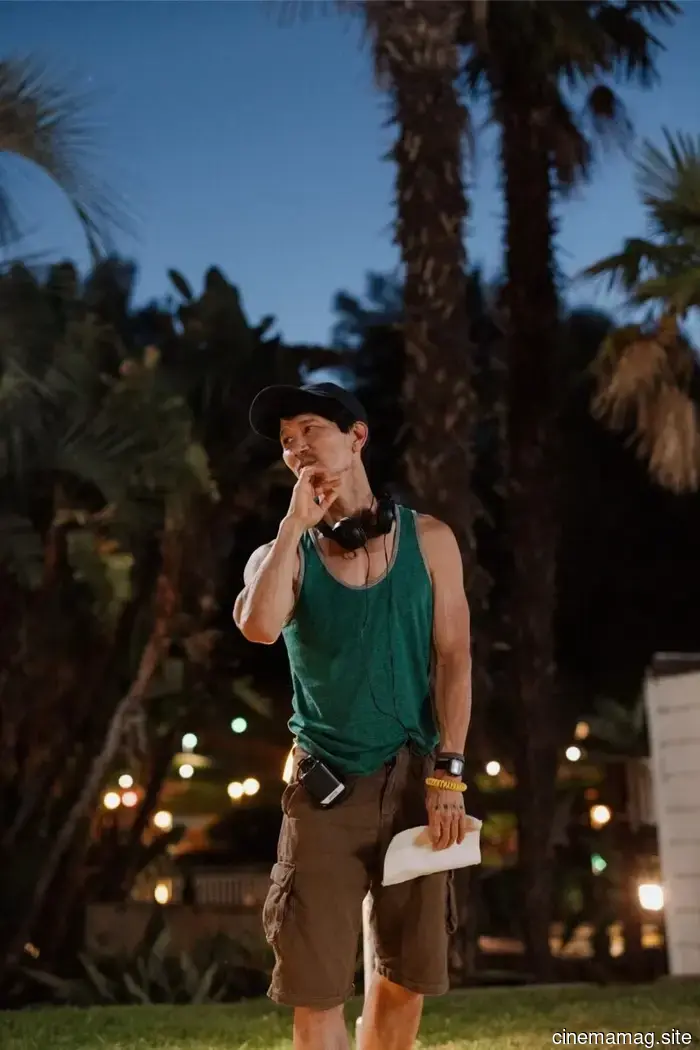
Gregg Araki on the set of I Want Your Sex
The film explores how the Internet and social media influence not just our social and sexual interactions but also our taste. Erica frequently discusses breaking through the noise. Many claim your films have been pivotal in shaping their tastes in music, fashion, and film. Did you and Carly discuss how taste has been influenced by algorithms during the development process? How do you discover new and exciting content to engage with?
In response to the first question, I didn’t consciously focus on taste. As someone immersed in culture, I often just experience whatever comes my way, much of which is algorithm-driven. I think of Heated Rivalry; I had read those books before the show was completed, and I was drawn to the genre after discovering it on Queerty or something similar. When I learned about its adaptation, I wanted to check it out, and it spiraled from there.
As for where new influences come from, I’m unsure. It seems to operate as it always has—people often ask how I find new bands. It’s happening organically, usually through my boyfriend who listens to KCRW. Today, it feels very algorithm-driven, but it also feels organic to me, whatever falls into my orbit feels intense when I genuinely connect with it.
When developing Erica Tracy, what kind of artist did you envision her to be? I know
Other articles
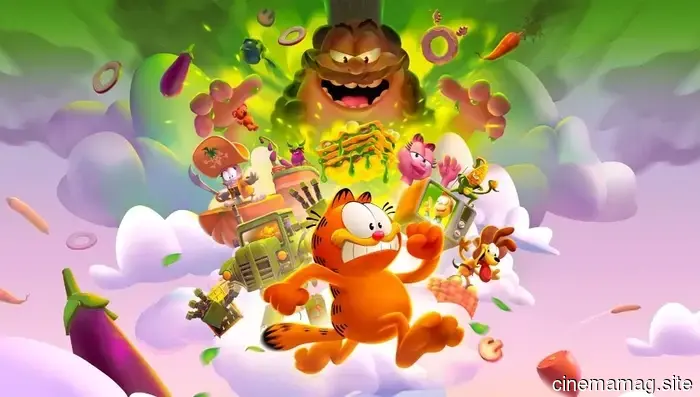 New trailer reveals gameplay for Garfield – Escape from Monday.
Microids has released a new gameplay trailer for Garfield – Escape from Monday, showcasing the initial 10 minutes of the forthcoming 3D platform adventure. This gameplay trailer (see below) demonstrates player...
New trailer reveals gameplay for Garfield – Escape from Monday.
Microids has released a new gameplay trailer for Garfield – Escape from Monday, showcasing the initial 10 minutes of the forthcoming 3D platform adventure. This gameplay trailer (see below) demonstrates player...
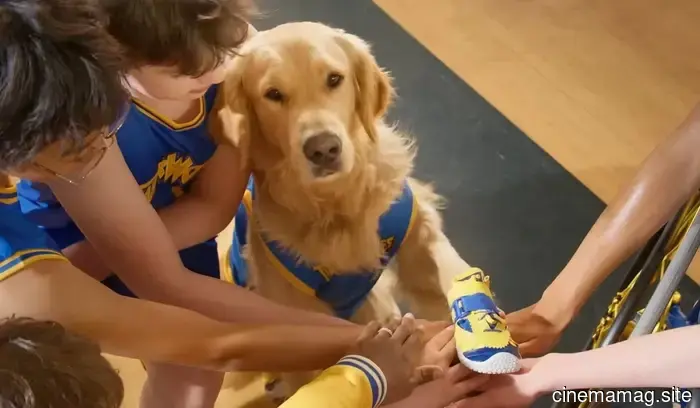 Air Bud returns to the court in the trailer for Air Bud Returns.
Nearly three decades after Buddy first appeared in 1997’s Air Bud, the sports-loving Golden Retriever returns in the 15th installment of the franchise, titled Air Bud Returns. The film is written and directed by Robert…
Air Bud returns to the court in the trailer for Air Bud Returns.
Nearly three decades after Buddy first appeared in 1997’s Air Bud, the sports-loving Golden Retriever returns in the 15th installment of the franchise, titled Air Bud Returns. The film is written and directed by Robert…
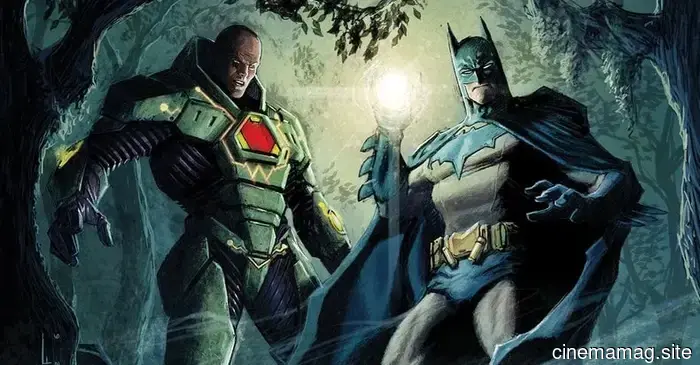 Preview of the Comic Book – Justice League: Knight Vision Special #1
Justice League: Knight Vision Special #1 will be released this Wednesday, and you can check out the official preview of the issue below, provided by DC Comics… A NEW THREAT TO THE DCU REQUIRES A BATMAN…
Preview of the Comic Book – Justice League: Knight Vision Special #1
Justice League: Knight Vision Special #1 will be released this Wednesday, and you can check out the official preview of the issue below, provided by DC Comics… A NEW THREAT TO THE DCU REQUIRES A BATMAN…
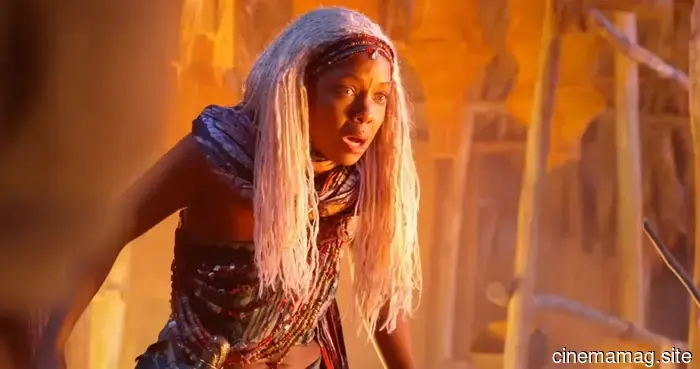 Take a look behind the scenes of Children of Blood and Bone with an exclusive first-look featurette.
With the premiere of the first trailer scheduled for tomorrow, Paramount Pictures has unveiled a behind-the-scenes featurette for the forthcoming adaptation of Tomi Adeyemi’s fantasy novel Children of Blood and Bone, whic…
Take a look behind the scenes of Children of Blood and Bone with an exclusive first-look featurette.
With the premiere of the first trailer scheduled for tomorrow, Paramount Pictures has unveiled a behind-the-scenes featurette for the forthcoming adaptation of Tomi Adeyemi’s fantasy novel Children of Blood and Bone, whic…
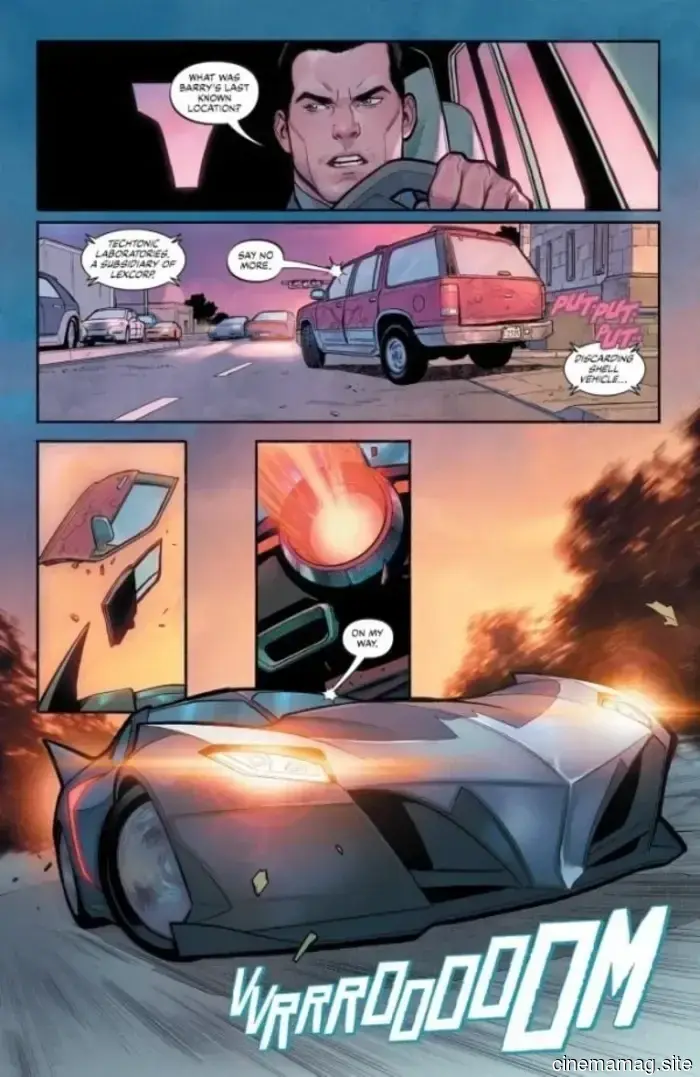 Comic Book Preview – Batman/Superman: World’s Finest 2026 Annual #1
DC Comics will release Batman/Superman: World’s Finest 2026 Annual #1 on Wednesday. You can take a look at the official preview of this special oversized issue below… AN OVERSIZED SUMMER SPECIAL!…
Comic Book Preview – Batman/Superman: World’s Finest 2026 Annual #1
DC Comics will release Batman/Superman: World’s Finest 2026 Annual #1 on Wednesday. You can take a look at the official preview of this special oversized issue below… AN OVERSIZED SUMMER SPECIAL!…
.jpg) Film Review – The Samurai and the Captive (2026)
The Samurai and The Prisoner, 2026. Written and Directed by Kiyoshi Kurosawa. Featuring Masahiro Motoki, Masaki Suda, Yuriko Yoshitaka, Munetaka Aoki, Ryota Miyadate, Tasuku Emoto, Joe Odagiri, Yusuke…
Film Review – The Samurai and the Captive (2026)
The Samurai and The Prisoner, 2026. Written and Directed by Kiyoshi Kurosawa. Featuring Masahiro Motoki, Masaki Suda, Yuriko Yoshitaka, Munetaka Aoki, Ryota Miyadate, Tasuku Emoto, Joe Odagiri, Yusuke…
Gregg Araki discusses I Want Your Sex, Madonna, Mapplethorpe, and Gooning.
A friend of mine recently joked that Steven Spielberg's Disclosure Day could be considered "Mysterious Skin for straight individuals." Putting the humor aside, it's a fitting analogy that goes beyond the alien-trauma theme: both Spielberg and queer punk icon Gregg Araki are intrigued by characters who are motivated by their quest for connection and satisfaction in dysfunctional families and fragmented communities. Moreover, their