
Tony Review: Matt Johnson Discovers the Perfect Elements in the Anthony Bourdain Biopic
To the public, Anthony Bourdain was a meticulously crafted persona: a fine-dining chef who passionately spoke about the pleasures of "ordinary" food and ventured to remote locations that sparked his desire to confront figures like Henry Kissinger on shows such as Parts Unknown. He readily acknowledged his imperfections, detailing his shortcomings in bestselling books like Kitchen Confidential and Medium Raw, while also sharing his insights through various blogs and social media until his tragic suicide in 2018. Given his substantial presence, it may seem that his life was extensively documented; Kitchen Confidential even inspired a Fox sitcom in 2005 featuring a young Bradley Cooper. Matt Johnson's film Tony recognizes the challenge of this narrative and, similar to many effective biopics, opts to concentrate on a specific, crucial segment of Bourdain's story: the opening chapters of Kitchen Confidential.
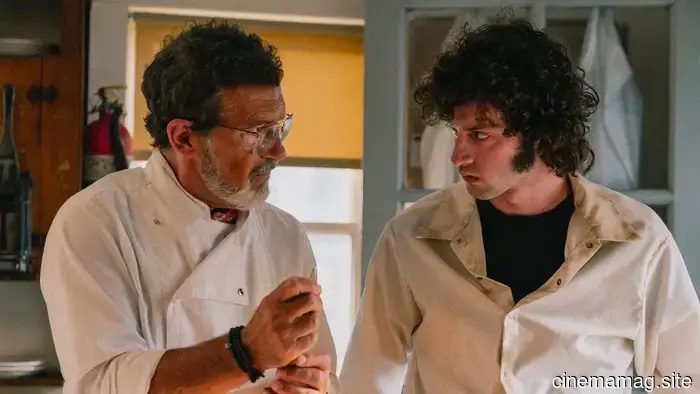
When we first encounter Dominic Sessa’s portrayal of Tony, food is the last thing on his mind. He is busy pitching a novel to a Vassar writing fellowship, describing it as a type of bildungsroman infused with elements reminiscent of Orwell. His awkward attempts to flirt with Nancy (Emilia Jones), a high school acquaintance, along with his rejection from the fellowship program, illustrate the Bourdain depicted on the poster: spoiled, unhappy, self-absorbed, self-destructive, thoughtless… and in dire need of a good wake-up call. Sessa gained notable recognition playing a similar type of arrogant youth in The Holdovers, but as envisioned by Johnson and co-writers Matthew Miller, Todd Bartels, and Lou Howe, Bourdain is portrayed as adrift and undefined, uncertain of his identity or purpose. Why else would he impulsively chase after Nancy to Provincetown?
This whim leads him to a hammock after getting into a scuffle at a local eatery for being overly familiar with a waitress. This restaurant is owned by “the Chef” (Antonio Banderas), who eventually hires Tony as a dishwasher for the summer. In these early scenes, Tony embodies the chaotic nature of typical kitchen tales: turmoil, insults, and drugs. However, it diverges by highlighting the actual work involved in managing even a simple four-item menu, from the lax safety measures of the time to the challenges of operating a potato slicer. One particularly engaging scene shows Tony assisting the Chef on a day off by refilling salt while the Chef prepares homemade ketchup for bottling. This moment stands out, especially after a rapid montage that goes through all the expected struggles and victories of a novice—an example of the light subversion one associates with the director of Blackberry and Nirvana the Band the Show the Movie. Jay McCarrol continues to provide the music along with editor Curt Lobb, but Michael Bauman takes over cinematography, replacing the shaky handheld shots with more elegantly framed images (notably, car lights illuminating a house hosting a lively party). This illustrates that while Johnson’s direction may have evolved in certain aspects, he still retains a connection to his roots.
Both the film and the character of Tony are inherently incomplete. It’s easy to envision this same situation unfolding with any random early-20s misfit, but the intrigue stems mainly from our awareness of the remarkable figure Tony will eventually become. For the most part, Johnson refrains from overtly signaling tragic outcomes or obvious cameos, which means that besides Tony himself and the Chef—whose true name remains a mystery to even his kitchen staff—the rest of the cast remains somewhat one-dimensional. For instance, Stavros Halkias portrays a character that is exactly what one might expect based solely on his casting, while Woodall adequately fulfills the role of a self-destructive local. Jones suffers the most, relegated to the role of the love interest who, at least smartly, recognizes that Tony is misleading her for most of the film. Yet she ultimately falls into the familiar trope of an inevitable breakup, leaving the impression that she will fade into the background once Tony returns home. This structural issue derives not only from it being the story's beginning, but also from the audience's awareness of this fact.
The film’s greatest achievement, in this regard, is that at no point does Tony seem to pause until he discovers that cooking is his true passion. Sessa shares a wonderful chemistry with Banderas, who radiates a firm warmth and reveals the depth of his mentor’s character in continuously unexpected ways. Banderas has aged into this role beautifully, capable of eliciting laughter merely from pouring out a pot of water, as well as delivering the incredulous line, “You don’t believe in God?” Sessa demonstrates he is more than just a single-layer performer. Yes, his character is somewhat of a brat, but he frequently plays the straight man, using his expressive eyes to convey unease about working conditions or deep regret over his failures.
Those seeking a film focused primarily on Bourdain's life may not find much insight into him or his
Other articles
 Tony Gilroy’s Behemoth! Will World Premiere as the Centerpiece of the 64th New York Film Festival.
Tony Gilroy's Behemoth!, marking his first feature film in 14 years (and his first original work in 17), has been officially announced to have its world premiere as the Centerpiece selection of the 64th New York Film Festival. The screening will take place at Alice Tully Hall on Friday, October 2, with Gilroy, Pedro Pascal, and other cast members present.
Tony Gilroy’s Behemoth! Will World Premiere as the Centerpiece of the 64th New York Film Festival.
Tony Gilroy's Behemoth!, marking his first feature film in 14 years (and his first original work in 17), has been officially announced to have its world premiere as the Centerpiece selection of the 64th New York Film Festival. The screening will take place at Alice Tully Hall on Friday, October 2, with Gilroy, Pedro Pascal, and other cast members present.
 Premium Collectibles Studio has unveiled a Chun-Li Android statue from Street Fighter.
Premium Collectibles Studio has officially launched its quarter scale Chun-Li Android statue, offering a futuristic reinterpretation of the Street Fighter icon, available in both Classic and Battle Editions.
Premium Collectibles Studio has unveiled a Chun-Li Android statue from Street Fighter.
Premium Collectibles Studio has officially launched its quarter scale Chun-Li Android statue, offering a futuristic reinterpretation of the Street Fighter icon, available in both Classic and Battle Editions.
 The B-Sides of Michael Mann featuring Blake Howard
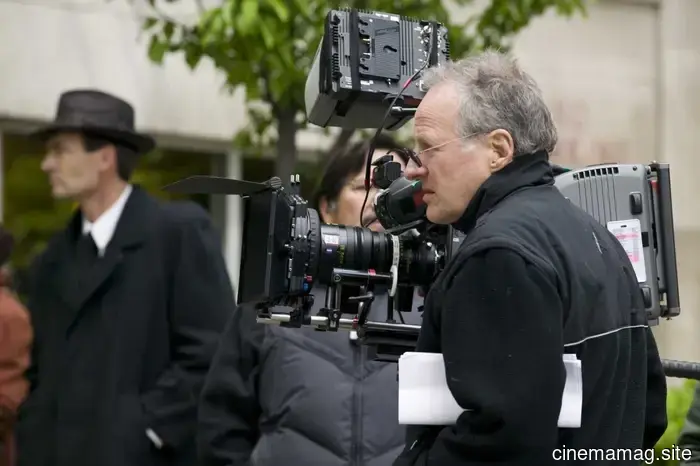
Welcome to The B-Side! Here, we focus on film directors—not the blockbuster hits that brought them fame or maintained it, but the lesser-known projects they created in between. Today, we're diving into the works of the esteemed Michael Mann! Our B-Side films are The Keep, Public Enemies, Blackhat, and Ferrari. Our special guest is the legendary Blake Howard from One.
The B-Sides of Michael Mann featuring Blake Howard
Welcome to The B-Side! Here, we focus on film directors—not the blockbuster hits that brought them fame or maintained it, but the lesser-known projects they created in between. Today, we're diving into the works of the esteemed Michael Mann! Our B-Side films are The Keep, Public Enemies, Blackhat, and Ferrari. Our special guest is the legendary Blake Howard from One.
 The B-Sides of Michael Mann featuring Blake Howard
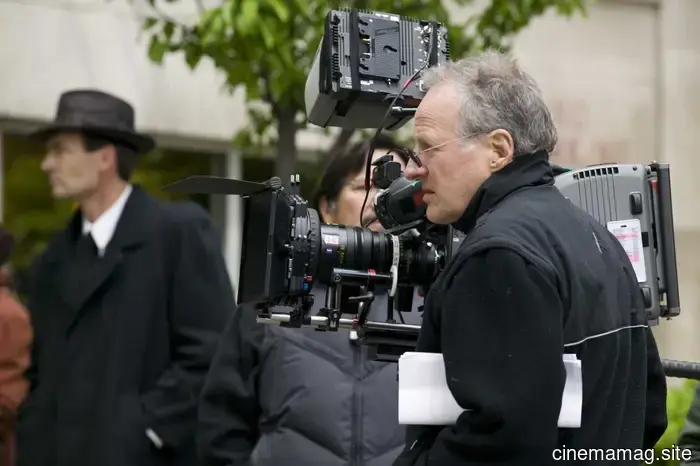
Welcome to The B-Side! In this space, we discuss film directors—not the films that brought them fame or maintained it, but the projects they undertook in between. Today, we're focusing on the remarkable Michael Mann! The B-Sides we'll be examining are The Keep, Public Enemies, Blackhat, and Ferrari. Joining us is the legendary Blake Howard from One.
The B-Sides of Michael Mann featuring Blake Howard
Welcome to The B-Side! In this space, we discuss film directors—not the films that brought them fame or maintained it, but the projects they undertook in between. Today, we're focusing on the remarkable Michael Mann! The B-Sides we'll be examining are The Keep, Public Enemies, Blackhat, and Ferrari. Joining us is the legendary Blake Howard from One.
 Tony Gilroy's Behemoth! Will Have Its World Premiere as the Centerpiece of the 64th New York Film Festival.
Marking his first feature film in 14 years (and his first original project in 17), Tony Gilroy’s Behemoth! has been announced to have its world premiere as the Centerpiece selection of the 64th New York Film Festival. The screening will take place at Alice Tully Hall on Friday, October 2, with Gilroy, Pedro Pascal, and other cast members present. This
Tony Gilroy's Behemoth! Will Have Its World Premiere as the Centerpiece of the 64th New York Film Festival.
Marking his first feature film in 14 years (and his first original project in 17), Tony Gilroy’s Behemoth! has been announced to have its world premiere as the Centerpiece selection of the 64th New York Film Festival. The screening will take place at Alice Tully Hall on Friday, October 2, with Gilroy, Pedro Pascal, and other cast members present. This
 The trailer for the single-take exorcism horror film Bury the Devil hints at a terrifying experience in real time.
In anticipation of its release this August, a trailer, poster, and images have emerged online for director Adam O’Brien’s (MOM) forthcoming horror film, Bury the Devil. The story unfolds in a real-time narrative, in a…
The trailer for the single-take exorcism horror film Bury the Devil hints at a terrifying experience in real time.
In anticipation of its release this August, a trailer, poster, and images have emerged online for director Adam O’Brien’s (MOM) forthcoming horror film, Bury the Devil. The story unfolds in a real-time narrative, in a…
Tony Review: Matt Johnson Discovers the Perfect Elements in the Anthony Bourdain Biopic
To the public, Anthony Bourdain represented a meticulously crafted image: the gourmet chef who eloquently celebrated the pleasures of "everyday" food and journeyed to remote places that inspired him to confront figures like Henry Kissinger on programs such as Parts Unknown. He would readily acknowledge his imperfections, detailing his shortcomings in his bestselling books.