
.jpg)
Film Critique – Spider-Man: Brand New Day (2026)
**Spider-Man: Brand New Day, 2026**
Directed by Destin Daniel Cretton.
Starring Tom Holland, Zendaya, Sadie Sink, Jacob Batalon, Jon Bernthal, Tramell Tillman, Michael Mando, Mark Ruffalo, Liza Colón-Zayas, Marvin Jones III, Eman Esfandi, Zabryna Guevara, and Keith David.
**SYNOPSIS:**
A lonely Peter Parker dedicates himself fully to being Spider-Man until the pressures of his life lead to a perilous transformation and the rise of a formidable new foe.
Recently, both the MCU and DC have overlooked the saying that a story's quality often hinges on its villains. Fortunately, this is not the case here. Director Destin Daniel Cretton’s Spider-Man: Brand New Day features a credible antagonist portrayed by Sadie Sink, whose traumas and motivations align seamlessly with those of Peter Parker’s Spider-Man (Tom Holland) and Jon Bernthal’s vengeance-driven vigilante Frank Castle, also known as The Punisher. Although the Punisher's brutality is moderated for a PG-13 rating, his distinct personality remains intact. This aspect works remarkably well, as the film (guided by the writing duo Erik Sommers and Chris McKenna) pays equal attention to thematic connections and contrasts between characters alongside the action-packed sequences.
Continuing from where Spider-Man: No Way Home ended, everyone has forgotten the friendly neighborhood spider's identity and their relationship with Peter Parker. This sets up a montage over approximately four years during which he battles crime, with Michael Mando’s Scorpion becoming his main adversary, along with several villain cameos that effectively illustrate Spider-Man's isolation as he takes on the responsibilities of a hero, while his ex-girlfriend MJ (Zendaya) and best friend Ned (Jacob Batalon) focus on their education.
A new challenge arises in Peter Parker’s life as his spider-hormones begin to affect his genetic makeup, leading to unexpected organic webbing and heightened spider-senses, resulting in a loss of control over his powers. His web shooters no longer integrate with his body. While this might sound absurd (writing about "spider-hormones" was unexpected), it feels scientifically plausible and opens the door for an exploration of identity that goes beyond simply recognizing Spider-Man's face.
The film delves into the aftermath of No Way Home, not directly questioning the choice made but highlighting the drawbacks of Peter living as a reclusive Spider-Man (an aspect Tom Holland portrays with relatable stress and humor). It raises issues of balance while also providing the superhero with new variations and enhancements to his powers. At one point, MJ, who does not remember Spider-Man but gets involved in his latest crime-fighting mission, questions why he is trying to suppress these changes (leading Peter to seek scientific counsel from Mark Ruffalo’s Bruce Banner).
This mission sees him collaborating with Detective Jean DeWolff (Liza Colón-Zayas), his Jim Gordon-like liaison within the New York City Police Department, to uncover the reasoning behind a series of raids on the Department of Damage Control. This agency, seemingly linked to the government and led by Bill Metzger (Trammell Tillman), aims to reverse-engineer the technologies captured from the villains Spider-Man subdues, repurposing their powers for what they deem a more noble cause. This scenario brings Spider-Man into conflict with Scorpion while introducing an unseen character capable of taking control of individuals within a certain range of their last host. The stakes become personal when this villain targets Peter Parker’s friends, resulting in a first act that occasionally resembles a horror film (one scene mentally tricks him into heartbreaking devastation), all underlined by another impressive score from Michael Giacchino.
The existence of Damage Control also raises questions about identity, pondering whether individuals are inherently heroic or villainous, and if only they should possess their abilities. This ties into the earlier mentioned adage, as every character opposed to the group has a justifiable grievance, adding tension to the third act. The antagonist displays complex motivations through a poignant flashback reminiscent of the losses experienced by Peter Parker and Frank Castle, both pursuing similar goals through vastly different methodologies.
In contrast to the usual tendency in Marvel films to assemble a cast without much rationale, focusing on fan service, it’s refreshing to see that every significant character here plays a meaningful role in Peter Parker and others deciding their identities. Instead of cramming characters for fan appeal, the film organically presents a cinematic universe where multiple superheroes co-exist. Additionally, it makes a concerted effort to depict New York City as a tangible location. Even the standard visual inconsistencies with The Hulk (seriously, how is this not addressed yet?) or the sense of Marvel backtracking on the events of No Way Home doesn’t detract from the film's thoughtfulness and the cohesive universe it presents.
Destin Daniel Cretton,
.jpg)
.jpg)
.jpg)
.jpg)
.jpg)
.jpg)
Altri articoli
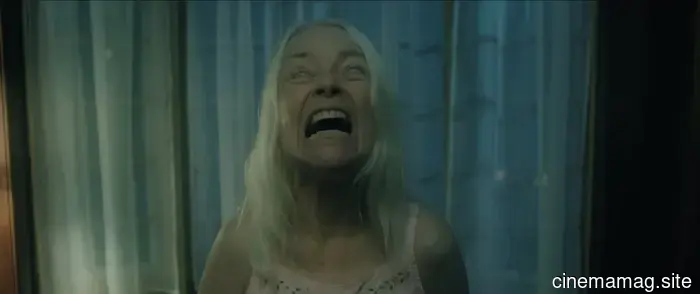 The trailer for the single-take exorcism horror film Bury the Devil hints at a terrifying experience in real time.
In anticipation of its release this August, a trailer, poster, and images have emerged online for director Adam O’Brien’s (MOM) forthcoming horror film, Bury the Devil. The story unfolds in a real-time narrative, in a…
The trailer for the single-take exorcism horror film Bury the Devil hints at a terrifying experience in real time.
In anticipation of its release this August, a trailer, poster, and images have emerged online for director Adam O’Brien’s (MOM) forthcoming horror film, Bury the Devil. The story unfolds in a real-time narrative, in a…
 Tony Gilroy's Behemoth! Will Have Its World Premiere as the Centerpiece of the 64th New York Film Festival.
Marking his first feature film in 14 years (and his first original project in 17), Tony Gilroy’s Behemoth! has been announced to have its world premiere as the Centerpiece selection of the 64th New York Film Festival. The screening will take place at Alice Tully Hall on Friday, October 2, with Gilroy, Pedro Pascal, and other cast members present. This
Tony Gilroy's Behemoth! Will Have Its World Premiere as the Centerpiece of the 64th New York Film Festival.
Marking his first feature film in 14 years (and his first original project in 17), Tony Gilroy’s Behemoth! has been announced to have its world premiere as the Centerpiece selection of the 64th New York Film Festival. The screening will take place at Alice Tully Hall on Friday, October 2, with Gilroy, Pedro Pascal, and other cast members present. This
 Premium Collectibles Studio has unveiled a Chun-Li Android statue from Street Fighter.
Premium Collectibles Studio has officially launched its quarter scale Chun-Li Android statue, offering a futuristic reinterpretation of the Street Fighter icon, available in both Classic and Battle Editions.
Premium Collectibles Studio has unveiled a Chun-Li Android statue from Street Fighter.
Premium Collectibles Studio has officially launched its quarter scale Chun-Li Android statue, offering a futuristic reinterpretation of the Street Fighter icon, available in both Classic and Battle Editions.
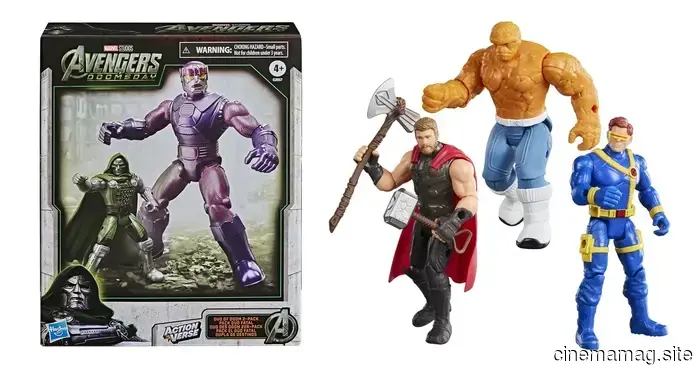 Hasbro has revealed the Marvel’s Avengers: Doomsday Actionverse and Titan Heroes figures.
Building on its earlier announcements of Marvel Legends Series action figures, Hasbro has now introduced a range of Actionverse and Titan Heroes products related to the eagerly awaited Marvel blockbuster Avenge...
Hasbro has revealed the Marvel’s Avengers: Doomsday Actionverse and Titan Heroes figures.
Building on its earlier announcements of Marvel Legends Series action figures, Hasbro has now introduced a range of Actionverse and Titan Heroes products related to the eagerly awaited Marvel blockbuster Avenge...
 Get ready for the trailer of the action thriller Evel.
Quiver Distribution has released a trailer for Derek Diorio's forthcoming action thriller, Evel, which is set to debut digitally this August. Athena Park plays a young lawyer who discovers herself…
Get ready for the trailer of the action thriller Evel.
Quiver Distribution has released a trailer for Derek Diorio's forthcoming action thriller, Evel, which is set to debut digitally this August. Athena Park plays a young lawyer who discovers herself…
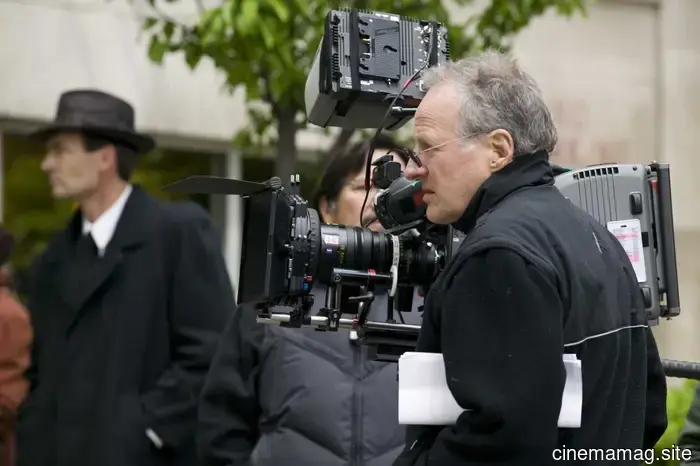 The B-Sides of Michael Mann featuring Blake Howard
Welcome to The B-Side! In this space, we discuss film directors—not the films that brought them fame or maintained it, but the projects they undertook in between. Today, we're focusing on the remarkable Michael Mann! The B-Sides we'll be examining are The Keep, Public Enemies, Blackhat, and Ferrari. Joining us is the legendary Blake Howard from One.
The B-Sides of Michael Mann featuring Blake Howard
Welcome to The B-Side! In this space, we discuss film directors—not the films that brought them fame or maintained it, but the projects they undertook in between. Today, we're focusing on the remarkable Michael Mann! The B-Sides we'll be examining are The Keep, Public Enemies, Blackhat, and Ferrari. Joining us is the legendary Blake Howard from One.
Film Critique – Spider-Man: Brand New Day (2026)
Spider-Man: Brand New Day, 2026. Directed by Destin Daniel Cretton. Featuring Tom Holland, Zendaya, Sadie Sink, Jacob Batalon, Jon Bernthal, Tramell Tillman, Michael Mando, Mark Ruffalo, Liza Colón-Zay…