

The Most Notorious Film: The Journey of Showgirls to Camp Classic Status
Adam Page revisits Showgirls and its transition from disaster to cult classic…
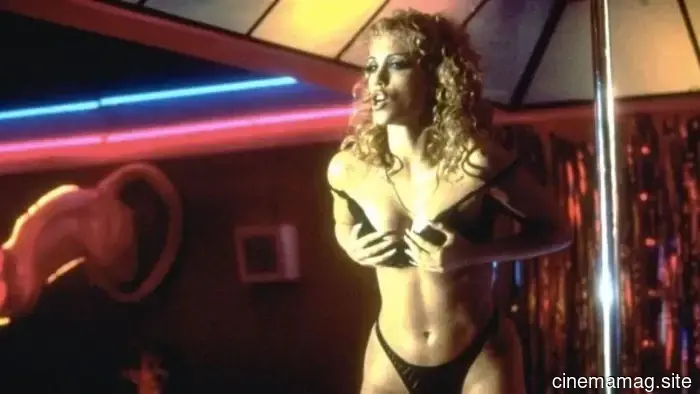
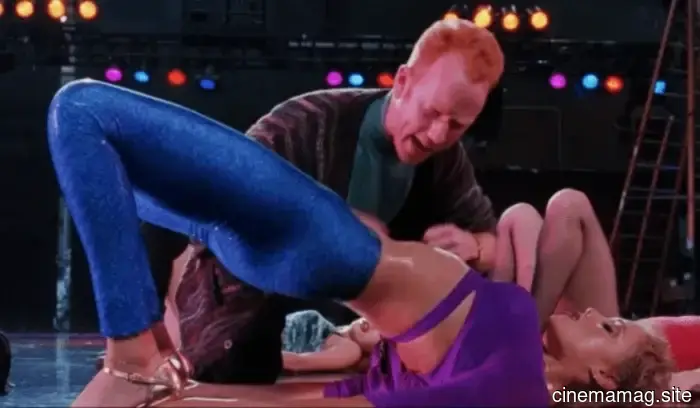
Throughout the years, I've come to a realization about failure, particularly concerning poorly made films, that I believe many can relate to: failure has an expiration date, and if you are patient, fortunate, and enough strangers find humor in the chaos together repeatedly, that failure evolves into something else entirely. I’m not implying it becomes success—nothing so straightforward—but it transforms into significance. This phenomenon has been vividly illustrated in the case of a $45 million surreal tale about a stripper named Nomi Malone, striving to ascend within a Vegas revue, helmed by a Dutch director who had endured Nazi rule and deemed the Las Vegas Strip a fitting second act for his career.
Indeed, I am referring to Showgirls, Paul Verhoeven’s 1995 NC-17 disaster. The film arrived like an uninsured car accident, critiqued not merely as a failure but examined as a body by critics, and it dominated the Razzies as if they were an invading force. It won seven Razzies in 1995, in addition to Worst Picture of the Decade in 1999, an accolade presented with an enjoyment typically reserved for war criminals and telemarketers. It grossed just over $30 million against its $45 million budget and ended careers. Elizabeth Berkley, a promising young actress transitioning from sitcoms, was transformed into a running joke that followed her down every red carpet for a decade.
Yet, amid the destruction, something began to resonate.
Having spent ample time witnessing collective disasters, I recognize that such calamities possess a distinct texture. There exists a type of disaster that is simply pitiful; it causes spectators to fidget and wish to leave. Conversely, there's the disaster that is so fully committed and blissfully unaware of its own demise, igniting laughter instead of discomfort among viewers. This latter type is rare and cannot be artificially manufactured. Many studios have attempted to craft camp intentionally, investing significant sums, yet it invariably falls flat, a feeble imitation of what it seeks to emulate.
For camp to succeed, it must be genuine, fully believing in itself while being utterly misguided. Showgirls had that belief akin to a drowning individual reaching for the surface. Every single choice made during its production—including the dialogue, lighting, that poolside seizure portrayed as romance, and Kyle MacLachlan's desperate attempts to appear normal while delivering lines no human would ever say—was executed with unwavering conviction. No one questioned it, and this sincerity is an irreplaceable element that ultimately led to its eventual combustibility.
However, conviction alone doesn’t cultivate a cult; someone needs to ignite the spark. The narrative of who sparked it and when is far more nuanced and human than the clichéd tale of “it was so bad that it became beloved.” This simplistic origin story implies that cult phenomena form by chance from negative energy and mere happenstance.
The evolution took place not by coincidence, but due to rental and bootleg copies of the film circulating in the mid-90s among audiences who viewed it far differently than Verhoeven intended. As writer Naomi Klein notes, a unique demographic of ironic twenty-somethings began hosting what could be termed Showgirls parties—hate-watching sessions before the term existed—enthusiastically reacting to the absurd poolside encounter with a blend of horror and delight, fully aware they were experiencing something frighteningly memorable. MGM noted the video rental statistics. This is the part that resonates deeply with me, for the studio did not create the irony; it simply recognized it, akin to a shark detecting blood from miles away, and directed itself toward profit.
By 1996, drag performers were enlisted to host midnight screenings in New York, formalizing what had spontaneously blossomed in living rooms into a bookable and monetizable event. The New York Times highlighted this shift that year with a headline indicating that the film was emerging from obscurity as high camp, resurrected at midnight, which seems to be the only permissible time for resurrections.
This marks the first pivotal moment—not a scholar or critic, but a marketing team observing the flicker of interest and scenting potential profit in its revival.
The second crucial point is even more intriguing, as it signals the transformation of mockery into something more structured, subtly evolving without easy detection. Peaches Christ staged drag interpretations of the film's wildly exaggerated scenes, a special homage suggesting that tributes arise not from pure disdain, but from something that has implanted itself into one’s psyche. A few years later, in Seattle, critic and writer David Schmader commenced hosting what he labeled annotated screenings. Beginning at the Northwest Film Forum in 1999, he illuminated the audience with a flashlight and microphone, dissecting every scene as he meticulously cataloged the intricate pattern of failure threaded through each choice in the movie—its direction, production, and performances.






Other articles
 The Top 12 NC-17 Films Ranked by Domestic Box Office Revenue
The leading NC-17 films, organized by domestic box office earnings, feature a variety of artistic movies considered too explicit according to the MPAA.
The Top 12 NC-17 Films Ranked by Domestic Box Office Revenue
The leading NC-17 films, organized by domestic box office earnings, feature a variety of artistic movies considered too explicit according to the MPAA.
 The Ultimate Terrible Film: The Rise of Showgirls as Camp Classic
Adam Page reflects on Showgirls and its transformation from disaster to cult classic… Throughout the years, I’ve come to understand something about failure, particularly regarding poorly received films, that I believe we can all concur on…
The Ultimate Terrible Film: The Rise of Showgirls as Camp Classic
Adam Page reflects on Showgirls and its transformation from disaster to cult classic… Throughout the years, I’ve come to understand something about failure, particularly regarding poorly received films, that I believe we can all concur on…
 Mike Flanagan has been brought on as the writer and showrunner for Henry Cavill's Warhammer 40,000 series.
As his newest adaptation of Stephen King's Carrie is scheduled to debut on Prime Video this October, director Mike Flanagan, known for The Haunting of Hill House and The Life of Chuck, appears ready to collaborate again with Amazon on…
Mike Flanagan has been brought on as the writer and showrunner for Henry Cavill's Warhammer 40,000 series.
As his newest adaptation of Stephen King's Carrie is scheduled to debut on Prime Video this October, director Mike Flanagan, known for The Haunting of Hill House and The Life of Chuck, appears ready to collaborate again with Amazon on…
 Marvel's Wonder Man cancelled even after a prior renewal for season 2.
As Marvel progresses towards the end of the Multiverse Saga and the next phase of the Marvel Cinematic Universe, the studio appears to be preparing for changes with the announcement that the l…
Marvel's Wonder Man cancelled even after a prior renewal for season 2.
As Marvel progresses towards the end of the Multiverse Saga and the next phase of the Marvel Cinematic Universe, the studio appears to be preparing for changes with the announcement that the l…
The Most Notorious Film: The Journey of Showgirls to Camp Classic Status
Adam Page reflects on Showgirls and its transformation from disaster to cult classic. Throughout the years, I've come to understand something about failure, particularly regarding poor films, that I believe we can all concur on...