
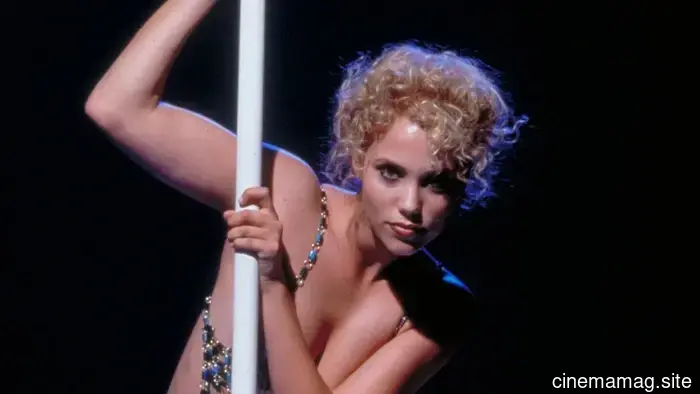
The Ultimate Terrible Film: The Rise of Showgirls as Camp Classic
Adam Page revisits Showgirls and its evolution from disaster to camp classic…
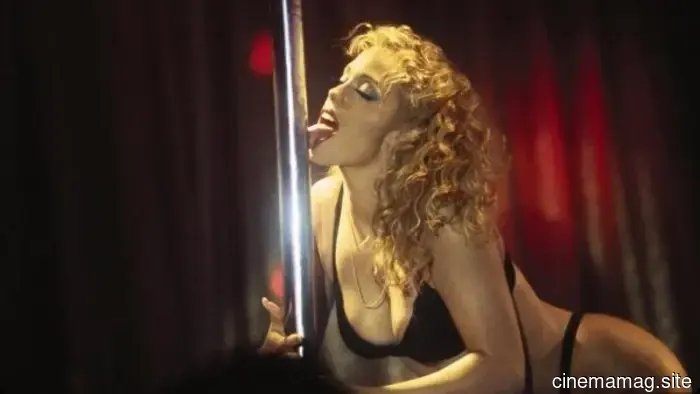
Over time, I’ve come to understand something about failure, particularly concerning bad films, that I believe we can all agree on: it has a finite timeline, and if you have enough patience, a bit of luck, and if enough people gather in a room to laugh at the chaos together for an extended period, that failure can transform into something else entirely. I’m not referring to success in a traditional sense, because it’s not quite so straightforward. Instead, it develops into significance. And few examples illustrate this transformation as dramatically and bizarrely as the $45 million surreal tale of a stripper named Nomi Malone, striving to ascend the ranks of a Vegas revue, helmed by a Dutch director who had endured Nazi occupation and seemingly concluded that the Las Vegas Strip was an appropriate second act for his career.
Of course, I'm referencing Showgirls, Paul Verhoeven’s infamous 1995 NC-17 disaster. This film was akin to a car wreck without insurance, one that critics didn’t just dismiss but dissected, and it swept the Razzies like an invading force, claiming seven awards in 1995 and being named Worst Picture of the Decade in 1999, receiving this distinction with a level of malicious glee usually reserved for war criminals and telemarketers. It grossed just over $30 million against that $45 million budget, leading to the downfall of numerous careers. Elizabeth Berkley, a promising young actress fresh off sitcom fame, found herself turned into a punchline that haunted her throughout red carpets for a decade.
However, amid the debris, something began to resonate.
Having spent ample time in settings where everything can unravel spectacularly, I know that disaster comes with a certain texture. There’s a type of disaster that simply elicits sadness; it makes everyone uncomfortable and eager to leave. Then there are the disasters that are so committed and total, blissfully unaware of their own failure, that they activate a switch in the collective psyche, prompting laughter instead of grimaces. That latter type of disaster is rare and cannot be artificially created. Studios have certainly attempted it, pouring money into producing camp on purpose, but it often results in a lifeless imitation of the original.
For camp to work, it must possess sincerity—fully believing in itself while being completely misguided about everything else. Showgirls had that belief, akin to how a drowning person clings to their hope of reaching the surface. Every choice made in that production—the dialogue, the lighting, the poolside scene mistaken for lovemaking, Kyle MacLachlan's futile effort to act like a normal human while delivering lines that no ordinary person would utter—was executed with unwavering conviction. No second-guessing took place, and that’s the irreplaceable ingredient that made it explosive later on.
Yet, conviction alone doesn’t create a cult; someone has to ignite the spark. The story of who did that, and when, is far more specific and human than the usual tale of “it was so bad that people started to love it." That casual origin narrative implies that these things materialized out of bad vibes and thin air.
This transformation didn’t occur by chance; it arose from the circulation of rental and bootleg copies of the film in the mid-90s among audiences who were not experiencing it as Verhoeven intended. Writer Naomi Klein noted that a distinct group of ironic twenty-somethings began hosting what could essentially be described as Showgirls parties—hate-watching gatherings before the term even existed—screaming at the poolside sexual scenes with a blend of horror and delight found only in the awareness that they were experiencing something that would leave an amusing scar. MGM took note of those VHS numbers. This part always strikes me, as the studio didn’t create the irony; it recognized it, akin to a shark detecting blood three miles away, and moved towards it with mercenary intent. By 1996, drag performers were being recruited to host midnight screenings in New York, transforming spontaneous living room events into something bookable and profitable. That year, The New York Times published a piece with a headline that encapsulated it all; the film was rising from the grave as high camp, resurrected at midnight—apparently the only time resurrections are permitted.
This marks the first pivotal moment—not a critic or scholar, but a marketing team observing the corpse twitch and sensing potential profit from the movements.
The second pivotal moment is even more intriguing, as it is where the mockery subtly starts to transform into something with deeper complexity. Peaches Christ in San Francisco began staging drag reenactments of the film’s most outrageous scenes, representing a unique tribute—after all, you don’t recreate what you merely despise; you reenact what has infiltrated your psyche. A few years later in Seattle, critic and writer David Schmader launched what he



Other articles
 The Most Notorious Film: The Journey of Showgirls to Camp Classic Status
Adam Page reflects on Showgirls and its transformation from disaster to cult classic. Throughout the years, I've come to understand something about failure, particularly regarding poor films, that I believe we can all concur on...
The Most Notorious Film: The Journey of Showgirls to Camp Classic Status
Adam Page reflects on Showgirls and its transformation from disaster to cult classic. Throughout the years, I've come to understand something about failure, particularly regarding poor films, that I believe we can all concur on...
 Marvel's Wonder Man cancelled even after a prior renewal for season 2.
As Marvel progresses towards the end of the Multiverse Saga and the next phase of the Marvel Cinematic Universe, the studio appears to be preparing for changes with the announcement that the l…
Marvel's Wonder Man cancelled even after a prior renewal for season 2.
As Marvel progresses towards the end of the Multiverse Saga and the next phase of the Marvel Cinematic Universe, the studio appears to be preparing for changes with the announcement that the l…
 The Top 12 NC-17 Films Ranked by Domestic Box Office Revenue
The leading NC-17 films, organized by domestic box office earnings, feature a variety of artistic movies considered too explicit according to the MPAA.
The Top 12 NC-17 Films Ranked by Domestic Box Office Revenue
The leading NC-17 films, organized by domestic box office earnings, feature a variety of artistic movies considered too explicit according to the MPAA.
 Mike Flanagan has been brought on as the writer and showrunner for Henry Cavill's Warhammer 40,000 series.
As his newest adaptation of Stephen King's Carrie is scheduled to debut on Prime Video this October, director Mike Flanagan, known for The Haunting of Hill House and The Life of Chuck, appears ready to collaborate again with Amazon on…
Mike Flanagan has been brought on as the writer and showrunner for Henry Cavill's Warhammer 40,000 series.
As his newest adaptation of Stephen King's Carrie is scheduled to debut on Prime Video this October, director Mike Flanagan, known for The Haunting of Hill House and The Life of Chuck, appears ready to collaborate again with Amazon on…
The Ultimate Terrible Film: The Rise of Showgirls as Camp Classic
Adam Page reflects on Showgirls and its transformation from disaster to cult classic… Throughout the years, I’ve come to understand something about failure, particularly regarding poorly received films, that I believe we can all concur on…