
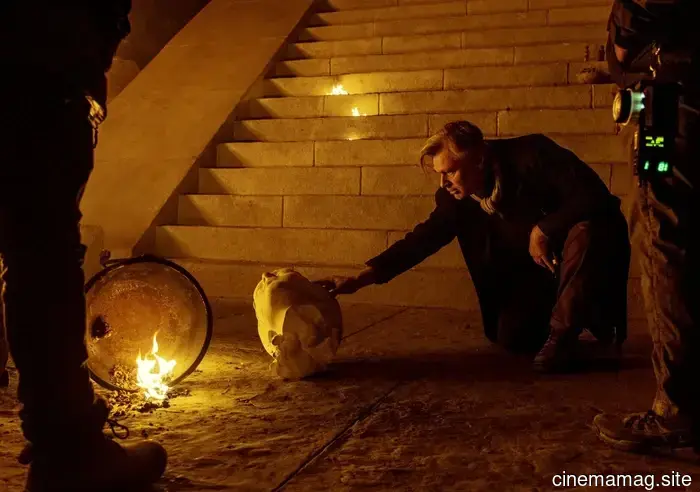
Christopher Nolan discusses the shortcomings of film criticism and explores the common philosophical themes found in both Oppenheimer and The Odyssey.
If you're already weary of the numerous interviews featuring The Odyssey team where they discuss filming entirely with IMAX cameras or maximizing practical effects, a divine gift has arrived. During the promotional tour in Beijing for his massive box office success, Christopher Nolan engaged in a comprehensive and captivating interview with Zhong Shu, a lecturer in political philosophy and doctoral student, offering the most in-depth conversation to date about his adaptation of Homer.
Nolan, who can sometimes be elusive—or perhaps not sufficiently probed—regarding the philosophical choices in his films, found a skilled interlocutor in Zhong Shu, who adeptly prompted him to share his insights within a relatively short time. They discussed topics such as "Christianizing" Homer's poem, themes of atonement in the film, criticisms of film criticism (make sure to check out our lukewarm review of his latest work), breaking narrative conventions, his depiction of the gods, and much more.
Regarding the adaptation and the idea of historical distance, Nolan explains, "The primary focus is the roughly 400-year gap between the events described by Homer and when those stories were recorded or first presented to audiences. That gap is quite fascinating. From a historical perspective, I don’t feel that I am entirely at odds with Homer’s narrative. My interest in adaptation arose from the fact that Homer wrote about an era hundreds of years prior, which his audience perceived as being more advanced than their own. They were a civilization in ascent, longing to recover what they had lost 400 years earlier."
He elaborates on this cyclical concept, mentioning, "The notion of a civilization at dusk is indeed present but subtle in the past. Historical records show that when old palace walls crumbled and were unearthed, they were referred to as ‘Cyclopean walls’ because people believed only giants could have constructed such magnificent structures. They harbored a sense of awe regarding this past civilization’s greatness. I became intrigued by this decline—traditionally referred to as the 'catastrophe' or the Bronze Age collapse—and the events occurring between the Trojan War and Homer. From a contemporary viewpoint, this aspect is both daunting and engaging. My work on Oppenheimer prior to this definitely influenced my perspective—it's a film centered on civilization’s end and collapse. I carried that sensibility into this adaptation of The Odyssey."
When asked about incorporating the notion of "atonement," a concept foreign to Greek culture that could be seen as "Christianizing" The Odyssey, Nolan replies, "I wasn't overly conscious of my philosophical approach, aside from really focusing on the idea of xenia. In the film, we simplify this to 'Zeus's Law,' which embodies mutual respect—the idea that I treat you as I wish to be treated. According to their beliefs, the stranger before you could be a god in disguise. I delved into this concept and realized that an intriguing aspect of the interplay between history and mythology is related to the ‘Sea Peoples’—the inhabitants of the sea believed to have caused the Bronze Age collapse. Identifying who they were remains one of history's compelling mysteries."
He continues, "The violation of xenia—what the suitors are doing in the palace—triggers the ensuing turmoil. I believe our perception of atonement is something we as viewers bring into the story. Whether atonement genuinely exists in the film or simply evokes a sense of catharsis during the long-anticipated reunion between Odysseus and Penelope, we might be projecting our modern sensibilities onto it. If it exists, it isn't an intentional effort to Christianize it; rather, it's a natural consequence arising from examining the philosophical implications of breaking Zeus’s Law."
On the topic of Odysseus repenting for his hubris, Nolan reflects, "One might ask: does it even matter if he repents? This question highlights the intrigue of these philosophical interpretations. Odysseus’s repentance would be entirely internal; it would serve solely his own spiritual journey without impacting the external world since the damage has already been inflicted. Xenia may have been irrevocably broken. Hubris is inherently tragic because it’s essentially irreversible. While Christian theology provides a different lens, practically speaking, it doesn't alter the events that have transpired. Therefore, in narrative terms, it might not necessarily hold significance. As mentioned, we invest our understanding into it, leading us to feel catharsis stemming from the confession and intimacy between Odysseus and Penelope. That aspect mattered deeply to me, and I feel emotionally connected to it. However, if his repentance yields no tangible outcome and catastrophe is inevitable—the collapse is approaching—how relevant is it to the plot? Are we more focused on his spiritual concerns or on the world he inhabits and believes he has harmed?"
After following Oppenheimer with The Odyssey—two narratives involving "great" men experiencing repentance—Nolan shared his reflections on the approach and criticism surrounding it. He
Other articles
 A beer-drinking witch confronts the powers of Hell in the trailer for Blood Magick.
Freestyle Digital Media has released a trailer for Blood Magick, a new horror film by writer-director Micah Delhauer, set to be available on VOD this month. It features performances by Frances Parsons, Victoria de Mare, and Laura Delhauer…
A beer-drinking witch confronts the powers of Hell in the trailer for Blood Magick.
Freestyle Digital Media has released a trailer for Blood Magick, a new horror film by writer-director Micah Delhauer, set to be available on VOD this month. It features performances by Frances Parsons, Victoria de Mare, and Laura Delhauer…
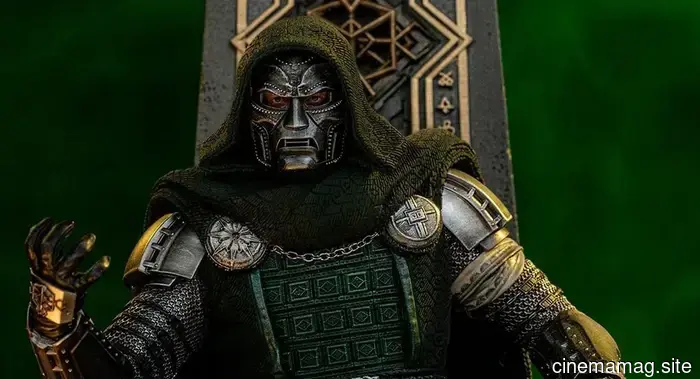 Iron Studios has revealed the Avengers: Doomsday Doctor Doom on Throne Art Scale Statue.
After presenting their Professor X and Magneto collectibles, Iron Studios has revealed yet another Art Scale statue for the upcoming December blockbuster Marvel Studios film, Avengers: Doomsday, featuring ‘D…
Iron Studios has revealed the Avengers: Doomsday Doctor Doom on Throne Art Scale Statue.
After presenting their Professor X and Magneto collectibles, Iron Studios has revealed yet another Art Scale statue for the upcoming December blockbuster Marvel Studios film, Avengers: Doomsday, featuring ‘D…
 Comic Book Preview – The Origins of the Hood: Marvel Rivals #1
This Wednesday, Marvel Comics explores Parker Robbins' origin story in Origins of the Hood: Marvel Rivals #1, and you can check out an early sneak peek with the official preview below...
Comic Book Preview – The Origins of the Hood: Marvel Rivals #1
This Wednesday, Marvel Comics explores Parker Robbins' origin story in Origins of the Hood: Marvel Rivals #1, and you can check out an early sneak peek with the official preview below...
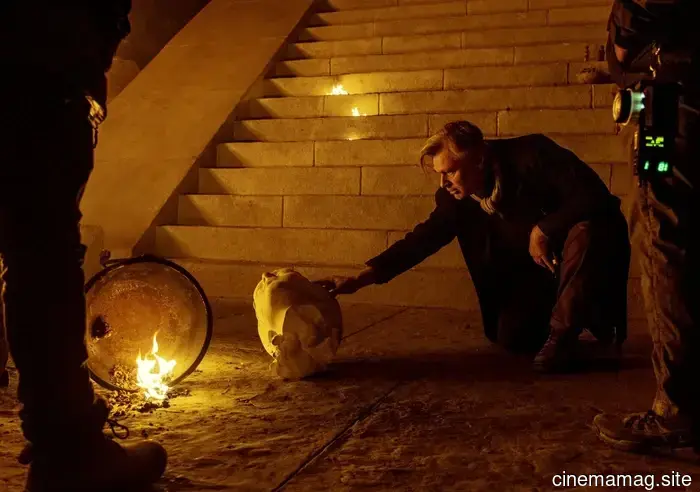 Christopher Nolan discusses the shortcomings of film criticism and the common philosophical themes between Oppenheimer and The Odyssey.
If you’ve become weary of hearing the Odyssey team's countless interviews about their experiences filming entirely with IMAX cameras or their efforts to capture everything as practically as possible, a divine surprise has now come your way. While on the Beijing press tour for his blockbuster, Christopher Nolan
Christopher Nolan discusses the shortcomings of film criticism and the common philosophical themes between Oppenheimer and The Odyssey.
If you’ve become weary of hearing the Odyssey team's countless interviews about their experiences filming entirely with IMAX cameras or their efforts to capture everything as practically as possible, a divine surprise has now come your way. While on the Beijing press tour for his blockbuster, Christopher Nolan
.jpg) 4K Ultra HD Critique – The 7th Voyage of Sinbad (1958)
The 7th Voyage of Sinbad, released in 1958, is directed by Nathan Juran and features Kerwin Mathews, Kathryn Grant, Richard Eyer, and Torin Thatcher. SYNOPSIS: The 7th Voyage of Sinbad has its 4K Ultra HD premiere, showcasing...
4K Ultra HD Critique – The 7th Voyage of Sinbad (1958)
The 7th Voyage of Sinbad, released in 1958, is directed by Nathan Juran and features Kerwin Mathews, Kathryn Grant, Richard Eyer, and Torin Thatcher. SYNOPSIS: The 7th Voyage of Sinbad has its 4K Ultra HD premiere, showcasing...
Christopher Nolan discusses the shortcomings of film criticism and explores the common philosophical themes found in both Oppenheimer and The Odyssey.
If you’ve become weary of hearing the hundredth interview with The Odyssey team about filming entirely with IMAX cameras or about their efforts to capture everything as practically as they could, a blessing has now come your way. While on the press tour in Beijing for his box office giant, Christopher Nolan