

In Nnamdi Nwosa's 'It's Relative,' Cousins Are at Odds with Each Other.
Nnamdi Nwosa’s impressive directorial debut, "It’s Relative," emerges from an extraordinary life trajectory: transitioning from finance, to stunt performing, and now to writing and directing.
His short film, which premiered on Thursday at Flickers’ Rhode Island Film Festival, tells the story of a similarly driven man. Chinomso (Charles Etubiebi) strives to support his family while adhering to the values of the Igbo people, the Nigerian ethnic group he proudly identifies with.
Alongside his cousin Khalil (Casimir Gregory), share a common family background and a passion for martial arts, yet they are at odds due to Khalil’s fascination with violence. Khalil revels in fighting, and the film hints at the roots of his resentment. He struggles to comprehend how Chinomso can tolerate insults without retaliating.
As Chinomso earnestly urges his cousin to reconsider his ways, Khalil challenges him to spar.
Filmed in a park in Midtown Manhattan, the movie is sleek and straightforward, presenting both sides of the cousins' conflict within a gripping seven minutes. Nwosa aims to expand some of its themes into a feature-length film.
At Flickers, we posed a few questions to him about shooting in proximity to the United Nations, familial connections, and the influence of Killer Films co-founder Christine Vachon, whom he acknowledges in the film’s credits.
**Nnamdi Nwosa on Creating ‘It’s Relative’**
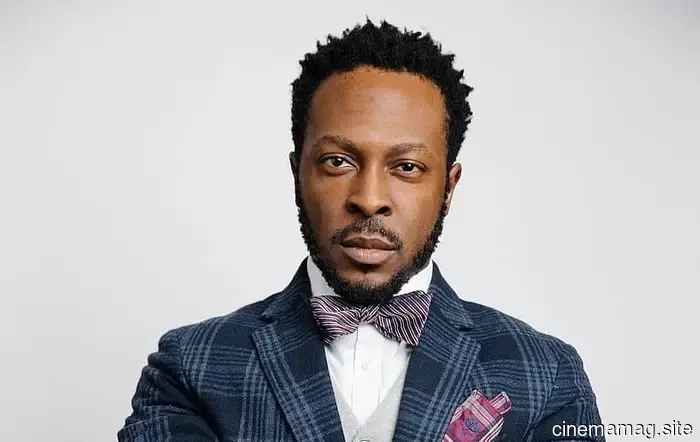
**Writer-director Nnamdi Nwosa**
**MovieMaker:** What inspired this from your real life?
**Nnamdi Nwosa:** I have a first cousin who grew up very close to me, feeling at times like an older brother whom I admired. The film captures our final conversation but condenses a nearly three-hour discussion into just a few minutes. It reflects my experience of how family dynamics can shift so much that people can feel only like relatives rather than true family.
**MovieMaker:** You have an extensive background in stunts—can you share how you got into that field and why you wanted to shift to writing and directing?
**Nnamdi Nwosa:** After spending a few miserable years in finance, I wanted to follow my passion. I have always loved action in film and television. As a child, I would edit the action sequences from my favorite VHS movies into compilations and watch them for hours.
I like to joke that I went from wanting to jump out of an office window during the 2008 Financial Crisis to actually jumping out of a set window in 2011. Working in stunts has been a remarkably unique and enjoyable experience—it’s never boring!
However, I felt driven to write and direct because there are stories that still need to be shared. My father immigrated from Nigeria to the U.S., and given that nearly a quarter of the African Diaspora in the U.S. are immigrants or their descendants, I noticed a lack of narratives focusing on African or Caribbean immigrants and their subsequent generations. I wanted to bring those stories to light.
**Nnamdi Nwosa, center, with the cast and crew of “It’s Relative”**
**MovieMaker:** How did you end up at SUNY Stony Brook?
**Nnamdi Nwosa:** When my wife was pregnant with our second child, she advised me to pursue my MFA quickly, as having kids would make it harder to go back to school. I began looking and found Stony Brook University, which impressed me with its partnership with Killer Films. I believed they could help me learn how to develop and tell the untold stories.
**MovieMaker:** Chinomso, the peaceful cousin, keeps telling Khalil, the fighting cousin, that he contradicts their shared Igbo culture. Why was this an important emphasis, and what values does Khalil contradict?
**Nnamdi Nwosa:** I wanted to highlight that despite being first cousins, Khalil, who is drawn to fighting, does not identify as Igbo because his father was not from Nigeria. Nevertheless, he was taught many West African values, particularly Igbo principles, but he ended up admiring a different culture he encountered on the streets.
Khalil's family always placed a strong emphasis on education, yet he felt it unnecessary, resulting in him dropping out of high school. His inquiry to Chinomso about whether he thought he was foolish marked a pivotal moment of discomfort. I think the struggle to maintain old country values is a common challenge for those born in the U.S.
**MovieMaker:** It’s intriguing that Chinomso can fight; the film demonstrates that he is skilled in martial arts. Why was it important to show that his choice is deliberate rather than stemming from fear?
**Nnamdi Nwosa:** Chinomso is indeed capable of fighting—his karate system is derived from the same lineage as Khalil’s. The difference lies in the fact that
Other articles
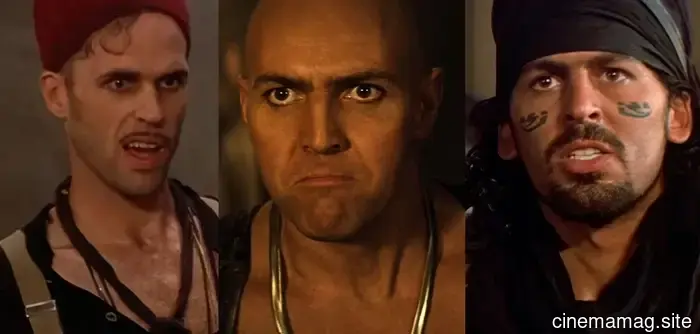 The Mummy 4 features a mix of returning cast members and new additions.
As directors Matt Bettinelli-Olpin and Tyler Gillett prepare to begin production on the movie, we are beginning to hear about the supporting cast that will join the returning trio of Brendan…
The Mummy 4 features a mix of returning cast members and new additions.
As directors Matt Bettinelli-Olpin and Tyler Gillett prepare to begin production on the movie, we are beginning to hear about the supporting cast that will join the returning trio of Brendan…
 How Runyu Li Maintains the Momentum of ReelShort’s Vertical Dramas - MovieMaker Magazine
Vertical dramas thrive or falter in the interval between episodes. A poorly timed subtitle, an inconsistent sound mix, or a sluggish transition during post-production can
How Runyu Li Maintains the Momentum of ReelShort’s Vertical Dramas - MovieMaker Magazine
Vertical dramas thrive or falter in the interval between episodes. A poorly timed subtitle, an inconsistent sound mix, or a sluggish transition during post-production can
In Nnamdi Nwosa's 'It's Relative,' Cousins Are at Odds with Each Other.
Nnamdi Nwosa's remarkable directorial debut, "It's Relative," is a product of an extraordinary life path: he transitioned from a career in finance to becoming a stunt performer.