

Legal Questions Surrounding AI in Film: If You Created It Using AI, Is It Yours?
Aditya Ezhuthachan is an attorney who specializes in entertainment law with the Beverly Hills-based Pessah Law Group. In his latest Legalities column, he discusses important considerations for filmmakers regarding the use of AI in their projects.
There is a sense of inevitability about the role of AI in the film industry. Despite criticisms, the rapid progression of AI technology shows no signs of slowing down, heading into an uncertain future.
However, filmmakers will encounter a new array of legal challenges when utilizing AI, starting from development all the way to distribution.
AI in Film Development and Pre-Production
The benefits of AI in filmmaking are undeniably clear: new creative tools can enhance a filmmaker's artistic expression, potentially expedite production processes, and reduce expenses. The primary concern, however, centers on whether one can still retain copyright over a film that involves AI in its creation.
The U.S. Copyright Office has consistently upheld that copyright is reserved for human authorship, a stance supported by courts. This year, the Supreme Court opted not to hear an appeal from a D.C. Circuit ruling which denied copyright to a software creator for a program that generated visual art independently. This case, Thaler v. Perlmutter, reiterated that copyright protection necessitates human authorship, meaning works created entirely by AI cannot receive copyright status.
What about situations where AI is used to augment human contributions? A significant ruling in 2023 saw the creator of a comic book titled Zarya of the Dawn awarded copyright only for the text, selection, coordination, and arrangement of the comic's written and visual elements. Conversely, the illustrations produced by the AI platform Midjourney were deemed ineligible for copyright protection.
The Copyright Office has also indicated that each case will be evaluated individually, and although there is an obligation to reveal any significant AI contributions, works may still be copyrightable if human creativity substantially contributes to or determines the final expressive elements. However, as shown in the Midjourney case, simply providing human prompts is not always adequate. Therefore, if AI determines the final expressive aspects, disclosure is mandatory, and the copyright for those components must be excluded from the copyright claim. It is worth noting that some uses of AI may be considered de minimis and therefore do not need to be disclosed.
Consequently, independent filmmakers must ensure that there are substantial human creative contributions, or confirm that AI usage is de minimis, to mitigate potential copyright complications with their films.
It is also essential to remember that securing copyright forms the foundational step in establishing a clean chain of title. Filmmakers must demonstrate the legitimacy of this chain to various stakeholders—including investors, insurers, sales agents, and distributors—making proper documentation critical from the outset.
AI in Film Production
Filmmakers are acutely aware that casting and crew hiring raises labor and employment law concerns. While worries persist that AI might reduce job availability in film production (notwithstanding the emergence of new roles such as AI artists), the practical issues filmmakers face are often well captured in union collective bargaining agreements.
In 2026, SAG ratified a new contract introducing various AI clauses, one of which prohibits replacing a live actor with a digital or synthetic counterpart unless it adds “significant additional value” to the film, with prior written notification to the union and timely negotiations for added compensation. These provisions supplemented previous requirements that digital replicas require actor consent, that payment is linked to usage rather than a one-time buyout, and that any scans of an actor's body must be justified by a "clear business reason." Moreover, using performances to train AI necessitates further negotiations.
Similar protections exist in the contracts of the WGA, DGA, IATSE, and Teamsters. While these provisions differ among unions, they share a common principle: AI cannot be used to substitute for creative labor without consent, compensation, or negotiation obligations.
Although these regulations may not be applicable to non-signatory producers, independent filmmakers frequently work with one or more unions on their projects. Nevertheless, non-union productions may still encounter AI-related issues during talent negotiations, insurance applications, and distribution requirements, and these protections highlight principal topics of concern.
AI in Post-Production
AI's most beneficial applications in film appear to be post-production activities: removing unwanted objects, dubbing voices, and adding visual enhancements—all of which promise significant cost reductions. However, issues of liability can arise from dealing with AI creations regarding not only copyright but also privacy rights, publicity rights, misappropriation, false light claims, false endorsements, trademark infringement, trade dress disputes, and defamation.
The overarching principle is that individuals possess rights to their privacy, publicity, and identity as markers of their commercial brand, meaning they should not be falsely linked to other commercial products, endorsements, or sponsorships, or suffer reputational damage from false statements. Thus, whenever an AI creation utilizes a real individual's name, image, likeness, or voice, these potential risks must be considered.
Despite legal protections for creative

Other articles
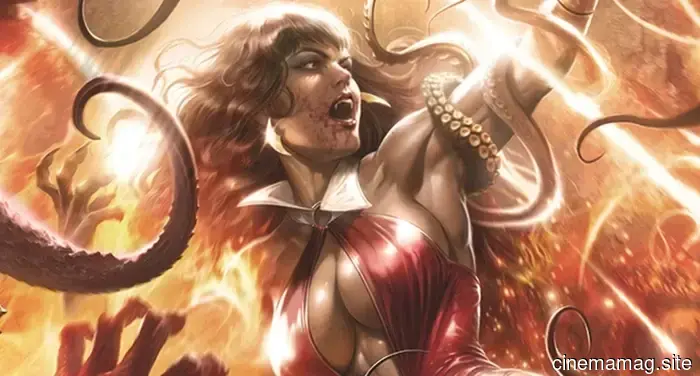 Vampirella: Paradise will be released this November by Dynamite Entertainment.
Dynamite Entertainment has revealed that writer Tom Sniegoski will continue his three-decade-long saga of the Daughter of Drakulon this November, collaborating once again with artist Edu Menna for Vampirella...
Vampirella: Paradise will be released this November by Dynamite Entertainment.
Dynamite Entertainment has revealed that writer Tom Sniegoski will continue his three-decade-long saga of the Daughter of Drakulon this November, collaborating once again with artist Edu Menna for Vampirella...
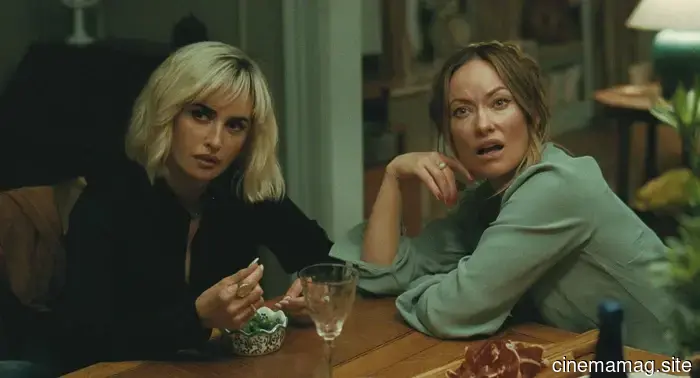 New to Streaming: The Invite, Night Nurse, Gail Daughtry and the Celebrity Sex Pass, and More
Every week, we showcase the significant titles that have recently arrived on streaming services in the United States. Take a look at this week's picks below and previous compilations here. Gail Daughtry and the Celebrity Sex Pass (David Wain) As society persists in cultivating its toxic culture, the team from The State and Wet Hot American Summer has returned to rescue you from
New to Streaming: The Invite, Night Nurse, Gail Daughtry and the Celebrity Sex Pass, and More
Every week, we showcase the significant titles that have recently arrived on streaming services in the United States. Take a look at this week's picks below and previous compilations here. Gail Daughtry and the Celebrity Sex Pass (David Wain) As society persists in cultivating its toxic culture, the team from The State and Wet Hot American Summer has returned to rescue you from
Legal Questions Surrounding AI in Film: If You Created It Using AI, Is It Yours?
The use of AI in filmmaking raises intricate questions regarding ownership. In this Legalities column, lawyer Aditya Ezhuthachan discusses these issues.