
Venice Review: Werner Herzog’s Bucking Fastard Is an Unusual, Genuinely Sincere Curiosity
After reaching a certain age and a substantial number of projects, directors often find themselves involved in the constraining discussion about whether they have entered their "late" style. Defining what that means can be challenging: when writing about Beethoven, Theodor Adorno characterized late artistic works as “devoid of sweetness, bitter and spiny”—expert distillations of one’s craft cut down until the final product may seem impenetrable. In just two days, Werner Herzog will celebrate his 84th birthday. Bucking Fastard, his latest feature in an ever-growing filmography, is his first fictional work since 2019’s Family Romance LLC, which centers on a Japanese company that rents actors to impersonate any individual the customer wishes. However, nothing in this film indicates that Herzog is attempting to simplify his approach or create something rigid or confrontational. Bucking Fastard stands out as an unconventional oddity, yet it is also energized by a childlike wonder toward its curious subjects and their unusual world. There’s a sincerity that prevents it from being dismissed as a trivial effort from a filmmaker who has passionately spoken about “the ecstatic truth.”
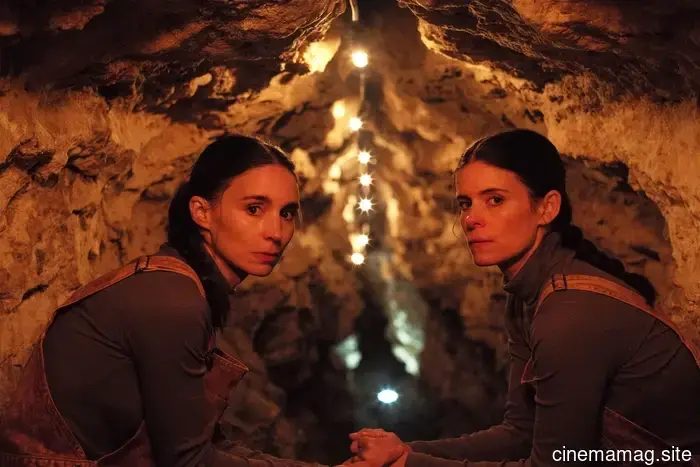
Genuine ecstatic moments are infrequent in this film, but Bucking Fastard remains in line with its predecessors. True to his style, Herzog abandons the criticized “accountant’s truth” of hard facts to uncover the emotional essence of his subject, resulting in a film where nothing appears entirely authentic. The premise, however, is rooted in reality. Loosely inspired by the peculiar case of the Chaplin sisters—identical twins who wore matching clothes, walked in sync, and spoke in unity—Bucking Fastard begins by reenacting the trial that convicted the sisters of stalking their neighbor, a truck driver with whom they became hopelessly and obsessively infatuated.
In Herzog’s depiction, the narrative shifts from a drama reminiscent of Yorgos Lanthimos to a fairytale-like story. The truck driver is portrayed as a wealthy wastrel and habitual drinker by Orlando Bloom, while the sisters—who insist, “not twins!” to strangers but are nearly conjoined—are played by Kate and Rooney Mara. Jean (Kate) and Joan (Rooney) first glimpsed the man through their fence while he lay drunkenly snoring on his lawn, an image that must have mesmerized them for reasons unknown. This chance encounter later leads to a romantic rendezvous, followed by an unlikely love triangle, and ultimately, obsession. “Is it a crime to love?” the sisters inquire of a bewildered court at the film's start. Probably not, although it is indeed a crime to torch your lover’s SUV when they abandon you for someone else or to recklessly drive that vehicle at high speed in a public area with the hope of tragically ending both your lives.
Herzog, who had the opportunity to meet the Chaplins before they passed away, has mentioned that his interest in the sisters stemmed not from their tumultuous romance, but from the fact they were the only known twins who communicated simultaneously. While witnessing the real-life Mara sisters move and speak as one might be the film’s most bizarre aspect, their synchronized performance never becomes tiring. Though it may take a moment to acclimate to their dual dialogue, there’s an undeniable tension between the two women—and the actresses interpreting them—that renders their relationship highly volatile and charged, allowing Herzog to explore their shared activities (like vacuuming, preparing tea, or opening a sardine can before a kind counselor played with saintly patience by Domhnall Gleeson) to create some surreal moments.
However, nothing about Bucking Fastard captures its significant oddity quite like its visual style. Peter Zeitlinger—Herzog’s cinematographer since the mid-1990s—shot much of the film using a gimbal, allowing for long, uninterrupted sequences that impart a fluid, sinuous quality, and the camera’s sweeping, ethereal movements inject a jazzy, improvisational spirit. “Everything in this world confuses me,” a character laments midway through. This feeling is relatable, although that sense of disorientation may strike you much earlier—long before Bucking Fastard transitions from the nondescript Irish suburb of its first half to take you into a picturesque green countryside, where Jean and Joan search for refuge after yet another scandal and become fixated on a tunnel etched into a nearby hill, rumored to be a magical pathway to the distant Orkney Islands.
Still, the deepest confusion, and the source of the film’s mystique, lies squarely with its creator. For newcomers, Bucking Fastard may come off as an awkward farce; for seasoned Herzog fans, it will raise some puzzling classification issues. How can one possibly categorize a film like this within Herzog’s extensive filmography? It’s easy to criticize some of its more perplexing elements—such as the sight of Orlando Bloom portraying Colin Farrell enjoying the
Other articles
 LEGO Advent Calendar sets for 2026 are now released.
The LEGO Group has officially revealed that its range of 2026 Advent Calendars is now available for purchase, featuring new sets from LEGO Disney, LEGO Friends, LEGO City, LEGO Marvel, and LEGO Star...
LEGO Advent Calendar sets for 2026 are now released.
The LEGO Group has officially revealed that its range of 2026 Advent Calendars is now available for purchase, featuring new sets from LEGO Disney, LEGO Friends, LEGO City, LEGO Marvel, and LEGO Star...
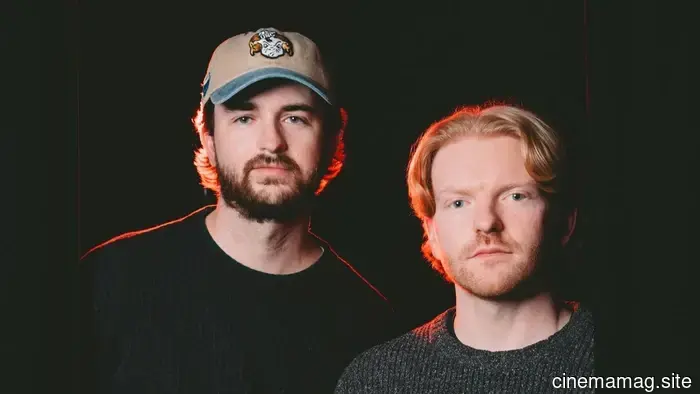 The Thrilling Journey of Research: Kevin Walker and Jack Auen Discuss Chronovisor
Bridging the physical and metaphysical realms, Chronovisor traces Columbia professor Béatrice Courte's journey to study the namesake object. Italian monk Father Pellegrino Ernetti asserted that he was among the creators of a device capable of recording events from the distant past. Committed to uncovering its history, she dedicates her time to poring over ancient texts in libraries. Their
The Thrilling Journey of Research: Kevin Walker and Jack Auen Discuss Chronovisor
Bridging the physical and metaphysical realms, Chronovisor traces Columbia professor Béatrice Courte's journey to study the namesake object. Italian monk Father Pellegrino Ernetti asserted that he was among the creators of a device capable of recording events from the distant past. Committed to uncovering its history, she dedicates her time to poring over ancient texts in libraries. Their
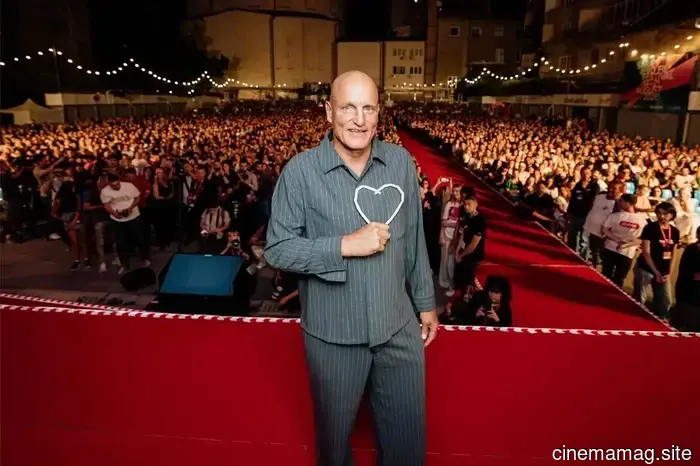 2026 Sarajevo Film Festival Features Woody Harrelson, Balkan Treasures, and Echoes of the Past
On the initial evening of my visit to Sarajevo this year, I participated in a gathering at the residence of the Spanish Ambassador. The event was held in honor of Rodrigo Sorogoyen, whose recent film, The Beloved, was scheduled to be shown at the festival's renowned open-air theatre that evening. Throughout all my years of attending festivals, it was the first party I attended.
2026 Sarajevo Film Festival Features Woody Harrelson, Balkan Treasures, and Echoes of the Past
On the initial evening of my visit to Sarajevo this year, I participated in a gathering at the residence of the Spanish Ambassador. The event was held in honor of Rodrigo Sorogoyen, whose recent film, The Beloved, was scheduled to be shown at the festival's renowned open-air theatre that evening. Throughout all my years of attending festivals, it was the first party I attended.
 UDON Entertainment is set to release Street Fighter Masters: Cammy vs. Chun Li.
UDON Entertainment has revealed that the two main female characters from Street Fighter will clash this October in the one-shot comic titled Street Fighter Masters: Cammy vs Chun Li. The comic is penned by Sherard Jacks…
UDON Entertainment is set to release Street Fighter Masters: Cammy vs. Chun Li.
UDON Entertainment has revealed that the two main female characters from Street Fighter will clash this October in the one-shot comic titled Street Fighter Masters: Cammy vs Chun Li. The comic is penned by Sherard Jacks…
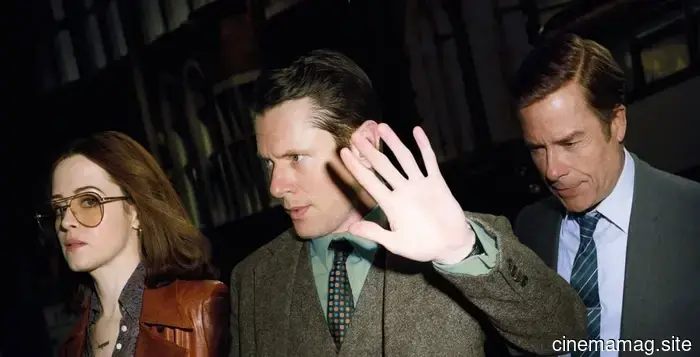 The initial teaser trailer and posters for Danny Boyle's Ink, featuring Jack O'Connell, Guy Pearce, and Claire Foy, have been released.
StudioCanal has released the initial trailer and character posters for Ink, the forthcoming drama that narrates the ascent of The Sun newspaper under the ownership of Rupert Murdoch and the editorial leadership of Larry Lamb.
The initial teaser trailer and posters for Danny Boyle's Ink, featuring Jack O'Connell, Guy Pearce, and Claire Foy, have been released.
StudioCanal has released the initial trailer and character posters for Ink, the forthcoming drama that narrates the ascent of The Sun newspaper under the ownership of Rupert Murdoch and the editorial leadership of Larry Lamb.
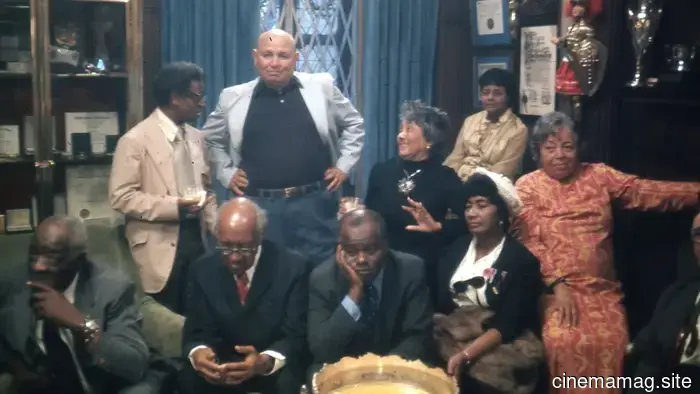 Once Upon a Time in Harlem Trailer: The Documentary of the Year Is Coming This October
Once Upon a Time in Harlem is the sole film to be shown at Sundance, Cannes, Telluride, TIFF, NYFF, and London this year, making it unmistakably the top documentary of 2026. This remarkable time capsule includes footage captured by the late William Greaves (Symbiopsychotaxiplasm) and his son David Greaves of a party that occurred in Duke in 1972.
Once Upon a Time in Harlem Trailer: The Documentary of the Year Is Coming This October
Once Upon a Time in Harlem is the sole film to be shown at Sundance, Cannes, Telluride, TIFF, NYFF, and London this year, making it unmistakably the top documentary of 2026. This remarkable time capsule includes footage captured by the late William Greaves (Symbiopsychotaxiplasm) and his son David Greaves of a party that occurred in Duke in 1972.
Venice Review: Werner Herzog’s Bucking Fastard Is an Unusual, Genuinely Sincere Curiosity
After reaching a particular age and a specific number of accomplishments, a director will almost certainly find themselves caught up in an exhausting discussion: have they entered their “late” period? Defining what this entails can be difficult: when writing about Beethoven, Theodor Adorno described late artistic works as “lacking sweetness, bitter and prickly”—brilliant reductions.