
2026 Sarajevo Film Festival Features Woody Harrelson, Balkan Treasures, and Echoes of the Past
On my first night in Sarajevo this year, I attended a gathering at the residence of the Spanish Ambassador. This event was held in honor of Rodrigo Sorogoyen, whose newest film, The Beloved, was scheduled to be screened at the festival's renowned open-air theater that evening. Throughout my years of attending festivals, this was the first gathering of its kind I had ever participated in, despite it being just the second of three similar invitations I received that week. The first came from someone associated with the Irish consulate, who casually mentioned my name among the attendees in an email a week earlier. The other invite, the most formal of the three, arrived that same evening from the UK, complete with a dress code that read “garden party, suits, uniforms,” which sent a slight post-colonial shiver down my back. Although that invitation was for Wednesday evening, by which time I would already be back home, I still enjoyed declining it.
Almost every activity in Sarajevo carries a political undertone, not least due to the many bullet holes from the siege that still adorn the walls of numerous residential buildings. The morning tram from the Hotel Holiday, where many of the less high-profile guests and international press are accommodated by the festival's hospitality team, drops you off at the very corner where Franz Ferdinand was assassinated in 1914. In the predominantly Muslim part of the city, you're just as likely to see a Palestinian football jersey as you are to spot the blue and yellow of Bosnia & Herzegovina, even though the country had only recently made it to its first World Cup this past summer. Additionally, there’s the Hotel Holiday itself, an impractically grand monument to 90s hospitality (Kane Parsons would undoubtedly find it amusing) that housed international press during the war years. If those walls could speak, they'd have countless stories to tell; they might also suffer from some form of lung cancer.
You can glimpse a nostalgically drunken recreation of what that scene could have looked like in Michael Winterbottom’s Welcome to Sarajevo, a 1997 film that also screened at the festival’s open-air theater. The audience was packed tight, the most engaged crowd I've been a part of in years—you could have heard a pin drop if it weren't for the hum of the 35mm projector that was set up for the evening. As a film, Welcome to Sarajevo hasn't aged perfectly, but it was shot shortly after the siege ended, making it an invaluable document of that time. For those in attendance (most of whom lived through it), it provided an opportunity to see a crucial moment in their shared history reflected back at them—a time when the battered concrete and the devastated lives left in the wake of war didn't completely dull the exhilarating optimism of a first summer post-conflict.
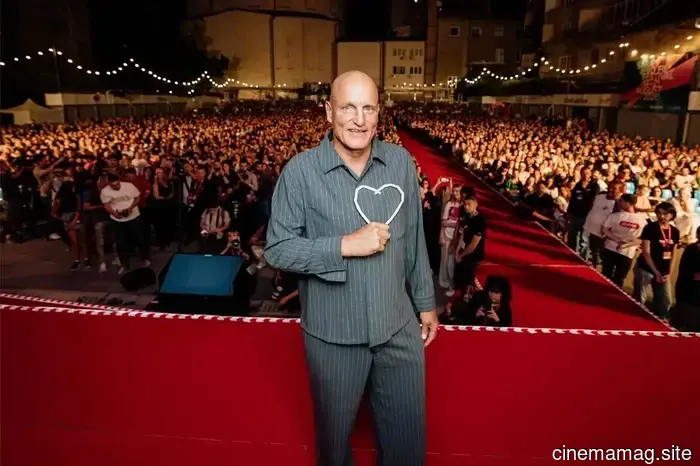
Welcome to Sarajevo was being shown because the film's star, the esteemed Woody Harrelson, visited to receive one of the festival’s annual "Heart of Sarajevo" awards and graciously requested it be screened in his honor. Earlier that day, I watched as Harrelson captivated a full auditorium during an engaging two-hour masterclass with our colleague Neil Young (in my humble opinion, the best moderator we have for these discussions), which included several glasses of Bushmills and two performances of Elvis’s “All Shuck Up.” If, in the weeks ahead, the city opts to elevate that “Heart” to something even more prestigious, I wouldn't be the least bit surprised.
In terms of new films: the standout works I saw (keep in mind, I had already praised Sandra Wollner’s Everytime, which won the festival’s top award, back at Cannes) were also from the region, which, according to my limited knowledge of Balkan cinema, seems to be experiencing a moment. The most striking was Kosara Mitić’s 17, which premiered at the Berlinale earlier this year. In terms of story and initial sequences, it bears an almost uncanny similarity to Miroslav Terzić’s 3 Weeks After, a Serbian film that deeply impressed me at KVIFF this summer and was showcased in Sarajevo in an out-of-competition slot. If you were to watch both concurrently, the parallels in their opening sequences would be remarkable; that experience would likely be overwhelming.
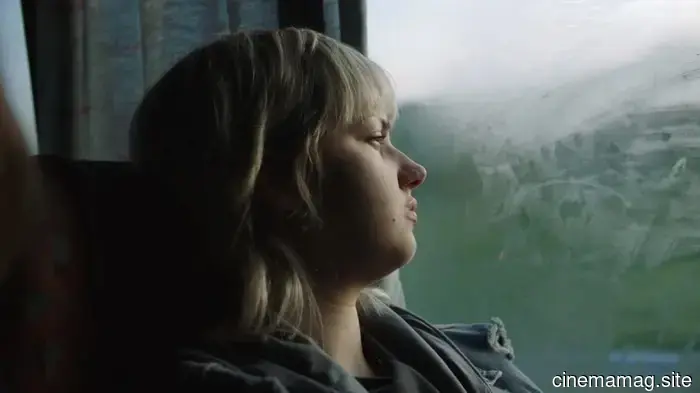
Unlike Terzić’s more metaphorical (and for me, more compelling) nightmare, 17 begins with an introverted teenager named Sara, played by Eva Kostić, who boards a bus destined for a hellish school trip. What distinguishes the two films are the preceding images, where Sara appears in a claustrophobic close-up being held down by two unnamed boys off-screen, her face pushed into a pillow. This scene subtly and unmistakably depicts sexual assault, a theme that filmmakers often avoid showing, let alone revisiting in a single film, as Mitić does here. Fortunately, 17 is a considerably less nihilistic piece than 3 Weeks After, and throughout the trials imposed on
Другие статьи
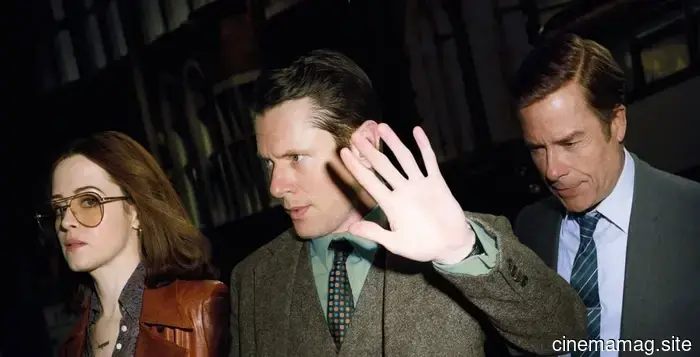 The initial teaser trailer and posters for Danny Boyle's Ink, featuring Jack O'Connell, Guy Pearce, and Claire Foy, have been released.
StudioCanal has released the initial trailer and character posters for Ink, the forthcoming drama that narrates the ascent of The Sun newspaper under the ownership of Rupert Murdoch and the editorial leadership of Larry Lamb.
The initial teaser trailer and posters for Danny Boyle's Ink, featuring Jack O'Connell, Guy Pearce, and Claire Foy, have been released.
StudioCanal has released the initial trailer and character posters for Ink, the forthcoming drama that narrates the ascent of The Sun newspaper under the ownership of Rupert Murdoch and the editorial leadership of Larry Lamb.
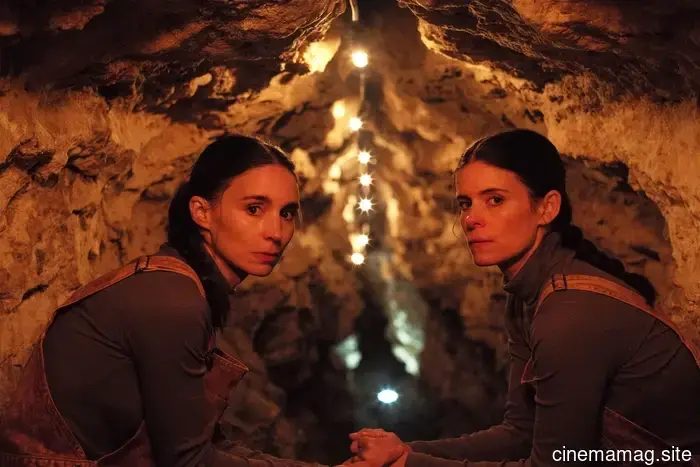 Venice Review: Werner Herzog’s Bucking Fastard Is an Unusual, Genuinely Sincere Curiosity
After reaching a particular age and a specific number of accomplishments, a director will almost certainly find themselves caught up in an exhausting discussion: have they entered their “late” period? Defining what this entails can be difficult: when writing about Beethoven, Theodor Adorno described late artistic works as “lacking sweetness, bitter and prickly”—brilliant reductions.
Venice Review: Werner Herzog’s Bucking Fastard Is an Unusual, Genuinely Sincere Curiosity
After reaching a particular age and a specific number of accomplishments, a director will almost certainly find themselves caught up in an exhausting discussion: have they entered their “late” period? Defining what this entails can be difficult: when writing about Beethoven, Theodor Adorno described late artistic works as “lacking sweetness, bitter and prickly”—brilliant reductions.
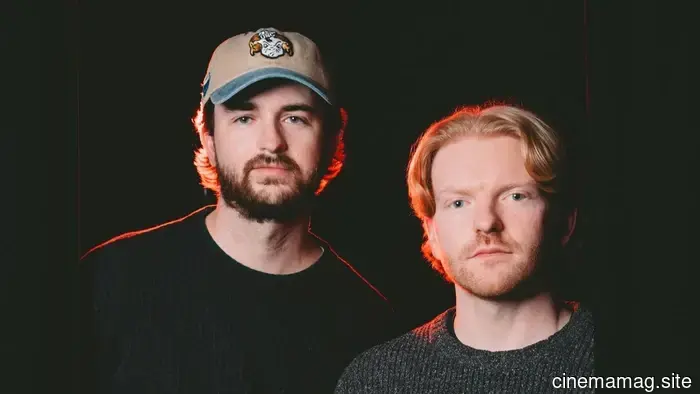 The Thrilling Journey of Research: Kevin Walker and Jack Auen Discuss Chronovisor
Bridging the physical and metaphysical realms, Chronovisor traces Columbia professor Béatrice Courte's journey to study the namesake object. Italian monk Father Pellegrino Ernetti asserted that he was among the creators of a device capable of recording events from the distant past. Committed to uncovering its history, she dedicates her time to poring over ancient texts in libraries. Their
The Thrilling Journey of Research: Kevin Walker and Jack Auen Discuss Chronovisor
Bridging the physical and metaphysical realms, Chronovisor traces Columbia professor Béatrice Courte's journey to study the namesake object. Italian monk Father Pellegrino Ernetti asserted that he was among the creators of a device capable of recording events from the distant past. Committed to uncovering its history, she dedicates her time to poring over ancient texts in libraries. Their
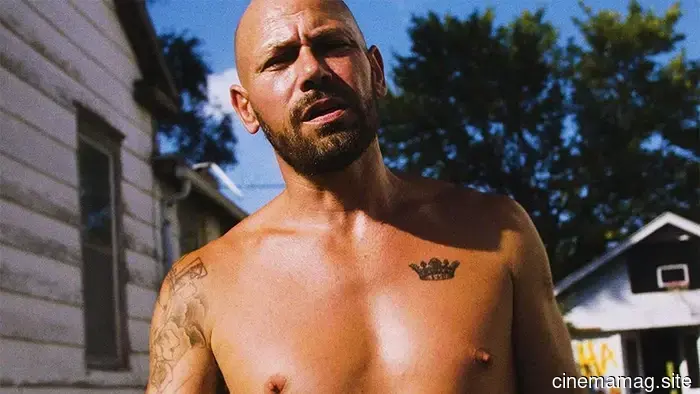 Venice Review: In Robert Greene’s Too Much Sugar, Making Films Serves as a Therapeutic Outlet
Too Much Sugar is a film centered on family, friendships, and the art of filmmaking—what's not to enjoy? It's the newest endeavor by Robert Greene, who frequently collaborates with Alex Ross Perry (Greene has edited a wide range of films, including Listen Up Philip and Pavements, along with the Safdie brothers' Lenny Cooke). Through his work as a documentary filmmaker, he has consistently shown a keen interest in the
Venice Review: In Robert Greene’s Too Much Sugar, Making Films Serves as a Therapeutic Outlet
Too Much Sugar is a film centered on family, friendships, and the art of filmmaking—what's not to enjoy? It's the newest endeavor by Robert Greene, who frequently collaborates with Alex Ross Perry (Greene has edited a wide range of films, including Listen Up Philip and Pavements, along with the Safdie brothers' Lenny Cooke). Through his work as a documentary filmmaker, he has consistently shown a keen interest in the
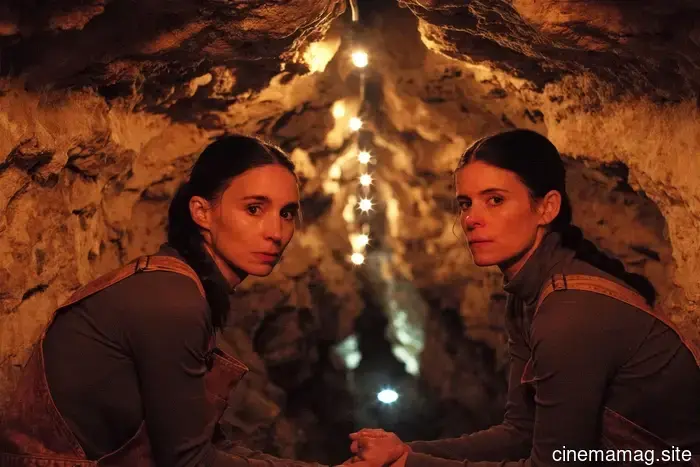 Venice Review: Werner Herzog’s Bucking Fastard Is an Unusual and Sincerely Moving Curiosity
After reaching a certain age and a particular number of works, a director will likely find themselves caught up in the constraining discussion: have they entered their “late” style? Defining what this entails can be challenging: when writing about Beethoven, Theodor Adorno described late artistic works as “lacking sweetness, bitter and angular”—exquisite distillations.
Venice Review: Werner Herzog’s Bucking Fastard Is an Unusual and Sincerely Moving Curiosity
After reaching a certain age and a particular number of works, a director will likely find themselves caught up in the constraining discussion: have they entered their “late” style? Defining what this entails can be challenging: when writing about Beethoven, Theodor Adorno described late artistic works as “lacking sweetness, bitter and angular”—exquisite distillations.
 LEGO Advent Calendar sets for 2026 are now released.
The LEGO Group has officially revealed that its range of 2026 Advent Calendars is now available for purchase, featuring new sets from LEGO Disney, LEGO Friends, LEGO City, LEGO Marvel, and LEGO Star...
LEGO Advent Calendar sets for 2026 are now released.
The LEGO Group has officially revealed that its range of 2026 Advent Calendars is now available for purchase, featuring new sets from LEGO Disney, LEGO Friends, LEGO City, LEGO Marvel, and LEGO Star...
2026 Sarajevo Film Festival Features Woody Harrelson, Balkan Treasures, and Echoes of the Past
On the initial evening of my visit to Sarajevo this year, I participated in a gathering at the residence of the Spanish Ambassador. The event was held in honor of Rodrigo Sorogoyen, whose recent film, The Beloved, was scheduled to be shown at the festival's renowned open-air theatre that evening. Throughout all my years of attending festivals, it was the first party I attended.