
Venice Review: Werner Herzog’s Bucking Fastard Is an Unusual and Sincerely Moving Curiosity
Once a director reaches a certain age and has a substantial body of work, they often find themselves in that constraining discussion: have they entered their “late” style? Defining what this entails can be challenging. When writing about Beethoven, Theodor Adorno described late artistic works as “ devoid of sweetness, bitter and spiny”—masterful reductions of one’s craft distilled to the point of being almost incomprehensible. In two days, Werner Herzog will celebrate his 84th birthday. His latest film, Bucking Fastard, adds to his growing filmography and is his first fiction piece since 2019’s Family Romance LLC, which revolves around a Japanese business that hires actors to impersonate desired individuals. However, nothing in Bucking Fastard suggests that Herzog is attempting to simplify his approach or create something provocative or challenging. Instead, it stands out as a unique spectacle infused with a childlike curiosity about its unusual subjects and their surroundings. The sincerity present in the film prevents it from being easily dismissed as a mere minor work from a filmmaker who has spent his impressive career championing “the ecstatic truth.”
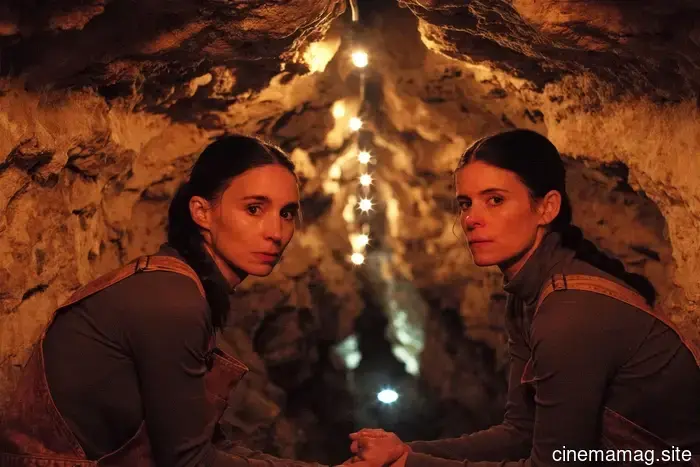
While genuinely ecstatic moments are sparse in Bucking Fastard, the film occupies a similar ambiguous space as Herzog's earlier works. Consistent with his method, Herzog disregards the dismissed "accountant’s truth" of tangible facts to delve into the emotional essence of his subject, resulting in a film where nothing appears or feels entirely authentic. The premise is grounded in reality, however. Loosely inspired by the peculiar case of the Chaplin sisters—identical twins who dressed alike, moved in sync, and spoke together—Buckingham Fastard opens with a reenactment of the trial that convicted the sisters of stalking their neighbor, a truck driver with whom they became obsessively infatuated.
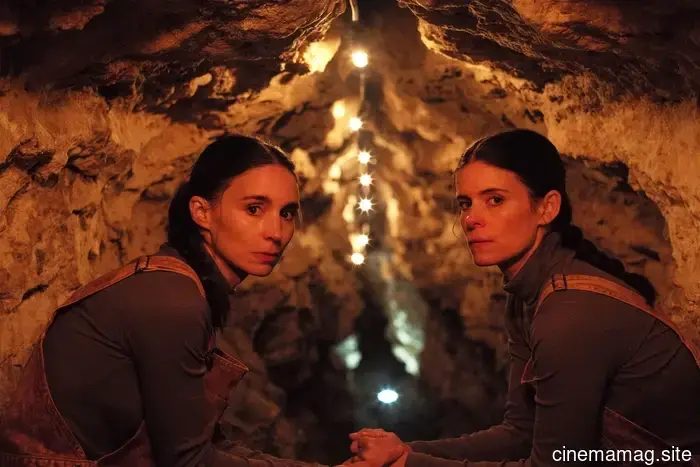
Yet, in Herzog’s interpretation, the narrative shifts from a Lanthimos-like drama into a kind of fairy tale. The truck driver is portrayed by Orlando Bloom as a wealthy rogue and habitual drinker, while the sisters—who adamantly insist they are “not twins!” yet appear almost as one entity—are played by Kate and Rooney Mara. Jean (Kate) and Joan (Rooney) first spotted the man through their fence as he lay drunkenly asleep on his front lawn, an image that seemed to mesmerize them for some reason. Subsequent encounters led to a brief affair, an unlikely love triangle, and ultimately an obsession. “Is it a crime to love?” the sisters question, baffling a courtroom at the film’s beginning. It’s likely not, though it certainly becomes criminal to set fire to your lover’s SUV in retaliation for leaving you for another, or to drive that same car recklessly in public with hopes of achieving a fatal outcome for both parties.
Herzog, who had the opportunity to meet the Chaplins before they passed, has stated that what attracted him to their story was not the explosive romance but rather their unique characteristic as the only known twins who spoke in unison. While observing the real-life sisters move and interact as one might be the film’s most bizarre aspect, their shared performance remains engaging. Adjusting to their simultaneous dialogue might take a moment, but an undeniable tension exists between the two women—and the actresses portraying them—making their connection a charged, fluctuating dynamic. Herzog explores their joint endeavors (cleaning, brewing tea, or opening a can of sardines before a patient counselor played by Domhnall Gleeson) to create some surreal and choreographed moments.
However, nothing in Bucking Fastard captures its profound oddity quite like its visual style. Cinematographer Peter Zeitlinger, who has collaborated with Herzog since the mid-1990s, filmed much of it using a gimbal; the lengthy, uninterrupted shots provided by this stabilizer lend the film a fluid, graceful texture, while the camera's sweeping, floating movements create a jazzy, improvisational feel. “Everything in this world confuses me,” a character notes despondently midway through, a sentiment many can identify with. The disorienting atmosphere may strike you much earlier than that, long before Bucking Fastard transitions from the indistinct Irish suburbia of its initial segment to transport you into a postcard-perfect countryside, where Jean and Joan seek solace after yet another scandal, only to become entranced by a tunnel carved into a nearby hill, rumored to be a magical passageway to the distant Orkney Islands.
Nevertheless, the primary source of perplexity and intrigue lies with its creator. For newcomers, Bucking Fastard may come across as a clumsy farce; for devoted Herzog fans, it raises perplexing categorization issues. How does one categorize a work like this within his extensive filmography? It’s easy to critique some of its most confounding elements—the sight of Orlando Bloom portraying Colin Farrell as a drunken seducer, for example, or the clichés scattered throughout Herzog’s Irish travelogue,
Other articles
 Once Upon a Time in Harlem Trailer: The Documentary of the Year Is Coming This October
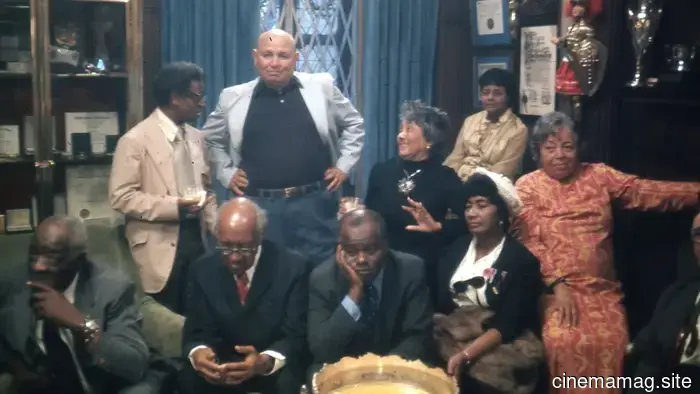
Once Upon a Time in Harlem is the sole film to be shown at Sundance, Cannes, Telluride, TIFF, NYFF, and London this year, making it unmistakably the top documentary of 2026. This remarkable time capsule includes footage captured by the late William Greaves (Symbiopsychotaxiplasm) and his son David Greaves of a party that occurred in Duke in 1972.
Once Upon a Time in Harlem Trailer: The Documentary of the Year Is Coming This October
Once Upon a Time in Harlem is the sole film to be shown at Sundance, Cannes, Telluride, TIFF, NYFF, and London this year, making it unmistakably the top documentary of 2026. This remarkable time capsule includes footage captured by the late William Greaves (Symbiopsychotaxiplasm) and his son David Greaves of a party that occurred in Duke in 1972.
.jpg) Film Review – Runner (2026)
Runner, 2026. Directed by Scott Waugh. Featuring Alan Ritchson, Owen Wilson, Rodrigo Santoro, Leila George, Adriana Barraza, Peta Sergeant, Scarlett Crabtree, Geraldine Hakewill, Kate Box, and Goran D. Kle…
Film Review – Runner (2026)
Runner, 2026. Directed by Scott Waugh. Featuring Alan Ritchson, Owen Wilson, Rodrigo Santoro, Leila George, Adriana Barraza, Peta Sergeant, Scarlett Crabtree, Geraldine Hakewill, Kate Box, and Goran D. Kle…
 The initial teaser trailer and posters for Danny Boyle's Ink, featuring Jack O'Connell, Guy Pearce, and Claire Foy, have been released.
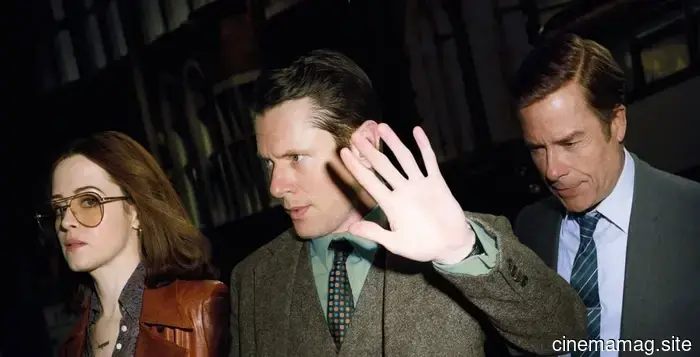
StudioCanal has released the initial trailer and character posters for Ink, the forthcoming drama that narrates the ascent of The Sun newspaper under the ownership of Rupert Murdoch and the editorial leadership of Larry Lamb.
The initial teaser trailer and posters for Danny Boyle's Ink, featuring Jack O'Connell, Guy Pearce, and Claire Foy, have been released.
StudioCanal has released the initial trailer and character posters for Ink, the forthcoming drama that narrates the ascent of The Sun newspaper under the ownership of Rupert Murdoch and the editorial leadership of Larry Lamb.
 UDON Entertainment is set to release Street Fighter Masters: Cammy vs. Chun Li.
UDON Entertainment has revealed that the two main female characters from Street Fighter will clash this October in the one-shot comic titled Street Fighter Masters: Cammy vs Chun Li. The comic is penned by Sherard Jacks…
UDON Entertainment is set to release Street Fighter Masters: Cammy vs. Chun Li.
UDON Entertainment has revealed that the two main female characters from Street Fighter will clash this October in the one-shot comic titled Street Fighter Masters: Cammy vs Chun Li. The comic is penned by Sherard Jacks…
 Venice Review: In Robert Greene’s Too Much Sugar, Making Films Serves as a Therapeutic Outlet
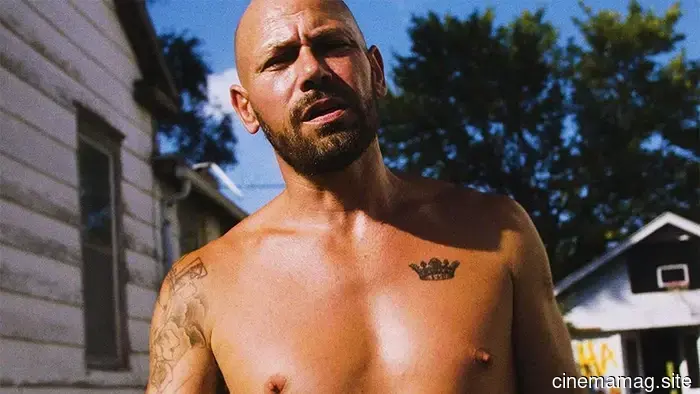
Too Much Sugar is a film centered on family, friendships, and the art of filmmaking—what's not to enjoy? It's the newest endeavor by Robert Greene, who frequently collaborates with Alex Ross Perry (Greene has edited a wide range of films, including Listen Up Philip and Pavements, along with the Safdie brothers' Lenny Cooke). Through his work as a documentary filmmaker, he has consistently shown a keen interest in the
Venice Review: In Robert Greene’s Too Much Sugar, Making Films Serves as a Therapeutic Outlet
Too Much Sugar is a film centered on family, friendships, and the art of filmmaking—what's not to enjoy? It's the newest endeavor by Robert Greene, who frequently collaborates with Alex Ross Perry (Greene has edited a wide range of films, including Listen Up Philip and Pavements, along with the Safdie brothers' Lenny Cooke). Through his work as a documentary filmmaker, he has consistently shown a keen interest in the
 Venice Review: Werner Herzog’s Bucking Fastard Is an Unusual, Genuinely Sincere Curiosity
After reaching a particular age and a specific number of accomplishments, a director will almost certainly find themselves caught up in an exhausting discussion: have they entered their “late” period? Defining what this entails can be difficult: when writing about Beethoven, Theodor Adorno described late artistic works as “lacking sweetness, bitter and prickly”—brilliant reductions.
Venice Review: Werner Herzog’s Bucking Fastard Is an Unusual, Genuinely Sincere Curiosity
After reaching a particular age and a specific number of accomplishments, a director will almost certainly find themselves caught up in an exhausting discussion: have they entered their “late” period? Defining what this entails can be difficult: when writing about Beethoven, Theodor Adorno described late artistic works as “lacking sweetness, bitter and prickly”—brilliant reductions.
Venice Review: Werner Herzog’s Bucking Fastard Is an Unusual and Sincerely Moving Curiosity
After reaching a certain age and a particular number of works, a director will likely find themselves caught up in the constraining discussion: have they entered their “late” style? Defining what this entails can be challenging: when writing about Beethoven, Theodor Adorno described late artistic works as “lacking sweetness, bitter and angular”—exquisite distillations.