
Venice Review: In Robert Greene’s Too Much Sugar, Making Films Serves as a Therapeutic Outlet
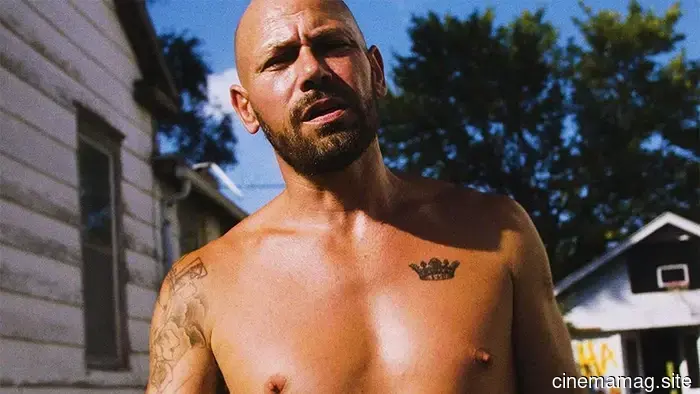
Too Much Sugar is a film centered on family, friendships, and the art of filmmaking—what's not to appreciate? It's the newest endeavor by Robert Greene, a frequent collaborator of Alex Ross Perry (Greene has edited works ranging from Listen Up Philip to Pavements, along with the Safdies’ Lenny Cooke). In his documentary filmmaking, he has consistently shown interest in the healing abilities of cinema, particularly where reality and fiction intersect. Initially, Sugar appears to profile Ryan “Holli-wood” Hollinger—a laborer and father of six children from five different mothers—but it soon expands to include the community aspect. The goal: to discover what films the community of Hollinger would want to see themselves reflected in and assist in bringing those ideas to life.
Greene’s work continues the “therapeutic” filmmaking approach he has pursued since the 2014 film Actress, which marked a creative milestone detailing former The Wire star Brandy Burre’s journey to return to acting after taking time off to raise a family. His interest in performance and its insights into character persisted in 2016’s Kate Plays Christine, which examined actress Kate Lyn Sheil’s preparations to portray Christine Chubbuck, the news anchor who tragically took her own life during a broadcast in the 1970s. These explorations culminated in the Peabody-nominated 2021 film Procession, where a group of survivors of clerical sexual abuse confronted their trauma through reenactment.
With Too Much Sugar, Greene aims for a similar exploration on a more personal level. He first concentrates on Hollinger—who he befriended at their sons’ basketball games in Missouri—before broadening the scope to include Michael “AccRite” Midgyett, a neighbor and coworker whose teenage son was killed at a party a few years earlier. The initial inspiration for Sugar was Hollinger’s wish to create his own film, but it quickly transforms into a narrative about the friendship between the two men and their interconnected family dynamics. Early in the film, Greene asks several family members to articulate their ideal movie; these concepts eventually surface in some form during the film's concluding half-hour.
The most prominent and polished segment is undoubtedly Hollinger’s buddy comedy (which gives the documentary its title), but the most poignant is Midgyett’s Rewind. In this segment, the grieving father imagines a scenario where he can “rewind” the events of his son’s murder. This method not only highlights Hollinger’s natural charm (notable quotes include “Don’t wait, be great!” and “Some people are entrepreneurs; I’m an entrepre-doer”) but also allows the more subdued members of the group an opportunity to shine. Particularly endearing is Hollinger’s supportive partner, Amanda, who possesses extraordinary patience and kindness, and dreams up a short film titled Mommy Swap just to experience a moment of acknowledgment for herself.
Although this might come off as a filmmaker overdoing it, Too Much Sugar is certainly not an easy watch, and those small victories, when they occur, feel genuinely like blessings. Greene draws us into the film with rhythmically edited flair—all sharp nail-gun sounds and quick punches in the boxing gym—before the mood shifts as various traumas and tragedies unfold in the second act. Consequently, the “sweetener” in those last 30 minutes feels well-deserved.
Too Much Sugar premiered at the 2026 Venice Film Festival.
Other articles
 The Thrilling Journey of Research: Kevin Walker and Jack Auen Discuss Chronovisor
Bridging the physical and metaphysical realms, Chronovisor traces Columbia professor Béatrice Courte's journey to study the namesake object. Italian monk Father Pellegrino Ernetti asserted that he was among the creators of a device capable of recording events from the distant past. Committed to uncovering its history, she dedicates her time to poring over ancient texts in libraries. Their
The Thrilling Journey of Research: Kevin Walker and Jack Auen Discuss Chronovisor
Bridging the physical and metaphysical realms, Chronovisor traces Columbia professor Béatrice Courte's journey to study the namesake object. Italian monk Father Pellegrino Ernetti asserted that he was among the creators of a device capable of recording events from the distant past. Committed to uncovering its history, she dedicates her time to poring over ancient texts in libraries. Their
 Venice Review: Danny Boyle’s Ink Offers a Thrilling Exploration of the Surge in Sensationalism
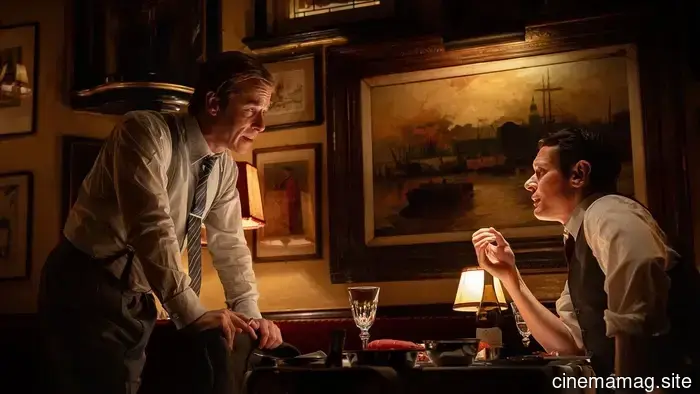
In Danny Boyle's latest film, Ink, there's a delightful scene where Rupert Murdoch (played by Guy Pearce) and Larry Lamb (portrayed by Jack O’Connell) kneel to press their hands against the pavement on Fleet Street in London, experiencing the powerful vibrations of the printing presses beneath them. The Australian trailblazer has just arrived in the UK and has recently recruited Lamb from The Mirror, securing his
Venice Review: Danny Boyle’s Ink Offers a Thrilling Exploration of the Surge in Sensationalism
In Danny Boyle's latest film, Ink, there's a delightful scene where Rupert Murdoch (played by Guy Pearce) and Larry Lamb (portrayed by Jack O’Connell) kneel to press their hands against the pavement on Fleet Street in London, experiencing the powerful vibrations of the printing presses beneath them. The Australian trailblazer has just arrived in the UK and has recently recruited Lamb from The Mirror, securing his
 Venice Review: Werner Herzog’s Bucking Fastard Is an Unusual and Sincerely Moving Curiosity
After reaching a certain age and a particular number of works, a director will likely find themselves caught up in the constraining discussion: have they entered their “late” style? Defining what this entails can be challenging: when writing about Beethoven, Theodor Adorno described late artistic works as “lacking sweetness, bitter and angular”—exquisite distillations.
Venice Review: Werner Herzog’s Bucking Fastard Is an Unusual and Sincerely Moving Curiosity
After reaching a certain age and a particular number of works, a director will likely find themselves caught up in the constraining discussion: have they entered their “late” style? Defining what this entails can be challenging: when writing about Beethoven, Theodor Adorno described late artistic works as “lacking sweetness, bitter and angular”—exquisite distillations.
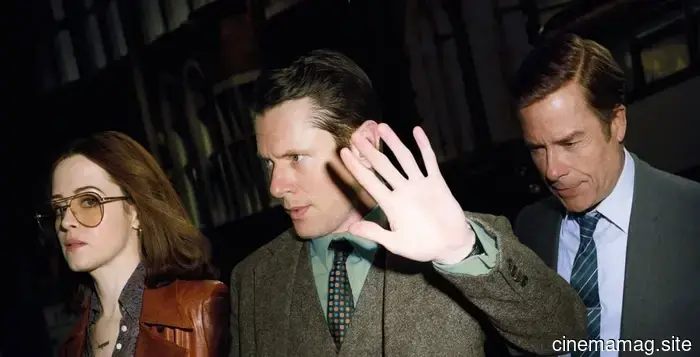 The initial teaser trailer and posters for Danny Boyle's Ink, featuring Jack O'Connell, Guy Pearce, and Claire Foy, have been released.
StudioCanal has released the initial trailer and character posters for Ink, the forthcoming drama that narrates the ascent of The Sun newspaper under the ownership of Rupert Murdoch and the editorial leadership of Larry Lamb.
The initial teaser trailer and posters for Danny Boyle's Ink, featuring Jack O'Connell, Guy Pearce, and Claire Foy, have been released.
StudioCanal has released the initial trailer and character posters for Ink, the forthcoming drama that narrates the ascent of The Sun newspaper under the ownership of Rupert Murdoch and the editorial leadership of Larry Lamb.
 LEGO Advent Calendar sets for 2026 are now released.
The LEGO Group has officially revealed that its range of 2026 Advent Calendars is now available for purchase, featuring new sets from LEGO Disney, LEGO Friends, LEGO City, LEGO Marvel, and LEGO Star...
LEGO Advent Calendar sets for 2026 are now released.
The LEGO Group has officially revealed that its range of 2026 Advent Calendars is now available for purchase, featuring new sets from LEGO Disney, LEGO Friends, LEGO City, LEGO Marvel, and LEGO Star...
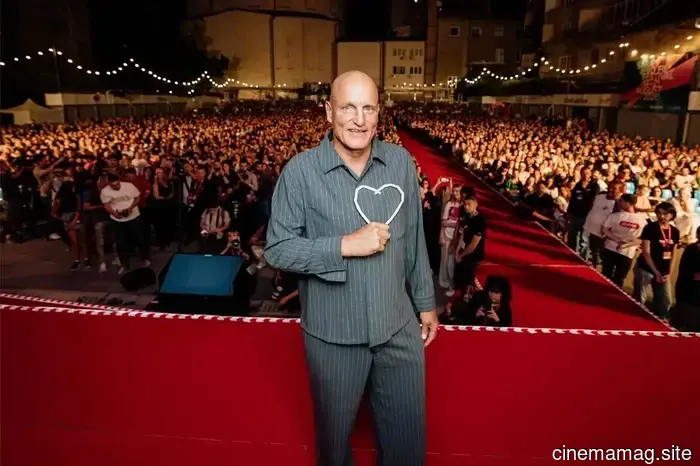 2026 Sarajevo Film Festival Features Woody Harrelson, Balkan Treasures, and Echoes of the Past
On the initial evening of my visit to Sarajevo this year, I participated in a gathering at the residence of the Spanish Ambassador. The event was held in honor of Rodrigo Sorogoyen, whose recent film, The Beloved, was scheduled to be shown at the festival's renowned open-air theatre that evening. Throughout all my years of attending festivals, it was the first party I attended.
2026 Sarajevo Film Festival Features Woody Harrelson, Balkan Treasures, and Echoes of the Past
On the initial evening of my visit to Sarajevo this year, I participated in a gathering at the residence of the Spanish Ambassador. The event was held in honor of Rodrigo Sorogoyen, whose recent film, The Beloved, was scheduled to be shown at the festival's renowned open-air theatre that evening. Throughout all my years of attending festivals, it was the first party I attended.
Venice Review: In Robert Greene’s Too Much Sugar, Making Films Serves as a Therapeutic Outlet
Too Much Sugar is a film centered on family, friendships, and the art of filmmaking—what's not to enjoy? It's the newest endeavor by Robert Greene, who frequently collaborates with Alex Ross Perry (Greene has edited a wide range of films, including Listen Up Philip and Pavements, along with the Safdie brothers' Lenny Cooke). Through his work as a documentary filmmaker, he has consistently shown a keen interest in the