
There’s Still Tomorrow: Director Paola Cortellesi Discusses Domestic Violence, International Success, and the Influence of Italian Neorealism
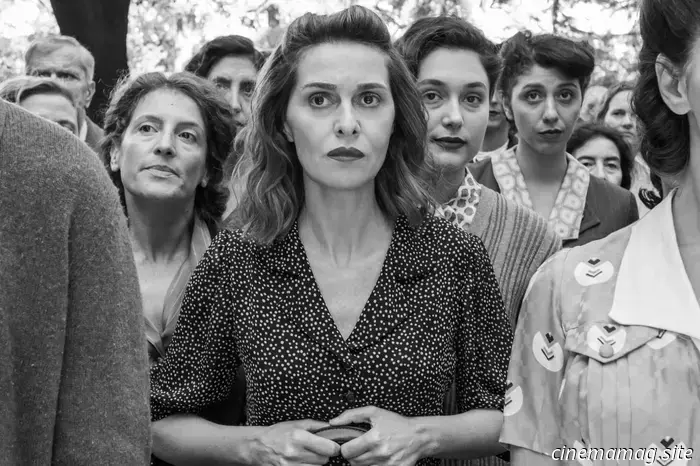
After years of acclaimed performances in Italian film and television, Paola Cortellesi has made her directorial debut with There’s Still Tomorrow, a post-war drama set in the 1940s that she also co-wrote and stars in. The film follows the matriarch of a working-class family as she deals with a toxic marriage and a daughter she wishes to shield from a similar fate, alongside her romantic dreams of a better life. This black-and-white film became a major box-office hit in Italy, ranking among the country’s top 10 highest-grossing films of all time.
In advance of the film’s U.S. release this Friday through Greenwich Entertainment, I spoke with Cortellesi about capturing the film's unique tone, the influence of classic Neorealist dramas and comedies, the central mother-daughter narrative, and why the film has struck a chord both in Italy and internationally.
The Film Stage: The film begins with a slap. How crucial was it to depict the dangers of Delia’s everyday life from the outset?
Paola Cortellesi: The opening scene serves as the opera's overture, summarizing key elements that will unfold throughout the film. It clearly presents violence, incorporating a touch of absurdity and even humor, as Delia behaves as if nothing has happened; it seems inconsequential. She's like a modern-day Cinderella. The contrasting music is a famous tune of the era: “I opened a window. And let’s breathe the fresh air of the spring.” Meanwhile, a dog is urinating in the basement. It’s a grim situation, but amusing in a way. This sets the stage for the themes to come.
You’ve mentioned being influenced by Italian Neorealism and comedies. Were there particular films you revisited while preparing, and how did they shape your process?
As Italians, we grew up surrounded by neorealism and the Italian comedies of the '50s and '60s. Since we watched them on television, they're ingrained in our culture. They certainly inspired me. Additionally, my grandmother’s stories play a significant role. It's a blend of their experiences, viewed through the lens of how cinema portrayed the era, specifically from the 1940s. I was particularly fond of a style known as “pink neorealism,” which depicts authentic moments and real conversations but adds a romantic touch, making it sweeter. I enjoy many films in that genre, including Campo de’ fiore [The Peddler and the Lady], and I could name many more, especially those featuring Anna Magnani, who was instrumental in pink neorealism.
That style of cinema heavily influenced my work. I opted for black-and-white to reflect my grandmother's memories of that time; it felt as if they were speaking to me that way. Thus, the black-and-white aesthetic was chosen intentionally. The film changes within the first eight-and-a-half minutes, mirroring neorealist techniques—using a square screen and music reminiscent of that period. While the opening might seem deceptive, it transforms completely from the title onwards: the music, composition, dialogue, and character interactions all evolve.
How did the collaboration with cinematographer Davide Leone unfold? The film is shot in black-and-white yet has a distinct desaturated look.
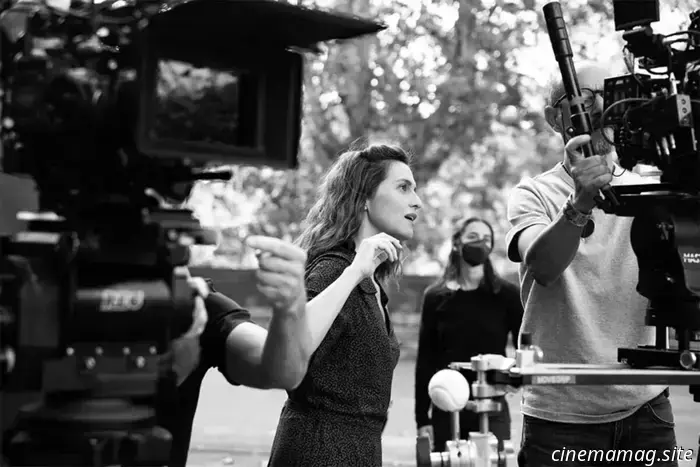
We filmed with standard color cameras, but I viewed the footage in black-and-white on the monitor. Naturally, it doesn’t exactly replicate what ends up on-screen. We made numerous adjustments, collaborating with the set and costume designers to differentiate colors between costumes and wallpaper, for example, since everything could have turned out gray. We aimed to create contrast on set, which was part of the process.
I loved the use of anachronistic music. Did you select these pieces early on as a way to indicate that these issues are still pertinent today?
Those musical choices were thoughtfully incorporated; certain scenes evolved directly from the music. I didn’t aim to mimic neorealism, as I wanted to express my own vision. While the subject of domestic violence is central, I chose to set the narrative in that era to speak about contemporary issues because we still grapple with domestic violence and femicide; on average, a woman is killed every 72 hours. My goal was to address the roots of this issue—not to suggest it began in the '30s, as it's a timeworn problem. Though Italy has evolved, that mindset remains pervasive. Returning to the music, it serves a dual purpose: it doesn’t merely reference the past but speaks to our current realities. I selected specific songs while writing.
The film beautifully evolves into a mother-daughter narrative. What was it like crafting that part of the story? Did you draw from your own experiences?
Yes, but not from a particular experience. I consider myself fortunate in comparison to the characters. This film is dedicated to my daughter; she is 12 now, but when I was writing
Other articles
 Vampirella #675 - Comic Book Sneak Peek
Dynamite Entertainment is set to release Vampirella #675 this Wednesday, and you can take a look at the official preview below… In this special anniversary issue, commemorating a year since the countdown, Vampirella’s analyst, Doc Chary, is called before a review board to justify his “enabling” of Ella Normandy’s paracosm inspired by her “vampire fetish” following the tumultuous events of “The Dark World.”
Vampirella #675 - Comic Book Sneak Peek
Dynamite Entertainment is set to release Vampirella #675 this Wednesday, and you can take a look at the official preview below… In this special anniversary issue, commemorating a year since the countdown, Vampirella’s analyst, Doc Chary, is called before a review board to justify his “enabling” of Ella Normandy’s paracosm inspired by her “vampire fetish” following the tumultuous events of “The Dark World.”
 Keke Palmer's The 'Burbs has added Haley Joel Osment, RJ Cyler, and additional cast members.
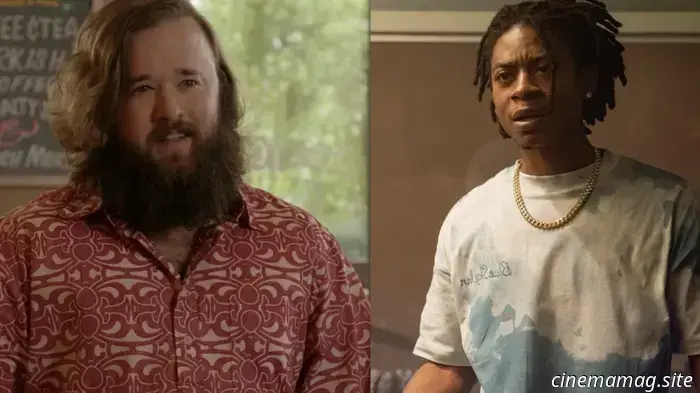
Keke Palmer recently won Entertainer of the Year at the NAACP Image Awards and is set to keep her momentum going with the forthcoming The ‘Burbs. This television remake of the 1989 movie features Palmer in the lead role, and six recurring guest stars will join the cast. According to Variety, Haley Joel Osment (The Sixth Sense), […]
Keke Palmer's The 'Burbs has added Haley Joel Osment, RJ Cyler, and additional cast members.
Keke Palmer recently won Entertainer of the Year at the NAACP Image Awards and is set to keep her momentum going with the forthcoming The ‘Burbs. This television remake of the 1989 movie features Palmer in the lead role, and six recurring guest stars will join the cast. According to Variety, Haley Joel Osment (The Sixth Sense), […]
-Movie-Review.jpg) Mickey 17 (2025) - Film Review
Mickey 17, 2025. Written and Directed by Bong Joon Ho. Featuring Robert Pattinson, Naomi Ackie, Mark Ruffalo, Toni Collette, Anamaria Vartolomei, Steven Yeun, Patsy Ferran, Steve Park, Tim Key, Holliday Grainger, Michael Monroe, Edward Davis, Cameron Britton, Ian Hanmore, Ellen Robertson, Rose Shalloo, Daniel Henshall, Angus Imrie, and Anna Mouglalis. SYNOPSIS: Mickey Barnes, an "expendable" […]
Mickey 17 (2025) - Film Review
Mickey 17, 2025. Written and Directed by Bong Joon Ho. Featuring Robert Pattinson, Naomi Ackie, Mark Ruffalo, Toni Collette, Anamaria Vartolomei, Steven Yeun, Patsy Ferran, Steve Park, Tim Key, Holliday Grainger, Michael Monroe, Edward Davis, Cameron Britton, Ian Hanmore, Ellen Robertson, Rose Shalloo, Daniel Henshall, Angus Imrie, and Anna Mouglalis. SYNOPSIS: Mickey Barnes, an "expendable" […]
 Star Wars: Reign of the Empire - The Mask of Fear - Review of the Book
Ricky Church examines Star Wars: Reign of the Empire – The Mask of Fear… One of the fascinating eras in the Star Wars universe is the time between Revenge of the Sith and A New Hope, when the Empire maintained a strict grip on the galaxy. Certain Star Wars content, such as The Bad Batch and Obi-Wan […]
Star Wars: Reign of the Empire - The Mask of Fear - Review of the Book
Ricky Church examines Star Wars: Reign of the Empire – The Mask of Fear… One of the fascinating eras in the Star Wars universe is the time between Revenge of the Sith and A New Hope, when the Empire maintained a strict grip on the galaxy. Certain Star Wars content, such as The Bad Batch and Obi-Wan […]
 X-Rated Trailer for Bruce LaBruce's The Visitor Presents a Graphic Game of Seduction
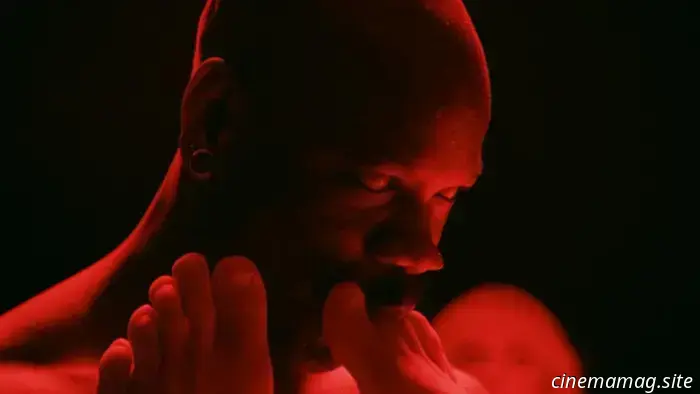
Following the impact of his bold incest drama Saint-Narcisse, underground Canadian director Bruce LaBruce made his return to Berlinale last year with The Visitor, his candid interpretation of Pier Paolo Pasolini's Teorema. A release from Circle Collective is set to kick off this Friday at Roxy Cinema in New York, followed by screenings at Landmark NuArt in Los Angeles on
X-Rated Trailer for Bruce LaBruce's The Visitor Presents a Graphic Game of Seduction
Following the impact of his bold incest drama Saint-Narcisse, underground Canadian director Bruce LaBruce made his return to Berlinale last year with The Visitor, his candid interpretation of Pier Paolo Pasolini's Teorema. A release from Circle Collective is set to kick off this Friday at Roxy Cinema in New York, followed by screenings at Landmark NuArt in Los Angeles on
 Matías Piñeiro discusses You Burn Me, Departing Shakespeare, and the perpetual reinvention of Hong Sangsoo.
“Focus the text,” instructs a translation app pop-up during a pivotal moment in Matías Piñeiro’s latest experimental essay film, You Burn Me. This phrase has become a guiding principle for the Argentinian director. Drawing inspiration from Sea Foam, a segment of Cesare Pavese’s work Dialogues with Leucò, Piñeiro imagines audiovisual exchanges among characters (Sappho
Matías Piñeiro discusses You Burn Me, Departing Shakespeare, and the perpetual reinvention of Hong Sangsoo.
“Focus the text,” instructs a translation app pop-up during a pivotal moment in Matías Piñeiro’s latest experimental essay film, You Burn Me. This phrase has become a guiding principle for the Argentinian director. Drawing inspiration from Sea Foam, a segment of Cesare Pavese’s work Dialogues with Leucò, Piñeiro imagines audiovisual exchanges among characters (Sappho
There’s Still Tomorrow: Director Paola Cortellesi Discusses Domestic Violence, International Success, and the Influence of Italian Neorealism
After years of acclaimed performances in Italian film and television, Paola Cortellesi made her directorial debut with There's Still Tomorrow, a post-war drama set in the 1940s that she also co-wrote and stars in. The story revolves around the matriarch of a working-class family as she deals with a troubled marriage and a daughter she hopes will not repeat her mistakes.