

100 Nights of Hero Review: A Lethargic, Patronizing Take on a Timeless Story
Arabian Nights, a vast anthology of Islamic folktales, holds a significant influence on modern literature and popular culture, akin to that of Shakespeare. Its storytelling innovations have shaped narratives well beyond the realm of fantasy. However, instead of featuring numerous stories from One Thousand and One Nights, the focus shifts to a single narrative stretched over a hundred nights, presented with an awkwardly miscast Charli XCX appearing in interludes amidst a poorly constructed royal love triangle that seems pulled straight from a budding teenage author's Wattpad entries. 100 Nights of Hero is based on a 2016 graphic novel by Isabel Greenberg, and writer-director Julia Jackman’s interpretation comes across less as a bold reinterpretation of a classic literary work, and more like a post-Bridgerton romance that carelessly leans into the very clichés it introduced, delivering a feminist message that borders on patronizing.
This messaging feels peculiar, especially given that One Thousand and One Nights has long attracted scholarly scrutiny for its feminist themes; brutal murders of women occur in the frame story until Scheherazade decides to save her life by captivating her husband with tales. The narrative serves as a dark reflection of a patriarchal society, more compelling than Jackman’s film, which treats the concept of women as property—denied the rights to read, write, and more—with such casualness that it’s astonishing the third act attempts to return to a broader empowerment theme.
Set in an exaggerated medieval setting, the plot arises from the troubled marriage of Jerome (Amir El-Masry) and his long-suffering wife Cherry (Maika Monroe), who bears the full blame for their childlessness—an issue compounded by the fact that Jerome's secrecy regarding his sexuality is an open secret that many prefer to overlook. Jerome's close friend Manfred (Nicholas Galitzine) arrives at their lavish estate, boasting that he could easily seduce Cherry, and is given one hundred nights to fulfill his challenge. Instead of immediately taking her to the bedroom, Manfred finds his attempts constantly interrupted by Cherry’s servant Hero (Emma Corrin), who persistently tells the tale of Rosa the Cunning (XCX), hindering Manfred’s efforts to win his bet.
The gradual recounting of this narrative—an anti-patriarchal reinterpretation of a folk tale from within the story—does bring Cherry and Hero closer, although detecting any chemistry between the two actors proves challenging. Their romance appears to be crafted solely because of the current trend of depicting forbidden same-sex love stories (despite Corrin being a non-binary actor, their character is labeled female in the screenplay); it lacks the authentic emotional depth necessary for the relationship to resonate beyond a blatant critique of patriarchy. This could have worked if the film either embraced its comedic potential in genre parody or more cleverly subverted long-standing tropes—its heavy-handedness makes the overall experience feel flat, with more focus on establishing the visual style than on developing the characters inhabiting that world. While the costumes are lavish and intricately designed, that loses significance if the audience feels detached from the characters wearing them. In the original story, Cherry and Hero's relationship is already established at the outset, which adds significant emotional weight to the maid’s efforts to intervene in the antagonist’s behavior. In a film where every element feels like a visual gimmick from a Pinterest board, it ultimately resembles a superficial attempt to shake up a traditional genre, lacking any genuine connections between the characters on screen.
Jackman’s previous work, Bonus Track, showcased a grounded coming-of-age story, so her focus on meticulously crafting this world is understandable. However, her vision lacks a distinctive artistic identity, painfully evident in her framing of characters in ways that heavily borrow from Wes Anderson. Here, composed camera movements clash with actors’ choreography that is designed to appear accidental yet lacks actual spontaneity. This results in a hollow imitation of his stylistic approach, similar to the TikTok trend that drained substance from his work. When filming on location instead of utilizing the elaborate sound stages typical of Anderson's films, it comes across as an ineffectual imitation by someone attempting to replicate his artistry with merely a smartphone.
With a total runtime of just 92 minutes, 100 Nights of Hero was clearly not aiming to replicate the expansive scope of its literary source—yet this does not excuse its shortcomings, as it attempts to modernize its material in a way that leaves viewers grateful for the enduring classics that remain.
100 Nights of Hero will be released in theaters on Friday, December 5.
Other articles
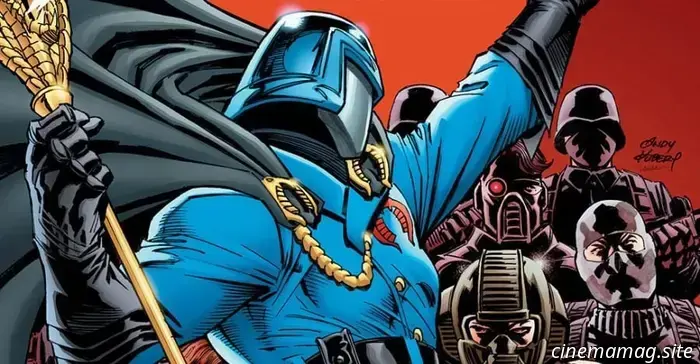 Comic Book Sneak Peek – G.I. Joe: A Real American Hero #323
Next week, Image Comics and Skybound Entertainment will release Larry Hama’s G.I. Joe: A Real American Hero #323, and you can check out the official preview of the issue below… COBRA RESURG…
Comic Book Sneak Peek – G.I. Joe: A Real American Hero #323
Next week, Image Comics and Skybound Entertainment will release Larry Hama’s G.I. Joe: A Real American Hero #323, and you can check out the official preview of the issue below… COBRA RESURG…
 The Trailer for The President’s Cake: Iraq’s Entry for the Oscars and Cannes Winner Debuts This February
One of the standout features at Cannes Directors' Fortnight earlier this year, Hasan Hadi's directorial debut The President's Cake received the Audience Award for its section as well as the Caméra d'Or. Now acquired by Sony Pictures Classics, Iraq's entry for the Oscars will start an awards-qualifying run on December 12 at Village East in NYC and Laemmle Monica Film in LA.
The Trailer for The President’s Cake: Iraq’s Entry for the Oscars and Cannes Winner Debuts This February
One of the standout features at Cannes Directors' Fortnight earlier this year, Hasan Hadi's directorial debut The President's Cake received the Audience Award for its section as well as the Caméra d'Or. Now acquired by Sony Pictures Classics, Iraq's entry for the Oscars will start an awards-qualifying run on December 12 at Village East in NYC and Laemmle Monica Film in LA.
 My Father's Shadow Trailer: U.K. Submission for the Oscars and Cannes Winner Premieres This February.
My Father's Shadow Trailer: U.K. Submission for the Oscars and Cannes Winner Premieres This February.
My Father's Shadow Trailer: U.K. Submission for the Oscars and Cannes Winner Premieres This February.
 The game 007 First Light featuring James Bond initiates a series of developer diaries.
Award-winning developer and publisher IO Interactive have unveiled the initial episode of a new series of developer diaries for 007 First Light. Titled Beyond the Light, this debut episode offers viewers...
The game 007 First Light featuring James Bond initiates a series of developer diaries.
Award-winning developer and publisher IO Interactive have unveiled the initial episode of a new series of developer diaries for 007 First Light. Titled Beyond the Light, this debut episode offers viewers...
 2026년에 추천하는 최고의 온라인 카지노 사이트
2026년에 이용할 수 있는 최고의 온라인 카지노 사이트를 찾아보세요. 안전하고 사용하기 편리한 게임 환경을 제공하며, 다양한 보너스와 흥미로운 게임 선택지를 경험할 수 있습니다.
2026년에 추천하는 최고의 온라인 카지노 사이트
2026년에 이용할 수 있는 최고의 온라인 카지노 사이트를 찾아보세요. 안전하고 사용하기 편리한 게임 환경을 제공하며, 다양한 보너스와 흥미로운 게임 선택지를 경험할 수 있습니다.
 Stephen Graham makes a striking entrance in the trailer for season 2 of A Thousand Blows.
Disney+ and Hulu have released the trailer for the second season of Steven Knight’s boxing drama A Thousand Blows, featuring Stephen Graham in a historical narrative about illegal bare-knuckle fighting.
Stephen Graham makes a striking entrance in the trailer for season 2 of A Thousand Blows.
Disney+ and Hulu have released the trailer for the second season of Steven Knight’s boxing drama A Thousand Blows, featuring Stephen Graham in a historical narrative about illegal bare-knuckle fighting.
100 Nights of Hero Review: A Lethargic, Patronizing Take on a Timeless Story
Arabian Nights, a vast anthology of Islamic folk tales, holds as much significance in modern literature and popular culture as the works of Shakespeare—an extensive work whose narrative techniques have shaped various genres beyond just fantasy. However, rather than exploring numerous stories from One Thousand and One Nights, let's focus on a singular tale told over a