
Sinking into the Abyss: Nadav Lapid Discusses Yes, the Erosion of Morality, and Elegance in Dance
For fifteen years, Israeli writer-director Nadav Lapid has been meticulously creating powerful and incisive films that scrutinize the incompetence, hypocrisy, criminality, and profound shame of his homeland in contemporary times—a place he has long left for a life in Paris, feeling he was born into a country where he never belonged. Unsurprisingly, the way global events have unfolded in recent years has only reinforced his existential doubts. One might expect that his first project since 2021 would capture the familiar dramatic intensity and passion of earlier works, such as Ahed’s Knee or the isolation featured in his international breakthrough, 2019’s Synonyms. While that intensity can be found in Yes, the grim, war-stricken reality in Lapid's sights has compelled him to explore a completely different approach to both reflect and critique the absurdity of the world: raucous, expressionistic satire.
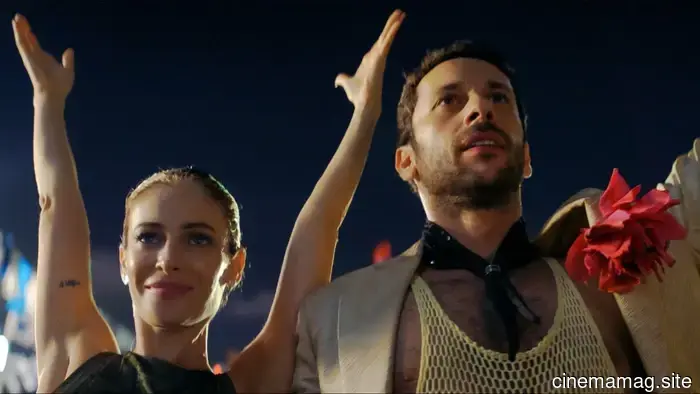
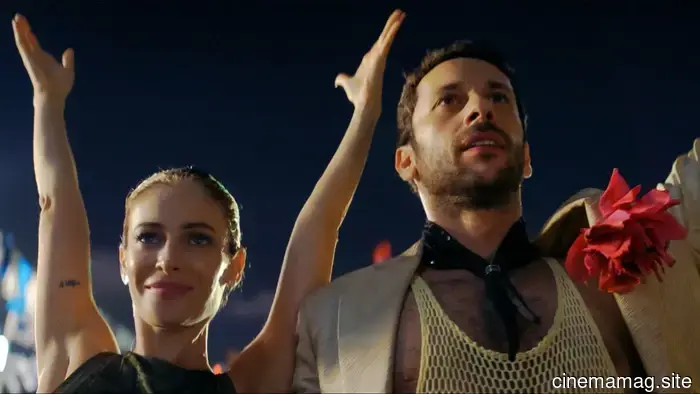
Yes, which made its debut in the Director’s Fortnight section of Cannes in 2025, showcases a well-known premise with a distinctly unconventional presentation. It follows a "yes man" who eagerly seizes every opportunity for success, regardless of his employer or the ethical implications of the work. However, the story is grotesque and the "comedy" so sharp in its truth, so grim in its reality, that it elicits more gasps than laughter, more anguish than amusement, more suffering than joy. Y, the jazz pianist tasked with composing the new post-October 7 Victory Anthem for Israel, lives in dire conditions with his wife Yasmin in modern Israel, having recently welcomed a son. Together, they perform for the Israeli (and Russian, and various global power brokers) oligarchy like jesters for royalty, catering to the whims of aging elites while nearly dancing themselves to exhaustion just to make ends meet.
What starts with a party scene as vibrant and flashy as Sorrentino's extravagant opening in The Great Beauty ultimately transitions to the grim reality beyond the walls of Gaza, where the genocide of Palestinians turns outrageous satire into unbearable truth. Ahead of this Friday's U.S. release, we spoke with Lapid about Yes, its connections to real-world events, the significance of his characters dancing through it all, and the satirical implications embedded in the film.
The Film Stage: What inspired the narrative of your film?
Nadav Lapid: It stemmed from several factors. I find myself questioning society—and societies at large—where everything matters but a sensitive soul. Observing a world that venerates money and power, even more simplistically than before, makes me doubt my place within it. One could say artist, but for me, "artist" symbolizes an endeavor to think differently, an alternative hierarchy beyond mere power and wealth. There seems to be no room left for this perspective, and even the vintage, romantic ideals of resistance and perseverance feel outdated.
Perhaps a very brave dog can challenge an elephant, but an ant attempting the same is a pathetic sight. In film, during intense moments, absolute statements are needed. Although there was a dialectic of “yes” and “no,” what if “no” has ceased to exist? The only feasible stance is to join the chorus of “yes!”—whether you're a doctor, an artist, a jazz pianist, or something else entirely. There's also an exhaustion that isn't mine alone but seems to symbolize a larger collective experience—an exhaustion from fruitless resistance and from the myth of such resistance, coupled with a genuine desire to belong, to love, and to be loved. But once you start making deals with the devil, it may seem fine at first, yet ultimately, you're only greeted by hell. This provided the genesis for this entire project.
Initially, I was inspired by a painting from George Grosz, which played a critical role in the film's conception. That painting, "The Pillars of Society," offers a grotesque and extremely expressionistic depiction of German society on the brink of the Nazis' rise to power. Yet, it also serves as a remarkably realistic portrayal of the state of affairs. He illustrated these figures as grotesque monsters, and indeed, they were. He depicted the world as facing an apocalypse, and it ultimately became one. This resonates with the same feeling: that we are teetering on the brink of catastrophe, sinking into the abyss.
You had previously drafted a version of Yes before October 7. How did the original differ from what it became after that date?
When October 7 unfolded, I was in Paris and deeply shocked. My first thought was to question the purpose of art and cinema amidst such chaos. However, when I revisited the script several days later, I realized it reflected the very world where society embarks on a quest for vengeance and violence.
I sensed that the entire reality—one where voices are silenced and everyone screams a bloody, deadly anthem in unison, where the next generation appears doomed to be worse than the
Other articles
.jpg) Film Critique – Our Protagonist, Balthazar (2025)
Our Hero, Balthazar, 2025. Directed by Oscar Boyson. Featuring Jaeden Martell, Asa Butterfield, Jennifer Ehle, Pippa Knowles, Chris Bauer, Anna Baryshnikov, Noah Centineo, Becky Ann Baker, Avan Jogia,…
Film Critique – Our Protagonist, Balthazar (2025)
Our Hero, Balthazar, 2025. Directed by Oscar Boyson. Featuring Jaeden Martell, Asa Butterfield, Jennifer Ehle, Pippa Knowles, Chris Bauer, Anna Baryshnikov, Noah Centineo, Becky Ann Baker, Avan Jogia,…
.jpg) Movie Review – Our Protagonist, Balthazar (2025)
Our Hero, Balthazar, 2025. Directed by Oscar Boyson. Featuring Jaeden Martell, Asa Butterfield, Jennifer Ehle, Pippa Knowles, Chris Bauer, Anna Baryshnikov, Noah Centineo, Becky Ann Baker, Avan Jogia,…
Movie Review – Our Protagonist, Balthazar (2025)
Our Hero, Balthazar, 2025. Directed by Oscar Boyson. Featuring Jaeden Martell, Asa Butterfield, Jennifer Ehle, Pippa Knowles, Chris Bauer, Anna Baryshnikov, Noah Centineo, Becky Ann Baker, Avan Jogia,…
 Katie Aselton and Daveed Diggs Discover Freedom in the First Trailer for Magic Hour.
This year at SXSW, Their Town (our review here) is making an appearance alongside Katie Aselton's earlier feature, Magic Hour, which debuted at the festival last year and is set for a theatrical release starting this summer. The drama, penned by Aselton and her husband, Mark Duplass, features performances by the director, Daveed Diggs, Brad Garrett, and Susan Sullivan. Greenwich
Katie Aselton and Daveed Diggs Discover Freedom in the First Trailer for Magic Hour.
This year at SXSW, Their Town (our review here) is making an appearance alongside Katie Aselton's earlier feature, Magic Hour, which debuted at the festival last year and is set for a theatrical release starting this summer. The drama, penned by Aselton and her husband, Mark Duplass, features performances by the director, Daveed Diggs, Brad Garrett, and Susan Sullivan. Greenwich
 Adam Sandler will star in Scott Cooper's upcoming Netflix drama, Time Out.
After Happy Gilmore 2 and Jay Kelly, Adam Sandler has secured his next project with Netflix, which is Scott Cooper’s psychological drama titled Time Out. The Springsteen: Deliver Me From Nowhe…
Adam Sandler will star in Scott Cooper's upcoming Netflix drama, Time Out.
After Happy Gilmore 2 and Jay Kelly, Adam Sandler has secured his next project with Netflix, which is Scott Cooper’s psychological drama titled Time Out. The Springsteen: Deliver Me From Nowhe…
 Adam Sandler will star in Scott Cooper's upcoming Netflix drama titled Time Out.
After Happy Gilmore 2 and Jay Kelly, Adam Sandler has secured his next project with Netflix, which is Scott Cooper’s psychological drama titled Time Out. The Springsteen: Deliver Me From Nowhe…
Adam Sandler will star in Scott Cooper's upcoming Netflix drama titled Time Out.
After Happy Gilmore 2 and Jay Kelly, Adam Sandler has secured his next project with Netflix, which is Scott Cooper’s psychological drama titled Time Out. The Springsteen: Deliver Me From Nowhe…
 The action thriller The Furious has released its trailer and poster.
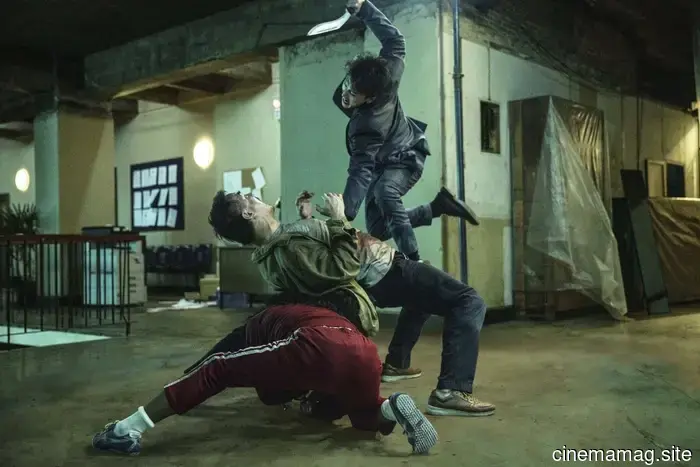
Lionsgate has unveiled a poster and trailer for the upcoming action thriller The Furious, directed by Kenji Tanigaki. The story centers around a desperate father on a mission to save his daughter, who has been kidnapped.
The action thriller The Furious has released its trailer and poster.
Lionsgate has unveiled a poster and trailer for the upcoming action thriller The Furious, directed by Kenji Tanigaki. The story centers around a desperate father on a mission to save his daughter, who has been kidnapped.
Sinking into the Abyss: Nadav Lapid Discusses Yes, the Erosion of Morality, and Elegance in Dance
For the past fifteen years, Israeli writer-director Nadav Lapid has skillfully created powerful and sharp films that critique the incompetence, hypocrisy, criminality, and deep shame of his native land in contemporary times. He has long since left Israel for a life in Paris, driven by the sense that he was born in a country where he never truly belonged.