
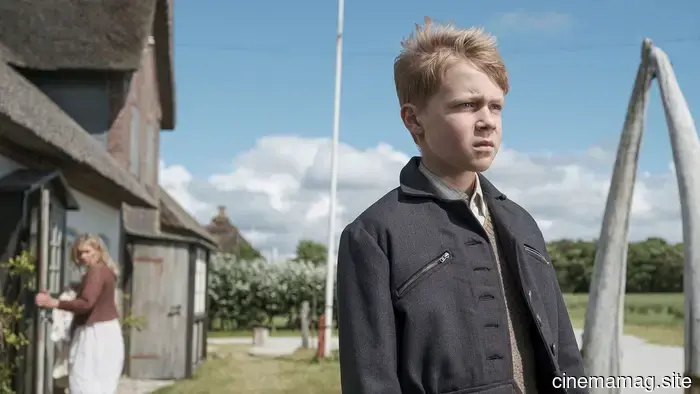
Amrum Review: Fatih Akin Explores the Deceptiveness of Fascism Through a Coming-of-Age Perspective
There’s a reason for the peculiar credit at the beginning of Amrum: “A Hark Bohm film by Fatih Akin.” The two have previously worked together on Akin’s In the Fade, but this project originated differently. Bohm initially wrote the script to direct it himself but later realized he didn't have the strength to do so. Having grown up on Amrum Island (and being a teenager during the film's 1945 setting), it was clearly a deeply personal project that Akin initially hesitated to take on.
What changed his mind was the need for a rewrite to adjust the film's length. This process allowed Akin to infuse the project with his own vision as much as the original creator’s. It resembles the situation in A.I. Artificial Intelligence, where Steven Spielberg completed what Stanley Kubrick began. It’s a kind of baton-passing, resulting in both artists leaving their marks, ensuring their names are equally recognized in the “A film by” credit.
In its simplest form, Amrum tells the coming-of-age story of a 12-year-old boy named Nanning (Jasper Billerbeck), who embarks on a quest to gather materials needed to prepare a plate of white bread with butter and honey for his mother (Laura Tonke’s Hille). What should be a simple task during more peaceful times becomes nearly impossible now, both practically and emotionally.
Why is that? Because they live on this island as outsiders during wartime, where resources are scarce. It doesn't matter that Hille's family has owned their house for nine generations—she’s seen as a mainlander from Hamburg. To her neighbors, she is viewed as superior due to that fact and her husband’s role in the German military. Even more troubling, she’s a Nazi so consumed by hatred that she undermines her own well-being to prove her point.
Nanning’s struggle is thus two-fold. He not only has to seek items now deemed precious (wheat, butter, and sugar) but also must persuade people who harbor disdain for his mother to help him. This situation exemplifies the insidious nature of fascism: we witness how a parent's sins can curse their child, alongside the child’s struggle to reconcile his love for that parent against the animosity everyone else feels toward her.
At first, this is explored through the contrast between Nanning’s family and a group of newcomers fleeing the Holocaust. Both are refugees (Hille hides from the war behind a veil of privilege). Both are desperate, hungry, and in search of safety. Nanning’s instinct to join the locals in belittling the newcomers stems from misguided arrogance. To the Amrum residents, he is no better than them. Additionally, as a member of the Hitler Youth, the refugees have reason to resent him too.
This realization presents a challenging lesson for a child whose parents have instilled an identity completely at odds with the place he currently inhabits. Nanning is just like any other boy who believes his mother is looking out for him. He also thinks he is likable and deserving of friendship. Yet in this particular environment, those beliefs position him precariously between two worlds, and this moment serves as a turning point requiring him to choose.
Bohm and Akin have crafted the ideal backdrop for Nanning’s decision-making. World War II is nearing its end, with Hitler’s grip on Europe about to loosen. Consequently, the Amrummers who allowed Hille to flaunt her swastika flag for their protection are becoming more vocal (as seen in Diane Kruger’s Tessa), more brazen with their contraband (as portrayed by Lars Jessen’s Grandpa Arjan), and increasingly willing to discuss the past (like Detlev Buck’s Sam Gangsters).
This last aspect is critical—it finally provides Nanning with insights about his family that compel him to acknowledge the flaws and inherent evil of their Nazi ideology. Naturally, he is reluctant to grapple with the idea that the people he loves could be so cruel and heartless. Nonetheless, he has witnessed undeniable evidence, even if he hasn’t fully processed it. He has observed his aunt’s (Lisa Hagmeister) struggles with Hille’s morality. The illusions are crumbling.
One cannot help but draw parallels with the current American situation. We see how many endure the xenophobia and brutality of the MAGA movement while walking down the street. The banning of books is escalating, and the Trump administration has redefined our government as a collection of sycophants loyal to the president over the Constitution. Yet amid this, there is hope for liberation as unexpected democratic wins arise.
Amrum also illustrates why fascism is relentless in dismantling educational systems founded on truth and empathy—two concepts that fundamentally oppose its agenda. This is because bigotry is a learned behavior. Without historical documentation of its destructiveness, we might be compelled to doubt our own experiences. Billerbeck shines when Nanning confronts
Other articles
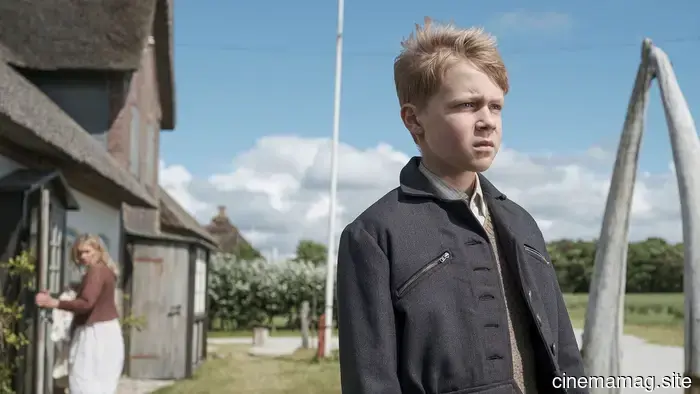 Amrum Review: Fatih Akin Explores the Subtle Threat of Fascism Through a Coming-of-Age Perspective
There’s an explanation for the unusual credit at the beginning of Amrum: “A Hark Bohm film by Fatih Akin.” Although the two previously worked together on Akin's In the Fade, this project was conceived differently. Bohm initially penned the script intending to direct it himself but soon realized he didn’t have the energy to follow through. Raised on
Amrum Review: Fatih Akin Explores the Subtle Threat of Fascism Through a Coming-of-Age Perspective
There’s an explanation for the unusual credit at the beginning of Amrum: “A Hark Bohm film by Fatih Akin.” Although the two previously worked together on Akin's In the Fade, this project was conceived differently. Bohm initially penned the script intending to direct it himself but soon realized he didn’t have the energy to follow through. Raised on
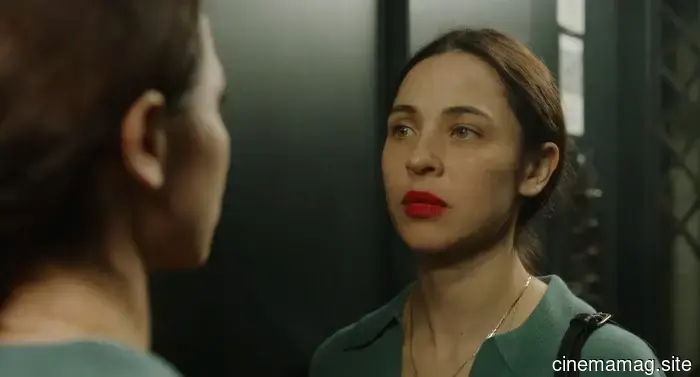 Currents Trailer: The Esteemed Drama by Milagros Mumenthaler Debuts This May
Selected for TIFF, NYFF, San Sebastian, and other festivals, Milagros Mumenthaler's highly regarded drama The Currents has been acquired by Kino Lorber, which plans to release the film next month. In anticipation of its debut on May 29 at Film at Lincoln Center in NYC and June 5 at Laemmle Royal in LA, the new trailer has been released.
Currents Trailer: The Esteemed Drama by Milagros Mumenthaler Debuts This May
Selected for TIFF, NYFF, San Sebastian, and other festivals, Milagros Mumenthaler's highly regarded drama The Currents has been acquired by Kino Lorber, which plans to release the film next month. In anticipation of its debut on May 29 at Film at Lincoln Center in NYC and June 5 at Laemmle Royal in LA, the new trailer has been released.
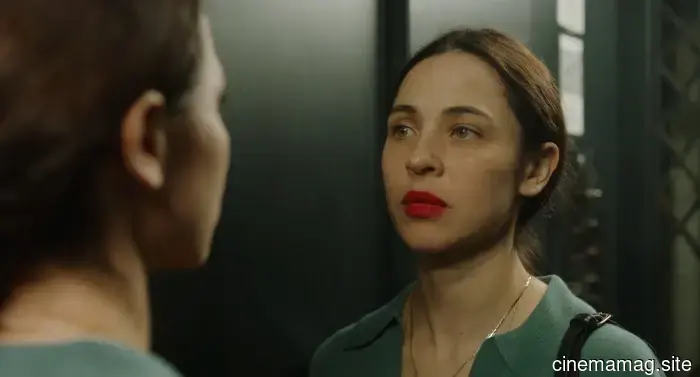 The Currents Trailer: Milagros Mumenthaler’s Esteemed Drama Launches This May
Chosen for TIFF, NYFF, San Sebastian, and others, Milagros Mumenthaler's celebrated drama The Currents has been acquired by Kino Lorber, who plan to release it next month. In anticipation of its debut on May 29 at Film at Lincoln Center in NYC and June 5 at Laemmle Royal in LA, the new trailer
The Currents Trailer: Milagros Mumenthaler’s Esteemed Drama Launches This May
Chosen for TIFF, NYFF, San Sebastian, and others, Milagros Mumenthaler's celebrated drama The Currents has been acquired by Kino Lorber, who plan to release it next month. In anticipation of its debut on May 29 at Film at Lincoln Center in NYC and June 5 at Laemmle Royal in LA, the new trailer
 Tony Leung Discovers Terrestrial Bond in Exclusive Poster for Ildikó Enyedi’s Silent Friend
Ildikó Enyedi, the director of the Oscar-nominated film On Body and Soul, has united Tony Leung and Léa Seydoux for Silent Friend, which narrates three interconnected stories revolving around a tree over a span of more than a century. After its premieres at Venice and TIFF, 1-2 Special is set to release the film in the U.S. starting May 8.
Tony Leung Discovers Terrestrial Bond in Exclusive Poster for Ildikó Enyedi’s Silent Friend
Ildikó Enyedi, the director of the Oscar-nominated film On Body and Soul, has united Tony Leung and Léa Seydoux for Silent Friend, which narrates three interconnected stories revolving around a tree over a span of more than a century. After its premieres at Venice and TIFF, 1-2 Special is set to release the film in the U.S. starting May 8.
 Godzilla Makes a Comeback in New York in the Initial Teaser for Takashi Yamazaki’s Godzilla Minus Zero.
Widely regarded as a significant milestone in the history of Godzilla films, Takashi Yamazaki's 2023 film Godzilla Minus One garnered over $116 million globally with a budget of $10-$15 million, also winning the award for Best Visual Effects at the 96th Academy Awards. It earned accolades from prominent figures such as Steven Spielberg and James Cameron.
Godzilla Makes a Comeback in New York in the Initial Teaser for Takashi Yamazaki’s Godzilla Minus Zero.
Widely regarded as a significant milestone in the history of Godzilla films, Takashi Yamazaki's 2023 film Godzilla Minus One garnered over $116 million globally with a budget of $10-$15 million, also winning the award for Best Visual Effects at the 96th Academy Awards. It earned accolades from prominent figures such as Steven Spielberg and James Cameron.
Amrum Review: Fatih Akin Explores the Deceptiveness of Fascism Through a Coming-of-Age Perspective
There's an explanation for the unusual credit at the beginning of Amrum: "A Hark Bohm film by Fatih Akin." Although the two have previously worked together on Akin's In the Fade, this project originated differently. Bohm initially penned the script to direct it himself but later recognized that he lacked the capacity to do so. Raised on