
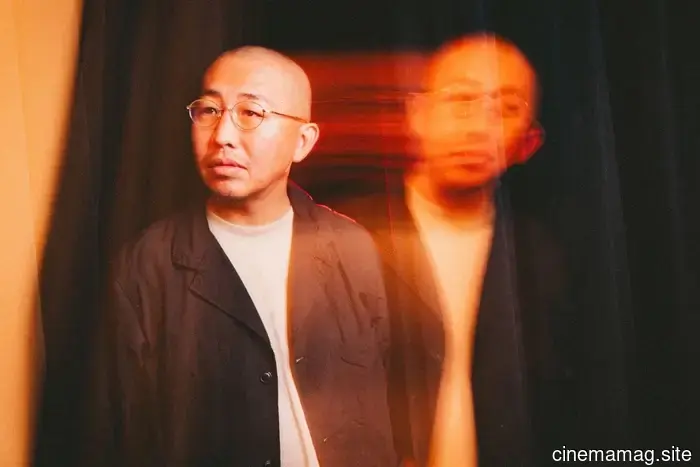
“My Most Brilliant Ideas Occur During Walks”: Sho Miyake Discusses Two Seasons, Two Strangers
In a high-rise building, a Korean woman (Shim Eun-kyung) sits at a table with a blank sheet of paper, taking a moment to reflect. After a brief pause, she starts to write. As her pencil moves, a scene takes shape, transporting us into it. A young woman (Yuumi Kawai) wakes up in a blue-tinted car backseat and gazes out at the vibrant, volcanic landscapes of Kozushima Island—a short boat ride from Tokyo. At the beach, she encounters a young man (Takada Mansaku), and they start to walk and converse, sharing their memories, philosophies, and initial impressions of each other. As they enter the sea, we pull back from the scene. The Korean woman is showcasing this very film, responding to questions from a small audience, albeit not very successfully. She physically retreats to a snowy lodge where she meets a somewhat reserved innkeeper. In two different seasons, two strangers connect. (As neat as the English title is, the original Japanese title, Tabi to Hibi, translates to "Journeys and Days.")
Sho Miyake’s fifth feature is delicate and beautifully visual, exhibiting structural wisdom. It is simple in its moment-to-moment exchanges while being rich in emotional depth. With a gentle touch, it explores the complexities of our daily lives and the interactions we share with the people and places around us—the words we choose to say and those we choose to leave unspoken.
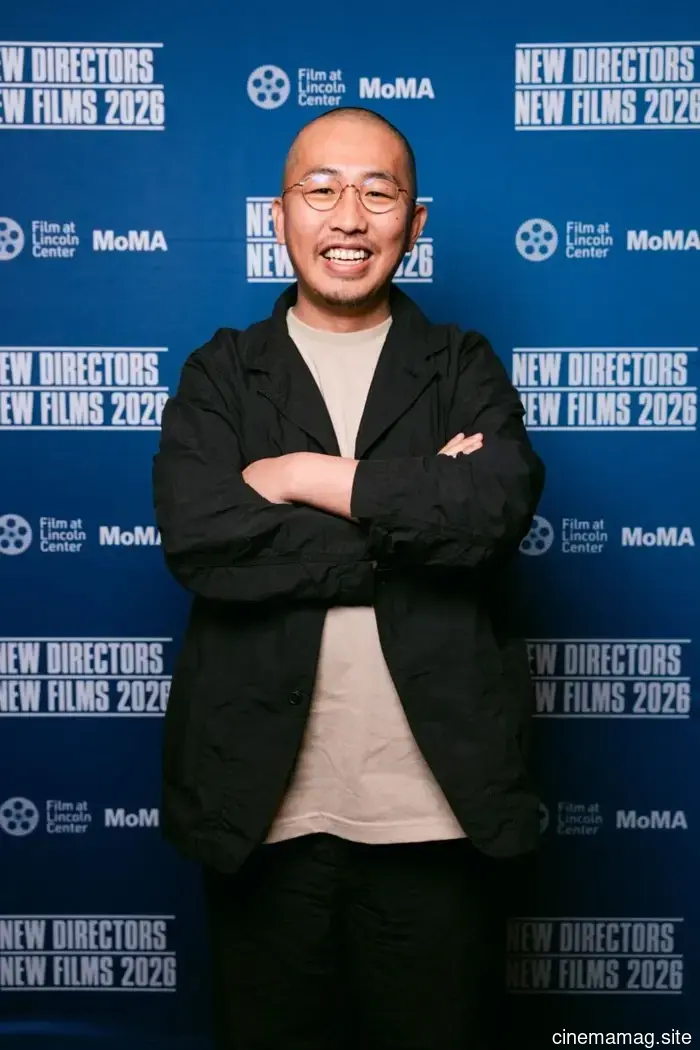
After winning the Golden Leopard at Locarno last year—a rare achievement for a Japanese film—Two Seasons, Two Strangers is now heading to North America. Miyake and I spoke at the conclusion of his film's engagement in the New Directors/New Films series, just before its opening at Metrograph this Friday, discussing the various journeys his characters undertake, both together and alone, and the paths his creative team took to reach this point.
Thanks to Monika Uchiyama for providing translation.
The Film Stage: I’d like to start by discussing the stories within stories—a charming element of this film. Are there specific films or literary works that influenced your interest in this narrative structure?
Sho Miyake: I can point to two inspirations. The first is Buster Keaton’s Sherlock Jr., and the second is Tony Scott’s Déjà Vu.
This film interweaves two unrelated manga short stories by the late Yoshiharu Tsuge: A View of the Seaside and Mr. Ben and His Igloo. What drew you to adapt these stories, and what motivated you to merge them into a single film while recontextualizing both?
I have always admired both manga stories. They share similarities, focusing on encounters between strangers who don’t know each other's names, emphasizing the brief time they spend together. I was also intrigued by the idea of combining a summer narrative with a winter one, believing it would create an interesting new experience for both the audience and myself as a filmmaker.
I appreciate the film’s self-reflexivity, allowing space for the audience and characters to absorb a location's unique aspects, following their curiosities. It evokes parallels to the works of Laura Citarella, Hong Sangsoo, and at home, Nobuhiko Ōbayashi and Shinji Sōmai. I’d love to know which filmmakers have influenced your approach here and if you see this film as part of a broader tradition of literary and expansive cinema.
Hong Sangsoo, as you mentioned, is a significant influence for me. For the summer part of the film, I was inspired by French filmmakers known for their "vacation" movies, particularly Éric Rohmer—his atmospheric work was crucial. In the winter section, I drew inspiration from more traditional Japanese directors, like Yasujirō Ozu and Mikio Naruse, whose influence has shaped my filmmaking overall.
Additionally, Hiroshi Shimizu, from the same generation as Ozu and Naruse, was vital for this film, especially due to his talent for capturing outdoor moments and how people interact with nature. His approach deeply inspired me.
Where were each section of the film filmed?
The summer scenes were shot on Kozushima Island, which is part of the Tokyo prefecture but requires a three-hour boat ride from Tokyo to reach. The winter scenes were filmed in Yamagata prefecture, specifically in an area called Shōnai, known for heavy snowfall.
There’s a strong sense of place in this film, particularly in scenes that feature simple walking. Did you know in advance which locations you wanted to film in and where to position the camera, or was it more of an on-site discovery process, similar to your characters?
For the summer scenes, some locations and shots were predetermined before arriving, but much was decided during exploration with the actors once production commenced. We aimed to find areas that felt evocative.
In the winter scenes, it was complicated since we couldn’t leave footprints, making exploration challenging. Therefore, I was more decisive about
Other articles
 Leviticus Trailer: The Yearnings of Your Heart Become Frightening in Celebrated Australian Horror Film
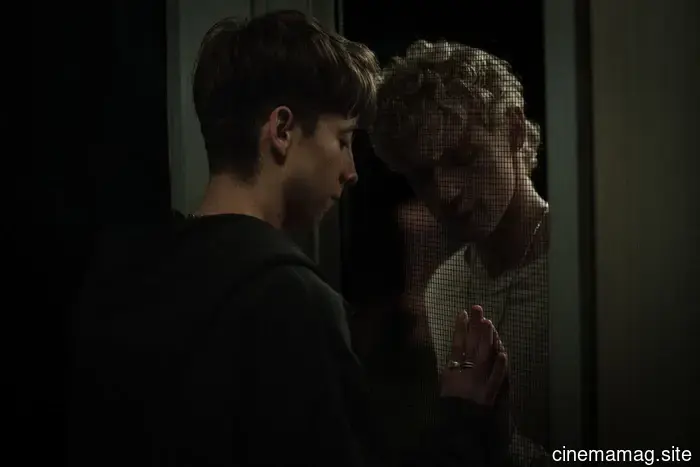
As we await the possibility of another filmmaker from this list producing their anticipated It Follows sequel, Australian director Adrian Chiarella's chilling feature debut, Leviticus, delivers a strikingly similar sense of nightmarish horror. The film centers on two boys residing in a conservative Christian community in rural Australia, as they start to exhibit unsettling behavior.
Leviticus Trailer: The Yearnings of Your Heart Become Frightening in Celebrated Australian Horror Film
As we await the possibility of another filmmaker from this list producing their anticipated It Follows sequel, Australian director Adrian Chiarella's chilling feature debut, Leviticus, delivers a strikingly similar sense of nightmarish horror. The film centers on two boys residing in a conservative Christian community in rural Australia, as they start to exhibit unsettling behavior.
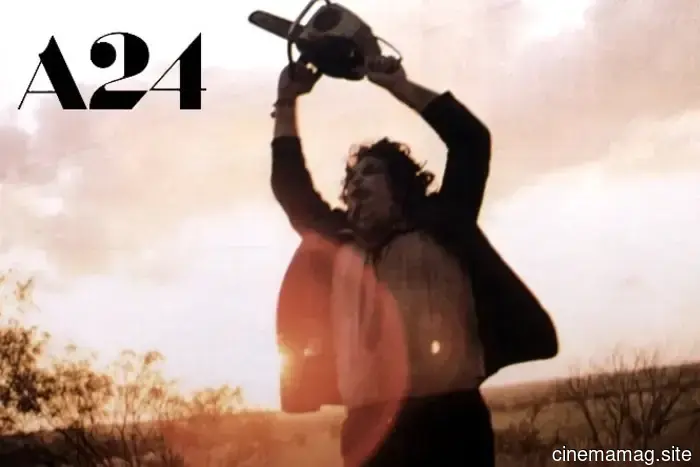 A24’s reimagining of The Texas Chainsaw Massacre has chosen Curry Barker as its director.
A24 is gearing up for another remake of The Texas Chain Saw Massacre, revealing that Curry Barker will be heading to the Sawyer home to reinterpret Tobe Hooper’s 1974 horror classic…
A24’s reimagining of The Texas Chainsaw Massacre has chosen Curry Barker as its director.
A24 is gearing up for another remake of The Texas Chain Saw Massacre, revealing that Curry Barker will be heading to the Sawyer home to reinterpret Tobe Hooper’s 1974 horror classic…
 The most recent Commando Comics honor Australian and New Zealand troops this ANZAC Day.
DC Thompson's newest Commando Comics, released in honor of ANZAC Day on April 25th, features four tales of the courageous exploits of Australian and New Zealand soldiers. Enthusiasts of Com...
The most recent Commando Comics honor Australian and New Zealand troops this ANZAC Day.
DC Thompson's newest Commando Comics, released in honor of ANZAC Day on April 25th, features four tales of the courageous exploits of Australian and New Zealand soldiers. Enthusiasts of Com...
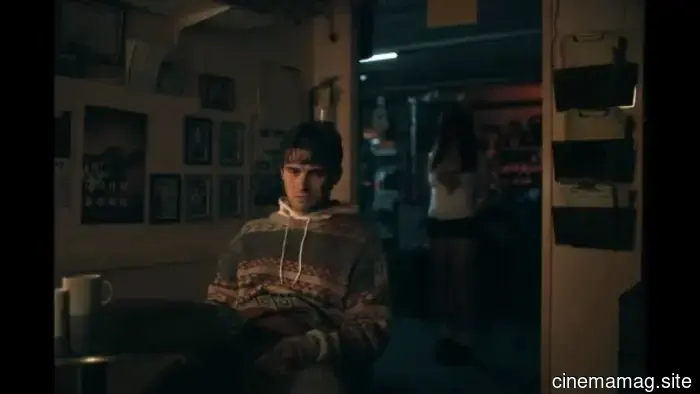 A24's reimagining of The Texas Chainsaw Massacre has appointed Curry Barker as its director.
A24 is gearing up for another remake of The Texas Chain Saw Massacre, revealing that Curry Barker will be heading to the Sawyer home to revamp Tobe Hooper’s 1974 horror classic.
A24's reimagining of The Texas Chainsaw Massacre has appointed Curry Barker as its director.
A24 is gearing up for another remake of The Texas Chain Saw Massacre, revealing that Curry Barker will be heading to the Sawyer home to revamp Tobe Hooper’s 1974 horror classic.
“My Most Brilliant Ideas Occur During Walks”: Sho Miyake Discusses Two Seasons, Two Strangers
In a high-rise building, a Korean woman (Shim Eun-kyung) is seated at a table with a blank sheet of paper before her, taking a moment to reflect. After a brief pause, she starts to write. As she uses her pencil, a scene takes shape, and before long, we find ourselves immersed in it. A young woman (Yuumi Kawai) stirs awake in the cool-toned backseat.