
A Decade of Nitrate Picture Show: A Spiritual Journey into the Essence of Cinema
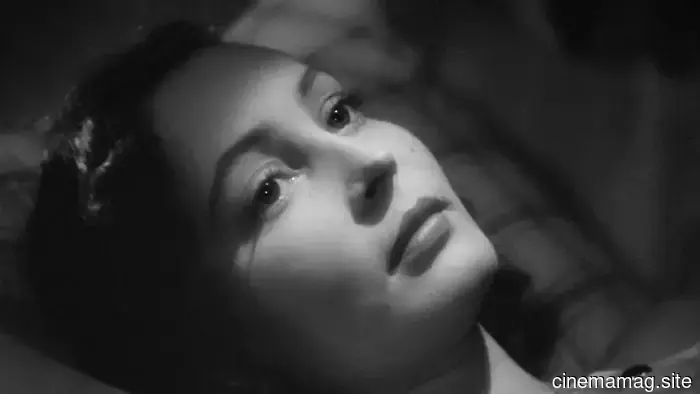
Now in its tenth edition, the Nitrate Picture Show—hosted at the George Eastman Museum in Rochester, New York—has become the closest experience that American film enthusiasts have to a pilgrimage. Every year, it seems that a significant portion of New York's film community travels upstate out of pure passion for the art form, eager to view the approximately twelve rare prints showcased at the festival. With the lineup kept under wraps until the morning of the first screening, the films often play a secondary role to the festival’s main attraction: nitrate film stock. This highly flammable material, which has since been discontinued, served as the standard film base for the initial five decades of cinema, and the George Eastman Museum is among only five venues in the U.S. still capable of screening it.
Most viewers might recognize nitrate as the film stock that brought down the Third Reich in Inglourious Basterds (2009) or caused a bus explosion in Alfred Hitchcock’s Sabotage (1936). Archivists are aware of nitrate’s heavy legacy within cinema history as a tragic contributor to vault fires that have resulted in the loss of countless films. For those who appreciate aesthetics, it is primarily celebrated for its rich visual textures. With a higher silver content than acetate or polyester film, nitrate possesses a sheen that no other material can replicate. To view a film on nitrate is to witness classic cinema in its true brilliance—catching every glint in the eyes of legendary stars like Greta Garbo or each bead of sweat on divas like Anna Magnani; appreciating the lavishness of Gloria Swanson’s gowns against the grand sets of Cecil B. DeMille; experiencing James Wong Howe’s exquisite lighting while pioneering Technicolor; or marveling at the natural beauty of moonlight (both genuine and artificial) reflected on water.
**Midnight**
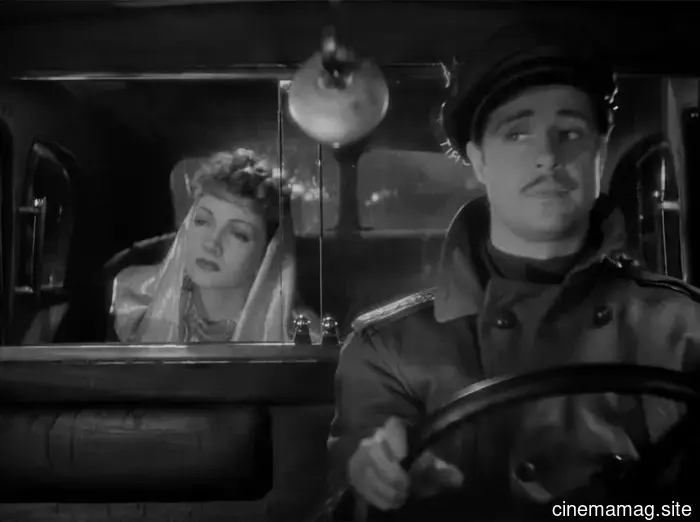
The standout feature of this year’s festival was Mitchell Leisen’s Midnight (1939), notable for its sheer luxury and grace. The film effortlessly encapsulates the effortless romance and playful social commentary characteristic of classical Hollywood, presenting performances and dialogue that burst with a glamorous absurdity, mixing sophistication and chaotic humor, typical of the best screwball comedies. The title alludes to the Cinderella story, where Claudette Colbert’s Eve Peabody deceives her way into Parisian high society, aided by a pawn ticket and a cuckolded aristocrat, Flammarion (John Barrymore), who seeks revenge on his snobbish wife (Mary Astor). Penned by Billy Wilder and Charles Brackett, the film is a seemingly endless treasure trove of comedic devices, mischievously carrying Peabody and her charming cab-driving suitor, Tibor Czerny (Don Ameche), through one extravagant soirée after another, each more luxurious and absurd than the last. Stunning scenes, such as a grand conga line at the Flammarion mansion featuring dozens of dancers, are executed with such nonchalance and elegance, hardly interrupting the main action, making them feel like mere playful embellishments, akin to bubbles in a fine glass of champagne.
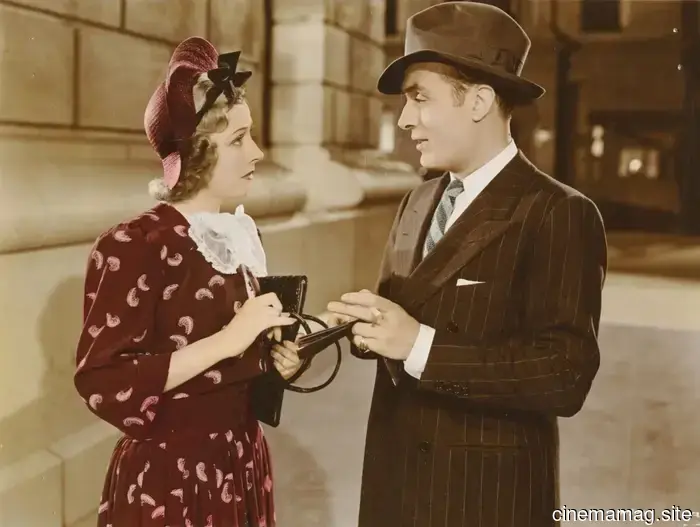
Another classical Hollywood film that left a lasting impression on me was John Stahl’s subtle melodrama When Tomorrow Comes (1939). Loosely inspired by James M. Cain’s novel Serenade, the film opens with a charming encounter between busy waitress Helen (Irene Dunne) and Phillippe (Charles Boyer), who she mistakenly believes is monitoring her restaurant’s unionization efforts. He follows her to the union meeting; she trails him around the city and eventually to his Long Island estate, where they encounter love amidst a hurricane. The movie is largely presented in wide shots with ample empty pauses interrupting otherwise ordinary dialogue, which gives it an almost atonal and modernist quality. It transitions from one unexpected set piece to another, not with romantic fervor but with a deeper sense of the physical and commonplace. The grand, melodramatic expressions of love and loss unfold quietly, with minimal musical score, yet convey a heartfelt understanding of desire's challenges.
The most striking moment of this year's festival was marked by one of its shortest films. Tucked within the Nitrate shorts block was a brief, three-minute piece titled Footage of the Bombing of Nagasaki, credited to the U.S. Government. Filmed with a 16mm camera from the rear window of The Great Artiste, one of six planes involved in the nuclear attack on Nagasaki, it was an overwhelming sight on the big screen, projected from an original print held by scientists of the Manhattan Project. Silent and showcasing only the mushroom cloud, it emanated a subdued sublimity, an intense and impersonal aesthetic stemming from an abstract chemical beauty deeply intertwined with an unsettling sense of morbidity. Its scale is almost beyond comprehension, and regardless of one’s preparations, it is impossible not to be left in stunned silence.
**When Tomorrow Comes**
The festival's objective to sift through archives
Other articles
 10 Years of Nitrate Picture Show: An Enthralling Encounter with the Essence of Cinema
Currently in its 10th edition, the Nitrate Picture Show—taking place at the George Eastman Museum in Rochester, New York—has become the nearest thing to a pilgrimage for American film enthusiasts. Each year, it seems that a significant portion of New York’s film community travels upstate, united by their passion for the art form, to experience the dozen or so rare prints on display.
10 Years of Nitrate Picture Show: An Enthralling Encounter with the Essence of Cinema
Currently in its 10th edition, the Nitrate Picture Show—taking place at the George Eastman Museum in Rochester, New York—has become the nearest thing to a pilgrimage for American film enthusiasts. Each year, it seems that a significant portion of New York’s film community travels upstate, united by their passion for the art form, to experience the dozen or so rare prints on display.
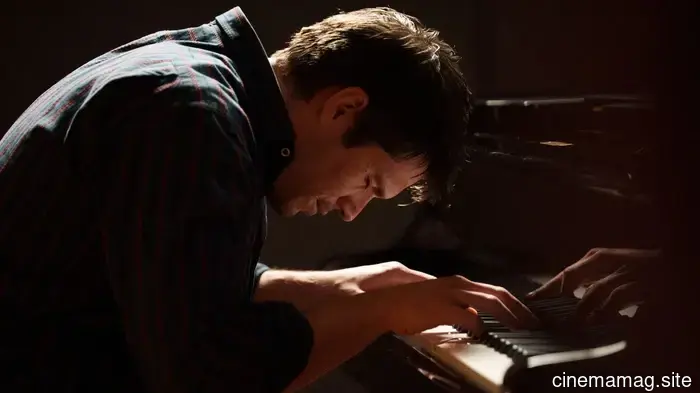 Just Released for Streaming: Two Pianos, The Last One for the Road, Pressure, The Wizard of the Kremlin, and More
Every week, we feature notable titles that have recently been released on streaming platforms in the United States. Take a look at this week’s picks below and find previous collections here. André Is an Idiot (Tony Benna) There is a refreshing sincerity in André Is an Idiot that is commendable, even if not everything succeeds. It presents a straightforward, stark topic for a
Just Released for Streaming: Two Pianos, The Last One for the Road, Pressure, The Wizard of the Kremlin, and More
Every week, we feature notable titles that have recently been released on streaming platforms in the United States. Take a look at this week’s picks below and find previous collections here. André Is an Idiot (Tony Benna) There is a refreshing sincerity in André Is an Idiot that is commendable, even if not everything succeeds. It presents a straightforward, stark topic for a
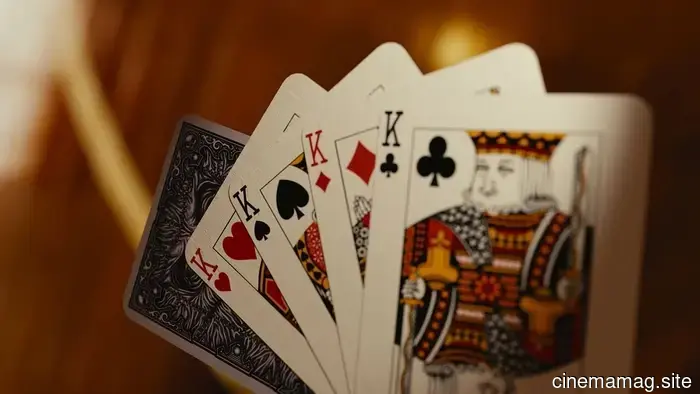 How Movies Transform Card Games into Drama - MovieMaker Magazine
Certain films allow the gaming universe to engulf the narrative completely. The Gambler, in its original version starring James Caan and the remake featuring Mark Wahlberg, focuses on the theme of compulsion itself.
How Movies Transform Card Games into Drama - MovieMaker Magazine
Certain films allow the gaming universe to engulf the narrative completely. The Gambler, in its original version starring James Caan and the remake featuring Mark Wahlberg, focuses on the theme of compulsion itself.
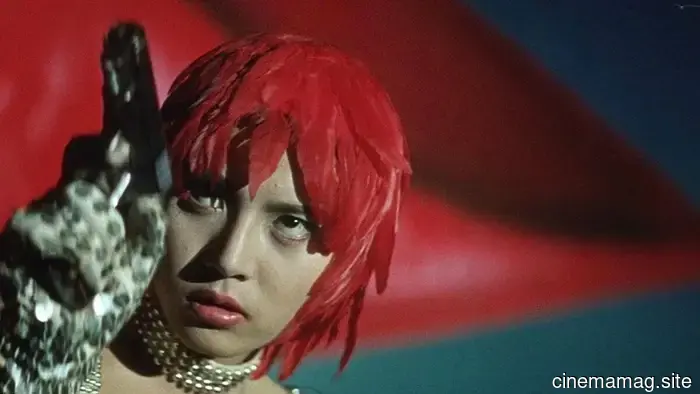 NYC Weekend Preview: Masahiro Shinoda, Budd Boetticher in 3D, Carlito's Way & More
NYC Weekend Watch is our weekly compilation of repertory events. The BAMA retrospective featuring a focus on 35mm films by Masahiro Shinoda has commenced. The Museum of Modern Art is continuing its well-curated Universal Westerns series, showcasing films by Anthony Mann and Budd Boetticher in 3D. Film at Lincoln Center's History, Italian Style series is ongoing with screenings of Vincere, The Conformist, and Love and Anarchy on 35mm. Museum of
NYC Weekend Preview: Masahiro Shinoda, Budd Boetticher in 3D, Carlito's Way & More
NYC Weekend Watch is our weekly compilation of repertory events. The BAMA retrospective featuring a focus on 35mm films by Masahiro Shinoda has commenced. The Museum of Modern Art is continuing its well-curated Universal Westerns series, showcasing films by Anthony Mann and Budd Boetticher in 3D. Film at Lincoln Center's History, Italian Style series is ongoing with screenings of Vincere, The Conformist, and Love and Anarchy on 35mm. Museum of
 The 13 Most Bizarre Films We've Ever Watched
Here are 13 of the most bizarre films we've ever encountered.
The 13 Most Bizarre Films We've Ever Watched
Here are 13 of the most bizarre films we've ever encountered.
 Quick Payout Casinos in Australia: Best 5 Platforms for 2026 - MovieMaker Magazine
Australian players are increasingly seeking quicker access to their winnings instead of having to wait several days for their withdrawals to be processed. Consequently, fast
Quick Payout Casinos in Australia: Best 5 Platforms for 2026 - MovieMaker Magazine
Australian players are increasingly seeking quicker access to their winnings instead of having to wait several days for their withdrawals to be processed. Consequently, fast
A Decade of Nitrate Picture Show: A Spiritual Journey into the Essence of Cinema
In its 10th edition, the Nitrate Picture Show—taking place at the George Eastman Museum in Rochester, New York—has turned into a sort of pilgrimage for American cinephiles. Each year, it seems like a significant portion of New York’s film community travels upstate, driven by their passion for the art form, to view the select few rare prints showcased.