
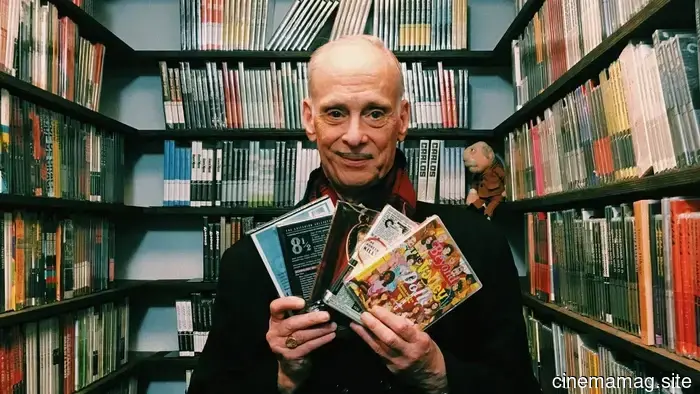
"There are constantly fascists to overcome": John Waters discusses the lasting impact of his films and how he has managed to avoid cancellation.
In 1973, Variety described John Waters’ landmark film Pink Flamingos as “one of the most vile, stupid and repulsive films ever made.” Fast forward to 2022, and that same film was released on Blu-ray by the esteemed Criterion Collection. Waters has transformed from an underground provocateur to a national treasure, even earning a star on the Hollywood Walk of Fame, making it difficult to find another cultural figure whose reputation has shifted so dramatically without compromising his principles or perspectives. Over 50 years ago, a unique boy from the suburbs of Baltimore, Maryland, set out to reshape culture in his own likeness—and he succeeded.
However, achieving the status of a national treasure demands hard work, and in the two decades since his last feature film (2004’s A Dirty Shame), Waters has kept his audience engaged with a busy roster of multimedia activities: writing books, participating in speaking engagements, holding gallery exhibitions, taking on acting roles, appearing on talk shows (you may have recently spotted him with Stavros Halkias on Everybody’s Live with John Mulaney), and maintaining a rigorous interview schedule akin to a presidential contender. In the meantime, the twelve films that underpin his legacy continue to captivate audiences, particularly thanks to Criterion’s dedication to his previous works, offering releases of Multiple Maniacs (1970), Pink Flamingos (1972), Female Trouble (1974), and Polyester (1981).
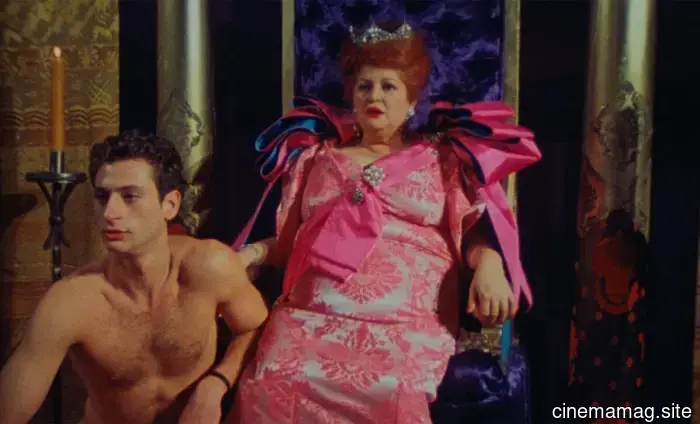
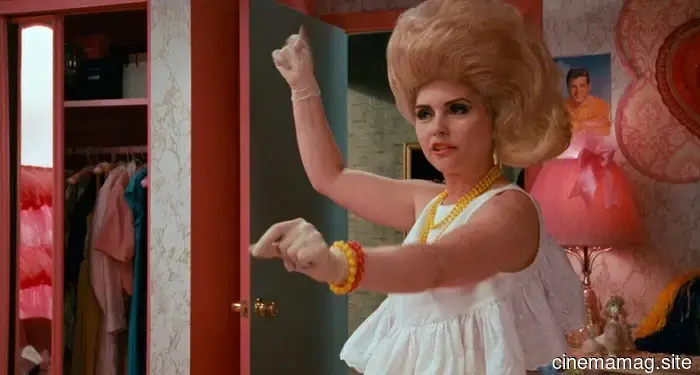
Criterion has now included two additional Waters films in its lineup, both featuring the director’s complete participation. The last film from his underground period, Desperate Living (1977), is described as an outrageous “antifascist fairy tale” (according to Criterion’s somewhat pretentious yet technically correct description) about a mentally ill housewife and her 400-pound housekeeper escaping from the Baltimore suburbs to “Mortville,” a hellish thrift-store Oz ruled by a malevolent queen. Conversely, Waters’ PG-rated Hairspray (1988) represents a different facet of his artistic sensibility and marks his most successful effort to penetrate mainstream American culture: it’s a cheerful yet still edgy comedy centered on the fight for integration in a Baltimore TV dance show, told from the perspective of an overweight girl who becomes a local dance star. Hairspray was one of the few of Waters’ films to receive a wholly positive critical response upon its initial release, leading to a hugely popular Broadway adaptation in 2002 followed by a 2007 feature-film remake, which solidified Waters’ status as an elder statesman while also making him quite wealthy.
Like many, I encountered Waters’ work during my formative years, and its influence on me is profound. Therefore, I was grateful for the chance to speak with the master in a Zoom interview conducted in June 2026.
The Film Stage: There’s a line in Cecil B. Demented that I quote frequently: “Technique is nothing more than failed style.”
John Waters: I love that line. It’s a perfect reference for Desperate Living.
In Desperate Living—and, even more so, in Hairspray—I think we can observe an evolution in your technique compared to your earlier films. I’d love to hear about your journey toward becoming a more technically refined filmmaker over the course of your career.
With every film I created, I aimed for it to resemble a Hollywood production—I just didn’t know how to achieve that. The mistakes stemmed from my lack of knowledge. I didn't intentionally want them to appear that way. However, some people appreciate it and describe it as “raw.” If they dislike it, they label it “amateur,” but it’s essentially the same issue.
Each project taught me a bit more. In my very first film, Hag in a Black Leather Jacket, I wasn’t even aware of editing. I filmed the shots in sequence, and once we finished, the film was complete. Mondo Trasho had no dialogue—just long shots—and Pink Flamingos consisted of endless pages of dialogue that we shot in long takes, with no cutaways, because we only used single-system sound, which meant we couldn’t cut back and forth. Then we transitioned to double-system sound with Female Trouble. The first time I was somewhat removed from the camera was during Desperate Living, which was beneficial. Hairspray marked the first time we had 35mm equipment and everything else, making it a Hollywood-style production where things improved with each film. I believe my best film is Serial Mom, which looks the best and had the most funding.
Correct me if I’m wrong, but Hairspray appears to be the first project that had a budget in the millions...
What was the budget? Maybe it was two-point… one-point… I can’t recall. Yes, it was significantly higher. Before that, Polyester cost $300,000, which was considerable for us back then. So yes, it was the first film with a substantial budget—it followed Hollywood norms. I
Other articles
 "Fascists Are Always There to Conquer": John Waters Discusses the Lasting Impact of His Movies and How He Never Faced Cancellation.
In 1973, Variety referred to John Waters' groundbreaking film Pink Flamingos as “one of the most vile, stupid and repulsive films ever made.” Fast forward to 2022, and that very film was released on Blu-ray by the esteemed Criterion Collection, known for its curation of significant cinema. This transformation marks Waters' evolution from an underground provocateur to a national treasure, complete with a star on the Hollywood Walk of Fame.
"Fascists Are Always There to Conquer": John Waters Discusses the Lasting Impact of His Movies and How He Never Faced Cancellation.
In 1973, Variety referred to John Waters' groundbreaking film Pink Flamingos as “one of the most vile, stupid and repulsive films ever made.” Fast forward to 2022, and that very film was released on Blu-ray by the esteemed Criterion Collection, known for its curation of significant cinema. This transformation marks Waters' evolution from an underground provocateur to a national treasure, complete with a star on the Hollywood Walk of Fame.
 U.S. Trailer for Hirokazu Koreeda's Sheep in the Box Released Before July Premiere
Given the numerous films that NEON presented at this year's Cannes Film Festival, it’s expected that some will begin to hit theaters this summer. On July 24, which is also the date when the distributor will launch Nicolas Winding Refn's Her Private Hell, they will release Hirokazu Koreeda's Sheep in the Box in the U.S.
U.S. Trailer for Hirokazu Koreeda's Sheep in the Box Released Before July Premiere
Given the numerous films that NEON presented at this year's Cannes Film Festival, it’s expected that some will begin to hit theaters this summer. On July 24, which is also the date when the distributor will launch Nicolas Winding Refn's Her Private Hell, they will release Hirokazu Koreeda's Sheep in the Box in the U.S.
 U.S. Trailer for Hirokazu Koreeda's Sheep in the Box Debuts in Anticipation of July Release
Given the numerous films NEON presented at the Cannes Film Festival this year, it's expected that several will be released in theaters beginning this summer. Hirokazu Koreeda's Sheep in the Box will premiere in the U.S. on July 24, coinciding with the release of Nicolas Winding Refn's Her Private Hell.
U.S. Trailer for Hirokazu Koreeda's Sheep in the Box Debuts in Anticipation of July Release
Given the numerous films NEON presented at the Cannes Film Festival this year, it's expected that several will be released in theaters beginning this summer. Hirokazu Koreeda's Sheep in the Box will premiere in the U.S. on July 24, coinciding with the release of Nicolas Winding Refn's Her Private Hell.
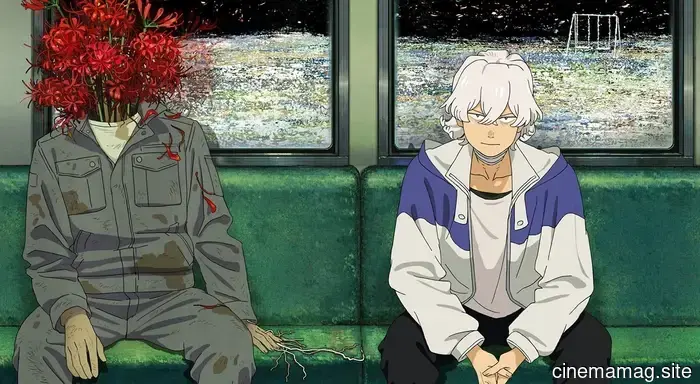 Netflix reveals the Fool Night anime series along with a trailer, poster, and promotional visuals.
During its anime lineup announcement at the Annecy International Animation Film Festival, Netflix revealed that it is adapting Kasumi Yasuda’s renowned manga Fool Night into a series format with a…
Netflix reveals the Fool Night anime series along with a trailer, poster, and promotional visuals.
During its anime lineup announcement at the Annecy International Animation Film Festival, Netflix revealed that it is adapting Kasumi Yasuda’s renowned manga Fool Night into a series format with a…
"There are constantly fascists to overcome": John Waters discusses the lasting impact of his films and how he has managed to avoid cancellation.
In 1973, Variety referred to John Waters' groundbreaking film Pink Flamingos as “one of the most vile, stupid and repulsive films ever made.” Fast forward to 2022, and that very film was issued a Blu-ray by the esteemed Criterion Collection, known for its influence on official film culture. Waters has transitioned from an underground provocateur to a national treasure, now honored with a star on the Hollywood Walk of Fame.