

Locarno Review: I Rarely Wake Up Dreaming Depicts a Uniquely Silent Queer Love Story Set Against the Backdrop of Wartime Ukraine
Late at night, while Kiev is in silent slumber, Isabelle Stever’s I Rarely Wake Up Dreaming begins with Olya (Tania Myronyshena) and Oleh (Markus Bright) engaged in an argument in their living room. One must strain to catch their muffled voices and squint to see their faces clearly, as we observe them quarreling through the window of a neighboring apartment. The handheld camera work by Volodymyr Usyk adds a sense of intimacy, suggesting that this moment is too private for anyone to overhear. Yet, we do listen in. Throughout Dreaming, Stever often films her characters from a distance, and this initial shot sets the stage for several others that depict the couple from afar, with corridors, windows, and door frames providing a protective barrier against prying eyes. This feels appropriately respectful for a love story tainted by various humiliations, but it also highlights a gap between the characters and the audience that Stever never completely closes. Strangely, her film tends to keep viewers at a distance, and its most poetic visuals do not quite coalesce into a cohesive whole.
Olya and Oleh are a young queer couple in Ukraine, with Oleh being a trans man who left Odessa in search of love and safety in the capital. This seems to be a successful endeavor, at least judging by the New Year’s Eve party that Stever revisits after the film's introduction. With only a few hours remaining in 2022, enveloped in the neon glow and electronic rhythm surrounding them, it feels almost sacrilegious to dwell on the rumors of Russian troops gathering at the border. This is the year they plan to marry, much to the approval of Olya’s traditional parents, who mistakenly perceive Oleh as cisgender and continue to press him about starting a family. However, when the war breaks out, and the country awakens to Russian airstrikes, Oleh joins Olya and her family in a desperate dash to the border. But their escape proves futile: all men aged 18 to 60 are ordered to stay and fight, and since Oleh’s passport marks him as male, he must fulfill his obligations.
The film provocatively reframes Oleh's gender affirmation as a wartime curse. Co-written by Stever’s spouse and collaborator Anna Melikova, Dreaming delves into the societal implications of his transition in a culture where masculinity has become inescapably tied to military service. However, Stever’s portrayal of these issues feels somewhat straightforward. The film attempts to draw parallels between Oleh's identity crisis and his nation’s struggles, suggesting that both are searching for their identities while resisting forces that threaten to annihilate them. This analogy is apt, yet Dreaming appears frustratingly constructed to establish this connection. The film’s dramatic framework is nearly transparent in how it links the personal and the national; consequently, despite the complexities of Oleh's existential conflict, he sometimes feels more like a pawn in a rigidly literal scenario.
Bright—like Myronyshena, a newcomer in his first acting role—exudes a profound vulnerability, which suits a character reduced to a target for others' expectations of masculinity. Olya urges him to abandon his identity for a chance at safety in Germany (“then you’ll reincarnate again”); her mother insists he rejects condoms (“so you’ll give us grandchildren”); an argument at the market results in a black eye (any man who isn’t on the front lines is deemed no man at all). However, these events reveal little about Oleh's internal struggles. Instead, they serve the plot: markers crafted to make his ultimate decision seem almost predestined.
Fortunately, Stever mostly keeps the conflict off-screen. The invasion is presented through news reports or through the sound design by Andreas Hildebrandt, with the distant explosions of Russian missiles reverberating closer and closer. This choice allows Dreaming to divert from cheap spectacle and find more unique, graphic representations of the omnipresent violence. An extreme close-up of a nail drill carefully tending to Olya’s cuticles or a defrosted octopus being chopped to pieces by a frustrated Oleh: these foreboding moments juxtapose with the quieter periods of life before the invasion. An early, continuous shot of the two lying naked in bed, viewed from a corridor so that only their legs are visible, glowing in the neon light spilling in from the street, might be the film's most memorable image. It is easy to write about some of Dreaming’s most captivating visuals, but it is much more challenging to shake the feeling that they function better as standalone pieces rather than parts of a complete mosaic.
The fact that a work of fiction has emerged from a country whose cinematic output since February 2022 has largely consisted of unflinching war documentaries is remarkable. For that reason alone, Stever’s latest is worthy of praise. However, there is a
Other articles
.jpg) Film Review – The Birthday Celebration (2026)
The Birthday Party, 2026. Directed by Miguel Ángel Jiménez. Featuring Willem Dafoe, Emma Suárez, Joe Cole, Vic Carmen Sonne, Christos Stergioglou, Carlos Cuevas, Antonis Tsiotsiopoulos, Francesc Garrido…
Film Review – The Birthday Celebration (2026)
The Birthday Party, 2026. Directed by Miguel Ángel Jiménez. Featuring Willem Dafoe, Emma Suárez, Joe Cole, Vic Carmen Sonne, Christos Stergioglou, Carlos Cuevas, Antonis Tsiotsiopoulos, Francesc Garrido…
 Which star will triumph in 2026?
Based on the films of 2026, the cinema scene is dominated by a select few actors who are monopolizing the box office successes. But who will emerge victorious in 2026 and claim the title of star of the year? This year has seen an impressive box office performance...
Which star will triumph in 2026?
Based on the films of 2026, the cinema scene is dominated by a select few actors who are monopolizing the box office successes. But who will emerge victorious in 2026 and claim the title of star of the year? This year has seen an impressive box office performance...
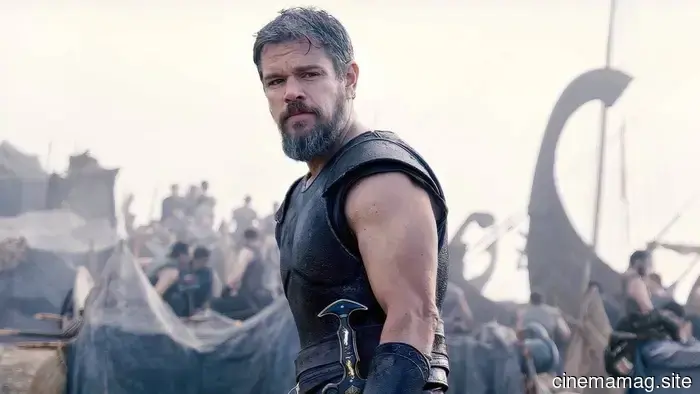 The Odyssey surpasses The Dark Knight Rises to claim the title of Christopher Nolan's highest-grossing film at the box office.
The box office is thriving this summer, and although Spider-Man: Brand New Day is at the forefront with $67 million worldwide after its second weekend, Christopher Nolan is also rejoicing in a…
The Odyssey surpasses The Dark Knight Rises to claim the title of Christopher Nolan's highest-grossing film at the box office.
The box office is thriving this summer, and although Spider-Man: Brand New Day is at the forefront with $67 million worldwide after its second weekend, Christopher Nolan is also rejoicing in a…
 Comic Book Sneak Peek – Godzilla's Monsterpiece Theatre Offers: Roar of the Worlds #1
This week, the King of the Monsters faces off against H.G. Wells with the launch of Godzilla’s Monsterpiece Theatre Presents: Roar of the Worlds #1. You can check out a preview of the issue with…
Comic Book Sneak Peek – Godzilla's Monsterpiece Theatre Offers: Roar of the Worlds #1
This week, the King of the Monsters faces off against H.G. Wells with the launch of Godzilla’s Monsterpiece Theatre Presents: Roar of the Worlds #1. You can check out a preview of the issue with…
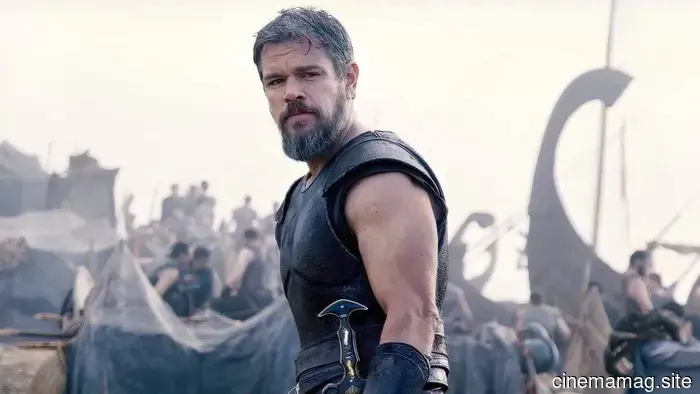 The Odyssey surpasses The Dark Knight Rises to claim the title of Christopher Nolan’s highest-grossing film at the box office.
The box office is booming this summer, and although Spider-Man: Brand New Day is at the forefront with $67 million globally after its second weekend, Christopher Nolan is also enjoying success with a…
The Odyssey surpasses The Dark Knight Rises to claim the title of Christopher Nolan’s highest-grossing film at the box office.
The box office is booming this summer, and although Spider-Man: Brand New Day is at the forefront with $67 million globally after its second weekend, Christopher Nolan is also enjoying success with a…
 Fox is working on an animated sequel series for Joe Dirt.
As the cult comedy marks its 25th anniversary, Deadline reports that David Spade is poised to return to the title role in 2001's Joe Dirt, providing his voice for an animated series.
Fox is working on an animated sequel series for Joe Dirt.
As the cult comedy marks its 25th anniversary, Deadline reports that David Spade is poised to return to the title role in 2001's Joe Dirt, providing his voice for an animated series.
Locarno Review: I Rarely Wake Up Dreaming Depicts a Uniquely Silent Queer Love Story Set Against the Backdrop of Wartime Ukraine
It is late at night, and Kiev is sound asleep as Isabelle Stever’s I Rarely Wake Up Dreaming starts with Olya (Tania Myronyshena) and Oleh (Markus Bright) having a heated argument in their living room. You have to listen closely to catch their muted voices and strain your eyes to see their faces clearly—we are observing them dispute through the