
.jpg)
Film Review – Coyote vs. Acme (2026)
**Coyote vs. Acme, 2026.**
Directed by Dave Green.
Featuring Will Forte, Lana Condor, Tone Bell, John Cena, Eric Bauza, P.J. Byrne, Martha Kelly, Luis Guzmán, Kenneth Choi, John Early, Jeff Bergman, Candi Milo, Nancy Linehan Charles, Ernie Vigil, and Jim Cummings.
**SYNOPSIS:**
After repeatedly finding himself thwarted by defective Acme products in his relentless chase of the Road Runner, Wile E. Coyote takes the bold step of hiring a billboard lawyer to bring a lawsuit against the Acme Corporation. "Why don’t you just give up?" questions a corporate attorney portrayed by John Cena, who is famously associated with the motto "never give up." This exchange with Wile E. Coyote subtly highlights the meta-hypocrisy without being over the top. This clever casting by director Dave Green and screenwriter Samy Burch contributes to the appeal of the live-action/animated legal comedy Coyote vs. Acme, which presents a captivating premise that is enough to draw audiences into theaters.
The intriguing aspect is that Wile is not in the wrong; the products are consistently defective, which should be addressed against Acme, despite the fact that none of the cartoon characters face real danger or significant harm. As a result, viewers are treated to a series of classic chase sequences featuring Wile’s arch-rival, the Road Runner (voiced by Eric Bauza), culminating in a brief montage of failed gadgets over three decades, highlighting Wile’s tenacity and the extent of his being deceived, thus justifying his claim for compensation.
After three decades of acquiring faulty items from Acme, Wile hears a commercial that leads him to lawyer Kevin Avery (Will Forte), who typically handles minor cases yielding only small payouts for his clients, including frequent appearances by Porky Pig. However, he lacks the ambition to tackle more significant cases against Acme's top attorney, Buddy Crane (John Cena). Simply put, the assertion that "Wile did nothing wrong!" in his predatory pursuit has a compelling allure, far from the defective attraction one might find in an Acme product.
The filmmakers (with support from James Gunn and Jeremy Slater, based on a magazine piece by Ian Frazier) successfully create a vibrant blend of live-action and animation (reminiscent of the classic Who Framed Roger Rabbit?), showcasing how human and cartoon interactions coexist. Be it a chase in a factory, property damage caused by Acme's products, or throwaway gags linking to background animated characters, the world feels alive, with even live-action moments infused with the energy of their animated counterparts. It’s filled with life, exuberance, and humor, propelling forward with infectious enthusiasm.
Whether it showcases the quintessential slapstick between coyote and bird or depicts Wile persuading Kevin (a clever twist since he can only communicate via signs) to take on a case against the multitude of defective items, the film aims for real change—emphasized by assistant Paige (Lana Condor), who urges Kevin to do more than just the bare minimum. The film is humorous enough that its high-concept premise doesn’t detract from its abundant sight gags and jokes, maintaining its animated essence. This clever, emotionally resonant film boldly critiques corporate greed while thoughtfully reevaluating the Wile E. Coyote/Road Runner rivalry, akin to Batman and the Joker; they are rivals who rely on each other.
In what seems like an astoundingly misguided decision by Warner Bros. CEO David Zaslav to shelve the movie for a tax write-off before selling distribution rights to Ketchup Entertainment, Coyote vs. Acme courageously portrays beloved cartoon characters as detestable villains, much like the human antagonists. Foghorn Leghorn’s Southern charm is twisted into that of a deceitful businessman, complacently associated with live-action characters who would betray him without hesitation. An early scene even draws parallels between these cartoon figures facing daily discriminatory challenges. Yet, the film's most impactful commentary emerges from the predatory nature of corporations, layered within a mystery that includes numerous cherished cartoon cameos, despite a few implausible world details.
Will Forte shows remarkable screen presence, effectively conveying his interactions within a world populated by animated characters. John Cena's imposing physique adds another dimension of animation, particularly during moments when he threatens cartoon elements or instructs his henchmen to capture the Road Runner to thwart any possible testimony. This ensures that even when the narrative leans away from cartoons, it remains engaging.
As the third act transitions towards sharper critiques of unethical corporate behavior, Coyote vs. Acme shifts slightly toward adult themes, yet it juggles multiple narratives, leaving audiences feeling emotionally invested and spurred to action. "Never give up" is presumably Wile E. Coyote’s new
.jpg)
.jpg)
.jpg)
.jpg)
.jpg)
.jpg)
Other articles
.jpg) Film Review – The Wrong Girls (2026)
The Wrong Girls, set for release in 2026, is both written and directed by Dylan Meyer. The film features performances by Kristen Stewart, Alia Shawkat, LaKeith Stanfield, Zack Fox, Seth Rogen, Kumail Nanjiani, Tony Hale, Chris Estrada, and Thomas La Barber.
Film Review – The Wrong Girls (2026)
The Wrong Girls, set for release in 2026, is both written and directed by Dylan Meyer. The film features performances by Kristen Stewart, Alia Shawkat, LaKeith Stanfield, Zack Fox, Seth Rogen, Kumail Nanjiani, Tony Hale, Chris Estrada, and Thomas La Barber.
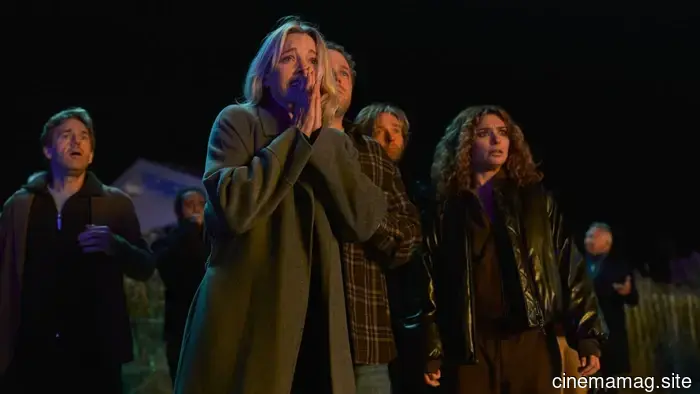 Netflix releases trailer for the Dutch thriller series The Perfect Lie.
Netflix has unveiled a trailer for The Perfect Lie, the forthcoming Dutch thriller series adapted from Saskia Noort’s book The Dinner Club. The series centers around Karen, who, after relocating to Bergen, finds herself in...
Netflix releases trailer for the Dutch thriller series The Perfect Lie.
Netflix has unveiled a trailer for The Perfect Lie, the forthcoming Dutch thriller series adapted from Saskia Noort’s book The Dinner Club. The series centers around Karen, who, after relocating to Bergen, finds herself in...
 MGM+ releases trailer for the adaptation of Dickens' A Tale of Two Cities featuring Kit Harington.
MGM+ has released a trailer for A Tale of Two Cities, a television adaptation of Charles Dickens' most popular English novel. The story takes place in London in 1782, amidst rising tensions...
MGM+ releases trailer for the adaptation of Dickens' A Tale of Two Cities featuring Kit Harington.
MGM+ has released a trailer for A Tale of Two Cities, a television adaptation of Charles Dickens' most popular English novel. The story takes place in London in 1782, amidst rising tensions...
.jpg) Film Review – The Wrong Girls (2026)
The Wrong Girls, 2026. Penned and helmed by Dylan Meyer. Featuring Kristen Stewart, Alia Shawkat, LaKeith Stanfield, Zack Fox, Seth Rogen, Kumail Nanjiani, Tony Hale, Chris Estrada, Thomas La Barber...
Film Review – The Wrong Girls (2026)
The Wrong Girls, 2026. Penned and helmed by Dylan Meyer. Featuring Kristen Stewart, Alia Shawkat, LaKeith Stanfield, Zack Fox, Seth Rogen, Kumail Nanjiani, Tony Hale, Chris Estrada, Thomas La Barber...
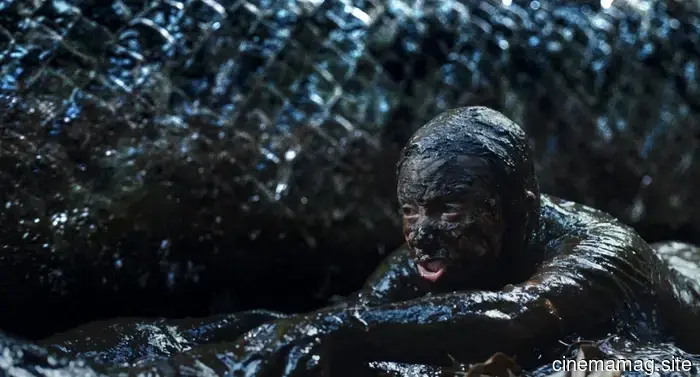 Watch out for Boiúna with the trailer for Lionsgate's horror featuring a massive snake.
Lionsgate has unveiled a trailer for Beware Boiúna, the forthcoming survival horror film directed by Mike P. Nelson (Wrong Turn, Silent Night, Deadly Night). The cast includes Kiana Madeira, Jessica Rothe, and Logan…
Watch out for Boiúna with the trailer for Lionsgate's horror featuring a massive snake.
Lionsgate has unveiled a trailer for Beware Boiúna, the forthcoming survival horror film directed by Mike P. Nelson (Wrong Turn, Silent Night, Deadly Night). The cast includes Kiana Madeira, Jessica Rothe, and Logan…
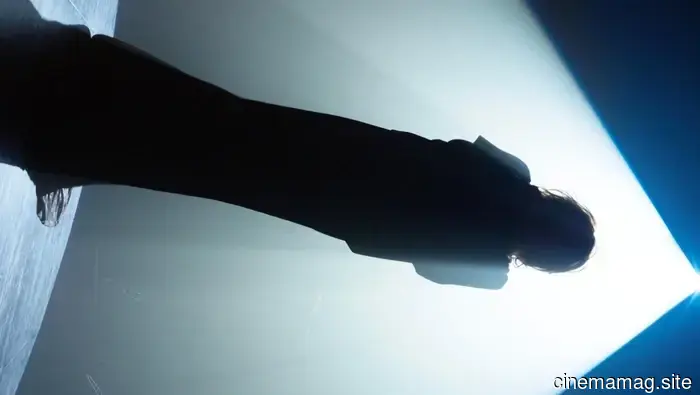 Locarno Review: Albert Serra and Ingrid Caven Form a Great Duo in Sixteen Moments from My Life
Albert Serra's Sixteen Moments from My Life may be viewed as a modest addition to the director's body of work, yet it undeniably persists in his ongoing pursuit of discovering methods to encapsulate fleeting moments of reality through the medium of cinema, and vice versa. It serves as a conceptually intriguing, albeit decidedly niche, counterpart to his
Locarno Review: Albert Serra and Ingrid Caven Form a Great Duo in Sixteen Moments from My Life
Albert Serra's Sixteen Moments from My Life may be viewed as a modest addition to the director's body of work, yet it undeniably persists in his ongoing pursuit of discovering methods to encapsulate fleeting moments of reality through the medium of cinema, and vice versa. It serves as a conceptually intriguing, albeit decidedly niche, counterpart to his
Film Review – Coyote vs. Acme (2026)
Coyote vs. Acme, 2026. Directed by Dave Green. Featuring Will Forte, Lana Condor, Tone Bell, John Cena, Eric Bauza, P.J. Byrne, Martha Kelly, Luis Guzmán, Kenneth Choi, John Early, Jeff Bergman, Candi…