
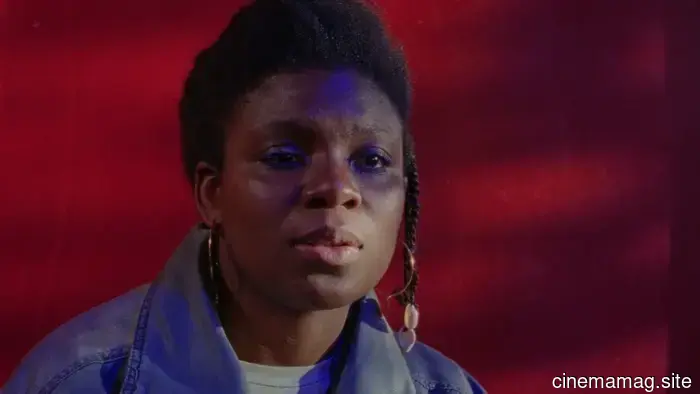
Locarno Review: At Night Is a Dreamy, Calming First Film
The finest film I experienced in Locarno this year is set in Paris after dark, meandering through quiet side streets, fluorescent diners, and late-night cafes and bars. At Night unfolds at a leisurely pace akin to that of a Rachel Cusk novel, echoing the author’s themes of displacement and melancholic charm. As the visuals envelop you, one perceives an artist longing for a different place while remaining genuinely intrigued by what lies ahead.
This film is the debut feature of Beatrice Gibson, who has won the Tiger Award for best short film twice at IFFR and has collaborated with Sean Price Williams (I Hope I’m Loud When I’m Dead) and Ben Rivers (Two Sisters Who Are Not Sisters)—the latter also serving as the cinematographer for this project. Dreamy and elusive, it possesses a quality that would fit into the Directors' Fortnight at Cannes, yet it feels right at home in Locarno’s Cineastí del Presente sidebar—much like Blue Heron, which premiered here last year before making its journey around the globe.
In many respects, the cinematic styles of Gibson and Romvari differ significantly, yet they share a similar warmth and depth of ideas. The travelogues of Chantal Akerman and Chris Marker inevitably came to mind, but Gibson’s debut soon establishes its own unique shapes and rhythms. Much of the credit goes to the collaborative atmosphere, particularly evident in a remarkable early scene where six women gather in a café to engage in a compelling ten-minute discussion about sex, aging, and desire.
The film predominantly follows two of these women: the first is a British director named B (played by Gibson), who opens with a voiceover—a phone call to her partner that starts with her discussing location scouting and transitions into an acknowledgment of her creative block. The other main character is Didi (Diocouda Diaoune), a single mother, with whom the film spends more time exploring various locations and listening to her engage in discussions about privilege and class. Occasionally, the other women from the café re-emerge, serving as reminders of shared experiences and solidarity.
Despite Gibson’s outsider perspective from London, the film notably avoids the usual Parisian landmarks to convey its sense of place—aside from a few underground train carriages and one inviting metro station. Instead, we witness a group of men playing pool in a Chinese restaurant, workers shutting down fluorescent storefronts, a series of quiet, lamp-lit streets, and a glimpse into the artist’s dressing room at a queer venue, culminating in a moving performance by singer Adam Christensen and composer Elvin Brandhi, who also provides the film’s score.
In addition to B, Didi, and the French capital, At Night is also a film about poetry. Gibson begins with a quote from Alice Notley, an American writer who passed away last year, and features a delightful recording of her reciting from her poem, The Descent of Alette, during one of B's lull-inducing metro journeys. English poet Sophie Robinson is also among the cast, highlighted in a striking close-up as she delivers a reading. True to its nature, At Night does not present a clear central narrative arc, which might create a slight feeling of slackness, but the film's consistent stream of words and ideas, coupled with Rivers’ stunning 16mm visuals, are more than sufficient to maintain its tranquil grip. I barely noticed time passing.
At Night premiered at the 2026 Locarno Film Festival.

Other articles
 American Doctor Review: Unbiased Examination of the Genocide Funded by Your Tax Money
Note: This review was first published during our Sundance coverage in 2026. The film is set to be released on August 14. When will this come to an end? When will this violence cease? And when will the United States cease its support for it? Filmmaker Poh Si Teng provides a stark and unflinching examination of the genocide occurring in Gaza with her
American Doctor Review: Unbiased Examination of the Genocide Funded by Your Tax Money
Note: This review was first published during our Sundance coverage in 2026. The film is set to be released on August 14. When will this come to an end? When will this violence cease? And when will the United States cease its support for it? Filmmaker Poh Si Teng provides a stark and unflinching examination of the genocide occurring in Gaza with her
.jpg) Film Review – The Brink of War (2026)
The Brink of War, 2026. Created and directed by Michael Russell Gunn. Featuring Jared Harris, Jeff Daniels, Branka Katić, Hope Davis, J.K. Simmons, Aya Cash, Guy Burnet, John Ross Bowie, Adrian Rawlins…
Film Review – The Brink of War (2026)
The Brink of War, 2026. Created and directed by Michael Russell Gunn. Featuring Jared Harris, Jeff Daniels, Branka Katić, Hope Davis, J.K. Simmons, Aya Cash, Guy Burnet, John Ross Bowie, Adrian Rawlins…
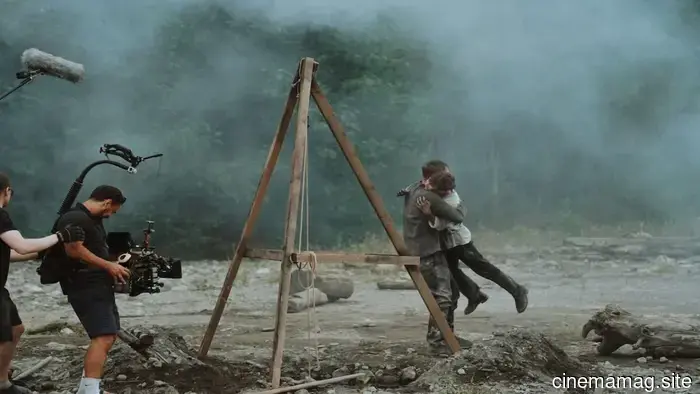 Why Practical Effects Are Not Truly Disappearing - MovieMaker Magazine
For a long time, the dominant narrative in film criticism has been straightforward: CGI triumphed, practical effects fell by the wayside, and viewers adapted to embracing the intangible nature of digital effects.
Why Practical Effects Are Not Truly Disappearing - MovieMaker Magazine
For a long time, the dominant narrative in film criticism has been straightforward: CGI triumphed, practical effects fell by the wayside, and viewers adapted to embracing the intangible nature of digital effects.
 In 'Flavor of the Month,' Nathan Xia addresses issues of stereotypical casting.
Recently, Nathan Xia had an opportunity to audition for a major franchise that was looking for an Asian American actor with martial arts skills, and he fully committed to the process.
In 'Flavor of the Month,' Nathan Xia addresses issues of stereotypical casting.
Recently, Nathan Xia had an opportunity to audition for a major franchise that was looking for an Asian American actor with martial arts skills, and he fully committed to the process.
 American Doctor Review: An Unbiased Examination of the Genocide Funded by Your Tax Dollars
Note: This review was first published during our 2026 Sundance coverage. The film is set to premiere on August 14. When will this come to an end? When will this violence cease? And when will the United States of America withdraw its support? Filmmaker Poh Si Teng provides a direct and unwavering examination of the genocide in Gaza with her
American Doctor Review: An Unbiased Examination of the Genocide Funded by Your Tax Dollars
Note: This review was first published during our 2026 Sundance coverage. The film is set to premiere on August 14. When will this come to an end? When will this violence cease? And when will the United States of America withdraw its support? Filmmaker Poh Si Teng provides a direct and unwavering examination of the genocide in Gaza with her
 Union County Review: Discovering Grace in the Gradual, Humbling Journey of Recovery
Please note: This review was initially published during our coverage of Sundance 2026. The film will premiere on August 14. Last summer, while The Bear was in the midst of its fourth season, Will Poulter walked into the show's namesake restaurant in Chicago, leaving the kitchen staff visibly stunned by his good looks. This wasn’t the first time such a reaction had occurred.
Union County Review: Discovering Grace in the Gradual, Humbling Journey of Recovery
Please note: This review was initially published during our coverage of Sundance 2026. The film will premiere on August 14. Last summer, while The Bear was in the midst of its fourth season, Will Poulter walked into the show's namesake restaurant in Chicago, leaving the kitchen staff visibly stunned by his good looks. This wasn’t the first time such a reaction had occurred.
Locarno Review: At Night Is a Dreamy, Calming First Film
The finest film I watched in Locarno this year takes place in Paris after dark, on quiet side streets, in brightly lit diners, and during late-night cafes and bars. At Night unfolds at a leisurely pace reminiscent of a Rachel Cusk novel, echoing the author's sense of dislocation and melancholic charm. As its visuals flow