
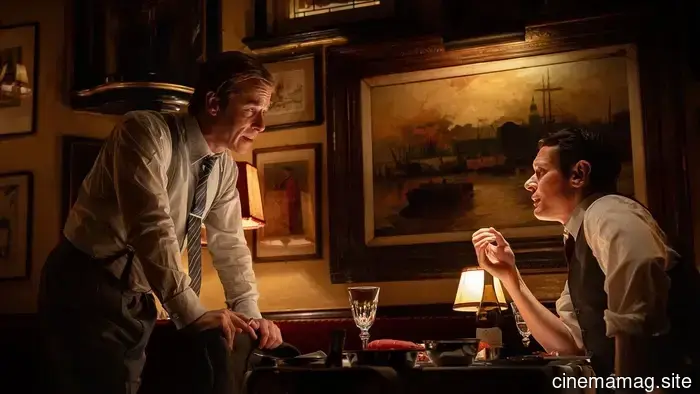
Venice Review: Danny Boyle’s Ink Offers a Thrilling Exploration of the Surge in Sensationalism
There's a delightful scene in Danny Boyle's new film **Ink** where Rupert Murdoch (Guy Pearce) and Larry Lamb (Jack O’Connell) crouch to touch the pavement on London’s Fleet Street to sense the powerful vibrations of the printing presses below. The Australian proto-disruptor is new to the scene and has just lured Lamb away from **The Mirror**, presenting his enticing offer with the assurance of a blank check and an even emptier canvas at **The Sun**. This film—a spirited adaptation of James Graham’s award-winning play—chronicles the adventurous years leading up to that pivotal night, convincingly connecting Lamb’s initial triumphs with the tabloid to the incessant 24-hour news cycle we navigate today.
Despite sounding somewhat didactic and broad, **Ink** is an enjoyable movie experience—something that could have easily been titled **The Wolf of Fleet Street** (although given the inclusion of “Lamb,” I imagine one of the tabloid’s famous copy editors could have concocted a sharper title). The screenplay was penned by Graham himself, and Boyle infuses it with much of the same energy and fervor (along with some shaky camera work) that showcased his talent in **28 Years Later**, making it one of the standout films of 2025.
What **Ink** lacks, however, is Alex Garland—a writer known for his bold touches that resonate with Boyle’s distinctive Gen X quirks. This director, who orchestrated a fantastical opening for the 2012 London Olympics only to turn down a knighthood a few months later, expresses skepticism towards the elite, a sentiment that is evident throughout his latest work. The film shines when it explores how Lamb—the working-class son of a well-respected union member—could deviate so drastically from his roots in his quest to both surpass and gain acceptance from the Fleet Street elite. (Lamb, ultimately, would receive his own knighthood in 1980—a moment Boyle treats with fitting disdain and a skillfully timed jump-scare.)
The theme of “self-destruction through slow erosion” has been a narrative pillar in mogul-themed films since **Citizen Kane**, but a closer comparison for **Ink** would be **The Sweet Smell of Success**, where Tony Curtis plays a sycophant to Burt Lancaster’s powerful theater critic, ultimately losing his integrity. This film could also be paired in a double feature with Boyle’s own **Steve Jobs**, an Aaron Sorkin-scripted portrayal that took multiple approaches to Walter Isaacson’s biography of the Apple visionary, transforming it into a compelling narrative of unrelenting progress that seldom paused to consider the potential consequences. Jobs, who passed away in 2011, wisely exited the stage before the industry turned against him, which spared Boyle from his unfortunate habit of stalling in the third act.
While the film opens with lively exchanges and a thrilling ascent (although I would prefer to keep the Sprints tune and the sound of machinery while omitting the Guy Ritchie-style title cards), **Ink** transitions into a more moralistic and familiar kind of movie as soon as Lamb opts to exploit a tragedy for the paper's gain—an action that nearly costs him his position before a surge in sales validates his decision, at least from a commercial standpoint. If there is a central image in the film, it is of Lamb’s hand positioning **The Sun**’s logo above those of its competitors as the world he’s creating in real-time begins to implode around him. The play first premiered on the West End in 2017, making it a product of those early Trump years and a notable precursor to **Succession**, which crafted its own version of Murdoch in Logan Roy—a character who may serve as the pinnacle pop-cultural interpretation of the man.
In **Ink**, Murdoch takes a back seat as the initially hesitant facilitator of Lamb’s more nefarious inclinations. When Pearce delivers a finely tuned performance on screen, we witness no significant meltdown or dubious dealings; instead, we see an outsider burdened with a substantial chip on his shoulder and a refusal to put on the brakes as his figures soar. Graham traces the roots of their obsession to a press awards gala in 1969, where Lamb was ridiculed by Hugh Cudlipp (brilliantly portrayed by Bertie Carvel, who won a Tony for his role as Murdoch in the stage version), a scene reminiscent of Trump at the 2011 White House Correspondents’ Dinner.
Surprisingly, **Ink** presents a sense of optimism in its early scenes, portraying a moment when the slate was wiped clean and outsiders (mostly working-class individuals) were finally allotted a space at the table. We see this through Claire Foy's character, Jules Davis, a composite representative of the few female journalists on Fleet Street at that time. For a short while, it appears joyous and light-hearted until a few choices unleash
Otros artículos
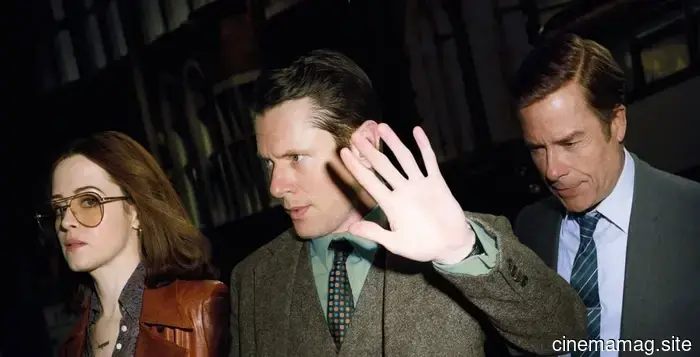 The initial teaser trailer and posters for Danny Boyle's Ink, featuring Jack O'Connell, Guy Pearce, and Claire Foy, have been released.
StudioCanal has released the initial trailer and character posters for Ink, the forthcoming drama that narrates the ascent of The Sun newspaper under the ownership of Rupert Murdoch and the editorial leadership of Larry Lamb.
The initial teaser trailer and posters for Danny Boyle's Ink, featuring Jack O'Connell, Guy Pearce, and Claire Foy, have been released.
StudioCanal has released the initial trailer and character posters for Ink, the forthcoming drama that narrates the ascent of The Sun newspaper under the ownership of Rupert Murdoch and the editorial leadership of Larry Lamb.
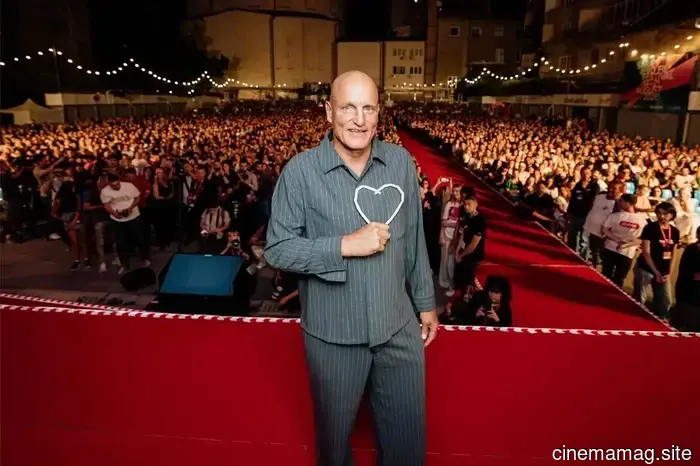 2026 Sarajevo Film Festival Features Woody Harrelson, Balkan Treasures, and Echoes of the Past
On the initial evening of my visit to Sarajevo this year, I participated in a gathering at the residence of the Spanish Ambassador. The event was held in honor of Rodrigo Sorogoyen, whose recent film, The Beloved, was scheduled to be shown at the festival's renowned open-air theatre that evening. Throughout all my years of attending festivals, it was the first party I attended.
2026 Sarajevo Film Festival Features Woody Harrelson, Balkan Treasures, and Echoes of the Past
On the initial evening of my visit to Sarajevo this year, I participated in a gathering at the residence of the Spanish Ambassador. The event was held in honor of Rodrigo Sorogoyen, whose recent film, The Beloved, was scheduled to be shown at the festival's renowned open-air theatre that evening. Throughout all my years of attending festivals, it was the first party I attended.
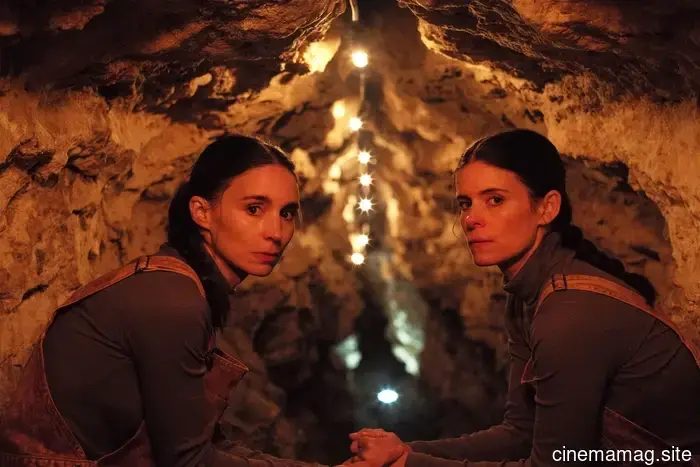 Venice Review: Werner Herzog’s Bucking Fastard Is an Unusual, Genuinely Sincere Curiosity
After reaching a particular age and a specific number of accomplishments, a director will almost certainly find themselves caught up in an exhausting discussion: have they entered their “late” period? Defining what this entails can be difficult: when writing about Beethoven, Theodor Adorno described late artistic works as “lacking sweetness, bitter and prickly”—brilliant reductions.
Venice Review: Werner Herzog’s Bucking Fastard Is an Unusual, Genuinely Sincere Curiosity
After reaching a particular age and a specific number of accomplishments, a director will almost certainly find themselves caught up in an exhausting discussion: have they entered their “late” period? Defining what this entails can be difficult: when writing about Beethoven, Theodor Adorno described late artistic works as “lacking sweetness, bitter and prickly”—brilliant reductions.
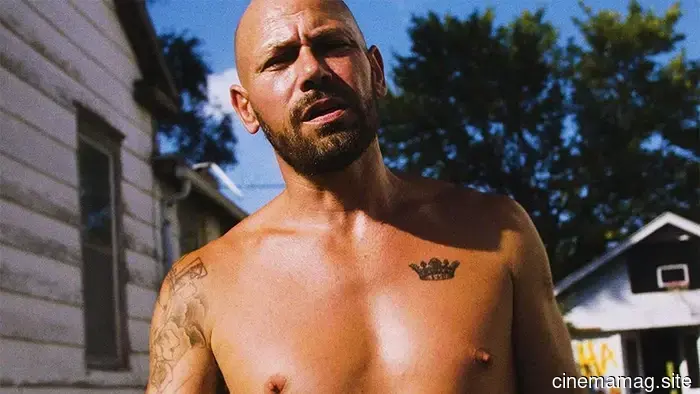 Venice Review: In Robert Greene’s Too Much Sugar, Making Films Serves as a Therapeutic Outlet
Too Much Sugar is a film centered on family, friendships, and the art of filmmaking—what's not to enjoy? It's the newest endeavor by Robert Greene, who frequently collaborates with Alex Ross Perry (Greene has edited a wide range of films, including Listen Up Philip and Pavements, along with the Safdie brothers' Lenny Cooke). Through his work as a documentary filmmaker, he has consistently shown a keen interest in the
Venice Review: In Robert Greene’s Too Much Sugar, Making Films Serves as a Therapeutic Outlet
Too Much Sugar is a film centered on family, friendships, and the art of filmmaking—what's not to enjoy? It's the newest endeavor by Robert Greene, who frequently collaborates with Alex Ross Perry (Greene has edited a wide range of films, including Listen Up Philip and Pavements, along with the Safdie brothers' Lenny Cooke). Through his work as a documentary filmmaker, he has consistently shown a keen interest in the
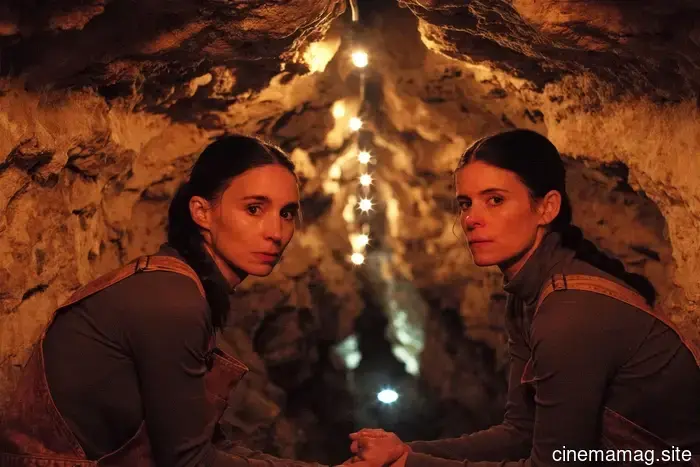 Venice Review: Werner Herzog’s Bucking Fastard Is an Unusual and Sincerely Moving Curiosity
After reaching a certain age and a particular number of works, a director will likely find themselves caught up in the constraining discussion: have they entered their “late” style? Defining what this entails can be challenging: when writing about Beethoven, Theodor Adorno described late artistic works as “lacking sweetness, bitter and angular”—exquisite distillations.
Venice Review: Werner Herzog’s Bucking Fastard Is an Unusual and Sincerely Moving Curiosity
After reaching a certain age and a particular number of works, a director will likely find themselves caught up in the constraining discussion: have they entered their “late” style? Defining what this entails can be challenging: when writing about Beethoven, Theodor Adorno described late artistic works as “lacking sweetness, bitter and angular”—exquisite distillations.
 LEGO Advent Calendar sets for 2026 are now released.
The LEGO Group has officially revealed that its range of 2026 Advent Calendars is now available for purchase, featuring new sets from LEGO Disney, LEGO Friends, LEGO City, LEGO Marvel, and LEGO Star...
LEGO Advent Calendar sets for 2026 are now released.
The LEGO Group has officially revealed that its range of 2026 Advent Calendars is now available for purchase, featuring new sets from LEGO Disney, LEGO Friends, LEGO City, LEGO Marvel, and LEGO Star...
Venice Review: Danny Boyle’s Ink Offers a Thrilling Exploration of the Surge in Sensationalism
In Danny Boyle's latest film, Ink, there's a delightful scene where Rupert Murdoch (played by Guy Pearce) and Larry Lamb (portrayed by Jack O’Connell) kneel to press their hands against the pavement on Fleet Street in London, experiencing the powerful vibrations of the printing presses beneath them. The Australian trailblazer has just arrived in the UK and has recently recruited Lamb from The Mirror, securing his